 努力小農
本文尚無譯文。
Typhoons and heavy rain bring unease… the greenhouse effect is like boiling a frog slowly
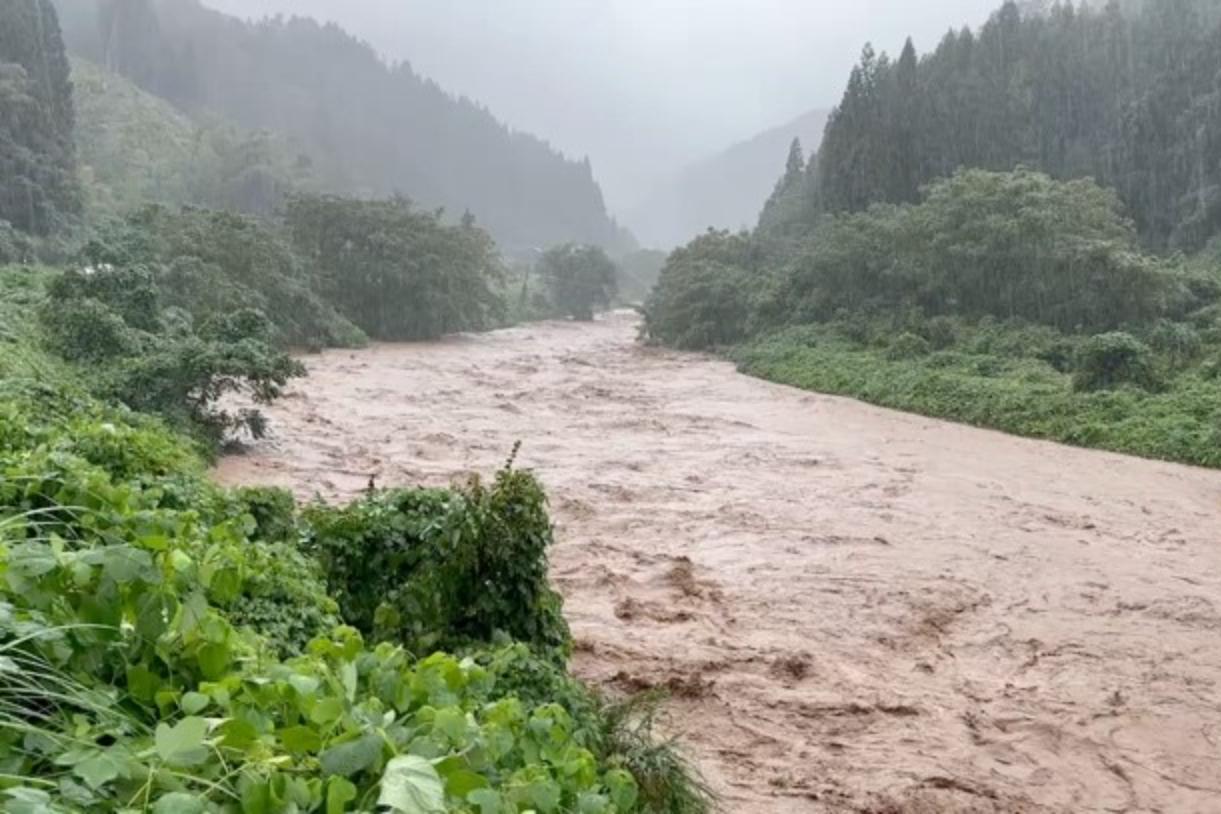
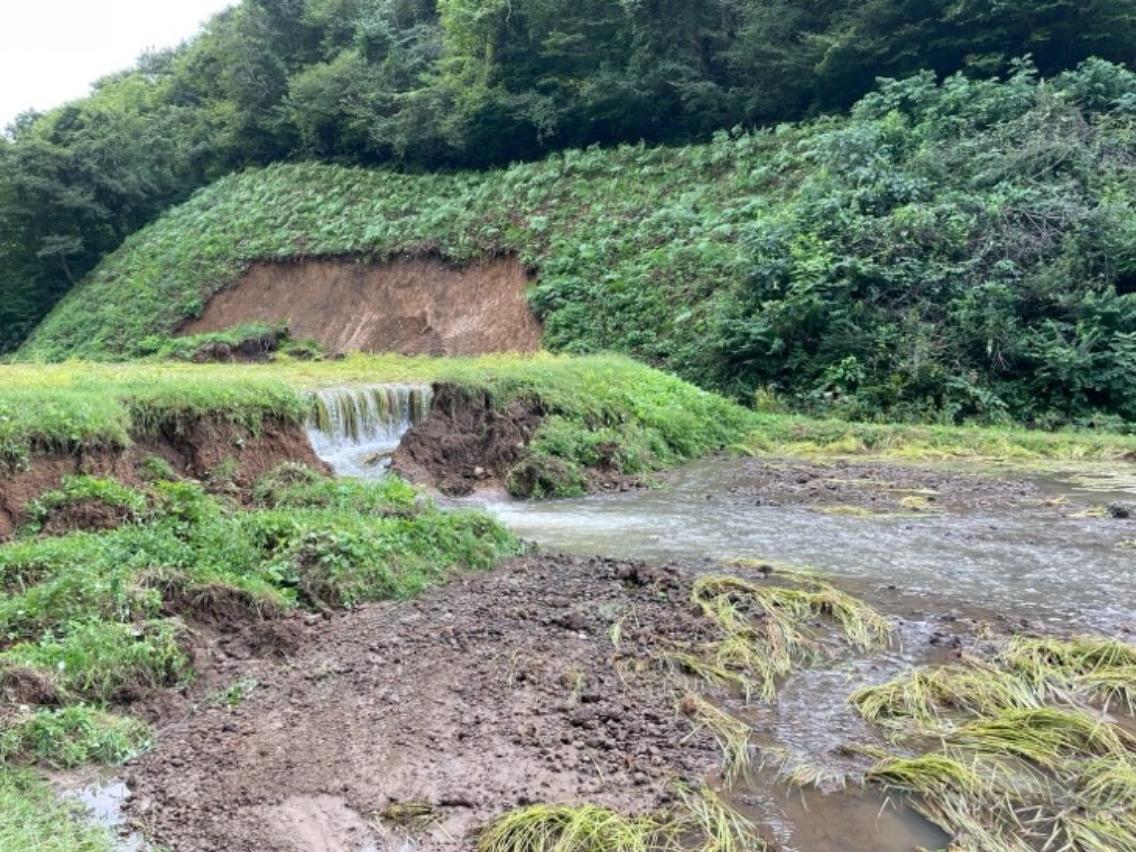
Farmland in Noto's Tome area, struck by the great earthquake at the start of the year, was hit again by autumn storms; mud and rocks flowed everywhere, and rice paddies ready for harvest yielded not a grain. (Photo: Yang Ching-hui)
I returned to Taipei on 18 September, but my heart was still on the Noto Peninsula, because after the earthquake came typhoons and heavy rain, which made me uneasy. Sure enough, on 21 September heavy rain fell in Noto. The Tzu Chi relief team sent back news of the damage, and reports kept coming in over the weekend: it seemed Noto's farmers, after the earthquake, had been ravaged again by torrential rain.
The greenhouse effect is like boiling a frog slowly: the heat is turned up little by little until the frog no longer has the strength to jump out and is cooked. The Earth's temperature is noticeably rising, hotter every year. Whether or not greenhouse gases are the cause, that is clearly the result.
Is it too late now?
Taiwan too faced heavy rain over the weekend of 21–22 September. There was no typhoon, but torrential rain caused flooding in Taipei, and earlier there were downpours in central and southern Taiwan. Even without a typhoon, the crop losses and damage from heavy rain were no less than from a typhoon. Meanwhile Hualien and Taitung are far from peaceful: since the 403 earthquake this year, Heping Township, gateway to the Suhua Highway in Hualien, hasn't had a single quiet day, with constant landslides and road closures; disruption of road and rail transport has become normal — to say nothing of the Central and Southern Cross-Island Highways.
The Central and Southern Cross-Island Highways and the Suhua Highway were once sources of pride, sung of as "man conquers nature". Looking back today, the "foolish old man" who moved mountains was only after short-term satisfaction and quick results. As the jianghu saying goes, "if you play the game, sooner or later you pay."
I met Hsieh Ching-kuei three years ago. By then he had left the Tzu Chi Foundation to farm full-time and had founded the Mitian Sharing Cooperative. A graduate of National Taiwan University's law department, he worked in legal affairs at foreign financial institutions, then joined Tzu Chi and went on to front-line international disaster relief. In the course of relief work he found that the biggest problem was the global food crisis — and that the root of the food crisis was increasingly clearly climate change.
When I first heard Hsieh say this two years ago, I thought he was even more of a worrier than me. I never expected that in these two years the Russia–Ukraine war would bring global food shortages and soaring wheat and soybean costs, while major rice producers such as India and Thailand, hit by climate change and successive poor harvests, would begin banning rice exports.
Japan too. Many Japanese complain that there are too many tourists eating Japan's rice and there isn't enough to go round. Add recent rumours of a big earthquake in the trench off southern Japan near Taiwan, and many people are stockpiling food, so there isn't enough rice. Rice is still sold in the shops, just at higher prices than before.
You don't need a fortune to know in advance
No need to wait another ten years: compare now with ten years ago and the difference is visible to the naked eye. The weather has got hotter, and the Tropic of Cancer across Taiwan has become "equatorial", so typhoons now "go around" Taiwan. For centuries of recorded history most typhoons "liked" to follow the Tropic of Cancer and Taiwan would always be "passed through"; now typhoons prefer to head north or south. On the weekend of 21–22 September, Japan, South Korea and Taiwan were all ravaged by torrential rain in a single cloud system.
In the past two years northern and southern China have also had frequent droughts and floods, and many local farmers have been hit by once-in-a-century disasters. No one knows what the future holds, because this is change their ancestors never experienced.
On this trip to Japan I learned that two of Japan's 24 solar terms, the spring and autumn equinoxes, are national holidays — showing how much the Japanese value these terms. Yet this year's autumn equinox (23 September), after the Mid-Autumn Festival (17 September), was not crisp and clear at all, but like the aftermath of a summer typhoon. Around Mid-Autumn I was on the Noto Peninsula, with temperatures above 32°C and over 26°C even at night — no autumn chill at all, even hotter than Taipei. The autumn equinox brought rain like a summer storm, proclaiming a reversal of the climate. This makes me believe that "man conquers nature" — yes, we have finally changed even the weather and climate, only not quite as we would have wished.
We are facing systemic change. According to some scientists, once atmospheric CO2 exceeds 430 ppm, climate change becomes irreversible — and we are now at that tipping point.
For the smallholder carbon farming project — whether in Hualien and Taitung, Noto in Japan, or Wuchang in northeast China — once-in-a-century downpours and even floods have occurred last year and this year. When I talk to smallholders about climate change, most feel nothing; but when we talk about how harvests over the past five to ten years relate to the weather, they immediately relate. Smallholders are the "front-row victims" of climate change, facing the most sensitive ecological changes affecting their crops and harvests — even damage from migrating wildlife or tropical pests and diseases never seen before.
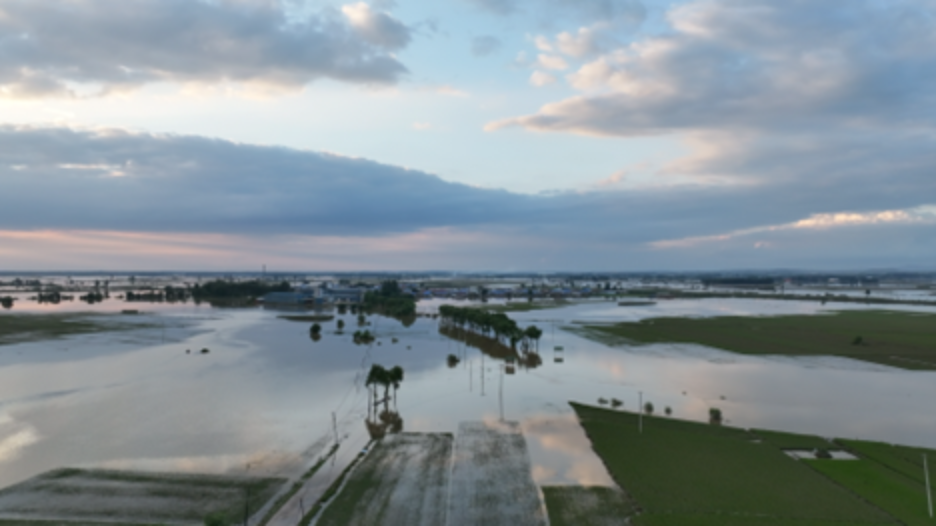
Wuchang in northeast China is the northernmost rice bowl, producing the best rice. Last year and this year it was hit by downpours unseen for a century, and tens of thousands of hectares of good farmland were flooded overnight.
If all humanity were a frog, smallholders would be its nerve endings. They already feel numbness and loss of function in the skin. The farming villages I've walked through are withering; their average age rises year by year and no young people come back — no policy can bring them back — like skin gradually peeling off and nerve endings dying.
After going to Noto I understood even better why Hsieh Ching-kuei, walking through the scenes of the Earth's great disasters, sensed the global food crisis over ten years ago. Disaster areas are far more sensitive to food supply than safe areas: disasters cut transport, and the first problem besides water is that medicine and food must be supplied from outside. If a disaster area can't produce its own food, there will be chaos, even collapse — something unimaginable after our decades of relative stability. Perhaps some people had such experiences in the 921 earthquake. In the countryside there are natural food sources for some people; in the city, people can only gnaw on land worth millions per ping. (Many of my friends in Shanghai recall that during the pandemic their deepest impression was the fear of not finding food — more frightening than the pandemic itself.)
Saving the future climate begins beneath our feet
While Taiwan worries about whether TSMC has enough electricity, whether there will be enough power for AI, or whether TSMC's fabs in the US, Japan and Germany are going smoothly, perhaps "Silicon Island Taiwan" has evolved to live on eating "silicon (chips)". With the National Land Planning Act coming into force, people worry about not being able to build houses on farmland (countless empty "villas" on farmland), factories (tens of thousands), or convenience stores (there are already700 illegally on farmland).
People seem indifferent to Taiwan's ageing population, falling birth rate and gradually shrinking population; all that's left is idle sighing over tea.
From two-odd years of very shallow carbon farming experience: NASA's annual atmosphericCO2 time-lapseover more than 20 years providesthe best evidence of climate warmingvisual effects. Besides CO2 concentrations rising year by year, every spring ploughing adds as much as 10% to atmospheric CO2. If farmers around the world changed how they plough, reduced tillage intensity, or left crop residues on the soil after ploughing, things would improve a great deal. At least the 13,000 tonnes of CO2 equivalent reduced in 2023 on more than 150 hectares of Taiwan's smallholder carbon farming fields can be traced to these fields reducing tillage intensity and increasing cover compared with before, raising soil organic matter — and, more importantly, without reducing yields.
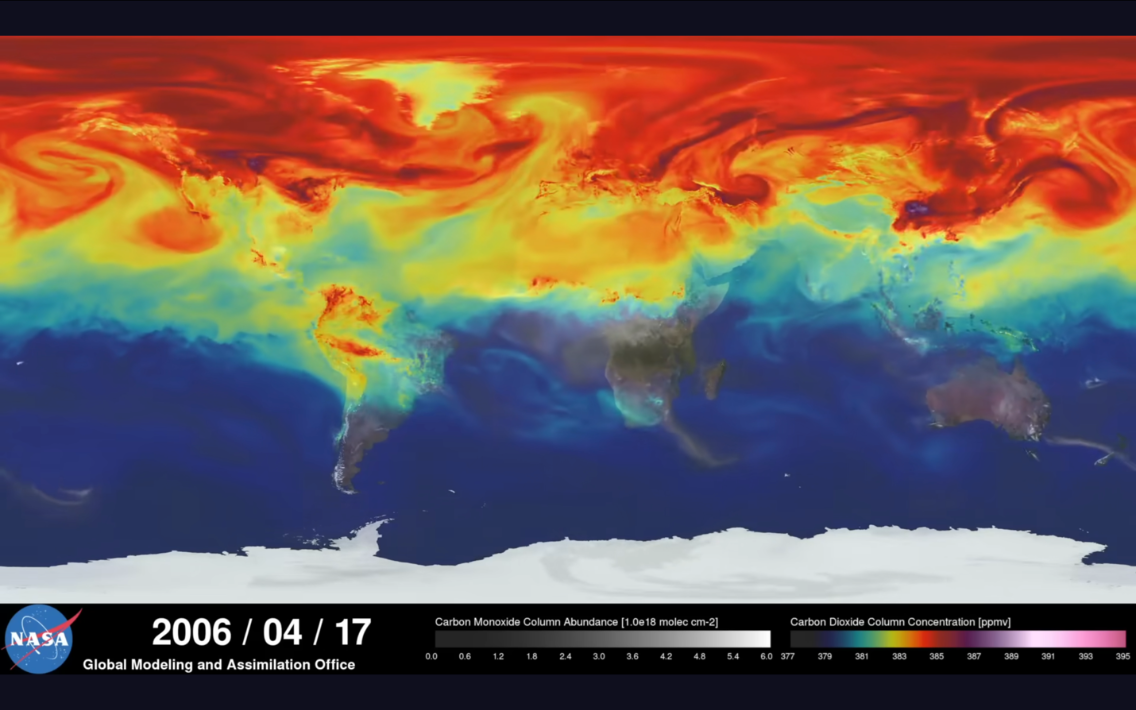
Over more than 20 years, NASA's data on atmospheric CO2 concentrations show the highest levels every spring, because tillage of farmland destroys soil organic matter, which turns into CO2 emitted into the atmosphere. Soil is the Earth's largest carbon sink, with 1.5 trillion tonnes of carbon stored in it. (Image: from the NASA website)
I'm excited that we have preliminarily shown agricultural soil carbon sequestration to be the best solution to global warming, solving the warming and food crises at the same time, at little cost, and something every farmer can do. More importantly, these farmers must be properly rewarded, so young people return to farming and local food supply is secure — only then can we face the next great disaster.
We need systemic change to address the systemic crisis of the global climate. A journey of a thousand miles begins beneath one's feet — in the soil. We look forward to more smallholders joining smallholder carbon farming, and to companies buying and supporting carbon-farming smallholders' products, while gaining quantified, auditable ESG/SDG performance and becoming drivers of corporate and global sustainability.
Source: CM Media ( https://www.cmmedia.com.tw/home/articles/49638 )


