 努力小農
本文尚無譯文。
Beware the money traps of carbon reduction and sustainability
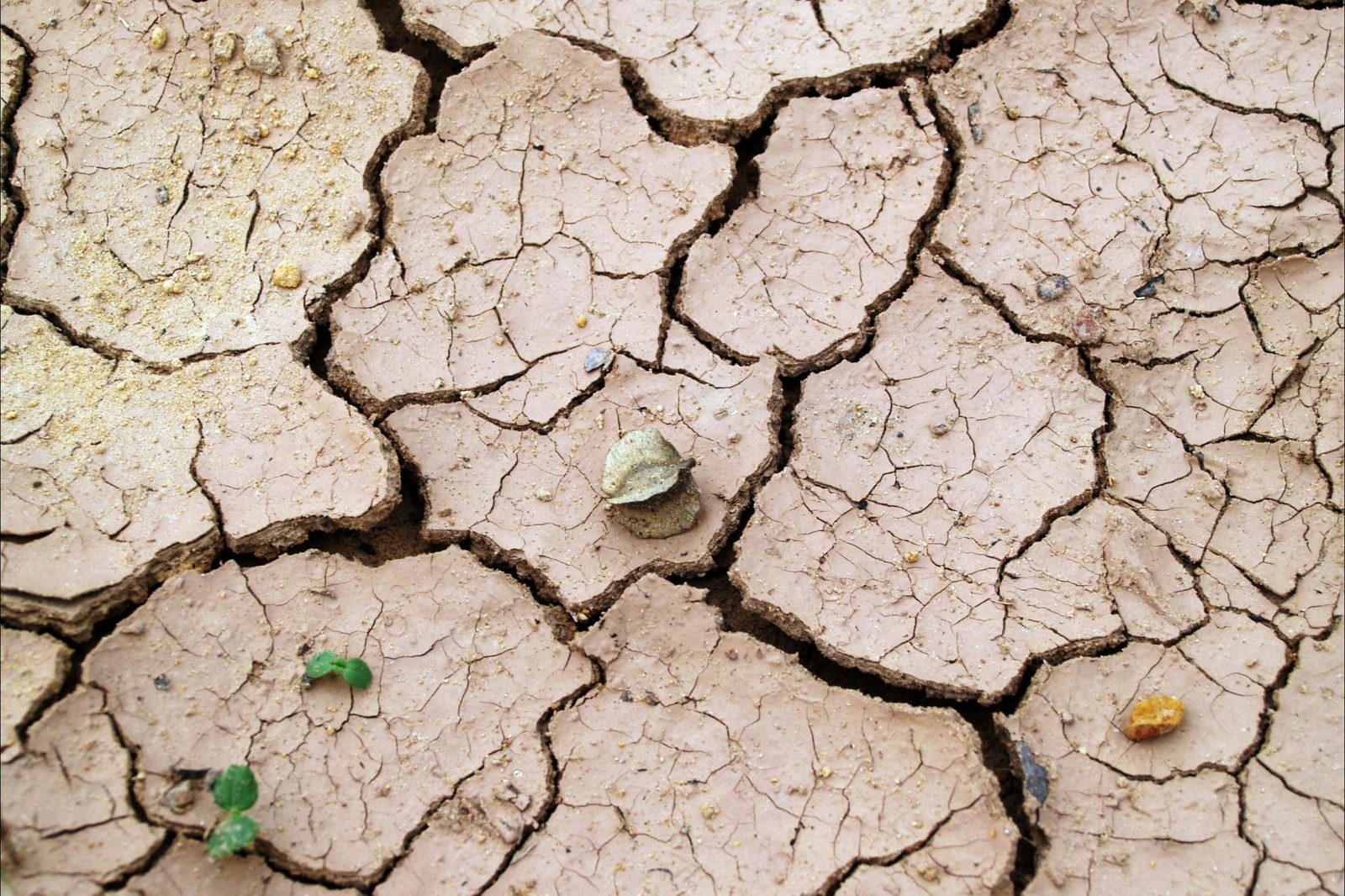
Whether floods or droughts, these environmental disasters are more numerous than we see before our eyes. President Lai mentioned "climate" seven times in his National Day address — but is Taiwan using the right methods? (Image: icon0 com @ pexels)
This autumn has been unusually hot and dry, and the strange path of the autumn typhoon Krathon astonished everyone — so typhoons can "break the rules" like this — causing heavy damage in Kaohsiung and Pingtung. The climate crisis draws ever nearer. Everyone is anxious to do something, yet doesn't want to change or spend money — how can that work?
Money can make net zero come true
I believe money makes the mare go: financial instruments are the ultimate means of reaching net zero in future. As International Financial Reporting Standards (IFRS) gradually align with sustainability and carbon reduction, changes to financial reporting and auditing will affect the behaviour of every industry. Only when "sustainability" and "net zero" are no longer slogans but numbers in the books that can be checked and proven will carbon trading be meaningful; otherwise it is just greenwashing or even fraud, enormously harmful to companies, society, nations and the future.
Internationally, across the Strait and at home, climate issues have been everywhere recently. President Lai Ching-te mentioned "climate" seven times in his National Day address, from domestic and international matters to cooperation with China on epidemic prevention and climate change. On 7 October the Ministry of Environment announced its "carbon fee" policy and rates, sending waves through business. I believe such an earmarked "carbon fee" can't be set very high and is better than nothing, but the real future challenge is international carbon tariffs or trade barriers.
Taiwanese businesses fear nothing except taxes and fines; whatever the amount, they save or dodge whatever they can. And many people want to get rich from this by peddling all kinds of "carbon credits" — most commonly so-called "forest carbon credits", even labelled "green carbon". People often ask me whether they can sell carbon credits from planting trees. My answer is always: "No!"
Want to make money planting trees to cut carbon? It must be REDD+
International carbon trading must comply with REDD+, "Reducing Emissions from Deforestation and Forest Degradation in Developing Countries". It's a long name, but as it suggests, it focuses on protecting forests: in developing countries the priority must be preventing deforestation and degradation, and forestry must be under overall planning, with a national REDD+ policy or action plan. On this point alone, it won't work in Taiwan.
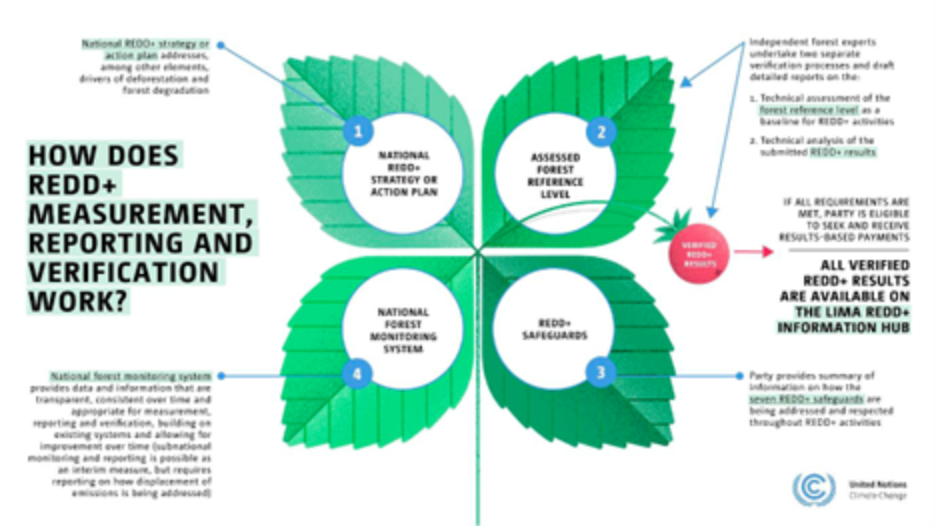
How is REDD+ measured, reported and verified? ① A national REDD+ strategy and action plan; ② assessment of forest reference levels; ③ REDD+ safeguards; ④ a national forest monitoring system. Is Taiwan ready for forest carbon credits? (Image: UN Framework Convention on Climate Change)
The international carbon trading information platform carboncredits.com publishes daily prices on international carbon markets. The lowest are "nature-based offsets", at only about US$0.30 a tonne. Since the UN declared its stance against greenwashing at the end of 2023, many false carbon credits have been exposed, most famously that forestry certified by Verra, then the giant of voluntary emission reduction, did "more harm than good". So the international market for natural carbon sinks (mainly forestry) has collapsed, from US$10 a tonne to US$0.30 today — like junk bonds.
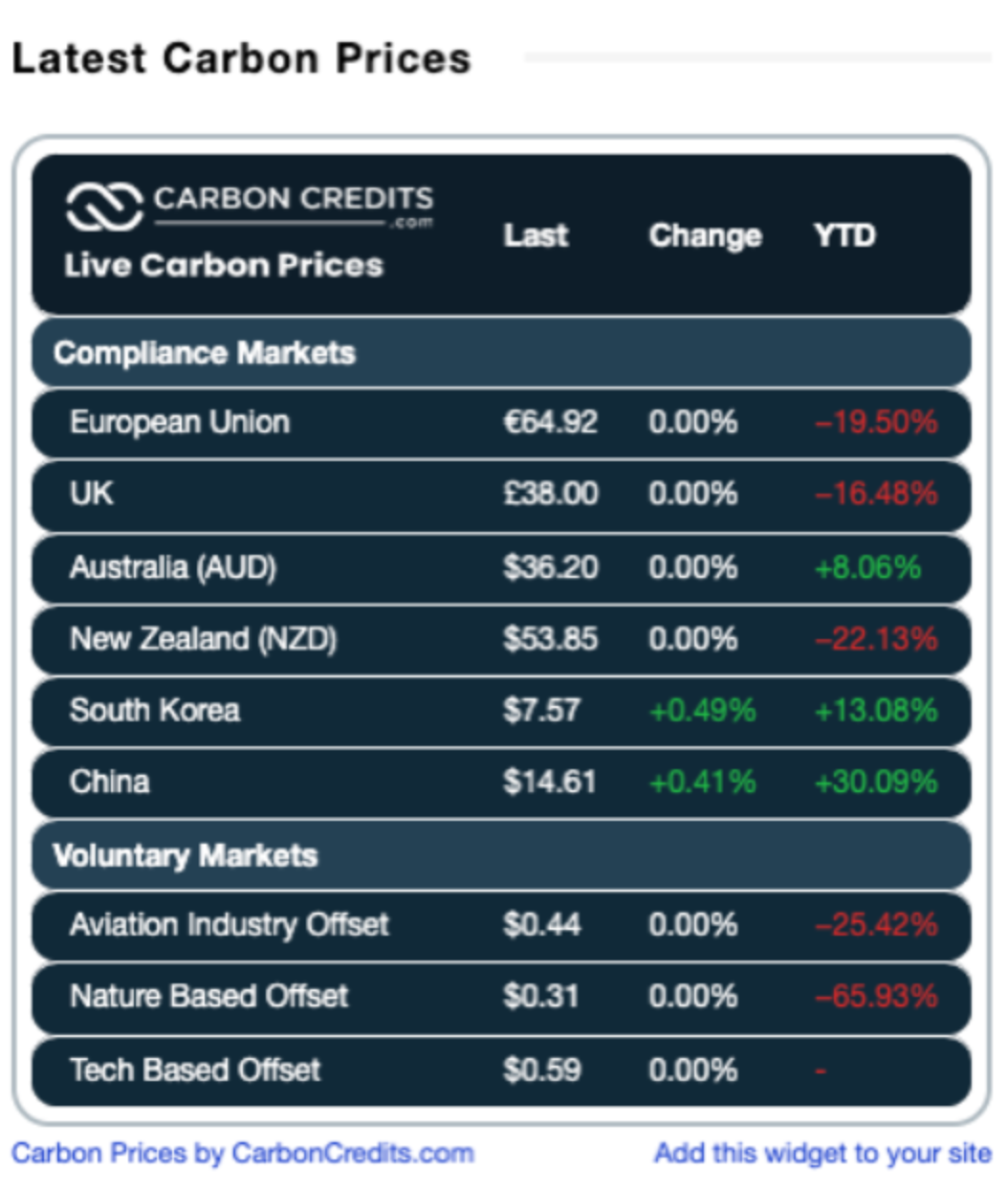
Nature-based offsets at only US$0.30 a tonne have become almost junk bonds — the inevitable outcome of the bankruptcy of REDD+ forest carbon credits. Now is the best time for a big clean-up of the international voluntary carbon market; unless these junk carbon credits are cleared out, truly good credits can't come to the fore. (Image: carboncredits.com, 11 October 2024)
Beware "carbon neutrality" that can't be proven
Yet in Taiwan we often hear companies claim that they or their products have achieved "carbon neutrality". None of this bears close scrutiny, because the EU has legislated that from 2026"carbon neutral" claims will be banned. Such claims are highly misleading to consumers and are found everywhere in the market, usually in the industries most harmful to the environment, such asaviationandfood. Yet in Taiwan they are becoming commonplace.
In early August this year, Brazil's Federal Public Prosecutor's Office issued a "Recommendation to suspend REDD projects in Amazonas State", which drew international attention because it showed that REDD has done much harm: not only has it not helped the worsening climate, it has created more disasters.
The recommendation notes that there are 17 years of practical experience since the reducing emissions from deforestation and forest degradation (REDD) mechanism was launched as the main international policy and tool against deforestation at the governments' annual international climate conferences. This experience shows that REDD, which mainly promised to reduce emissions to the atmosphere from deforestation, faces many problems; deforestation and forest degradation in the world continue to increase; and the increasingly muddled promise of contributing to climate change mitigation by reducing deforestation emissions has so far made no progress.
The prosecutors also stated that there is a lack of documentation and evidence that the communities concerned consider it successful, in the communities' interests — especially those of indigenous women and traditional populations — while preventing deforestation. FUNAI, the official body for Brazil's indigenous peoples, issued an official notice in 2024 advising indigenous peoples not to take part in negotiations, agreements and contracts involving carbon credit trading because of all the problems involved.
A major move by Brazil's Federal Public Prosecutor's Office
The Federal Public Prosecutor's Office and the Pará State Prosecutor's Office also gave their opinion on carbon credit contracts in Notice No. 5, more specifically on violations of consultation under ILO Convention 169 and the territorial rights of indigenous and traditional peoples.
On actual environmental disasters, in the current scenario of the global climate crisis, the Geological Survey of Brazil'sdatashow that floods and droughts in the past decade have been far more widespread than in earlier periods. There were 314 recorded floods between 2014 and 2023, against 182 in the previous decade. Droughts also rose sharply, with 406 recorded between 2014 and 2023 against only 92 in the previous decade.
In the reference above, a decade-by-decade comparison of Brazil's weather-related events (droughts and floods) shows exponential growth: from the first records in 1934/1943 (2 floods), there followed 6 floods (1944/1953), 13 (1954/1963), 21 (1964/1973), 110 (1974/1983), 134 (1984/1993), 105 (1994/2003), 182 (2004/2013) and most recently 314 (2014/2023). Droughts have risen by similar numbers, very sharply in the past decade. On the Amazon, for example, of the ten largest floods in the past hundred years, six occurred in the past decade, and the worst drought in Amazon history occurred in 2023. Other regions of Brazil face similar situations. In Acre, Rio Branco had its two largest floods in 2023 and 2024, while the Madeira River at Porto Velho faced its worst drought in 2023, along with six of the highest low-flow records in the past decade.
This year is the coolest year of the Earth's future
Researchers at Harvard University and the University of Washington have also reachedconclusions: by 2100, the share of the world's population (all of humanity) affected by severe heatwaves will increase by 50% to 100%.
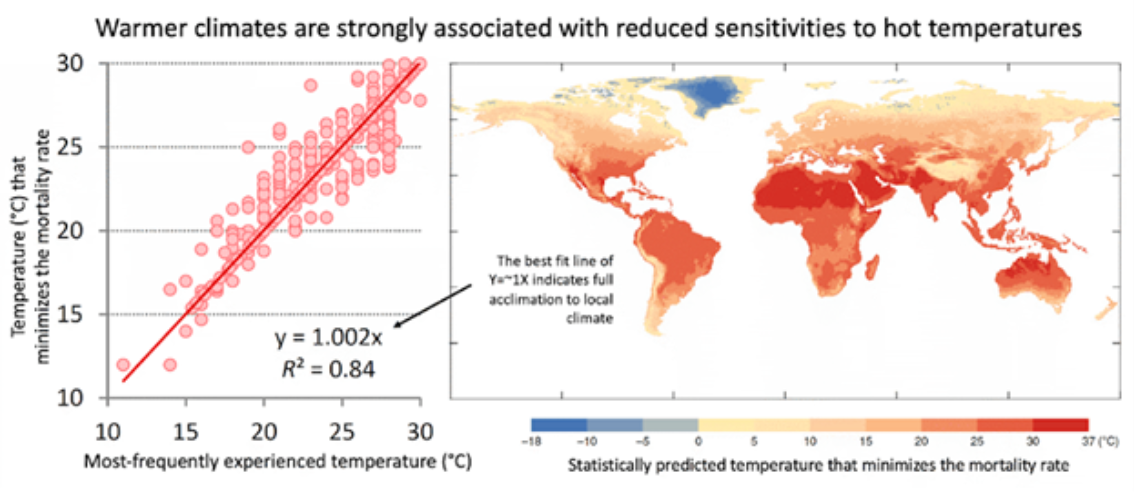
The strong link between climate warming and reduced sensitivity to high temperatures, and statistically, the distribution of mortality in the places worst affected by warming.
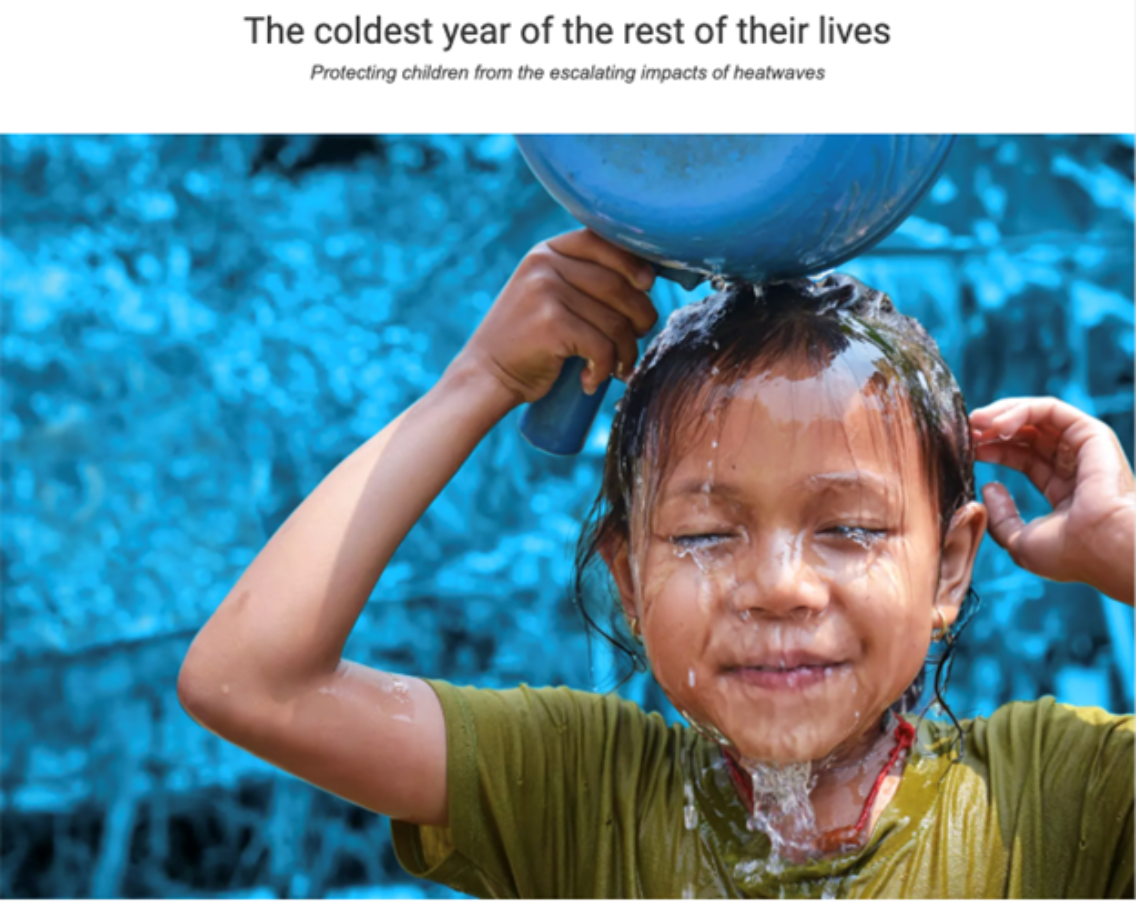
A UNICEF report warns that unless warming is slowed, this year will be the coolest year of children's lives — that is, it will only get hotter. (Image: UNICEF)
In October 2022 UNICEF published a report, "The Coldest Year of the Rest of Their Lives", noting that almost every country in the world is already experiencing more severe and longer-lasting heatwaves, which are expected to become more destructive. It stresses that by 2050 almost every child on Earth — more than 2 billion children — is expected to face more frequent heatwaves, whether or not the world achieves a "low greenhouse gas emissions scenario", with an estimated 1.7°C of warming by 2050.
Brazil's Federal Public Prosecutor's Office cites research byThe Guardian, Germany'sDie ZeitandSourceMaterial,which found that over 90% of Verra-certified REDD carbon credits were worthless. This is based in part on apaperpublished in Science, which found that most REDD projects did not significantly reduce deforestation, and that the benefits of those that did were lower than claimed.
Everyone says this year had the hottest summer on Earth in 100,000 years — and this year may be the coolest of the future, as it will only get hotter. And in Brazil,forest fires in the Amazon basin are still burning, meaning the lungs of the Earth are emitting far more CO2 than they absorb. This week the world's greatest power, the US, was hit by a once-in-a-millennium hurricane in Florida, displacing a million people. I believe this is a wake-up call for profit-driven "REDD forest carbon sinks" and other fraudulent carbon trading. If voluntary emission-reduction projects and carbon trading are to solve the greenhouse effect in future, there must be open, transparent mechanisms and strong oversight, so that genuine emission reductions make their proper contribution, backed by quantifiable sustainable development indicators (SDGs). I hope the "great greenwashing clean-up" can drive out bad money, so good money has a normal environment in which to grow.
Source: CM Media ( https://www.cmmedia.com.tw/home/articles/49879 )


