 努力小農
本文尚無譯文。
Smallholder carbon farming launches in Wuchang
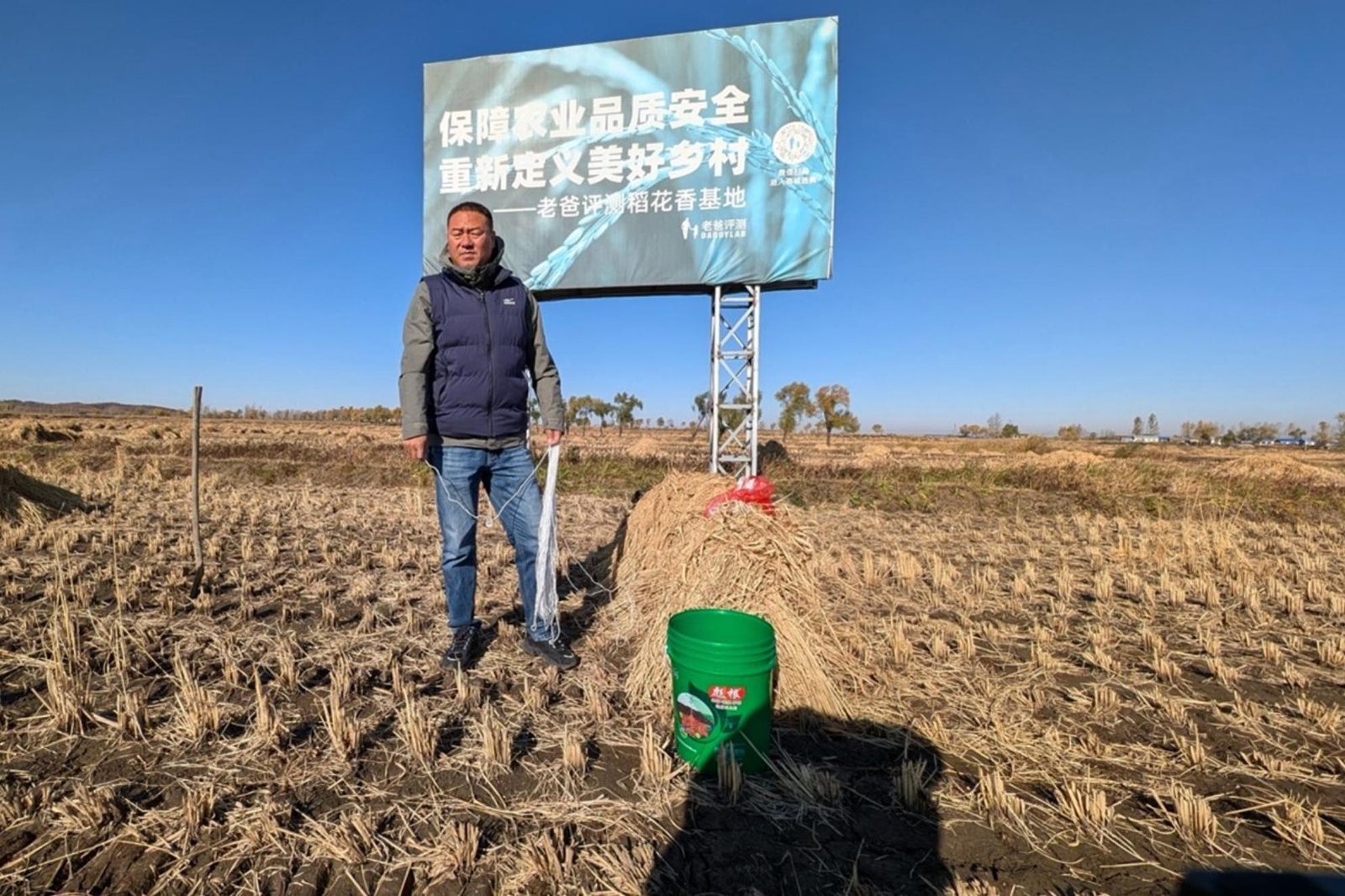
Ten years on, Zou Zhizhong, who took part in food authenticity testing back then, has joined the Wuchang smallholder carbon farming project this year. (Image: provided by Jay Fang)
Home of China's best rice
"Wuchang rice — this is China's best rice." In the first episode of the second season of the hugely popular A Bite of China over ten years ago, "Seasons", this verdict on Wuchang rice in the autumn-harvest segment was the final word, establishing Wuchang rice's status and value.
Ten years ago, in early December, to prepare a food authenticity laboratory, I went to Wuchang in Harbin, Heilongjiang, to collect local rice samples as reference templates for "stable isotope ratio fingerprinting of food geographical origin", to be used in future to verify whether so-called "Wuchang rice" on the market really came from there. This was a food-origin authentication technology the EU had actively developed since 2013. I was responsible for bringing it from the UK to China and combining it with genetic PCR testing to set up a food authenticity laboratory in Shanghai, offering solutions to fraud over origin and seed source.
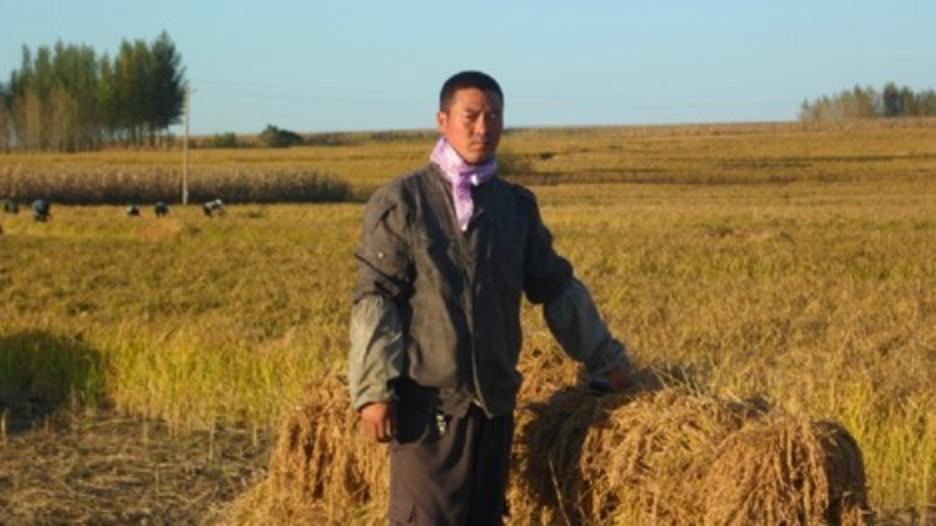
Ten years ago, Wuchang rice smallholder Zou Zhizhong, in his early thirties, displayed his own ID card to guarantee that the rice he sold was his own and 100% Wuchang rice. This caught my attention, and I went to see for myself whether it was genuine and would stand up to scrutiny. (Image: provided by Jay Fang)
I sell it, I'm responsible for it
At the time it was estimated that Wuchang, the place of origin of Wuchang rice in China, produced only a little over a million tonnes, while rice on the market claiming to be "Wuchang rice" could reach over ten million tonnes — a very serious counterfeiting problem. So my first trip to the northeast was straight to Wuchang. Before going, I searched online for Wuchang rice, and among thousands of adverts one from Zou Zhizhong, head of the Haohai Rice Professional Cooperative, caught my eye: he put his ID card in the advert without hiding anything, with the words "I sell it, I'm responsible for it" in large letters. I contacted him to explain that I wanted his help collecting rice samples in Wuchang, and he agreed, somewhat at a loss. Of course I also contacted other rice sellers and arranged times to sample in Wuchang's various townships, with locals accompanying me.
As soon as I got off the plane in Harbin, I heard the air pollution index PSI was over 1,000, because across the vast land people were busily burning straw, collectively creating beyond-world-class pollution. In Wuchang itself the pollution was even worse. I hurriedly collected more than 250 samples across Wuchang by geographical area, hydrology, soil characteristics and cultivation characteristics, then left early. It was a truly frightening experience: although I don't have asthma and kept the hotel windows shut, I struggled to breathe at night. So I collected the samples as fast as I could and fled with my tail between my legs. The planned five-day sampling trip was done in three.
A year later I went back to Wuchang to sample, and made several more trips in between to learn about local rice cultivation and the requirements for geographical-indication products. So I gradually got to know Zou Zhizhong, and used his Zhiguang Township as the site for in-depth analysis, further building stable isotope fingerprint profiles for organic and conventional cultivation.
After a series of sampling, analysis and comparison, we successfully distinguished rice produced in Taizhou, Jiangsu, from Wuchang rice in the fingerprint profiles, with high discriminating power.
Those who love the virtue of food authenticity
Unfortunately, because faking origin is almost an open secret in the market, few businesses really want to "seek the truth", so this very costly testing experiment came to nothing soon after my contract ended and I left the lab. This fits the human nature described in "I have never seen anyone who loves virtue as much as he loves beauty": anything that goes against human nature has a hard time succeeding in the market.
But my friendship with Zou Zhizhong has endured. Unfortunately China restricts rice exports and Taiwan's customs limit travellers to 1 kg of rice each, so there's no way to bring in Wuchang rice for everyone to taste.
After smallholder carbon farming got under way last year, I discussed its feasibility with Zou Zhizhong. As it happened, last September the northeast had once-in-a-century torrential rain and floods; half of Wuchang was flooded, with low-lying paddies hit first, so Wuchang suffered heavy losses last year. Farmers in the northeast and Wuchang are victims of climate change.
This April I went for a site survey, and we agreed that I would return to Wuchang in October to launch a smallholder carbon farming project, bringing the soil organic carbon methodology to the black soil of the northeast.
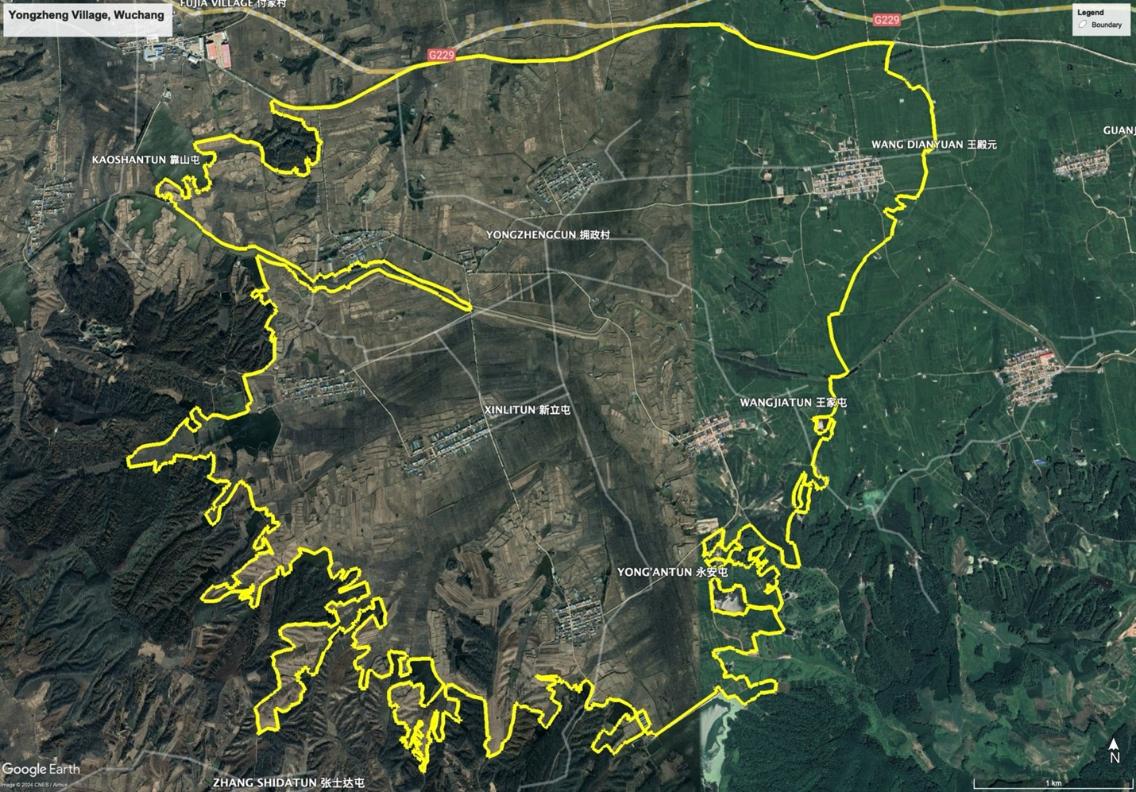
Yongzheng Village in Zhiguang Township, Wuchang City, covers about 1,600 hectares, with about 1,200 hectares of cultivated land, mainly rice supplemented by flint corn. (Image: provided by Jay Fang)
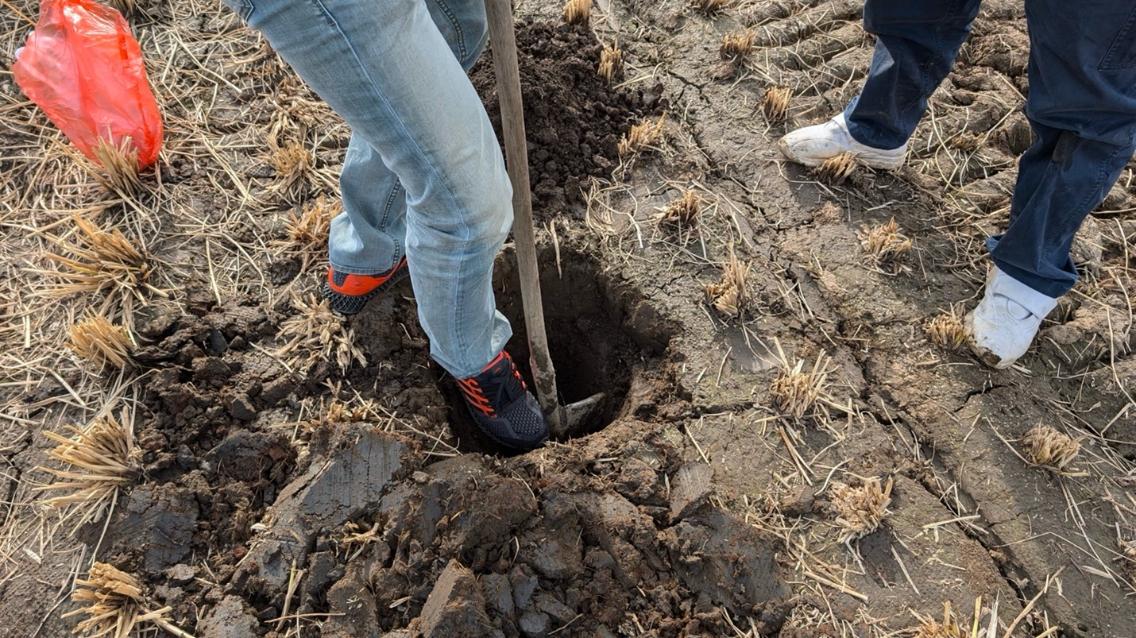
Sampling on the black soil of the northeast: rich in organic matter, the soil is loose — we'll see what the sampling results show. (Image: provided by Jay Fang)
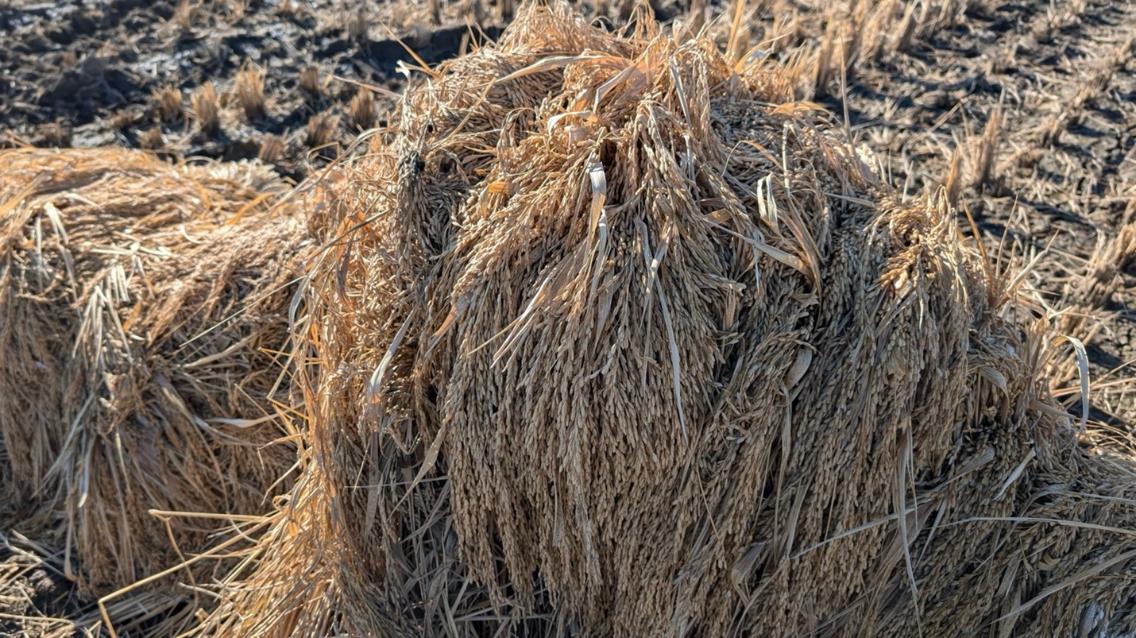
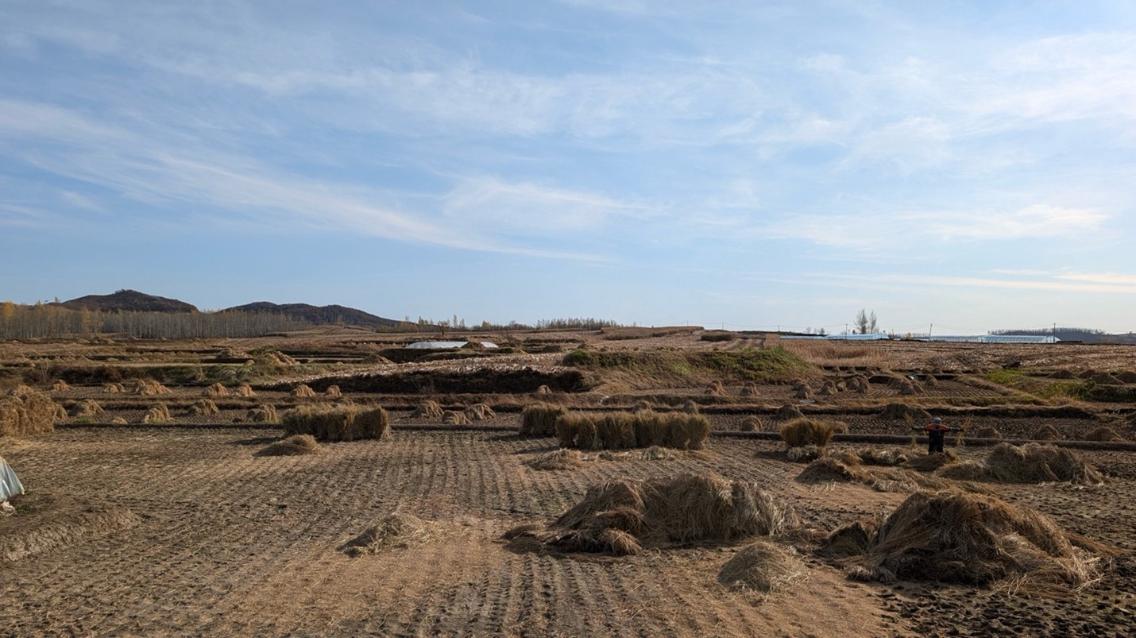
Some farmers in the northeast still keep up the tradition of hand transplanting and harvesting. Hand-harvested rice is dried on straw stacks, which locals call "rice stacks" — a distinctive sight in northeastern paddies after harvest. (Image: provided by Jay Fang)
Carrying out smallholder carbon farming in Wuchang is relatively simple. Take Xiaowangjiatun, where Zou Zhizhong lives: apart from a small area of hills, it's all plain. Low-lying land holds water easily and grows rice; higher land where water is hard to get grows flint corn for feed. It's clear at a glance on Google Earth. This one village covers over 1,600 hectares, with over 1,300 hectares of cultivated land.
Smallholders helping themselves amid climate disaster
On 16 October we held a stakeholder consultation meeting in the meeting room of the residents' committee of Yongzheng Village, Zhiguang Township, Wuchang, and we alsostreamed it live in full on the MiHuMiSang Facebook page. As it happened, Tzu Chi volunteers had gone to help with relief during last year's Wuchang floods, and four local Tzu Chi volunteers attended the meeting that day.
In a month, if all comments have been answered, the project developer can formally launch the project. It will be the first soil organic carbon project in mainland China.
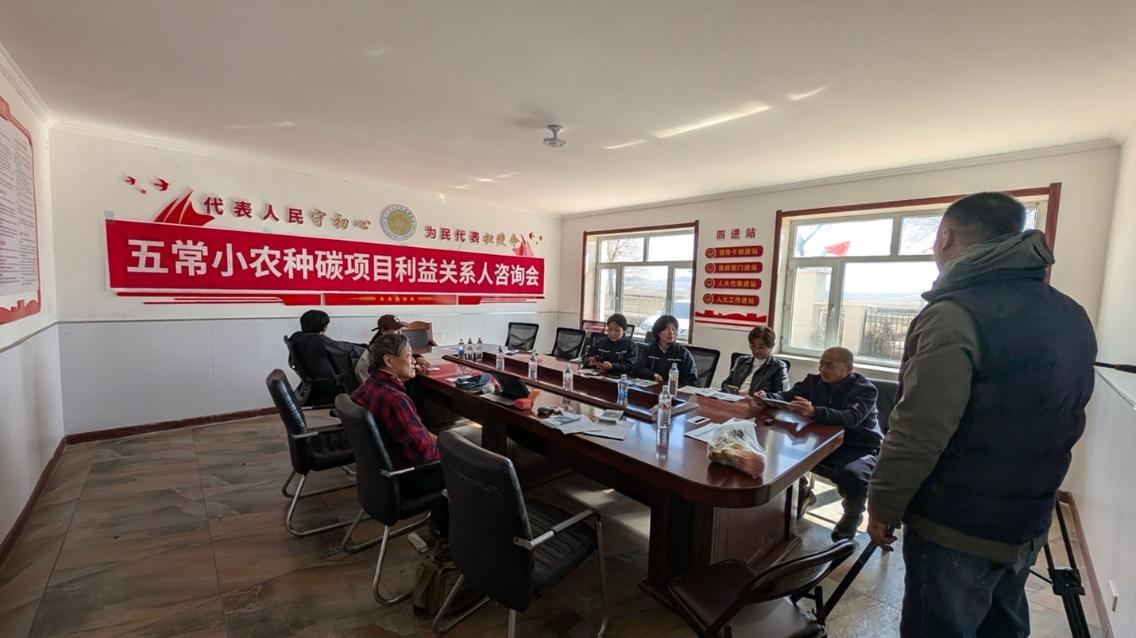
The Wuchang smallholder carbon farming project can formally launch a month after the stakeholder consultation meeting. (Image: provided by Jay Fang)
We hope smallholder carbon farming's international emission-reduction certification and traceability system can add some sustainable elements for Wuchang's smallholders: on one hand it may improve their image and sales; on the other it is a path to self-help for victims of climate disaster.
Source: CM Media ( https://www.cmmedia.com.tw/home/articles/50201 )


