 努力小農
本文尚無譯文。
Witnesses to climate change: is the Noto Peninsula's satoyama a model of sustainability or an epitaph? (Part 2)
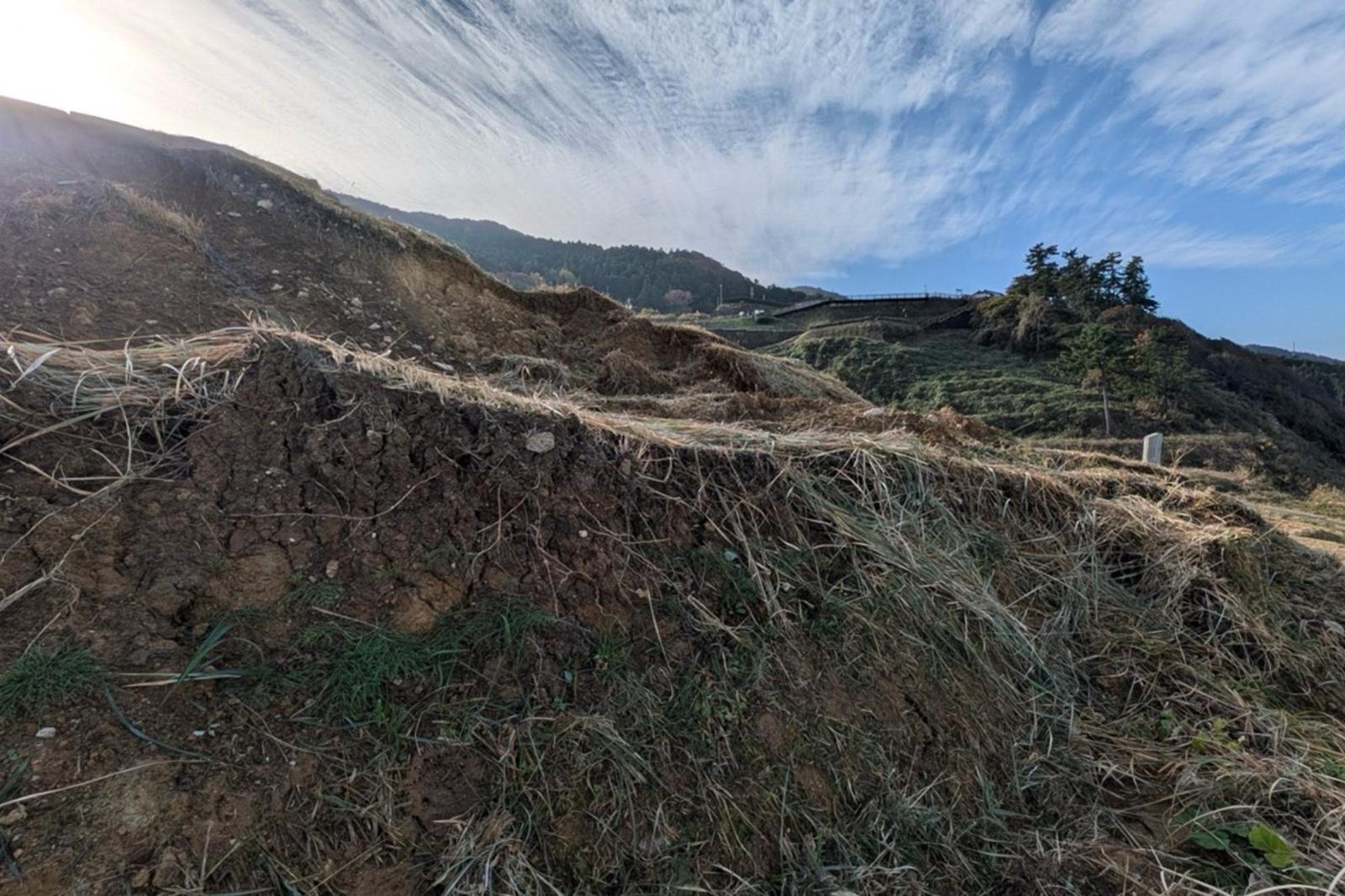
Walking through the 400-year-old Shiroyone Senmaida, the iconic image of satoyama terraced fields: after the earthquake and torrential rain, November temperatures were still above 20°C, much warmer than in the past, yet the scenery looked especially desolate. (Photos: Hsieh Ching-kuei, Jay Fang)
Mr Katsuyoshi Shuta, in his seventies, comes from a family that has lived in the Tome area for over a century. The narrow terraces carved along the river in the local valley are all over a hundred years old. He had never seen or heard of such heavy rain or earthquakes in Tome. Three days of torrential rain from 20 September destroyed a third of the local farmland — meaning it can't be restored in the foreseeable future.
The area is in the mountains. Mr Shuta drove us to see Tashiro and Rengebo, the two worst-hit areas. Although some roads had reopened, others were still cut and couldn't be restored, so we could only pass through hurriedly. A month and a half after the disaster, the scenes of ruin looked like the aftermath of a great war; the broken walls were all evidence of the earthquake and the downpours.
Helpless witnesses to climate change
Under the warm autumn sun, Mr Shuta pointed out damaged house after damaged house and told us who had lived there. More than half his neighbours have moved away after the January earthquake and the September rains; even the temple no longer has a priest.
"Under normal circumstances, with such huge natural risks and an ageing local population that can't carry on, no project could go ahead. But this is the birthplace of the Satoyama Initiative, and we've arrived in time for a once-in-centuries disaster. Perhaps this is precisely a challenge to the resilience of satoyama — we can't just walk away," I said to Hsieh Ching-kuei, who supports the project, after seeing the paddies signed up in Noto.
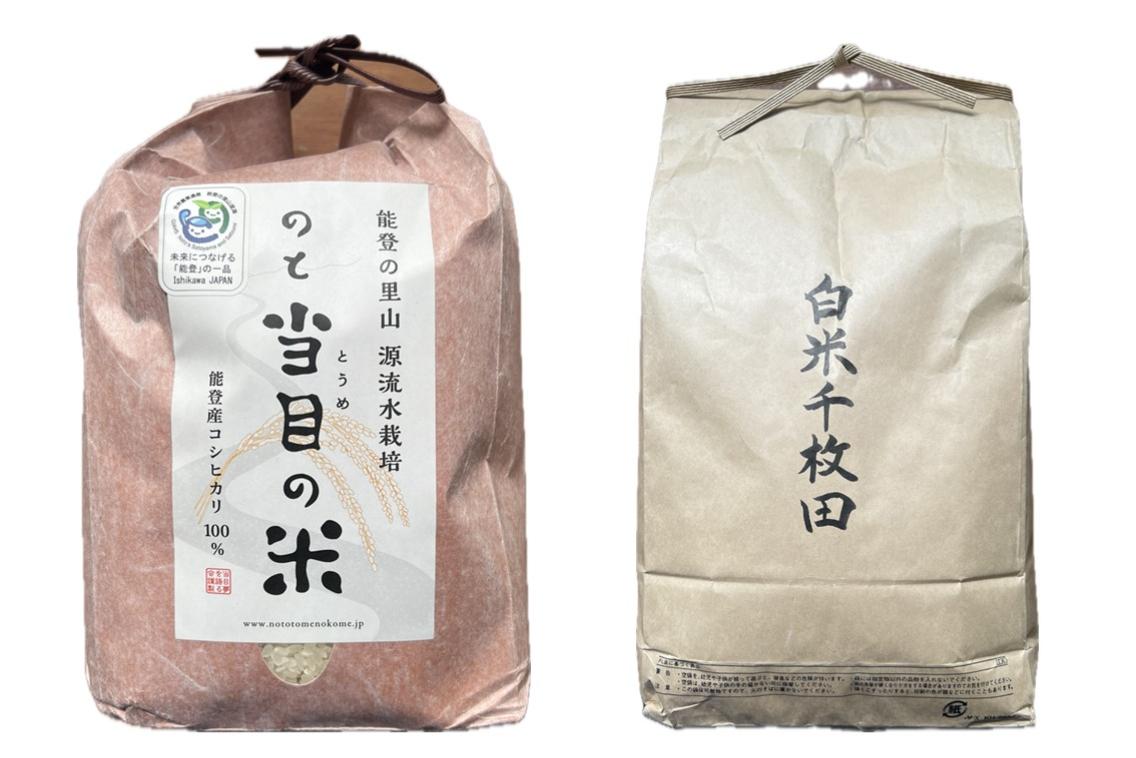
After signing the contracts, the Noto smallholders gave us rice from Tome and Senmaida. We don't know how many more harvests these paddies will yield. (Image: provided by Jay Fang)
We can see the desperate plight of Noto's agriculture. Natural disasters destroying farmland and scaring away tourists are external factors that can still be overcome; hardest is the structure of the community and population. Today everyone farming is over 60, carrying on their parents' and grandparents' work. Many of their children and grandchildren live elsewhere, and those who stay don't farm. Mr Shuta himself only started farming at home when his father fell ill and could no longer work; whether his children will take over is a big question mark.
Visiting smallholders in Taiwan, most of the 50- to 60-year-old smallholders I meet are in Mr Shuta's situation, having taken over the "family business", but they all worry that no one will carry it on. Social structures have changed: ageing, low birth rates and globalisation; imported produce is cheaper than domestic; buying ingredients and cooking at home is more expensive than fast-food outlets, convenience stores and chain restaurants. This has changed our collective food culture, utterly defeating traditional agriculture from the consumption side.
In an industrial and commercial society, who cares about the "Satoyama Initiative" or "sustainable soil management"? Which company or chain cares about smallholders' livelihoods and supplies ingredients and foods produced by smallholders? Listed companies make much of ESG sustainability reports, but how many care about SDG 12 — responsible consumption of domestic rice? Instead catering is put out to tender, and at the same quality the lowest bidder wins.
"Of course we have to help farmers with production, but even more we need to open up channels for produce from the consumption side, so that sustainable agricultural products win consumers' favour in the market over industrialised, unsustainable farmed and raised products and are bought over the long term. Only then can the value of the ecosystem services of the Satoyama Initiative's sustainable agriculture bring farmers economic benefits and ensure young people are willing to farm."This is my footnote after walking through the agricultural disaster zones of Taiwan and Japan in early and mid-November. In a market economy, production must be driven by consumption. My abilities are limited, but I must do something.
The terraces of Shiroyone Senmaida and Tome are destined never to be farmed on a large scale like plains, and the same goes for Taiwan's smallholders. Becoming "satoyama" is dictated by the environment: on the Pacific Ring of Fire, earthquakes, tsunamis and typhoons shaped Taiwan, Japan, the Philippines and even the Andes of South America. For thousands of years farmers have had to work hard on unstable land to feed themselves and coexist with nature.
With the rise of industrial civilisation and massive extraction of fossil fuels, farm and industrial products could be produced rapidly, in bulk and cheaply. Humanity chose an economic model of draining the pond to catch the fish, greedily and endlessly consuming cheap products and lifestyles that destroy the environment. This brought temporary convenience and an appearance (illusion) of prosperity, while destroying the original satoyama way of producing and living and wrecking the ecological environment on a large scale.
Today even the home of the Satoyama Initiative faces the threat of extinction. In another ten years the sight of satoyama terraces will be gone. This isn't momentary romantic nostalgia: it accelerates the deterioration of the Earth's environment, and humanity must rely on cheap produce grown on a vast scale far away. When the climate crisis sweeps the world, today's industrial civilisation will surely vanish like the satoyama terraces.
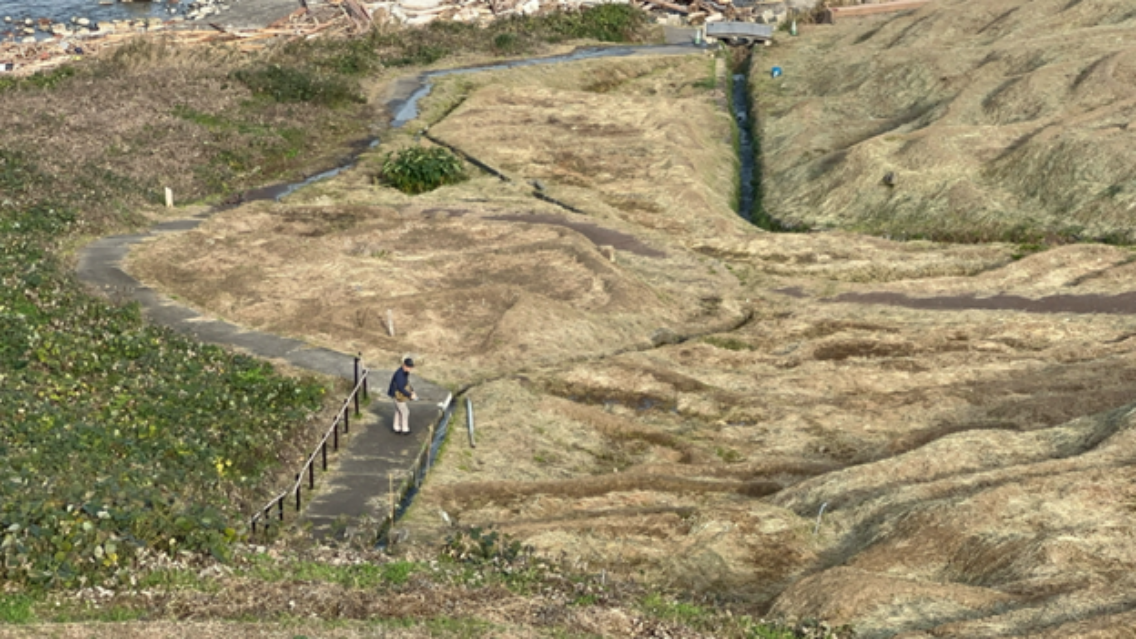
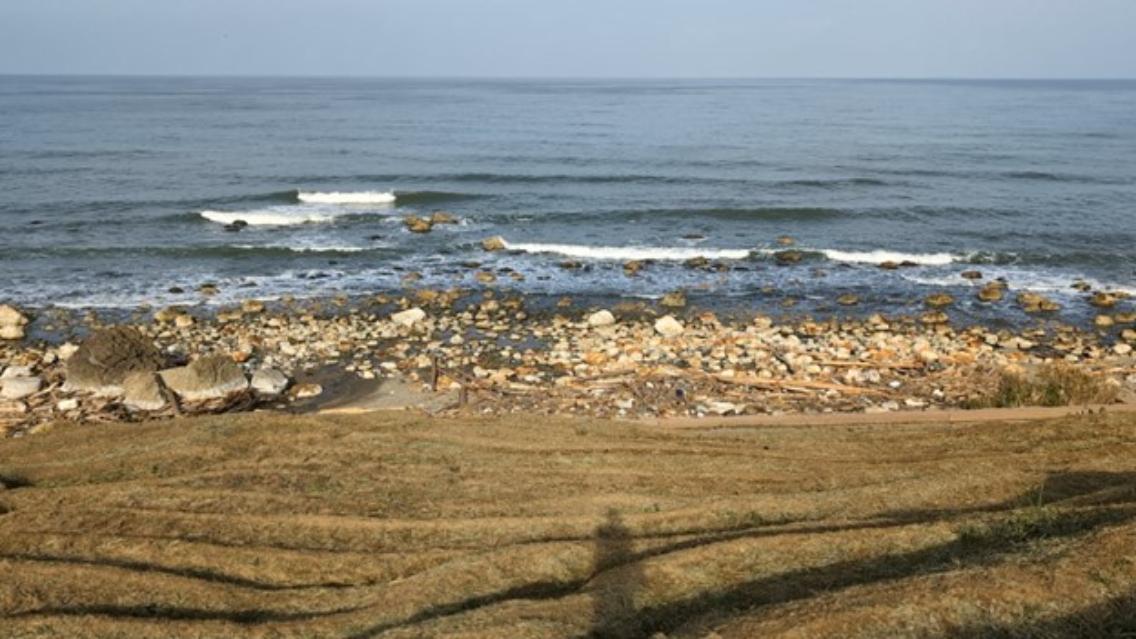
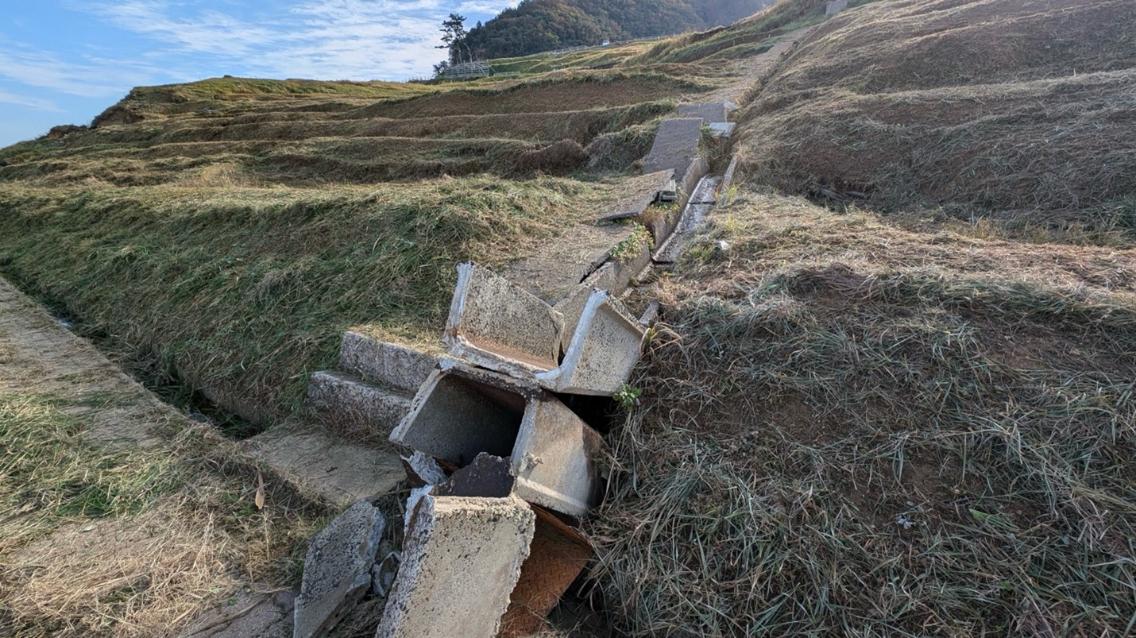
Walking through the 400-year-old Shiroyone Senmaida, the iconic image of satoyama terraced fields: after the earthquake and torrential rain, November temperatures were still above 20°C, much warmer than in the past, yet the scenery looked especially desolate. (Photos: Hsieh Ching-kuei, Jay Fang)
A diabetic Earth
I often use diabetes to describe the climate problem; both involve glucose. Through photosynthesis CO2 is turned into glucose. Glucose is good: animals and plants alike depend on it as the energy of life, and it can be converted into starch, fat and protein. People eat food and obtain glucose through digestion; metabolised glucose enters the blood and is carried around the body, supplying energy to every cell. But if there is too much glucose to be used up, it becomes diabetes. Diabetics usually feel nothing, but with long-term diabetes, nerve endings and small blood vessels soaked in high glucose gradually die, leading to kidney failure, then uraemia, multiple organ failure and death. So diabetes is usually not the direct cause of death; other organs' disease and failure are.
In severe diabetes the peripheral blood vessels and nerves die, so first there is numbness; later the eyes go blind and tissue in the hands and feet dies, requiring amputation — otherwise infection of the dead tissue will kill the patient.
The climate crisis is the same. The illusion of convenience and prosperity blinds those in power. Smallholders are at the nerve endings and capillaries of society and the environment, on the front line of climate disaster. They will die off first, then wither, gradually disappearing from the edges of cities like amputated limbs, the damage moving gradually towards the city centre.
Smallholder carbon farming: watch your mouth, get moving
"Watch your mouth, get moving" is the one sure way to treat diabetes or stop it worsening: to keep metabolism in balance while healthy, you must control your diet and exercise more to keep blood sugar stable.
The problem of a warming, intensifying climate is the same. With too much CO2 and other greenhouse gases, we must start from the root on two fronts: reducing fossil fuels (watching our mouths) and increasing natural carbon sinks — forests, agriculture and oceans absorbing CO2 (getting moving). But who can do it? No one wants to give up the former, and after Trump takes office there will be even more gorging; the latter needs a large-scale adjustment of the economic model, passing the cost of natural carbon sinks on to emitters through the market economy. How could vested interests who "can't be bothered to move" step out of their comfort zone?
COP29, COP30… carrying on like this is like a group of very fat people already suffering from diabetes gathering to feast and drink at a meeting, talking grandly about dieting and exercising more — all while lying flat, speaking without back pain. Their limbs have already begun to rot and ooze pus and their eyes have long been blind, so they won't shed a tear until they see the coffin. As for why they come to the meeting? Because they heard there's lots of money and lots of good food.
Smallholder carbon farming uses the FAO's sustainable soil management to increase organic matter in the soil, "in theory" solving both the food and climate crises facing humanity at once. This is a "necessary revolution".
Bringing smallholder carbon farming to the "home of satoyama" may be a last redemption. If smallholder carbon farming succeeds, a new chapter of the Satoyama Initiative will open. Although the risk of project development failing is great, what is that risk compared with the global climate crisis? We hope smallholder carbon farming, through the worldwide fame of the Satoyama Initiative, can show that smallholders have a chance, through sustainable soil management, to increase long-term storage of soil organic carbon and reverse the climate change crisis. At the very least, 2024's great earthquake and abnormal typhoons and downpours have made me resolve to give it everything.
Source: CM Media ( https://www.cmmedia.com.tw/home/articles/50596 )


