 努力小農
本文尚無譯文。
World Soil Day 2024: 50th anniversary of The One-Straw Revolution
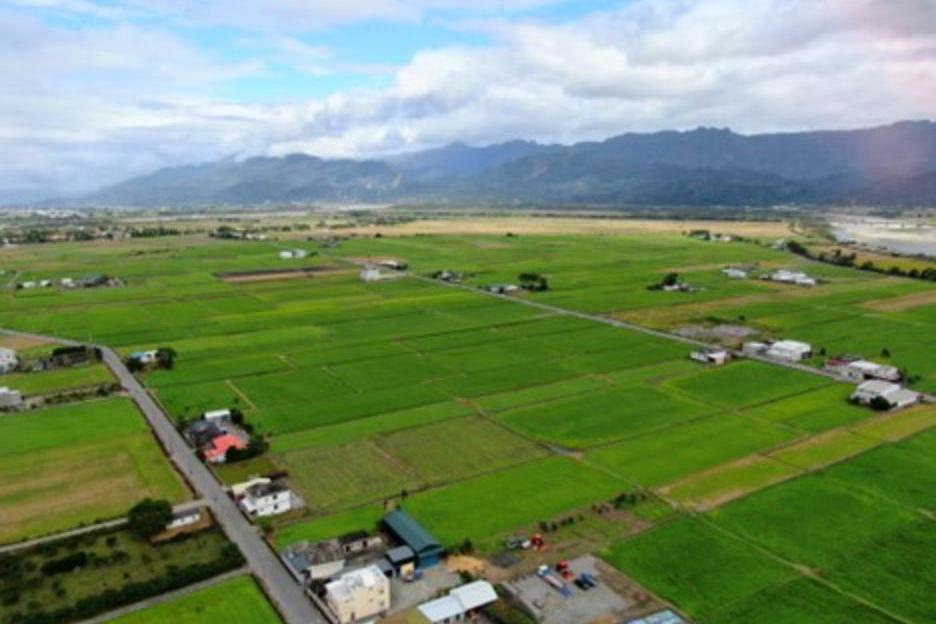
Vast farmland is in fact an "unnatural product of nature". Smallholders struggle with heaven, earth and people, and losing is the norm. (Photo: Jay Fang)
Masanobu Fukuoka in Taiwan
Masanobu Fukuoka published The One-Straw Revolution in 1975, 50 years ago. At 8 p.m. on 5 December, World Soil Day, we have invited Professor Wang Jun-hsiu of National Tsing Hua University, translator of the traditional Chinese edition, to lead a reading. To translate the book, he made a special trip to Japan to retrace Fukuoka's footsteps, striving for a faithful, fluent and elegant translation. We have also invited smallholders who practise natural farming to talk about their own experience.
In four years of visiting smallholders I've seen a dazzling variety of farming methods, and heard many smallholders mention Masanobu Fukuoka, the father of Japanese natural farming. The Mitian Sharing Cooperative in Hualien, for example, follows Fukuoka: more than ten people who weren't originally farmers set out on a "journey of natural farming", using no chemical fertilisers or pesticides. Ten years on, members'Hsu Cheng-terice yields reach 12–14 ge per year (1,000–1,400 catties of wet paddy), already exceeding conventional (fertiliser- and pesticide-using) neighbouring fields
Mitian Sharing's founding philosophy: "Nature has its own marvellous cycles. Before humanity widely adopted chemical and industrial methods of agricultural production, our excrement was called 'big fertiliser' — the most natural fertiliser, a natural resource that could return to the land and nourish it! But because modern people eat so unhealthily, with too many heavy metals, hormones and other potentially harmful elements in their food, the agricultural authorities have ruled that human excrement may not be used as fertiliser!"
"Although we'd love to learn Fukuoka's four principles of natural farming — no ploughing, no fertiliser, no pesticides, no weeding — no ploughing and no weeding are still very hard to achieve," Hsu Cheng-te told me.
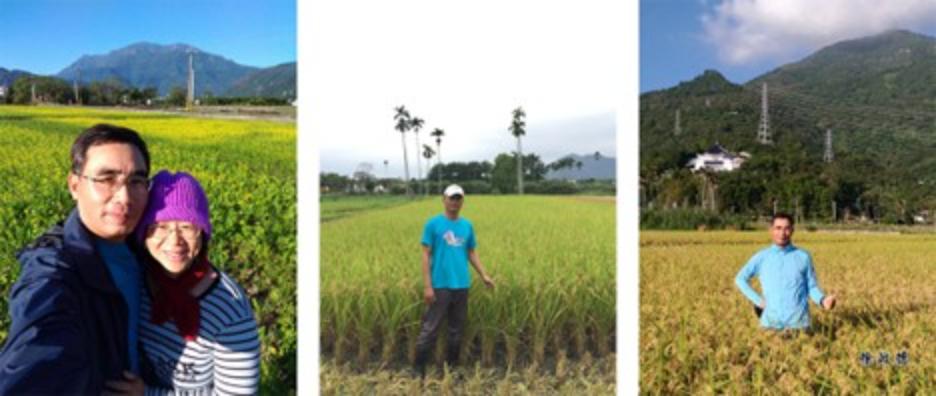
Hsu Cheng-te returned home to farm as a happy farmer, practising natural farming. In ten years his yields have overtaken neighbouring fields using chemical fertilisers and pesticides. He believes that if you work hard and conscientiously, things will change. (Image: Mitian Sharing Cooperative website)
Humanity's failure to understand nature is the obstacle to natural farming
Because I hadn't read Fukuoka's book, I couldn't respond at the time. Only recently, when I got hold of The One-Straw Revolution and read it carefully, did I find that its publisher is Wu Tung-chieh, CEO of the Green Front, and its translator Wang Jun-hsiu — both friends of more than 30 years. It also dawned on me why, in 50 years in Japan, natural farming's "way has not prevailed, nor has it sailed away on a raft". As Fukuoka points out in the book, natural farming hasn't spread (p. 58) because "humans do not understand nature" (p. 61). (When I visited satoyama smallholders on Japan's Noto Peninsula and asked whether they knew Fukuoka and his natural farming, most said no, or that they'd heard of him but didn't know what it was.)
Nature is hard for ordinary mortals to understand, because most people think in points, at most in lines, seeing two or more points. The sources of crop pests and diseases, for instance, are rarely single: the relationships between plants (crops, weeds), insects (pests, beneficial insects), microbes (pathogens, probiotics), weather (bad droughts and floods, favourable conditions), farming methods and inputs — these physical, chemical and biological conditions, plus time, form an analysis with infinite elements. Even a supercomputer might not produce a result; it's an infinite system of simultaneous equations that even today's AI can't solve, more complex than E=mc².
Besides past and present, you have to add the dimension of the future. Who can predict the weather for the next year or two? Who knew that after several years of fewer typhoons, two would strike in October this year and four would hover around Taiwan in November, cutting Hualien–Taitung smallholders' rice by 30–50%? These are completely unpredictable. Had they known, farmers would have sown half a month earlier and cut losses by at least 20–30%, or protected cultivation could have lost fewer structures.
National weather agencies have endless resources — satellites in the sky, monitoring stations on the ground — yet still can't predict the weather the day after tomorrow. How are smallholders to "understand nature"? Smallholders are like Mao Zedong: "struggling with heaven, struggling with earth, struggling with people — endless joy". But as I see it, many smallholders, white-haired like me, besides struggling with heaven, earth and people, must also struggle with insects and pathogens. They're tired of struggling, and their children don't want to carry on the fight.
Ecological wisdom with a "view of emptiness"
This year's theme is "Caring for soils: measure, monitor, manage", highlighting the importance of accurate soil data and information for understanding soil properties and supporting sound decisions on sustainable soil use.
We emphasise [MiHuMiSang · Ecological Wisdom]. Masanobu Fukuoka's beliefs and practice of "natural farming" fit perfectly with the Taoist philosophy of following nature in "ecological wisdom". The One-Straw Revolution realises the "view of emptiness"; only by grasping it can one see through to the essence of all things and truly enter the fundamental reality that is neither born nor destroyed, neither defiled nor pure, neither increasing nor decreasing.
This fits this year's Soil Day theme, "Caring for soils: measure, monitor, manage", and the MRV (monitoring, reporting, verification) principle of emission reduction; The One-Straw Revolution guides smallholders at a deeper level on how to put it into practice.
Alongside The One-Straw Revolution, this year we have also launched the FAO's Global Soil Doctors Programme (GSDP) to help everyone understand their own soil. Whatever the farming method, you must understand the physical, chemical and biological properties of your soil to grow good crops.
World Soil Day began after the 2015 UNFCCC climate conference and is now ten years old. Its main purpose is to show that soil carbon sequestration can address both the food security and climate security crises at once, while also serving the 17 UN Sustainable Development Goals and most of their targets and indicators.
This year Tianzu Company in Hualien and Tzu Chi University have set up a soil organic carbon testing centre through industry–academia cooperation, serving smallholders who want to take part in soil carbon sinks — an important gift for this year's Soil Day.
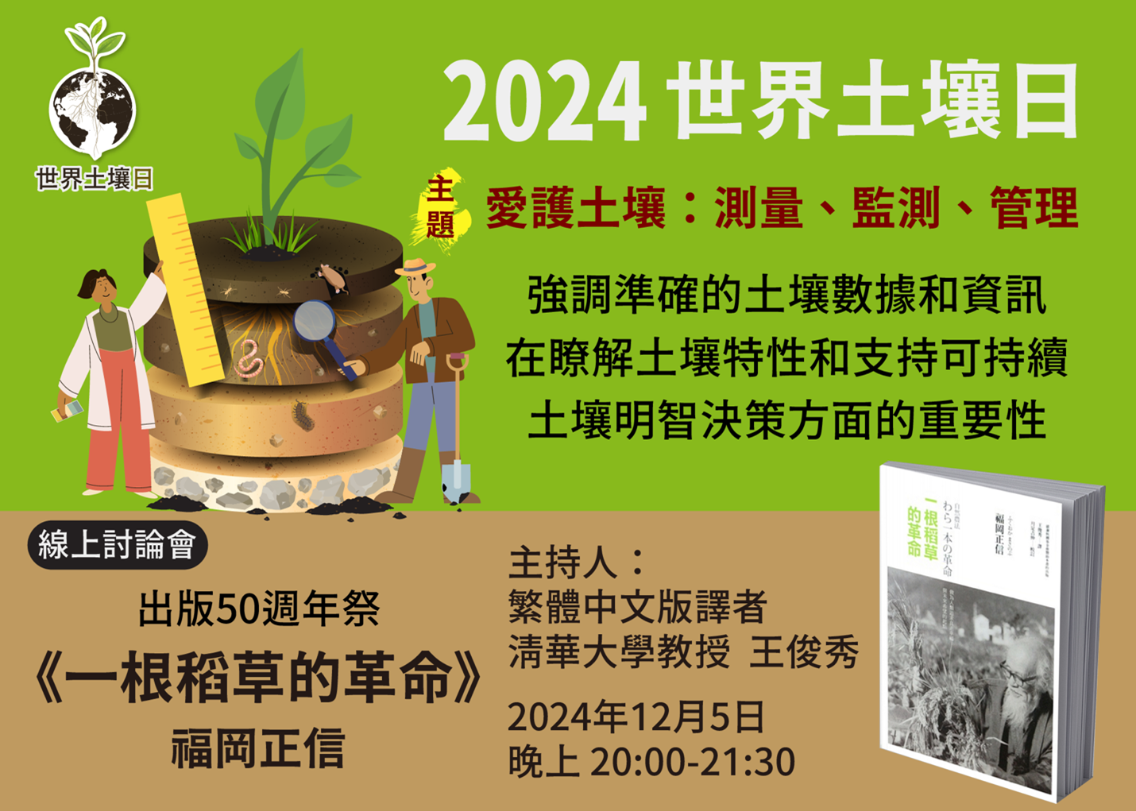
We cordially invite you to our upcoming online discussion on Masanobu Fukuoka's classic The One-Straw Revolution, to be held on Zoom Meeting on 5 December, World Soil Day.
Programme:
Book: Masanobu Fukuoka, The One-Straw Revolution
Format: reading the book together and sharing practical experience
Host: Professor Wang Jun-hsiu of National Tsing Hua University, translator of the traditional Chinese edition
Professor Wang made two field trips to Japan to translate the book and will share his valuable experience online
Time: 5 December 2024, 8:00–9:30 p.m. Platform: Zoom Meeting
Please read The One-Straw Revolution beforehand and prepare your questions and experiences to share. We look forward to your participation in exploring the book's profound meaning and its application in practice, and invite participants to share their practical experience.
Places in the online meeting are limited. If you're interested, be sure to register and leave a correct email address so we can send you the meeting link.
Registration link:https://forms.gle/8H2HZqQnUsmqNyy96
If you're not sure you can attend, please don't register, as we will also stream live on Facebook at facebook.com/mihumisang.org/; those who can't attend can watch it later.
Five copies of The One-Straw Revolution will be given to online participants.
Source: CM Media ( https://www.cmmedia.com.tw/home/articles/50912 )


