努力小農
本文尚無譯文。
Living by subtraction can save us too — on reading The One-Straw Revolution
People and nature must find a way to live together. Even if we emigrate to Mars, "body and land are not two". (Photo: Jay Fang)
I recently saw news of the deaths of romance novelist Chiung Yao and pop composer Liu Chia-chang, so familiar to people born in the 1950s and 60s. It marks the farewell of a generation and symbolises the official arrival of Taiwan's elderly generation. As a baby boomer born in the 1960s, I too have officially entered the legal stage of old age.
Cultivating oneself, ordering the family, governing the state and pacifying the world through supplements
Looking back on life, we seem to have spent it all in the traditional "culture of supplements": supplements from the womb, then food tonics, medicinal tonics, vitamins, iron pills (to build blood)… supplementing from childhood to adulthood, with too many kinds to list. Throughout life there are endless subsidies, allowances and compensation, and in old age even more supplements — as the saying goes, "labour insurance plus health insurance: all you can eat for 399". The question is, are Taiwanese healthier? Judging by how fast Taiwan's population is shrinking, Taiwanese physical and mental health should rank near the bottom of the world.
In study and work, the cramming (補習, also "supplementing") never ends: preschool supplements, extracurricular talent classes, after-school tutoring and cram schools once at school, and cramming even for job exams (flight attendants, entertainers) and civil-service exams — all to "win at the starting line". But how many scholars educated entirely in Taiwan without going abroad make it into international academic halls?
In fact all this supplementing is an attempt to satisfy "a heart that is never satisfied", always thinking a bit more will make things a bit better. Some things do get better the more you do them, but with others, the more you do, the more mistakes you make; do less and you err less; do nothing and you're right.
The Taoist idea of being through non-being, the Buddhist "form is emptiness", and the Confucian (and Laozi's) warning that the five sounds and five colours confuse the ears and eyes all urge people to face life and the affairs around them with a calm, clear mind. Only by removing noise and dazzling distractions can you see the dangers ahead and the direction to go. It's like driving on Taiwan's roads: with all the signboards, flashing LEDs, broadcasts, rubbish trucks playing "A Maiden's Prayer", and cats and dogs darting about, it's hard even to see the traffic signs and lights clearly. Finding a road sign and following it to your destination is even more impossible. There are also traffic notices crammed with dozens of characters; even if I'd taken a speed-reading course I couldn't read them in time, and on the motorway it's impossible — by the time you've read it you may have crashed or been hit, ending up black and blue.
Collectively lost
Taiwan's "pedestrian hell" isn't a problem of individual drivers. In the traffic system everyone has jointly added lots of "essential elements", and pedestrians and drivers alike are collectively lost in the shared maze we've built. If this isn't hell, what is? It is also the shared karma of the "collective culture of supplements".
I saw a news item that actress and singer Sylvia Chang, over 70, "She once took a dozen pills a day, until she learned to live by subtraction" — a great lesson for us: more is by no means better. She gave up her medication for meridian therapy and meditation, and her health improved.
As the saying goes, "body and land are not two": we are what we eat. We live on air, water and food, and the vast majority of what we eat comes from the land — what's grown, poultry and livestock raised on feed, and even additives and packaging refined from oil. Even if we eat only unprocessed whole foods, land polluted by industrial waste and wastewater, plus the fertilisers (organic or not) and pesticides used in growing, all return through soil, air and water to our food chain and become part of our bodies.
In Sapiens: A Brief History of Humankind, authorYuval Noah Harariargues that humans were healthiest as foragers and hunter-gatherers, and that the shift to farming brought all sorts of problems, including health problems and the rise of bureaucracy. He even suggests that it was not humans who domesticated wheat but wheat that domesticated humans: once wheat was cultivated, humans became "fixed" to the land, working like slaves for wheat, domesticated by it and helping it produce ever more offspring. It looks as though people eat wheat, but in the long run wheat swallowed humanity's freedom and nature, domesticating us.
At first glance this argument seems logically confused, but on reflection it makes a lot of sense: not only do birds die for food, so do people. Even if "people die for money", ultimately they just want to live a bit better. Even someone as brilliant as Musk, the day he emigrates to Mars, will still have to bow for his daily bread — and in the end be domesticated by the food he eats.
Microbes domesticated humanity
Today, besides plants and animals, humans are domesticated by food through powerful industry and commerce brainwashing the public with advertising — brainwashing across the whole food chain and process. Hence "ultra-processed food" (UPF), now proven not only to cause cardiovascular, liver and kidney disease but to be a root cause of cancer. UPF brings together food technology and the chemical engineering of colour, aroma and flavour, exploiting humanity's fatally irresistible attraction to sugar, fat and salt, chemically synthesising memories that seduce our senses so we can't stop once we start. Isn't it like Breaking Bad, the story of painstakingly cooking up high-quality drugs?
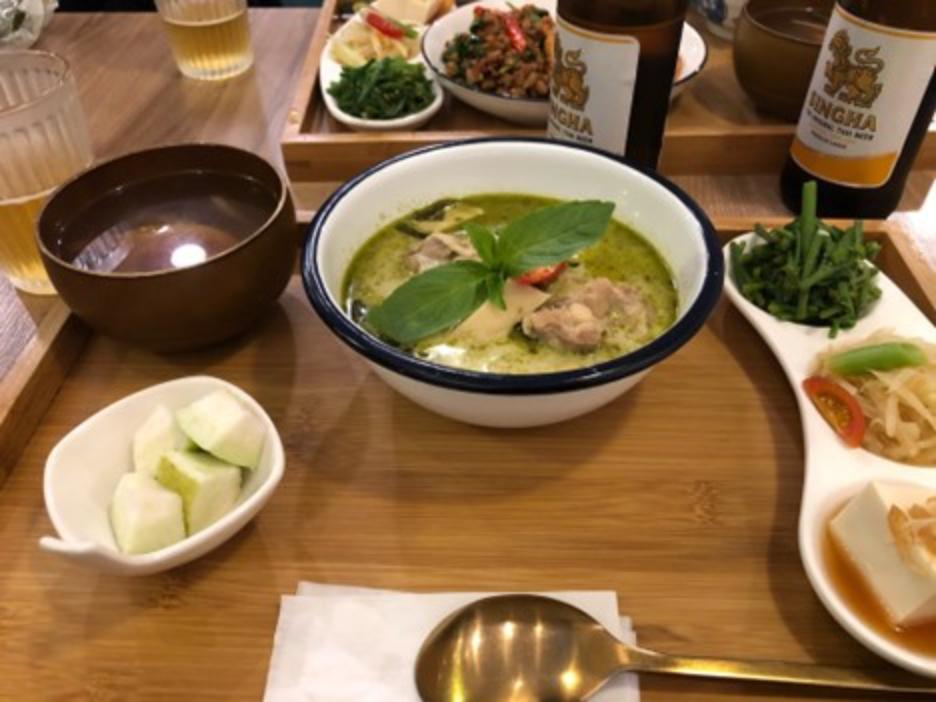
What we like to eat may be decided not by our brains but by the "collective will" of our gut bacteria. (Photo: Jay Fang)
Don't we treat the land just as we treat our own bodies? The Japanese natural-farming philosopher Masanobu Fukuoka's "four nos" (no ploughing, no fertiliser, no pesticides, no weeding) can produce higher yields than the "four musts" of conventional farming (ploughing, fertiliser, pesticides, weeding). To many farmers this sounds like a fairy tale; brainwashed for so long by advertising for tillers, fertilisers, pesticides and weeders, of course they don't believe it.
But think calmly: why are the trees in a forest so tall and strong? Why do weeds that can't be driven off or wiped out grow so wildly? You'll see that if you grasp the characteristics of plants and their environment, they will flourish endlessly, while all our efforts often run the other way. Heaven and the earth god have their own laws for protecting plants and animals and controlling pests and diseases. Don't forget that billions upon billions of microbes (bacteria, moulds, fungi, etc.) and micro-animals (earthworms, insects, etc.) live in the soil at all times; it was they who domesticated the Earth a billion years ago, long before humans appeared. Plants photosynthesise and excrete organic matter into the soil simply to meet the needs of soil microbes; if the microbes aren't satisfied, plants won't grow well, because the organic matter the microbes absorb and metabolise becomes nutrients that plants take up through their roots.
Back to the human body: our nutrition comes not from food itself but from the excretions of microbes metabolising food in our gut. We eat only to meet the needs of these gut bacteria. So in recent years some have argued that gut bacteria rule human thoughts and behaviour: what you like to eat is decided not by your brain but by your gut bacteria, which tell you what they want, and then you work hard and earn money to satisfy them.
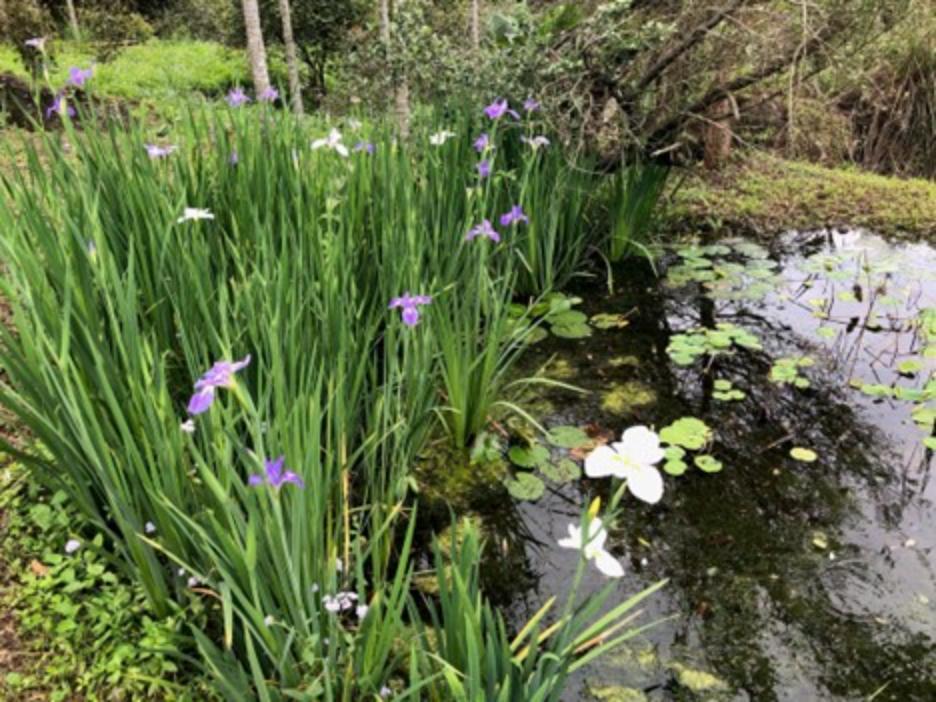
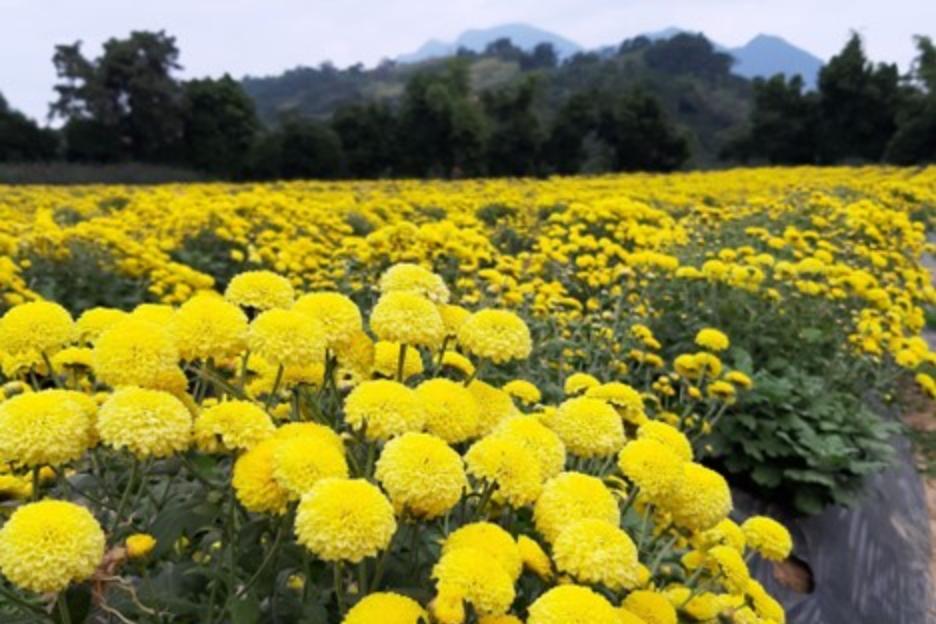
Wild flowers and grasses that no one plants can bloom luxuriantly. Nature's own nourishment beats human efforts to pull up seedlings to help them grow. (Photo: Jay Fang)
Taking tonics and medicine works on the same principle as fertilisers and pesticides: if they meet the needs of the gut flora or soil flora, there is health and abundance. But we often make trouble for ourselves: seeing a temporary effect, we keep going — like amphetamines, once seen as a miracle stimulant, until we learned that momentary excitement came at the cost of irreversible damage to health.
Rome wasn't built in a day, nor can it be destroyed in a day. Our habits are deeply rooted, and with advertising brainwashing it's hard to break free; it takes constant effort and proof to see clearly and believe. If we can't save the Earth, let's at least save ourselves!
Written on 5 December, World Soil Day, after reading Masanobu Fukuoka's The One-Straw Revolution.
Source: CM Media ( https://www.cmmedia.com.tw/home/articles/51041 )