 努力小農
本文尚無譯文。
Smallholder carbon farming gets a professional soil testing station
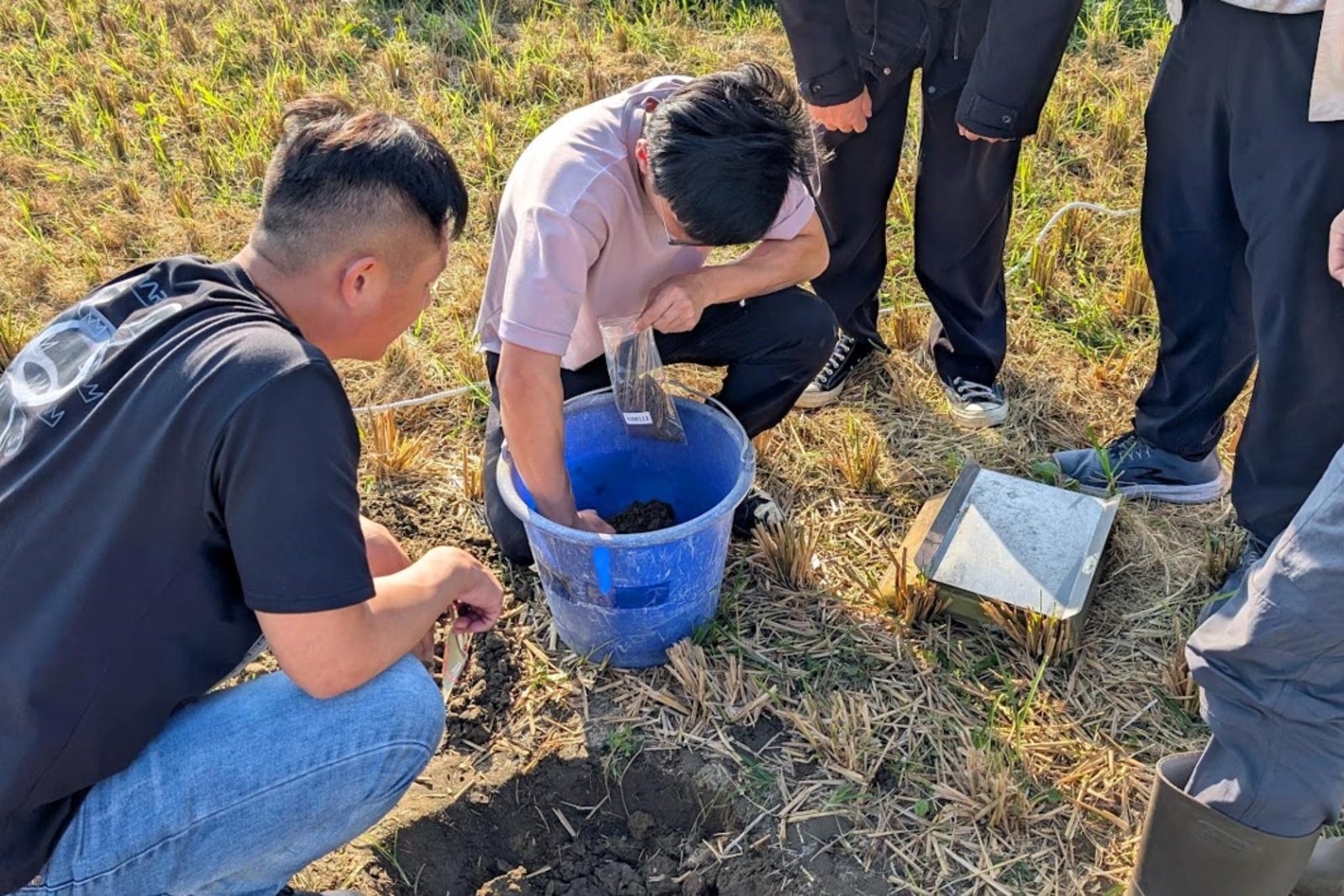
Smallholder carbon farming requires representative soil sampling and precise, accurate testing to ensure a scientific evidence base for carbon reduction. (Photo: provided by Jay Fang)
Today, every sector implementing carbon reduction and sequestration technologies stresses being "science based": there must be sufficient scientific data as evidence, repeatable, verifiable and traceable, before a method becomes effective and credible.
From the end of 2021 we collected all kinds of agricultural emission-reduction certification methodologies that smallholders could carry out. Most had ready-made formulas for estimating reductions: alternate wetting and drying of rice to reduce methane (CH4); rotating grasses with legumes, using root-nodule bacteria to reduce nitrous oxide (N2O); making and using biochar to reduce emissions and fix carbon; using rice husks as fuel for grain drying instead of diesel to cut CO2, and so on. But these technologies were either hard to monitor or the owners had little interest, so they couldn't be implemented.
"Smallholder carbon farming" was in the end the most costly and risky methodology. With no academic papers to refer to, we had to measure directly, which meant going to each field to collect samples and send them for testing — very expensive. But because Taiwan's agricultural authorities offer farmers a fertility testing service, in the first and second years smallholders sent their soil to the Ministry of Agriculture's Taiwan Agricultural Research Institute or local district agricultural improvement stations for testing, which saved participating smallholders a lot.
The risk is high because smallholders' farming is affected by a great many variables. This November's typhoons, for example, had a big impact on farmland in the east and south, with soil and water loss that also reduces organic carbon in the soil. The Noto smallholder carbon farming project begun this year was hit in the same way. In the long run, though, if smallholders adopt eco-friendly farming that encourages microbial growth in the soil, there may still be significant improvement over the long term (10–20 years).
Because on-site verification of the Taiwan Smallholder Carbon Farming Project early this year showed sequestration per hectare exceeding expectations, enough to form a profit model, and since it should not be seen as benefiting private parties — and this is not the core business of government agricultural research units — the Ministry of Agriculture informed us that it would no longer test samples for smallholder carbon farming.
No more public-service soil testing for smallholder carbon farming
Yet soil organic carbon testing on the market is expensive. An article on the Ministry of Agriculture's agricultural knowledge base on 23 June 2023, "Methods and benefits of managing soil carbon sinks on farmland", states: "Taiwan's carbon trading system is still being drafted; future carbon prices are estimated at NT$200–2,000 per MgCO2e, so the value of the soil carbon sink added per hectare of farmland per year is only NT$40–4,000. However, verification of each carbon inventory costs hundreds of thousands of dollars, plus NT$5,000 per soil carbon analysis, and field measurement of soil carbon is uncertain. So unless there is a project area of sufficient scale, the benefits of increasing soil carbon sinks may not currently cover the costs of verification and periodic inspection."
Each of our test plots is 1,000 m², with four 100 m² sampling points, each needing two soil samples — upper (0–20 cm) and lower (20–50 cm) — so eight samples. At NT$5,000 each, that's NT$40,000. A smallholder with under 10 hectares sequestering 10 tonnes per hectare under good management couldn't even cover the testing cost of one plot.
After much negotiation, Tianzu Sustainable Agriculture Co., Ltd. in Hualien and Tzu Chi University set up a soil organic carbon testing station under the Department of Public Health's environmental laboratory through industry–academia cooperation. It can test smallholders' soil organic carbon while charging the lowest possible fees, so that smallholder carbon farming can be sustained. Tzu Chi's environmental laboratory has long tested pesticide residues in crops and honey, as well as other public-health tests.
In future, all smallholder carbon farming test results, whether passed or not, will be published along with test methods and data, to ensure public trust.
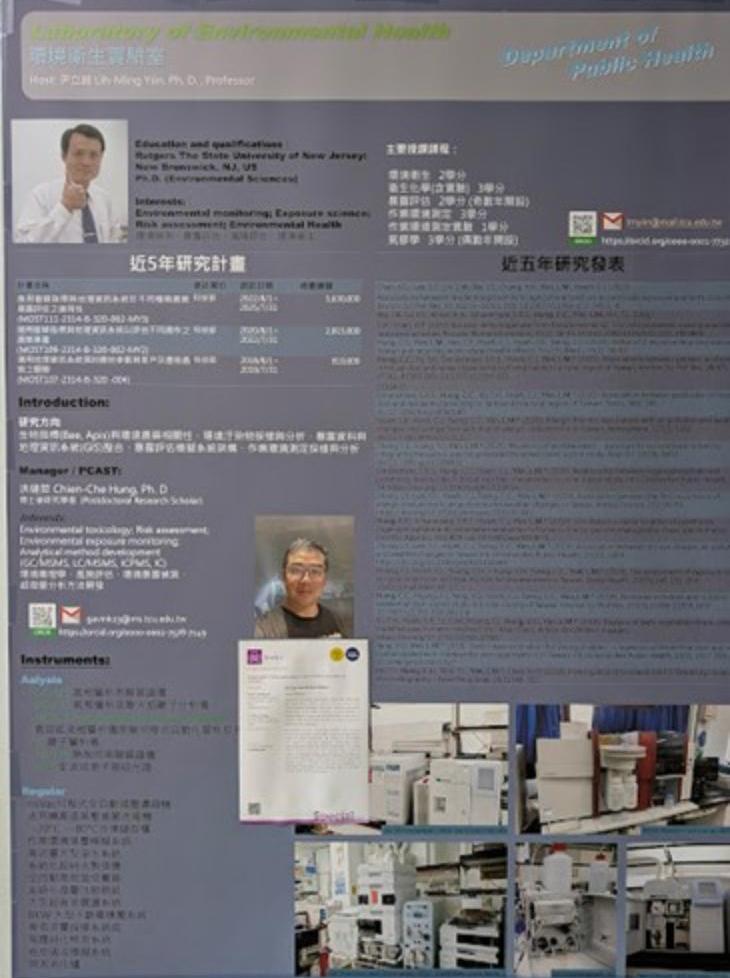
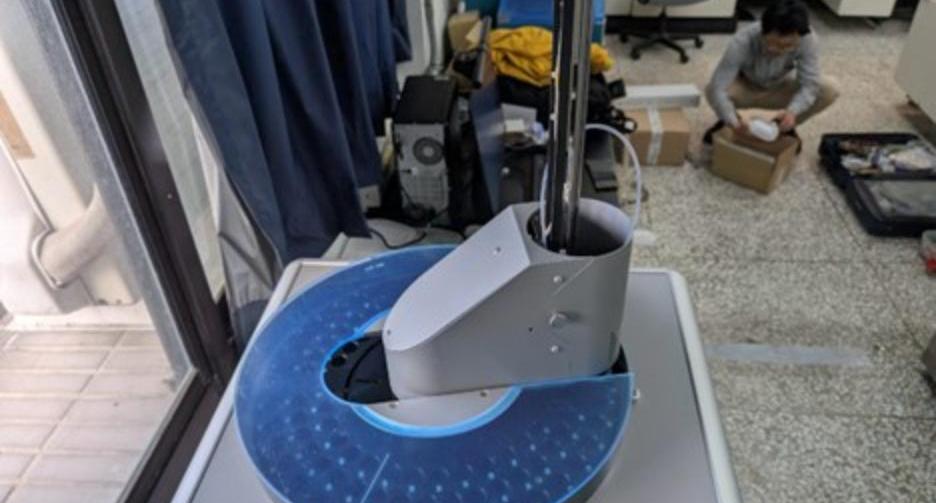
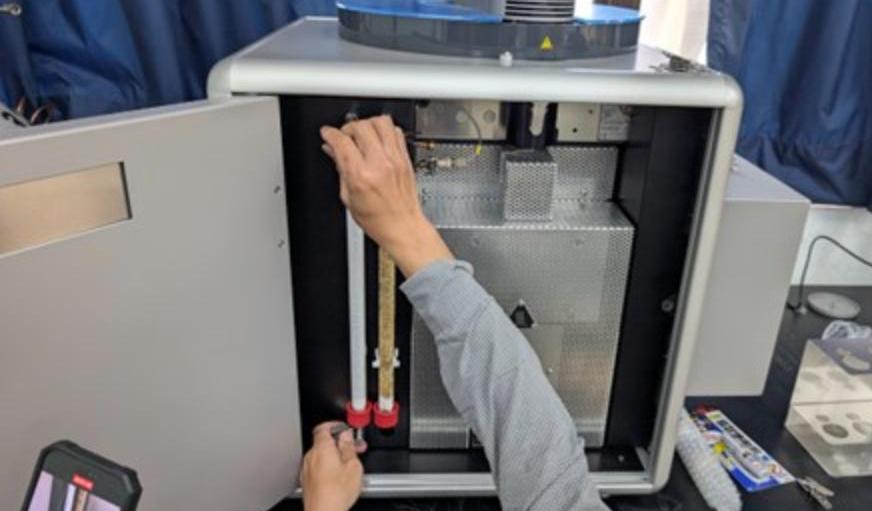
Tzu Chi University's Environmental Health Laboratory uses combustion–infrared spectrometry for its soil testing laboratory. After many twists and turns, the equipment was finally installed in December, followed by a series of calibrations to ensure consistency and precision. (Photo: provided by Jay Fang)
Because Taiwan's soil organic matter (carbon) test method, "TARI S201.1B Determination of soil organic matter — combustion/infrared method", was established by the Ministry of Agriculture's Taiwan Agricultural Research Institute, the Tzu Chi environmental laboratory treats TARI as its "gold standard", strictly following its laboratory quality control and test methods in setting up the soil testing station.
Soil organic carbon (SOC) is an important component of soil health, affecting soil structure, fertility and carbon-sequestering capacity. Accurately testing and measuring SOC is essential for understanding soil quality, managing agricultural practice and addressing environmental problems such as climate change. This article examines various soil organic carbon test methods and compares their precision, cost and effectiveness.
Choosing a test method
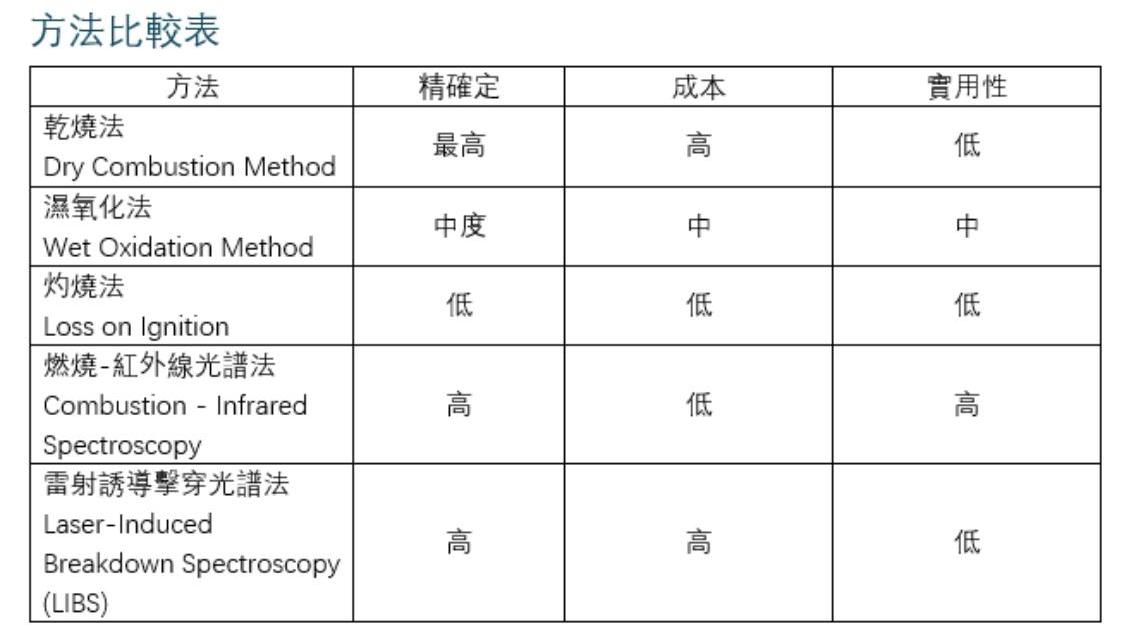
We referred to several existing international methods for testing soil organic carbon:
1. Dry combustion
Precision: Dry combustion, also called elemental analysis, is considered one of the most precise techniques for measuring SOC. Soil samples are burned at high temperature, converting all organic carbon to CO2, which is then measured.
Cost: This method needs sophisticated laboratory equipment such as CHN (carbon, hydrogen, nitrogen) analysers, making it relatively expensive. Initial equipment costs are high, but once in place, the cost per sample can be moderate.
Effectiveness: Dry combustion is highly effective and reliable, giving accurate and repeatable results. It is widely used in research and detailed soil analysis.
2. Wet oxidation
Precision: Wet oxidation oxidises the organic carbon in soil samples using a chemical oxidant (usually potassium dichromate), then quantifies the amount oxidised.
Cost: Compared with dry combustion, this method is cheaper, as it doesn't need sophisticated instruments. However, it involves hazardous chemicals, which may bring extra handling and disposal costs.
Effectiveness: Although wet oxidation is effective and produces relatively accurate results, it is less precise than dry combustion. Results may be affected by easily oxidised inorganic substances in the soil.
3. Loss on ignition (LOI)
Precision: LOI measures the weight lost by a soil sample at a specific temperature (usually about 550°C), attributed to the combustion of organic matter.
Cost: LOI is relatively cheap. It needs a furnace capable of high temperatures and a balance to measure weight changes, making it accessible to many laboratories.
Effectiveness: LOI is less precise than dry combustion and wet oxidation, as other volatile substances may also be lost. But it is effective for quick estimates of SOC in routine soil testing.
4. Combustion–infrared spectroscopy
Precision: Infrared spectroscopy, including mid-infrared (MIR) and near-infrared (NIR) spectroscopy, provides information on SOC content by measuring infrared absorption when soil organic matter is heated and burned.
Cost: Initial investment in infrared spectrometers can be high, but the cost per sample is relatively low. The method is also non-destructive and fast.
Effectiveness: Infrared spectroscopy is effective for high-throughput analysis and gives good precision, but must be calibrated against reference methods (such as dry combustion) to ensure accuracy.
5. Laser-induced breakdown spectroscopy (LIBS)
Precision: LIBS uses a laser to create a plasma on the soil surface, then analyses the emitted light to determine carbon content. It offers high precision and has potential for field use.
Cost: LIBS equipment is expensive and requires technical expertise to operate. However, it can provide fast, real-time analysis, which may offset some costs in large-scale applications.
Effectiveness: LIBS is highly effective for rapid, in-field SOC measurement, making it suitable for precision agriculture and environmental monitoring. It is still being developed for further applications.
There's no such thing as a free lunch
This also confirms that TARI's choice of "combustion–infrared spectrometry" balances cost and practicality, so the Tzu Chi environmental laboratory uses the same equipment and method.
This raises another issue: sharing the cost of testing. One test plot with eight samples, including sampling and testing, costs at least NT$10,000, which affects farmers' willingness to take part and the benefits. Some smallholders feel that if you're going to farm carbon, you should bear some cost — other agricultural certifications cost more than NT$10,000 — and it also deters free riders with no reduction performance, who would waste resources and reduce the profit share of other conscientious carbon-farming smallholders (because besides the guaranteed purchase price of US$10 per tonne of CO2e, smallholders also share in carbon credit income after costs).
For smallholders who signed contracts from 2022 to 2024, Eco-affinity Inc. must bear the testing costs under the contract. But from 2025 these costs will be borne by newly signed smallholders: at NT$10,000 per plot of eight samples, at least 10 jia of land must successfully farm carbon to leave room for profit.
Of course we will also seek public and private investment to support the testing costs smallholder carbon farming needs. But there's no such thing as a free lunch, and we hope every participating smallholder will carry out carbon reduction genuinely and responsibly, rather than just making up the numbers.
[MiHuMiSang: Smallholder carbon farming gets a professional soil testing station]
Source: CM Media ( https://www.cmmedia.com.tw/home/articles/51240 )


