 努力小農
本文尚無譯文。
The Changliang Radish Festival is back: a feast at the site where Taiwan's smallholders practise carbon farming
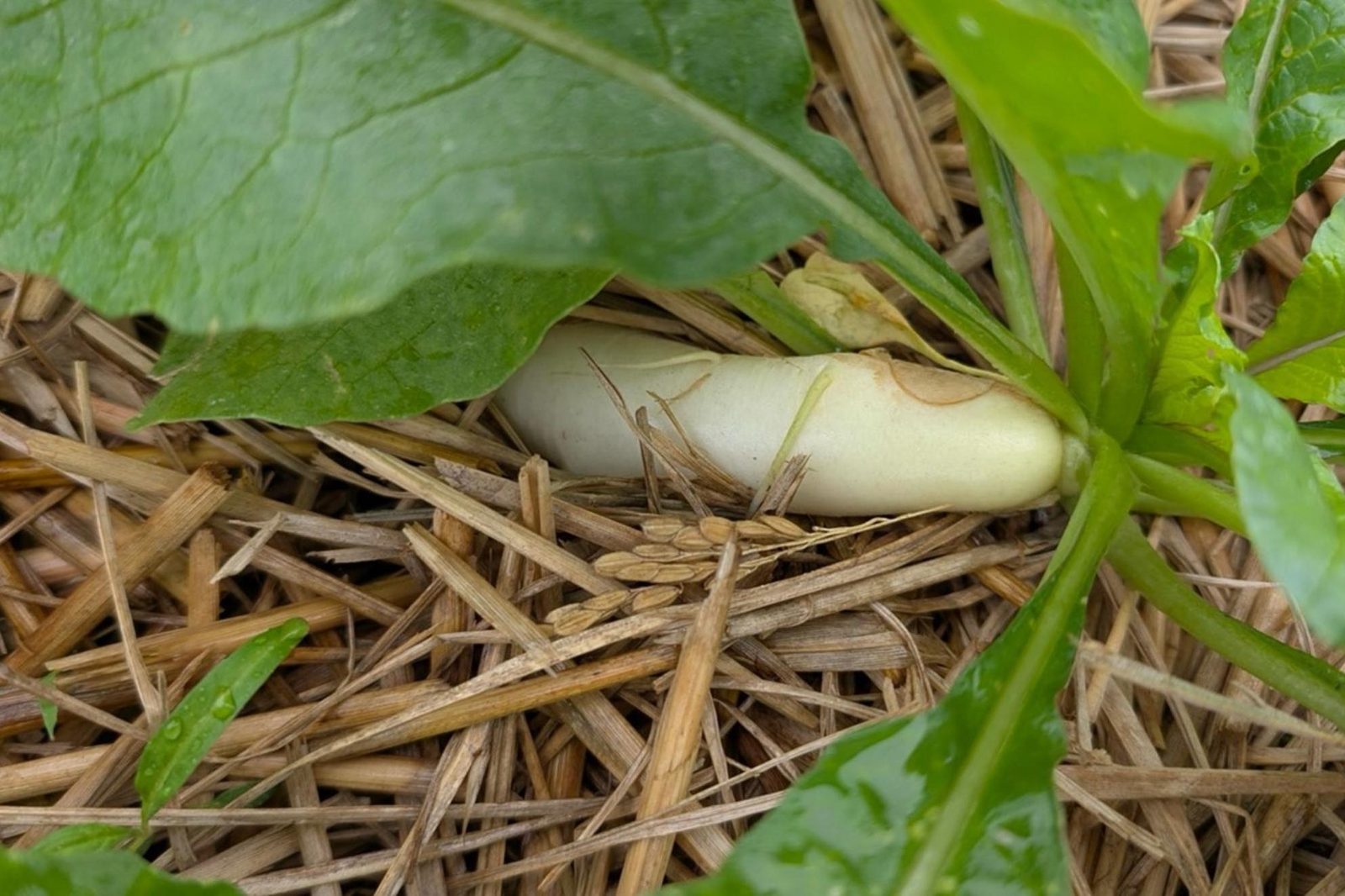
Changliang village chief Chen Wen-hua sowed a jia of radishes during the fallow period. With a bit more rain this year, some radishes are already poking up. Everyone is welcome to come to Changliang Village, Yuli Township, on 19 January 2025 to pull radishes, learn about the process of the Taiwan Smallholder Carbon Farming Project, and witness the contribution farmers can make to fighting global warming. (Photo: Jay Fang)
Who would have thought that a small farming village on the very edge of Taiwan's transport network would be the first place in Taiwan to take shape as part of international agricultural emission-reduction certification? After several typhoons, it has only grown more determined and keeps moving forward. On 19 January 2025 Changliang Village in Yuli Township will hold its Radish Festival again; everyone is welcome to come and witness the journey and results of smallholder carbon farming.
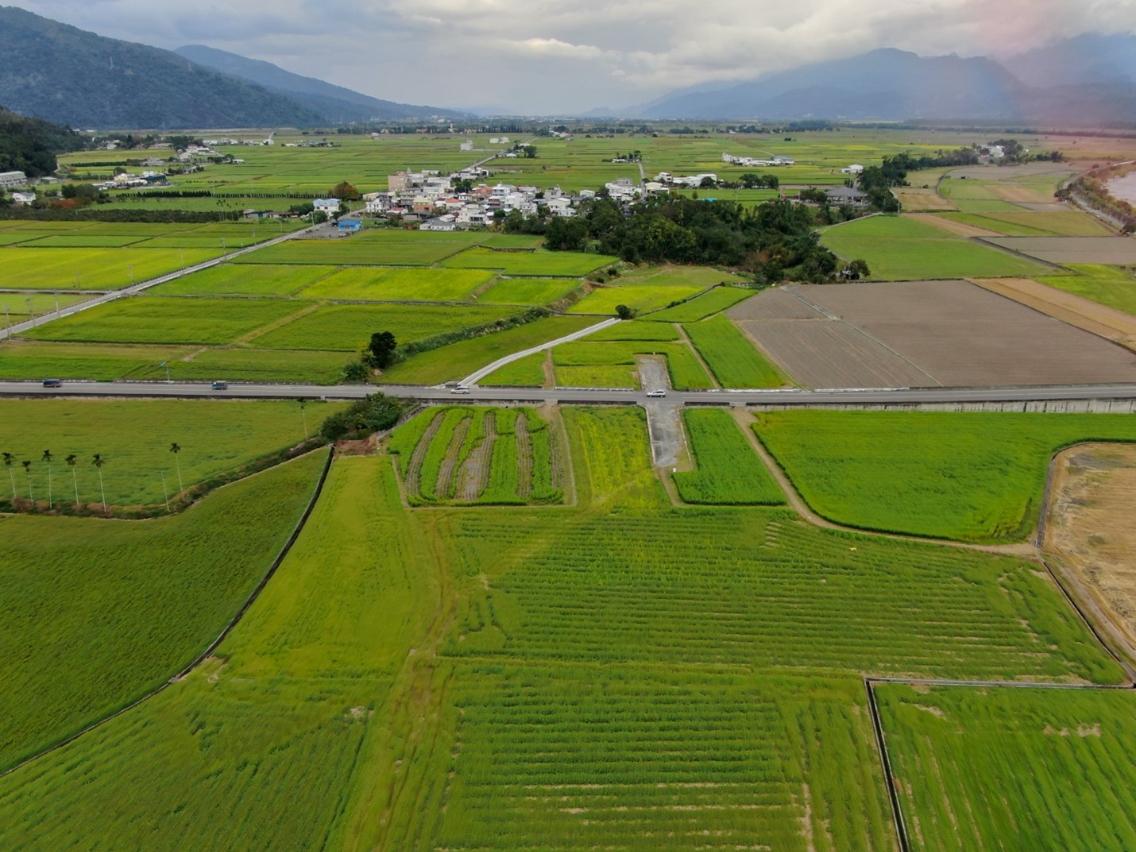
From a drone, most of Changliang's land is lush green from November to February — the secret of agricultural carbon sequestration. (Photo: Jay Fang)
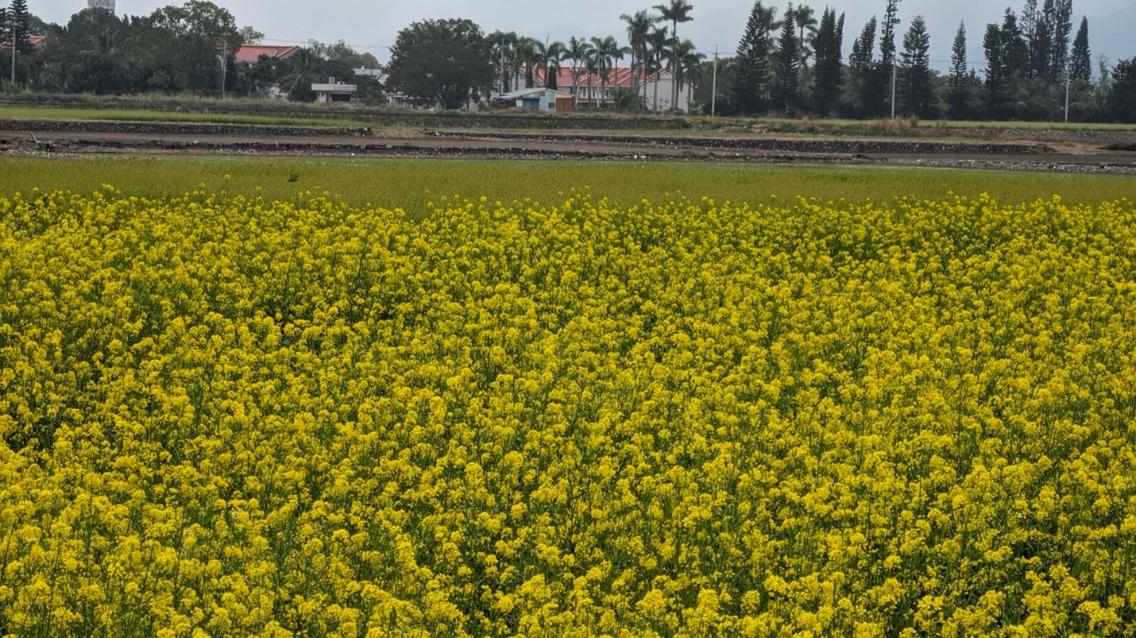
Rapeseed flowers in Changliang's fields can be eaten or pressed for oil, and also act as green manure fixing carbon, providing natural fertility for crops. (Photo: Jay Fang)
The first whole-village movement of the Taiwan Smallholder Carbon Farming Project
Changliang lies south of Yuli Township in Hualien County, next to Zhuoxi and Fuli townships. It's exactly two hours' drive from both Hualien City and Taitung City, and well away from Highway 9, so many people have never heard of this little village of only four or five hundred people, whose 150 hectares of rice paddies are its main industry.
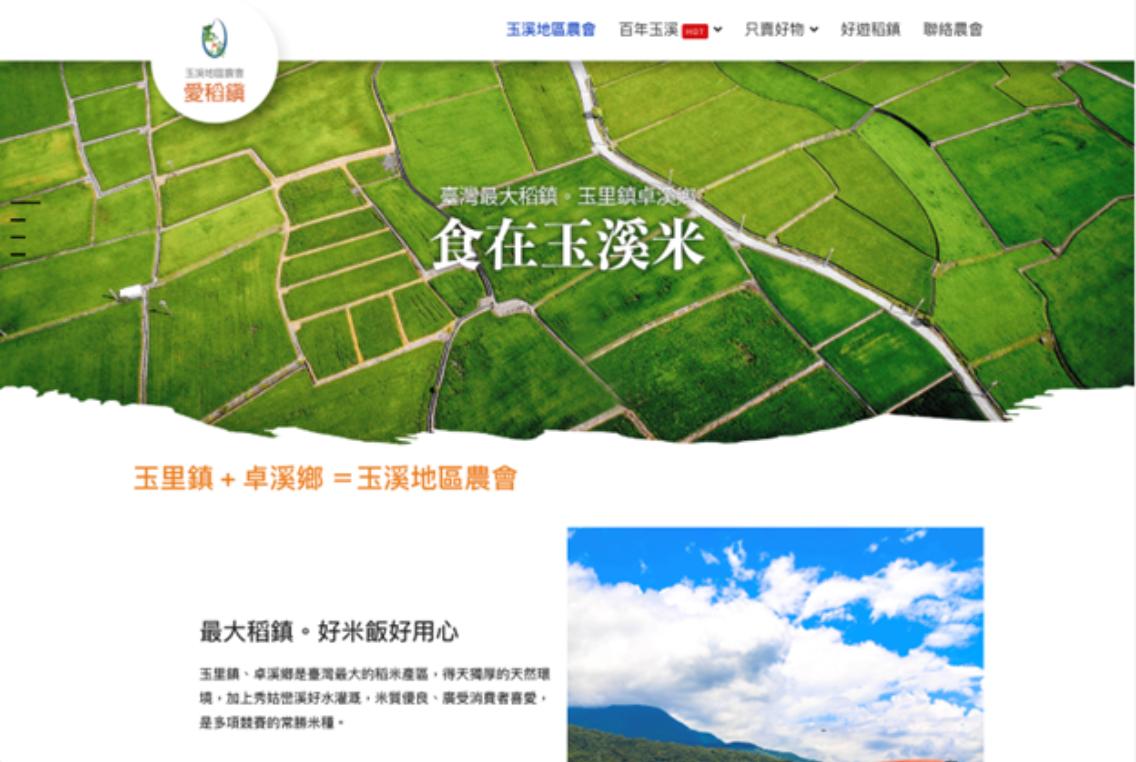
This year's Radish Festival is organised by the Yuxi District Farmers' Association (Yuli Township and Zhuoxi Township). You may not know that Yuli is Taiwan's largest rice-growing township, with 6,700 hectares under cultivation, more than half of it double-cropped. (Image: Yuxi District Farmers' Association website)
Because of geographical constraints, Changliang accounts for only 1/45 of Yuli's 6,700 hectares of paddies and gets less attention. Most residents grow rice or work elsewhere; there are no convenience stores or chain shops — it's a quiet little village.
Changliang became the first whole-village movement of the Taiwan Smallholder Carbon Farming Project thanks to villager Chiu Chui-chuan. In early May 2022, when the Green Consumers' Foundation was advocating international certification of agricultural carbon reduction, it held four online meetings to discuss possibilities. Chiu said at one that he'd love to take part. His family had always farmed in Changliang, but he had studied in town from childhood and later studied and worked abroad, not farming. In 2019 he came home to care for his seriously ill mother and his father; after his mother passed away, the COVID pandemic struck, and he decided to stay and take up farming, learning it afresh. So he was keen to try new methods connected with the latest international trends, and he brought in young Fuli farmer Su Chun-lung to join agricultural carbon reduction too.
When we signed contracts with Chiu Chui-chuan and Su Chun-lung, we didn't yet know which agricultural emission-reduction methodology to choose. We considered rice water management to reduce methane, rice–legume rotation to reduce N2O from nitrogen fertiliser, generating power from agricultural waste (such as rice husks), and biochar, but none was very reliable, and Taiwan lacked research data following international methodologies, which would take ages to accumulate. So in August 2022 we finally chose the Gold Standard's Soil Organic Carbon Framework Methodology as the basis for our application.
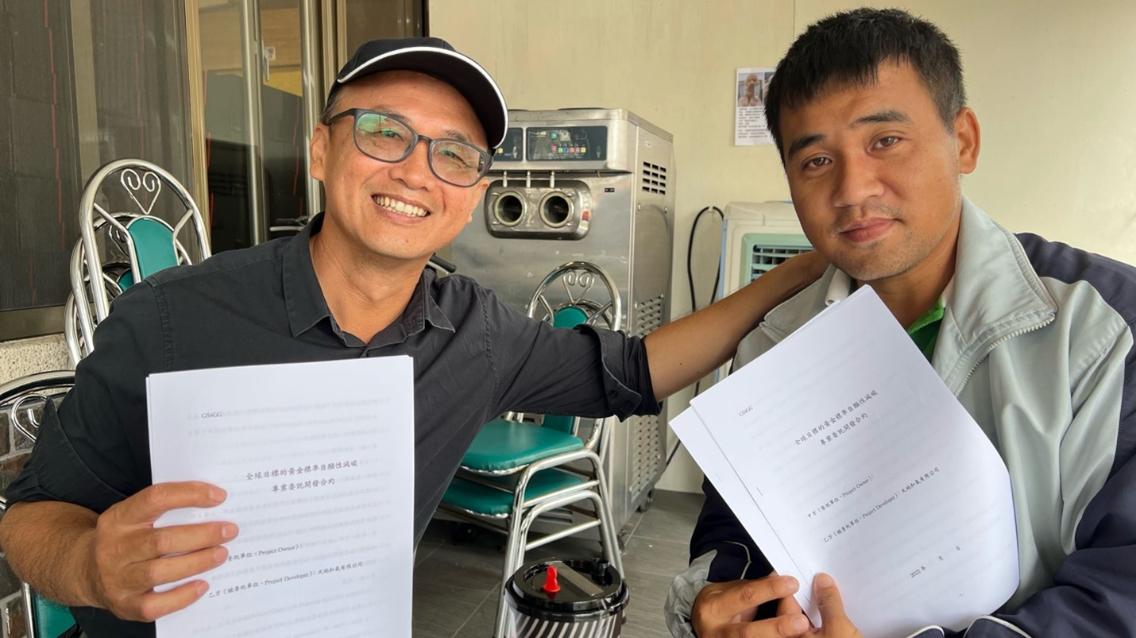
On 4 May 2022, Chiu Chui-chuan of Changliang Village, Yuli (left), and young Fuli farmer Su Chun-lung signed smallholder carbon farming contracts No. 001 and 002, beginning Taiwan's smallholder carbon farming journey. (Photo: Jay Fang)
Through Chiu Chui-chuan I also met village chief Chen Wen-hua. Chief Chen farms over ten hectares, a veteran whose yields are among the best in the village. As it happened, the Changliang Radish Festival was on 8 January 2023, so I took the chance to meet farmers of Changliang's Second and Third Quality Rice Production and Marketing Groups, who readily joined the Taiwan Smallholder Carbon Farming Project. With these 144 hectares of paddies on board, the project became feasible.
The Soil Organic Carbon Framework Methodology covers a broad range of ways to increase soil carbon sinks, and past research in Taiwan estimated an increase of only 1 tonne of organic carbon per hectare — about 3.67 tonnes of CO2 equivalent (CO2e) — with carbon trading prices of only tens of dollars a tonne. In terms of economic benefit from carbon reduction, there wasn't much to gain, but the people of Changliang felt they had nothing to lose, so they might as well give it a go.
Reducing tillage and increasing cover produced Changliang's emission-reduction results
Perhaps it was the right timing, place and people. In early 2024, comparing the organic carbon in soil samples taken at the end of 2022 and in 2023, the increase exceeded all expectations: after statistical calculation and conservative estimation, it reached tens of tonnes of CO2 equivalent, nearly 20 times the original estimate — great news for emission-reduction certification.
This was an unprecedented first. Upholding the principles of openness and transparency, we made all relevant data public for scrutiny. Both the verification body and the Gold Standard's certification body have taken this phenomenon very seriously, examining and checking it again and again, and it is still under review. (Generally, for a first project the review can take 3–5 years, while verified carbon credits last for decades — unlike ordinary certification activities that just "issue a certificate".)
We carefully reviewed the practices of all smallholders whose soil organic carbon rose or fell, and found that reducing tillage and increasing cover were the most important physical factors. Even where large amounts of organic fertiliser were used, the carbon gain was not significant. In the past, Changliang farmers puddled their fields immediately after the second rice harvest each November, leaving the ground bare. But from 2022 most fields have grown intercrops such as rapeseed, buckwheat and radishes, partly to save puddling costs (at least NT$5,000 per jia) and partly to reduce wind-blown dust.
Unexpectedly, this change matched practices that favour soil carbon sequestration — less tillage, more cover, less sun exposure and keeping the soil moist. Past academic research seldom combined these factors, and this produced Changliang's 2023 emission-reduction results.
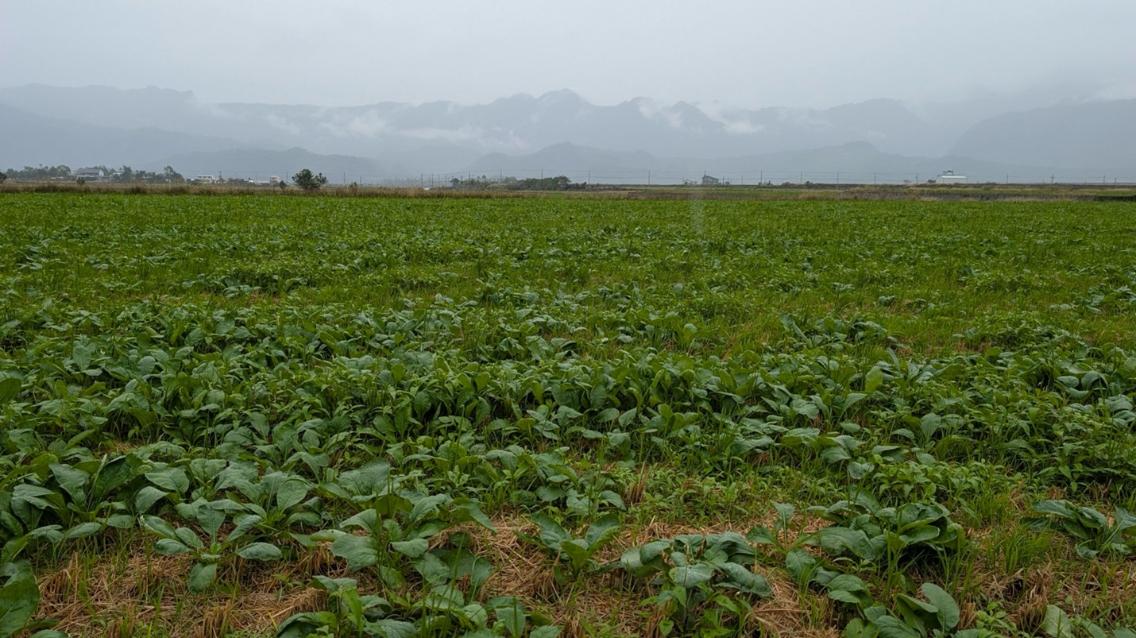
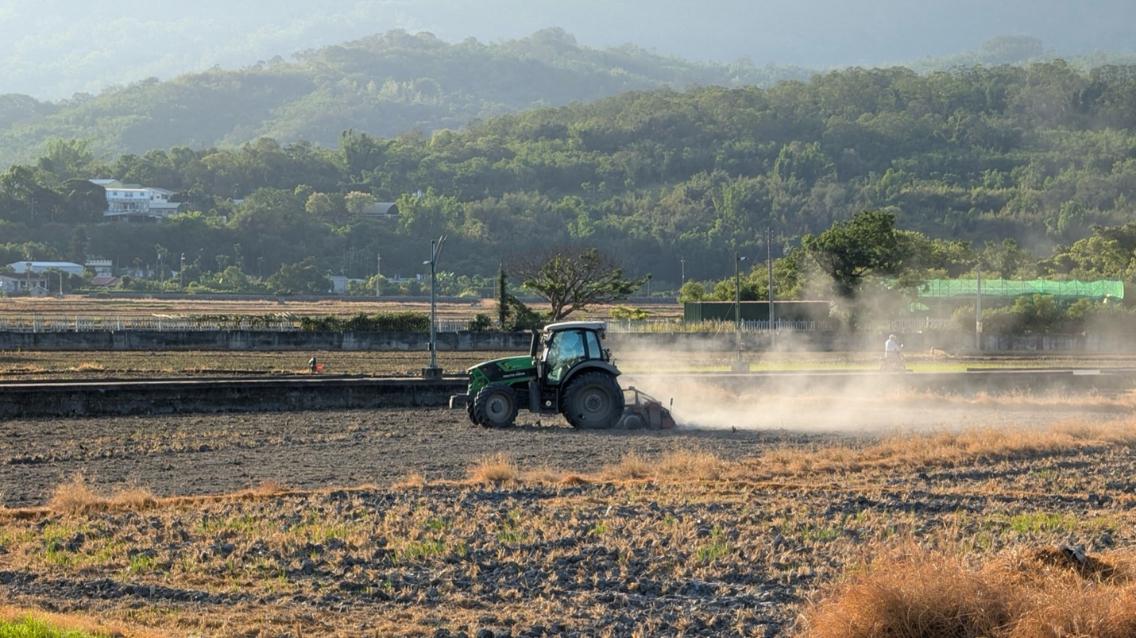
Compare and see. Changliang's fields (top) are widely planted with green manure and intercrops during fallow, shielding the soil from sun and keeping it moist — "less tillage + more cover" is the sure way to increase soil organic carbon. By contrast, in the usual practice of puddling immediately after the fallow begins, the soil gets no chance to fix carbon.
In 2024, however, two typhoons in October struck during the rice harvest, seriously affecting the harvest in Hualien and Taitung — and possibly washing away soil organic carbon under strong winds and heavy rain. How much soil organic carbon Changliang has this year can only be determined from the test results.
The first low-carbon rice: the Changliang Radish Festival is back
In fact carbon reduction, especially agricultural carbon reduction, can't be approached with anxiety over gains and losses, because no amount of human effort beats the will of heaven. A typhoon, downpour, earthquake or debris flow can all seriously affect changes in soil organic carbon, beyond human control. In over two years on the smallholder carbon farming journey, I've come to appreciate even more that "heaven's power is unfathomable".
But human behaviour is self-inflicted harm: long-term heavy tillage, abuse of pesticides, fertilisers and herbicides, and paving everything with concrete are what have damaged the natural carbon cycle of soil organic carbon and caused the largest human emissions.
Neither envious nor grasping — that is the philosophy of smallholder carbon farming. "It can't get much worse anyway, so we might as well try." Even after being hit hard by typhoons and having rice stolen by a drying mill, Changliang's villagers grumbled for a bit, but after a night's sleep went back to their fields and got on with what needed doing.
After more than two years of observation and in-depth interviews, the real problem of Taiwan's agriculture is selling domestic rice and domestic food. Take rice: people eat less and less rice, switching to bread or imported rice, which is half the price of domestic rice. Rice mills blending rice is endemic; even when caught there is no criminal liability for food safety, and courts rarely find fraud, so even the rice consumers eat may be imported. If rice, a strong domestic crop, is in this state, other produce is even worse off.
Everyone is welcome to come to Changliang two weeks before Lunar New Year with the kids on winter break, to truly encounter "our land, our people". I'm sure it will be an experience unlike any other.
Source: CM Media ( https://www.cmmedia.com.tw/home/articles/51556 )


