 努力小農

本文尚無譯文。
Smallholder carbon farming: looking back and looking ahead
May 2025 be a year of living, thriving soil.
As the year came to a close, it only began to feel like winter at the end of December. It was indeed once again the hottest year in 100,000 years, and barring surprises, 2025 will be hotter still.
The Taiwan Smallholder Carbon Farming Project is now entering its third year since development began. We have grown step by step and even gone international, developing smallholder carbon farming projects on Japan's Noto Peninsula in Ishikawa Prefecture and in Wuchang, Heilongjiang Province, China. In future we will take the idea of smallholder carbon farming even further.
The Satoyama of Noto
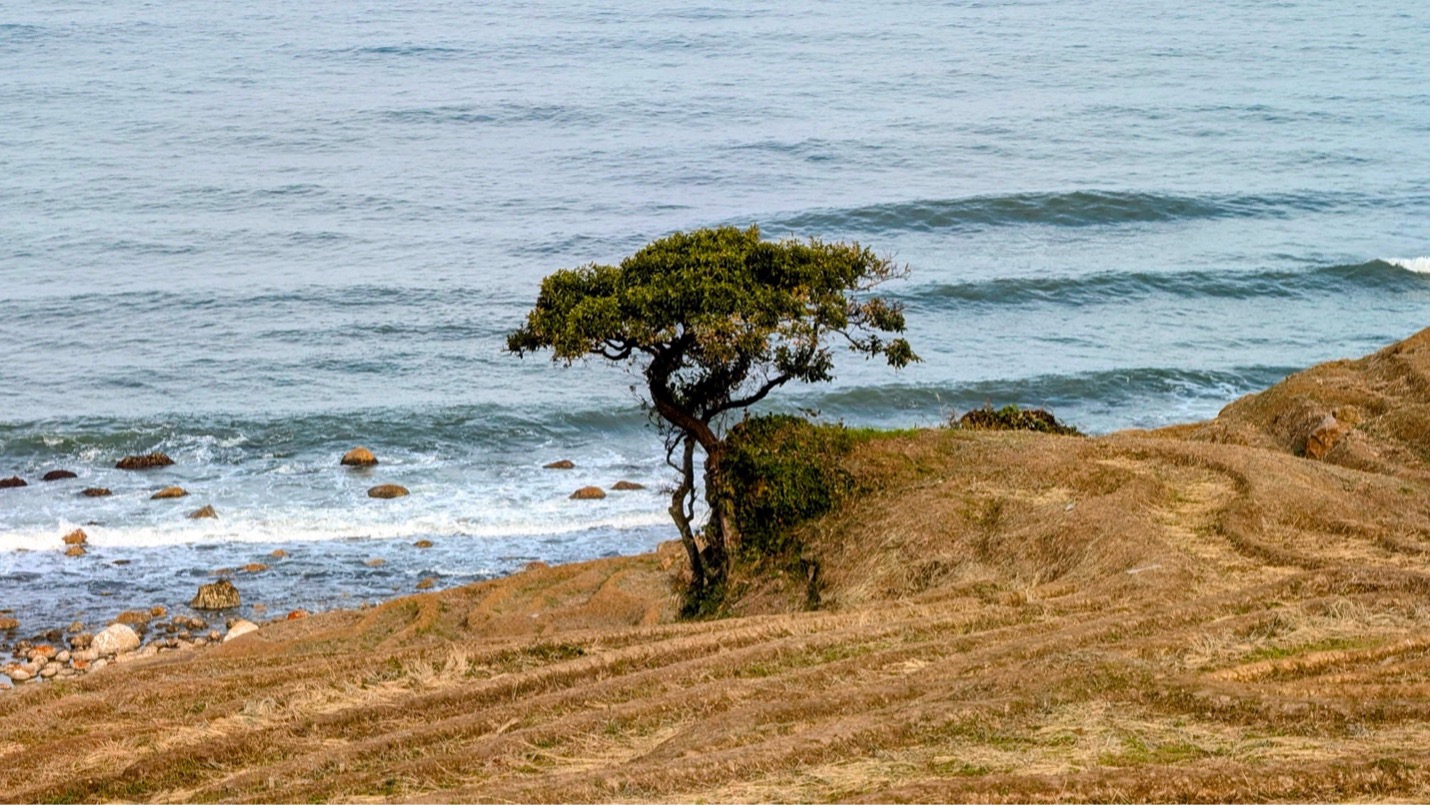
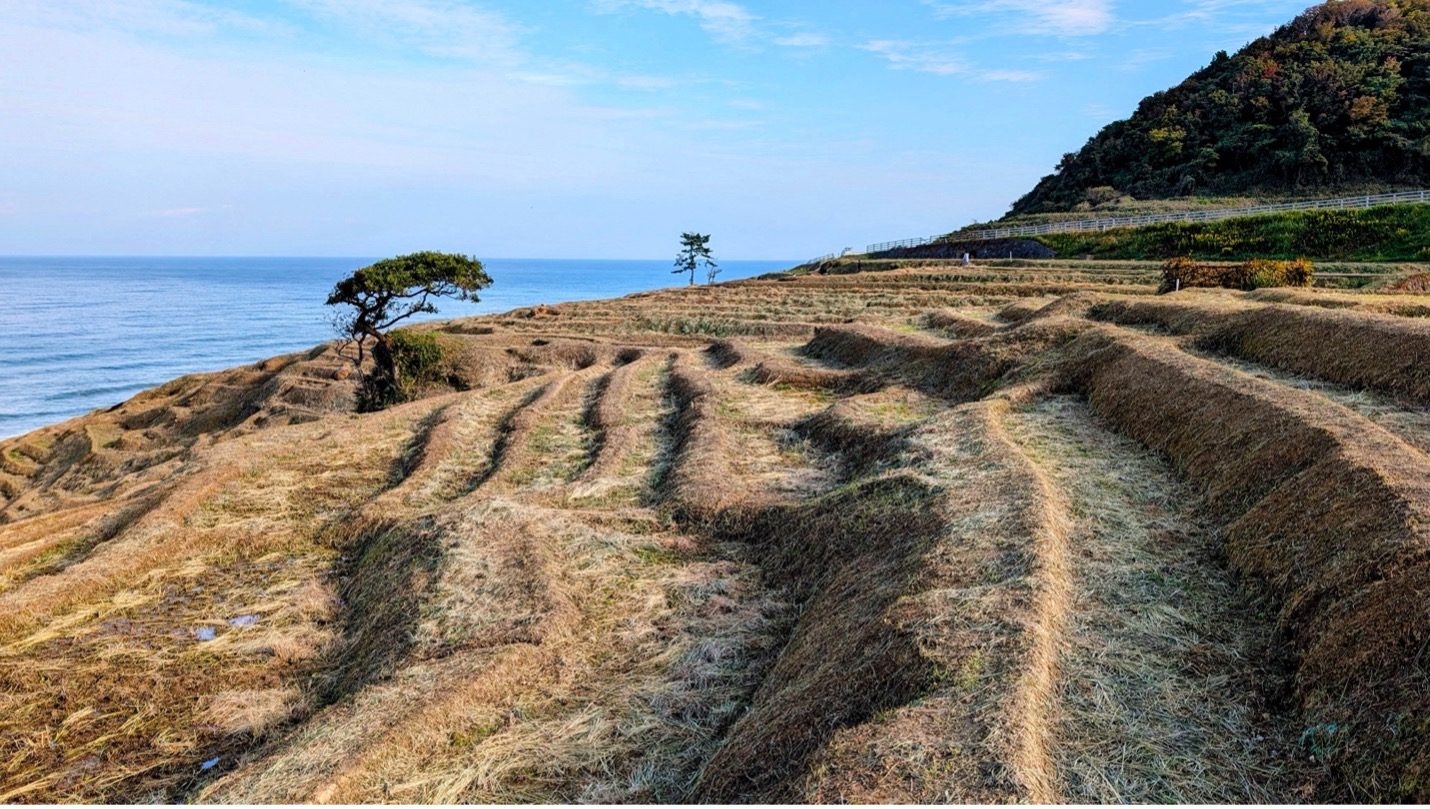
Shiroyone Senmaida, 400-year-old seaside rice terraces. On the narrow terraces farmers can only plough and harvest by hand, making them a symbol of satoyama–satoumi sustainable agriculture. The smallholder carbon farming programme has taken root here to sustain ecological smallholder farming. (Photo: Jay Fang)
A major earthquake struck the Noto Peninsula on 1 January 2024. It destroyed large numbers of houses and triggered landslides and debris flows; the seabed rose, roads were cut and good farmland collapsed. A smallholder economic ecosystem more than 400 years old — a site of the UN's satoyama–satoumi sustainable agriculture, forestry and fisheries initiative — was almost wiped out in a moment, and the road to reconstruction is long.
Fortunately, the Tzu Chi Foundation's disaster-relief team from Taiwan arrived immediately, took part in relief work, and built mutual trust with local residents, farmers and government. It introduced smallholder carbon farming and an SDG impact system to support medium- and long-term reconstruction, using an international certification mechanism to document in detail the road to rebuilding and revitalising the satoyama homeland. Unexpectedly, just after we held a stakeholder consultation meeting there on 16 September, days of heavy rain began on 20 September, causing once-in-a-century floods and debris flows, and people became disaster and climate refugees once again.
We believe this is a test of the resilience of the satoyama smallholder economic ecosystem: good farmland turned into wasteland, to be rebuilt into sustainable farmland once more. It is a test of a major historical and cultural mission, and we hope to use the Sustainable Development Goals to verify our future work.
https://photos.app.goo.gl/K9MfqnHvJwFDL48q8
https://photos.app.goo.gl/KouJ1gtLZqcQW5HGA
The damage in the Machino area of Noto: even two months after the torrential rain, the fields showed no sign of recovery. (Photo: Jay Fang)
Wuchang, nothing is constant
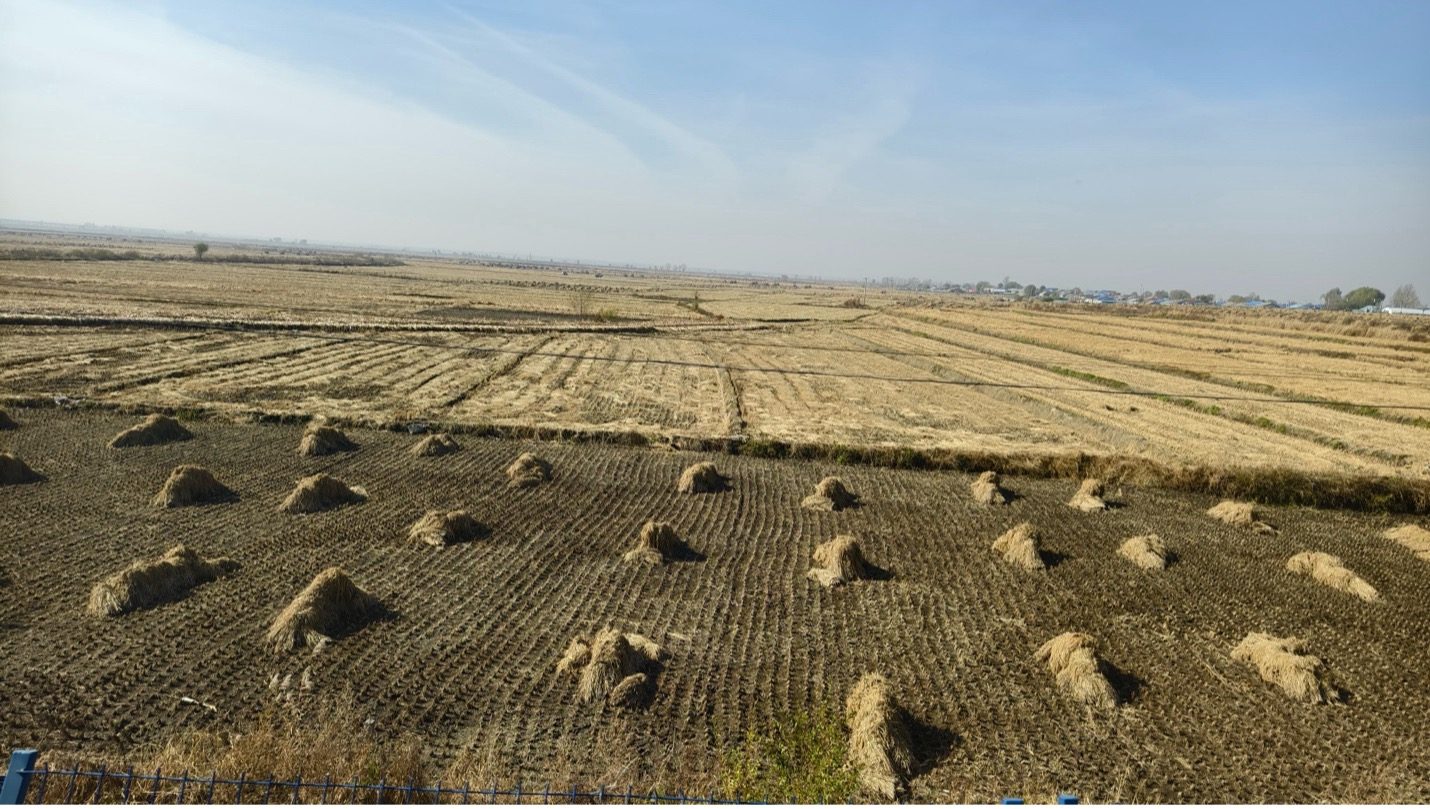
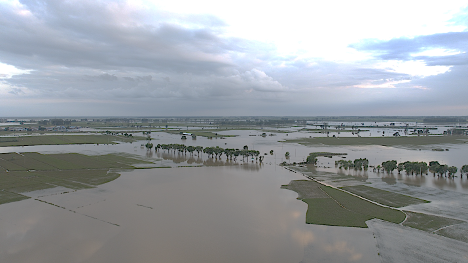
Under climate change, the usually dry North China Plain was turned into a flood plain by summer downpours — something no one expected. (Photo: Jay Fang)
Wuchang rice is hailed as China's best rice. In September 2023 it was hit by once-in-a-century rainstorms that flooded two-thirds of the paddies, causing heavy losses, and the same happened again this summer. Wuchang, which normally lacks water in summer, not only had enough water but was flooded. It seems that under climate change the heat of global warming is moving north; where warm and cold air meet in the atmosphere, clouds and rain form, and intense rainfall has become the norm.
The weather has always been unpredictable. In the Earth's 4.6 billion years, it finally had a relatively stable 10,000 years, and agriculture could only develop in this "window" when the climate was not so violent, feeding 8 billion people — yet in the end humanity is collectively destroying this hard-won balance.
In recent years summer floods in North China have become ever more frequent, as if the atmosphere had its own grand "South-to-North Water Diversion" canal, carrying the south's warm, moist air to fall on the north. Xiong'an New Area in Hebei, billed as a "plan for the millennium", lies low; when heavy rain comes, the only option is to shift the water onto the neighbours — protect Xiong'an and flood Zhuozhou. Yet isn't Zhuozhou itself a two-thousand-year-old city, as famous as Ji (Beijing) since the Spring and Autumn period?
I have never believed in "emigrating to other planets". The grand Mars colonisation plan of the world's richest man, "Mr Musk" (Elon Musk), is nothing more than a personal light show of giant fireworks (SpaceX). It took the Earth at least 3 billion years to make it habitable for life. Even if "Mr Musk" is a genius and Trump's kingmaker, can he conjure even a small oasis on Mars? Can he solve Mars's extreme cold and storms?
Mr Musk, Don't Look Up
The 2021 film "Don't Look Up" seems like a fable of the 2024 US election, except that the ever harsher climate change is turned into something more concrete — an asteroid hurtling straight at us — with the crisis of the Earth manipulated to win wealth for the rich and the means to escape the planet.
Trump does not believe in global warming or free-trade globalisation, nor in the many universal values of fairness and inclusiveness that humanity has painstakingly built over recent decades. Instead he pursues America First (white supremacy) and MAGA (Make America Great Again) dominance of the planet. This is the other side of the same coin as the second power, China — isn't China's MCGA (Make China Great Again) the same, except that one looks back to its strength after the Second World War 70 years ago and the other to the far older glory of the Han and Tang dynasties?
Both great powers only want to "become strong by restoring the past", without seeing the unprecedented shared crisis that humanity faces in the future. The crisis we face is not as hopeless as an asteroid hitting the Earth; if everyone changes a little, we can turn it around.
We have always held that agriculture is humanity's oldest industry. Large modern machinery and the overuse of chemical fertilisers and pesticides have caused soil organic carbon to be lost, escaping into the atmosphere as carbon dioxide — a "great achievement" indeed. If even smallholders can pay attention to storing carbon in soil organic carbon sinks and slow global warming, then surely large farms, companies and even nations can do the same.
We can only keep working hard
"Do not fail to do good because it is small; do not do evil because it is small." The reckless development, production and consumption that followed the Industrial Revolution must be restrained and regulated before we can change the trajectory of global warming. This is not "man conquering nature" but "man following nature". Yet how weak and defenceless is the strength of smallholders when facing the vested interests of agriculture — the large farm machinery, pesticide, chemical fertiliser and GMO industries that are close relatives of the military-industrial complex?
We hope everyone will support and take part in smallholder carbon farming. We are not only in Taiwan but are also spreading this good work to neighbouring Japan and China. The world is one family and the Earth is one whole, with no distinction between us.
Looking back on 2024, we worked hard alongside smallholders to try to change the status quo. Heaven sees what people do, and in 2025 more people will join us in moving forward.
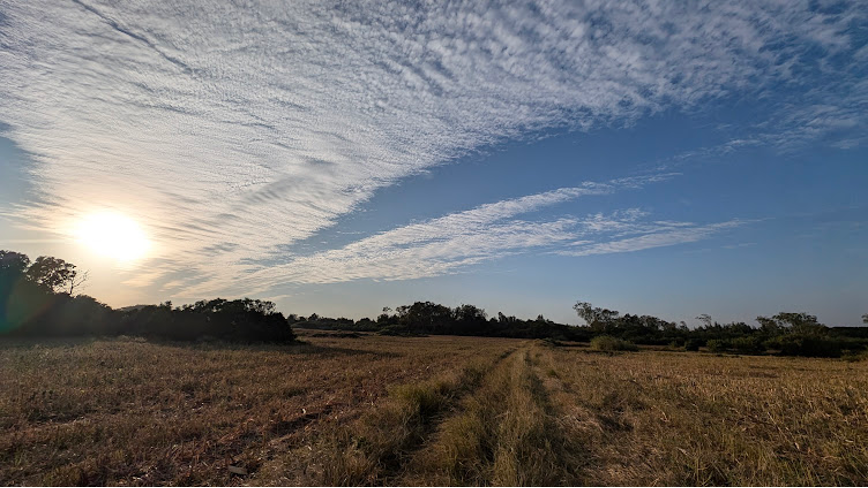
Smallholder carbon farming has also been developed in the sorghum fields of the outlying island of Kinmen. (Photo: Jay Fang)
Key events of 2024
27 January / Changliang Village Radish Festival
February / A Gold Standard-approved VVB (Validation and Verification Body) carried out the Project Design Validation/Project Performance Verification of the Taiwan Smallholder Carbon Farming Project
March / The project developer, Eco-affinity Inc., applied to the Gold Standard to scale up the microscale project to a large-scale project
April / Received authorisation from the UN Food and Agriculture Organization (FAO) to launch the "Global Soil Doctors Programme" in Taiwan.
May / Visited the Noto earthquake zone in Japan to study the feasibility of smallholder carbon farming in Noto, and submitted the large-scale project design document for the Taiwan Smallholder Carbon Farming Project.
June / Discussed the feasibility of a Noto (Japan) smallholder carbon farming project with the Tzu Chi Foundation.
July / Began looking for a third-party, transparent soil organic carbon testing laboratory open to public participation
August / Assessed the feasibility of a soil organic carbon laboratory with the environmental laboratory of Tzu Chi University's Department of Public Health
September / Held the first "stakeholder consultation meeting" in Noto, Japan, setting up a microscale smallholder carbon farming project of about 60 hectares. On 20 September torrential rain caused disaster in Noto, damaging farmland in the Machino area. We also launched the Kinmen smallholder carbon farming programme.
October / Held the first "stakeholder consultation meeting" in Yongzheng Village, Wuchang, Harbin, Heilongjiang Province, China, where rice smallholders farming about 1,200 hectares signed up to establish the "Wuchang Smallholder Carbon Farming Project", and signed a Gold Standard sustainability certification project contract with the Haohai Rice Cultivation Cooperative. In October Taiwan was hit by Typhoons Krathon and Kong-rey, and smallholders suffered damage.
November / In Noto, Japan, signed Gold Standard sustainability certification project contracts with an NPO in the Machino area and the Shiroyone Senmaida Aikōkai. Because the VVB for the Taiwan Smallholder Carbon Farming Project had no large-scale project experience, the validation scope temporarily reverted to a microscale project; after clarification from the Gold Standard, it will proceed as a micro- or small-scale project or be upgraded to a large-scale project.
December / Tzu Chi University's soil laboratory was set up and calibrated for repeatability, reproducibility, linearity, bias and stability.


