努力小農
本文尚無譯文。
Letting the Global Soil Doctors take root in Taiwan
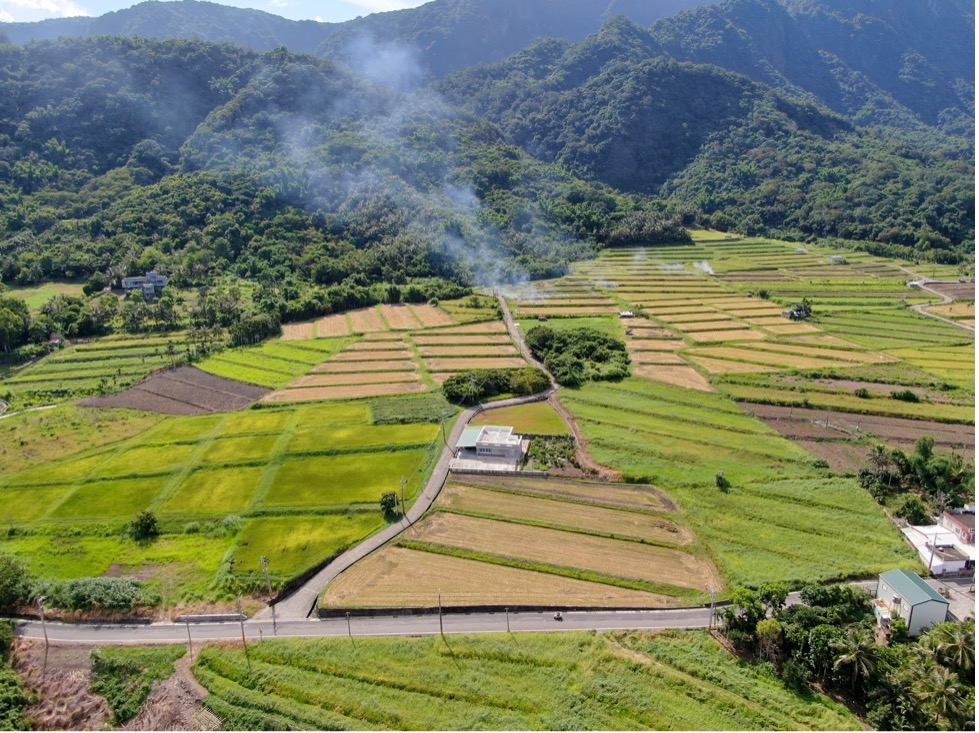
Taiwan is small and densely populated, with limited farmland that must be well protected. The Taiwan Smallholder Carbon Farming Project has joined the "Global Soil Doctors Programme" to improve soils and soil health together with farmers around the world. Everyone is welcome to join. (Photo: Jay Fang)
Improving farm soils together with the world
To keep expanding, the Taiwan Smallholder Carbon Farming Project needs teaching materials that farmers can easily understand and put into practice. Since 2015 the UN Food and Agriculture Organization (FAO) has strongly promoted increasing soil organic carbon so that soils become carbon sinks, which can address both the food and the climate crises at once: only when soil organic matter increases and soils are healthy can crops give stable yields to feed the world's growing population, expected to reach 10 billion by 2050. At the same time greenhouse gases must reach "net zero". If humanity is to maintain its quality of life, the world's arable land must play a role in sequestering carbon.
Military conflicts in recent years have caused massive damage to farmers and farmland and become a major humanitarian crisis. In the face of threats to life and food, the importance of soil is all the more evident.
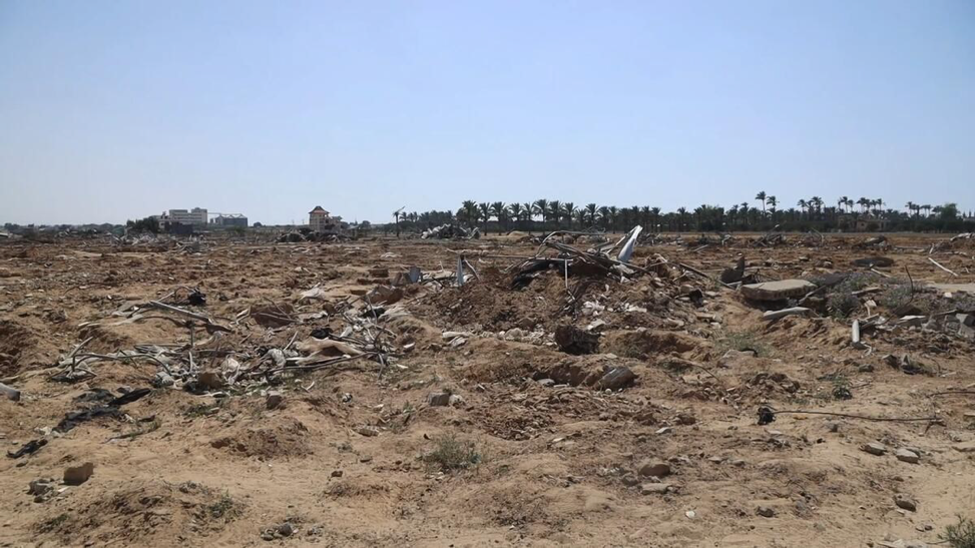
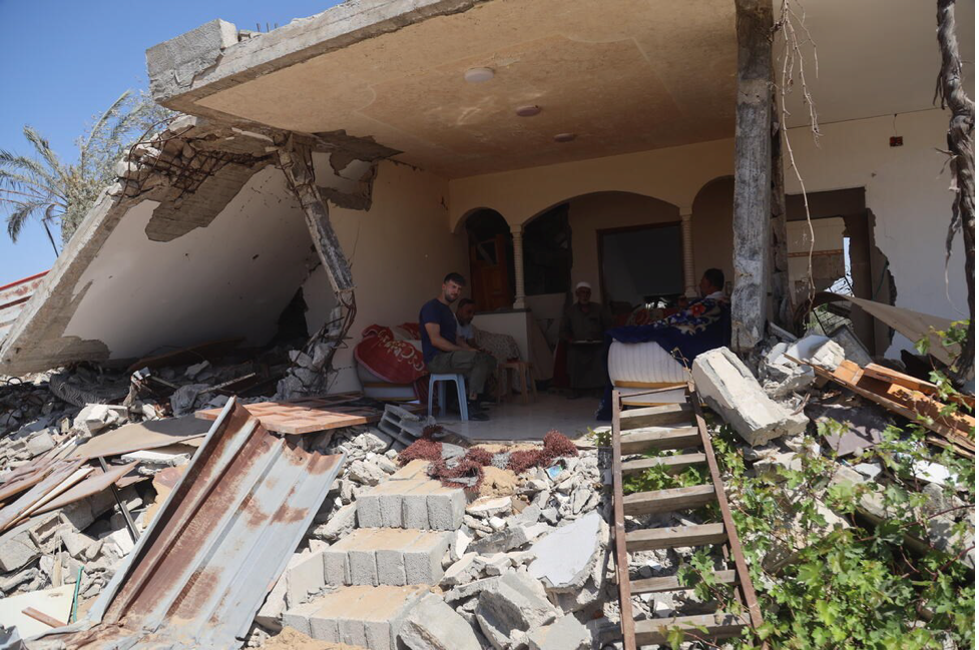
The military conflict between Israel and Palestine has destroyed large areas of farmland and many villages, causing food shortages. The FAO has called for peace and for the protection of farmers and farmland. (© FAO. Used with permission)
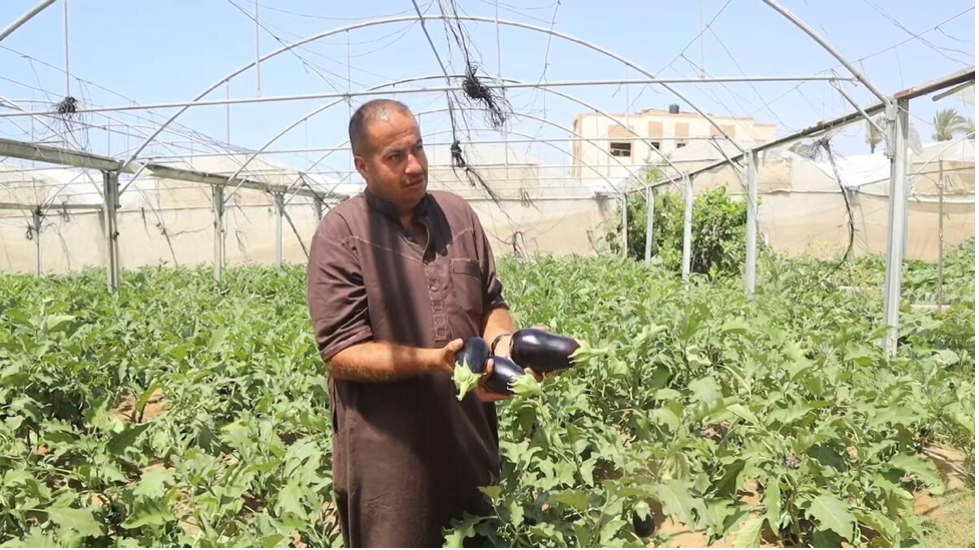
Khan Younis, Gaza Strip, 20 June 2024 — Mohamed El Yaty's damaged/destroyed greenhouse farm.
According to the latest geospatial assessment by the FAO–UNOSAT project, as of 23 April 427 hectares of greenhouses in the Gaza Strip had been damaged. Khan Younis Governorate had the largest damaged area (217 hectares, 41.9% of all greenhouses). (© FAO. Used with permission)

Responding to the FAO's call for "better production, better nutrition, a better environment and a better life", we are implementing the "Global Soil Doctors Programme" to cherish peaceful and fertile land.
The Global Soil Doctors Programme (GSDP) is a farmer-to-farmer training programme developed by the Global Soil Partnership (GSP). It aims to provide farmers with educational materials on Sustainable Soil Management (SSM). Outstanding farmers — recognised as "soil doctors" — are selected to support and educate other farmers in their local communities. The programme creates a self-sustaining exchange process that promotes SSM practices.
In March this year the FAO's Global Soil Doctors Programme accepted the Green Consumers' Foundation and Eco-affinity Inc. as participating organisations and authorised us to use its essential teaching materials and content and to translate them into Traditional Chinese. However, because Taiwan is not a member, the FAO cannot provide direct support, but we can report Taiwan's activities to them.
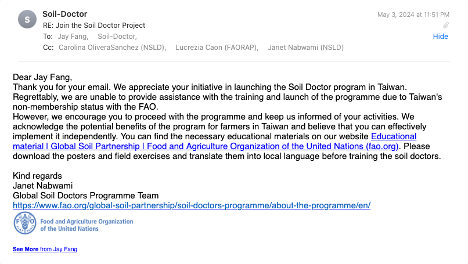
Since leaving the United Nations in 1971, Taiwan has had little dealing with UN bodies. Government participation meets international political resistance, whereas civil society organisations have more room to take part. Even without formal membership, they can still join, purely as civil society, in people's-livelihood activities of universal value.
Joining the UN Global Soil Partnership
From July we officially launched the "Global Soil Doctors Programme" as a promoter of the Global Soil Partnership (GSP). We plan to translate all teaching materials and references into Chinese, look for and invite groups and individuals in every county and city to take part as soil doctors, and form teams according to GSP rules.
Any group willing to contribute money and effort to promoting soil doctors can become a promoter. Promoters select potential farmer groups and potential soil doctors (usually farmers) and provide the necessary training. The trained soil doctors then train farmers in their local communities and organise community activities.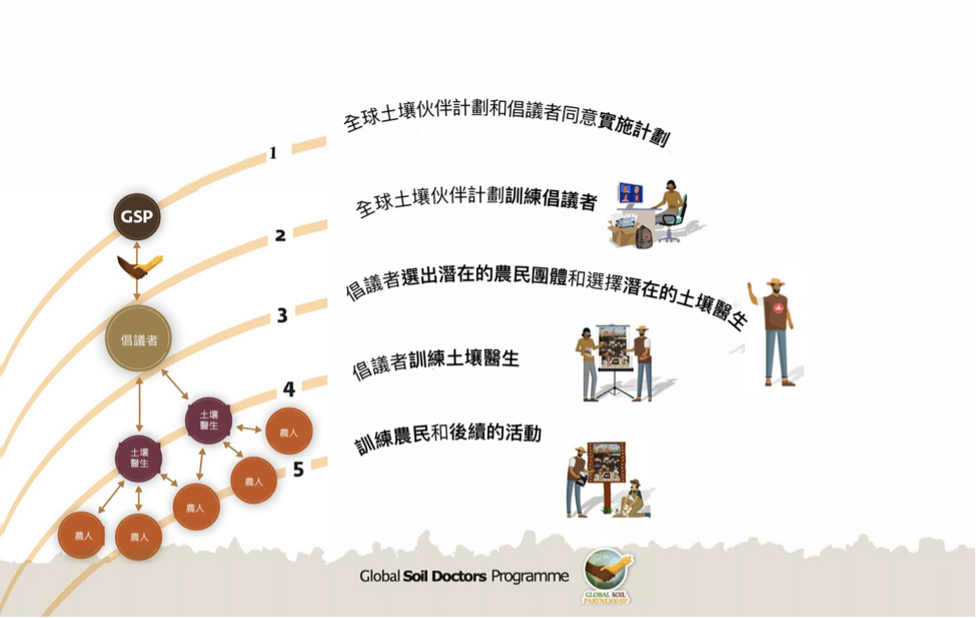
Promoters should meet the following conditions:
- Be a government agency, extension service, soil science society, local/regional association, non-governmental organisation, private sector body or any other recognised institution actively working on "sustainable soil management" in the country, or a soil scientist;
- Show interest in the topic of "sustainable soil management" (see the Voluntary Guidelines for Sustainable Soil Management, now being translated) and have solid general knowledge of agriculture, land management or natural resource management;
- Be able and interested to sustain the programme over the long term;
- Have existing links and connections with farming communities (the promoter must be trusted by farmers) and access to farmers' networks;
- Have the financial resources to fund trainers and/or the costs of running the soil doctors project;
- Ideally, national-level promoters should be able to coordinate and cooperate with other local promoters.
The promoter's role:
- Help trainers attend the GSP (Global Soil Partnership) training course;
- Identify the farmer groups that will take part in the programme and spread information to encourage their participation;
- Select GSP-qualified trainers according to the Global Soil Doctors criteria (Annex 1);
- Identify and select potential soil doctors according to the criteria in Annex 1;
- Train soil doctors to use the teaching materials prepared by the GSP (Global Soil Partnership);
- Provide soil doctors with the educational materials needed to implement the programme;
- Support soil doctors in training other farmers;
- Support the GSP (Global Soil Partnership) by translating the teaching materials into local languages;
- Combine the GSP (Global Soil Partnership) materials with related resources and initiatives already existing at national level;
- Enable the exchange of information between the GSP Secretariat and soil doctors (ensuring regular feedback);
- Share implementation feedback (such as field experience and local knowledge) with the GSP (Global Soil Partnership) and make suggestions on how to improve the programme.
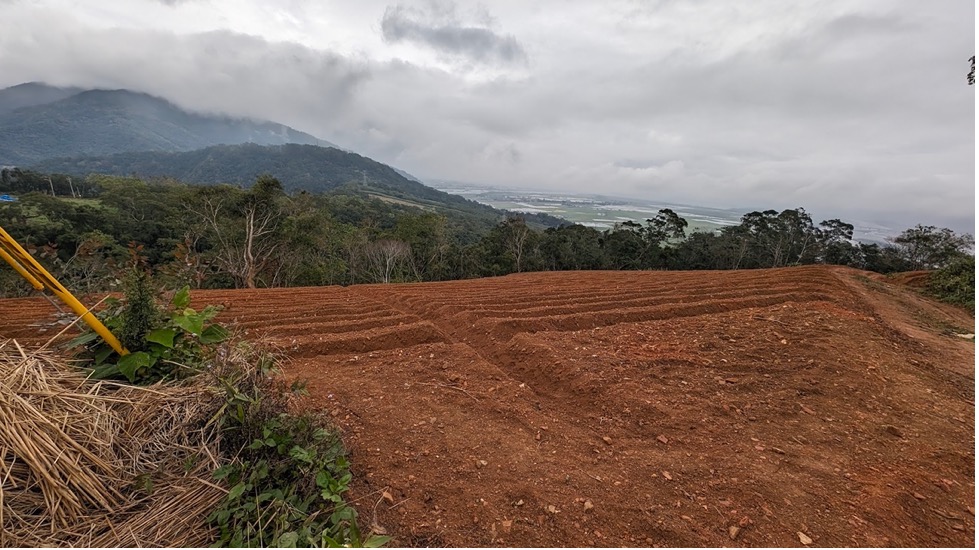
Taiwan's farmland is already scarce yet still suffers heavy erosion — a hazard the future soil doctors programme needs to eliminate.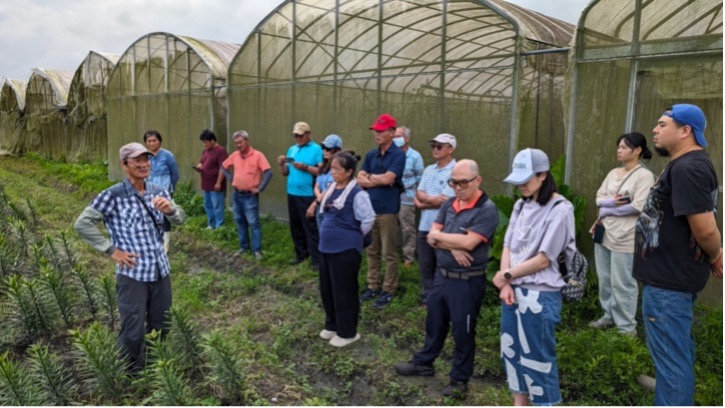
A preliminary soil doctors course held in June at Jiang Yu-bao's ecological farm in Shoufeng, Hualien. Jiang Yu-bao (speaking into the microphone) told the story of his 30-year road from farming to organic, ecological agriculture. (Photo: Jay Fang)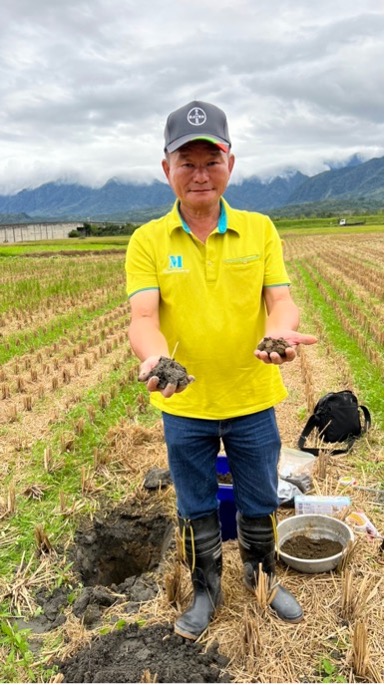
Chen Wen-hua, chief of Changliang Village in Yuli Township, Hualien, shows soil in his field whose organic carbon has increased since he reduced tillage intensity and began using bio-organic inputs. (Photo: Jay Fang)
Annex 1: Criteria for selecting trainers
- Formal education, such as a certificate, diploma or university degree in soil science, agriculture, agronomy or a related field, with a good understanding of the principles of sustainable soil management;
- Employed by the promoter, or a long-term supporter of the promoter, to train and support soil doctors nationally or at a selected sub-national level;
- Able to teach in the local language in the specific country or region, in order to train and communicate with local farmers;
- For the training of trainers provided by the GSP Secretariat, at least one soil doctor trainer per country (preferably two) should be proficient in Chinese and English;
- Have, or be able to build, close relationships with farming communities and soil doctors (trainers should be trusted by farmers);
- Able to train soil doctors using the existing training materials;
- Provide support to soil doctors to build the capacity of farmers in their communities;
- Able to contribute to the selection and adaptation of soil doctor training materials (posters, soil testing methods, soil testing tools, etc.) and adjust them to local conditions (language, relevant information, etc.);
- Available and willing to be trained; and
- Willing to undergo the necessary assessment to become a qualified soil doctor trainer.
Annex 2: Criteria for selecting soil doctors
- Represent a range of geographical areas, ensuring gender and ethnic diversity;
- Willing to coordinate or host demonstration plots;
- Show availability and willingness to receive specific training to become a qualified soil doctor;
- Able and eager to share knowledge with other farmers by running training sessions for farmers in their own and even other communities;
- Lead by example, innovating, reflecting and experimenting in their own farming practice;
- Able and willing to help farmers carry out basic assessments of their soil using the methods they were trained in;
- Willing to share their local knowledge and experience with the promoter, who will then share it with the GSP (Global Soil Partnership) to improve the GSDP (Global Soil Doctors Programme).
Protecting farmland is everyone's responsibility
Taiwan already has good grassroots farmer training courses. For example, the Dawushan Cultural and Educational Foundation has long worked with the Food Industry Research and Development Institute to systematically promote the use and home propagation of photosynthetic bacteria among farmers, fishers and livestock keepers across Taiwan, with remarkable results: nearly 10,000 people have been trained and the bacteria are now widely used.
In recent years National Taitung University's Extension Center for Environment-Friendly Agriculture and Fisheries has certified more than 500 hectares of environment-friendly smallholder farms in Hualien and Taitung, creating a force for change. The centre's director, Professor Liu Jiong-xi of National Taitung University, is determined to turn the whole of Taitung County organic.
The Taiwan Smallholder Carbon Farming Project is gradually expanding, and we hope this year to grow to 1,000 hectares of fields taking part in carbon farming, using the photosynthesis of crops to "plant" carbon dioxide from the air back into the soil.
If you would like to become a soil doctor or a soil doctor trainer, please contact the Green Consumers' Foundation at [email protected], and we will send relevant information to those interested.