努力小農
本文尚無譯文。
Getting to know soil by looking, listening, asking and feeling
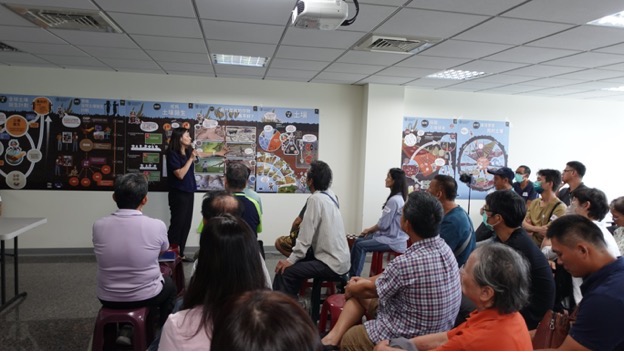
The first Global Soil Doctors information session began at the Dawushan Cultural and Educational Foundation in Pingtung. Video: https://youtu.be/ic8ls1LkJP4.
Understanding our soil
The UN Global Soil Doctors teaching materials fall broadly into three areas: the physical, chemical and biological aspects of soil. What farmers care about most is when the crops they work so hard on give poor yields or poor quality. Most farmers, seeing someone else's crops grow better than their own, hurry to apply fertiliser and spray, afraid of falling behind; at least by fertilising and spraying they have done all they can, and even if they lose, they don't lose face. But the old saying warns against "pulling up the seedlings to help them grow". Blindly chasing high yields is not necessarily a good thing. Take rice blast, which troubles rice farmers every year: its main cause is not the pathogen but the mindset of chasing high yields — planting the rice too densely and using too much fertiliser. High yields may be tempting in the short term, but in the long run not only can the yields not be sustained, the soil may even be ruined, and in the end you lose on both counts.
As the saying goes, "body and soil are one" (shin-do-fu-ji). The soil is like our body: we must protect it well in order to use it well. To be healthy we must first understand our own body. Chinese medicine's "look, listen and smell, ask, and feel the pulse" — observing what is said and done — is how the root of an illness is found and the right remedy prescribed. Nature has its own power to heal, and so does soil; once we find its natural laws, problems can be solved easily.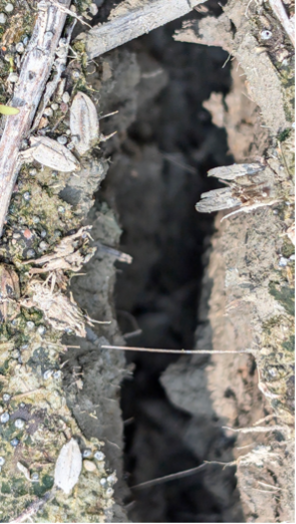
We need to understand the condition of our soil in depth, reading the signs: looking, listening, asking and feeling.
Several signs of our life and health can be seen by simple physical observation — body temperature, heart rate, blood pressure and breathing rate. We can measure them with simple non-invasive instruments, or even judge by our own senses whether they are normal. This is the most convenient method, just as when we drive we check the tyre pressure, fuel gauge and temperature gauge to drive safely.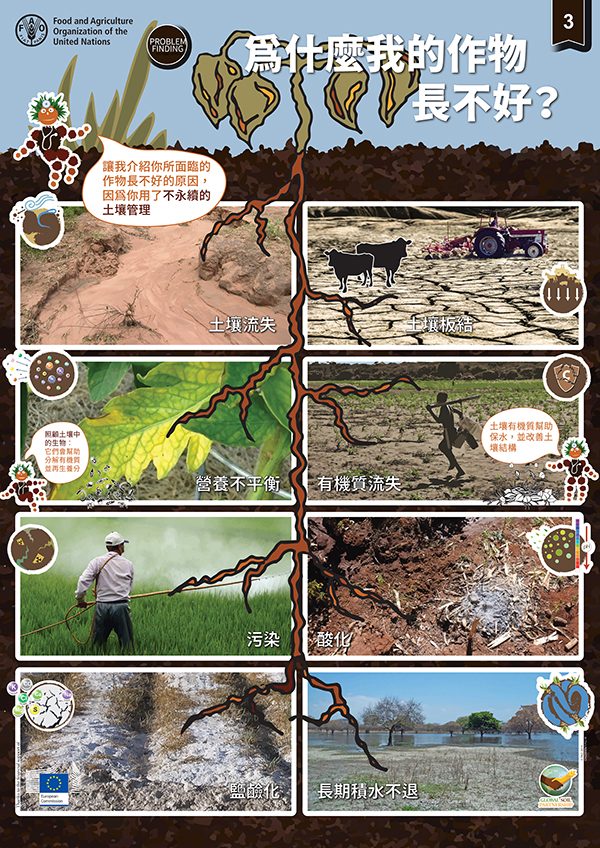
Eight soil symptoms
As soil doctors, we can also "read the signs" of soil to understand its health. The Global Soil Doctors Programme lists eight soil conditions that can be seen at a glance:
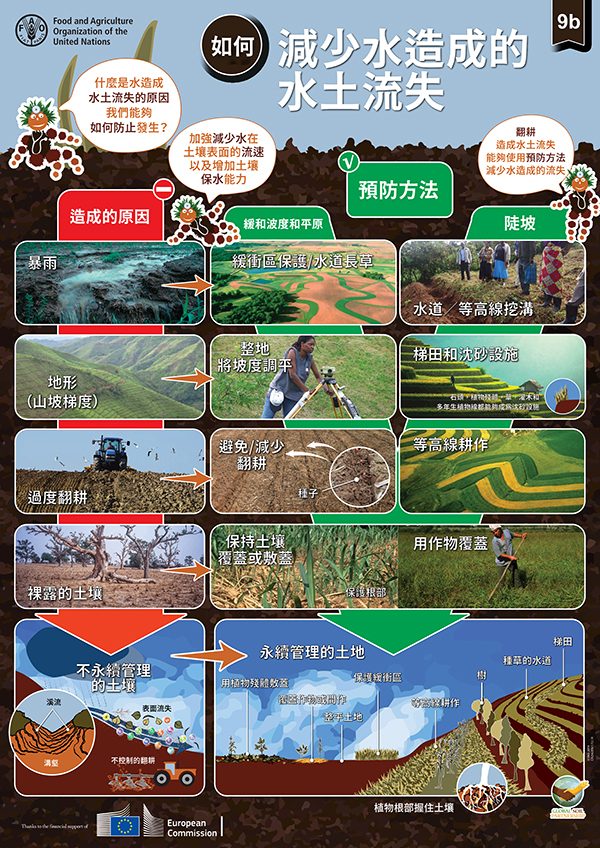
1. Soil erosion: Taiwan has high mountains, fast rivers and frequent earthquakes, along with occasional typhoons and torrential rain, so soil erosion is very common. Before preparing the land, you can see whether there are traces of water scouring, or whether a nearby river floods or debris flows occur; if so, soil may be lost. Of course improper irrigation can also wash soil away. Solutions include channelling water with ditches or planting trees to reduce soil erosion.
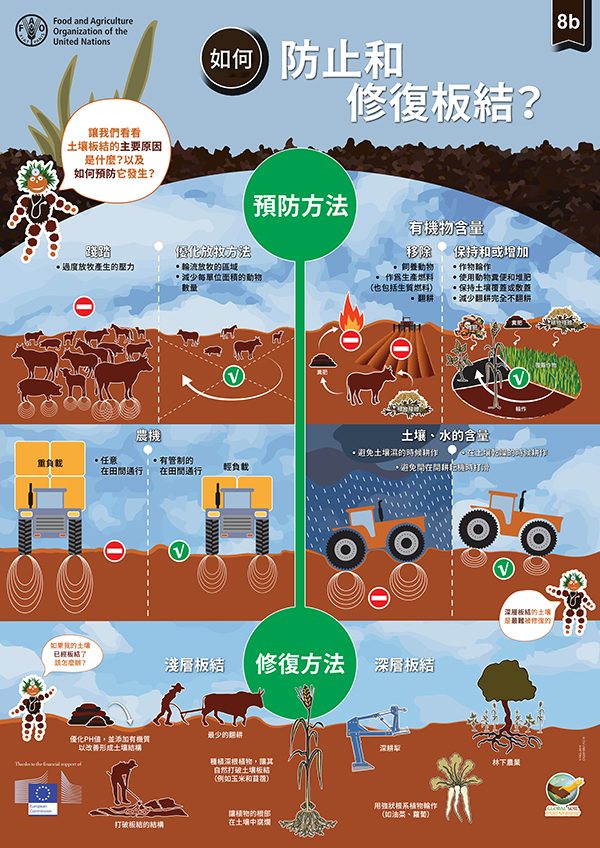
3. Nutrient imbalance: the colour of a plant's leaves and fruit shows whether it is malnourished, and experienced farmers can tell whether the problem is caused by pests and diseases, climate, soil pH and so on. The solutions are very varied and must be judged by person, situation, time, place and material; it takes a lot of experience and knowledge to prescribe the right remedy. Above all, don't grab any cure in a panic, or you'll only make things worse.
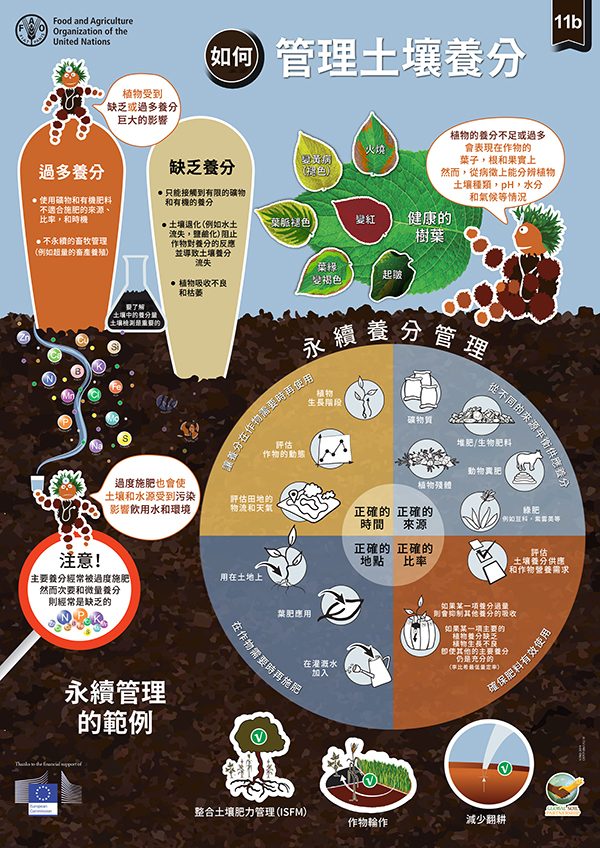
4. Loss of organic matter: this is common in Taiwan's soils today. Besides natural strong winds and heavy rain causing soil erosion and loss of organic matter with it, there is tillage that leaves the soil uncovered: the physical action of the tiller destroys soil structure and organic matter is lost. Many people think turning the soil loosens it and lets air in, but in fact the opposite is true — it leads to compaction. The solution is to prevent damage by water and wind, to think about how to till gently, and, where tillage is necessary, to cover the soil afterwards with green manure plants or mulch it with straw residues.
5. Pollution: on the one hand there is industrial pollution — Taiwan's farmland has more factories than weeds. Some are electroplating plants that discharge wastewater containing toxic heavy-metal compounds or highly toxic substances such as cyanide, or car repair shops dumping engine oil, and so on. These can kill crops or accumulate in them and poison consumers, leaving harm for generations. Pesticide misuse is another major source of agricultural pollution: apart from the food-safety problem of residues, it is a serious health hazard for farmers, and many still use their own bodies as test subjects and end up with cancer or rare diseases. Reporting illegal factories is everyone's responsibility; we must also learn to use pesticides safely and solve all kinds of pollution, for our own good and others'.
6. Acidification: everyone knows that overusing fertilisers leaves acidic substances such as nitrate, phosphate and sulphate to accumulate in the soil. It's like someone taking random medicines and tonics that the body cannot metabolise, straining the liver and kidneys. When the soil loses its liver-and-kidney detox function, it becomes acidified. Acidified soil needs its texture adjusted, with help from organic matter and microbes. Some people use lime to neutralise it; this is fast, but the violent acid–base reaction can make the soil saline-alkaline.
7. Salinisation: apart from the original soil properties, the main causes are agricultural water and improper use of inputs, which make salts accumulate in the soil and fail to drain away. Salinisation builds up over a long time; the causes must be found and removed one by one.
8. Long-term waterlogging: also called internal flooding. In areas of land subsidence along the west coast this problem is very serious. Apart from planting salt- and water-tolerant crops or switching to aquaculture, there are probably no better suggestions; the Global Soil Doctors materials offer no solution either, other than leaving such areas.
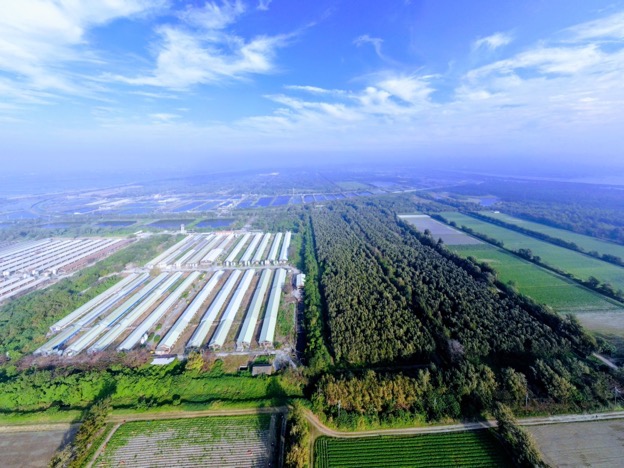
Large areas along Taiwan's west coast can no longer be farmed because of land subsidence. This is a problem without a solution; the land is unsuitable for farming and can only be converted to other uses.
That is the general content of the Global Soil Doctors Programme; there are more detailed explanations and introductions. The main purpose of the course is to promote dialogue between farmers, so they can exchange experience about their land, soil, crops, farming methods, farm machinery and inputs, combining local people and local wisdom to help farmers solve problems and produce better products, while also connecting with the world: "grassroots action, global thinking", bringing together the wisdom and experience of farmers worldwide to work together for a sustainable planet.
We are recruiting Global Soil Doctors promoters, seed teachers, soil doctors and participating farmers. All are welcome to join. Application form: https://forms.gle/pZUWQnfB3dJUVAoHA
Soil doctor teaching materials: https://1drv.ms/f/s!ApUqRLxnJNc1h_p_j7wk1UDz_y0VHQ?e=DF0ZrN