努力小農
本文尚無譯文。
After the typhoons: the importance of the Global Soil Doctors, revisited
Is heaven and earth without mercy?
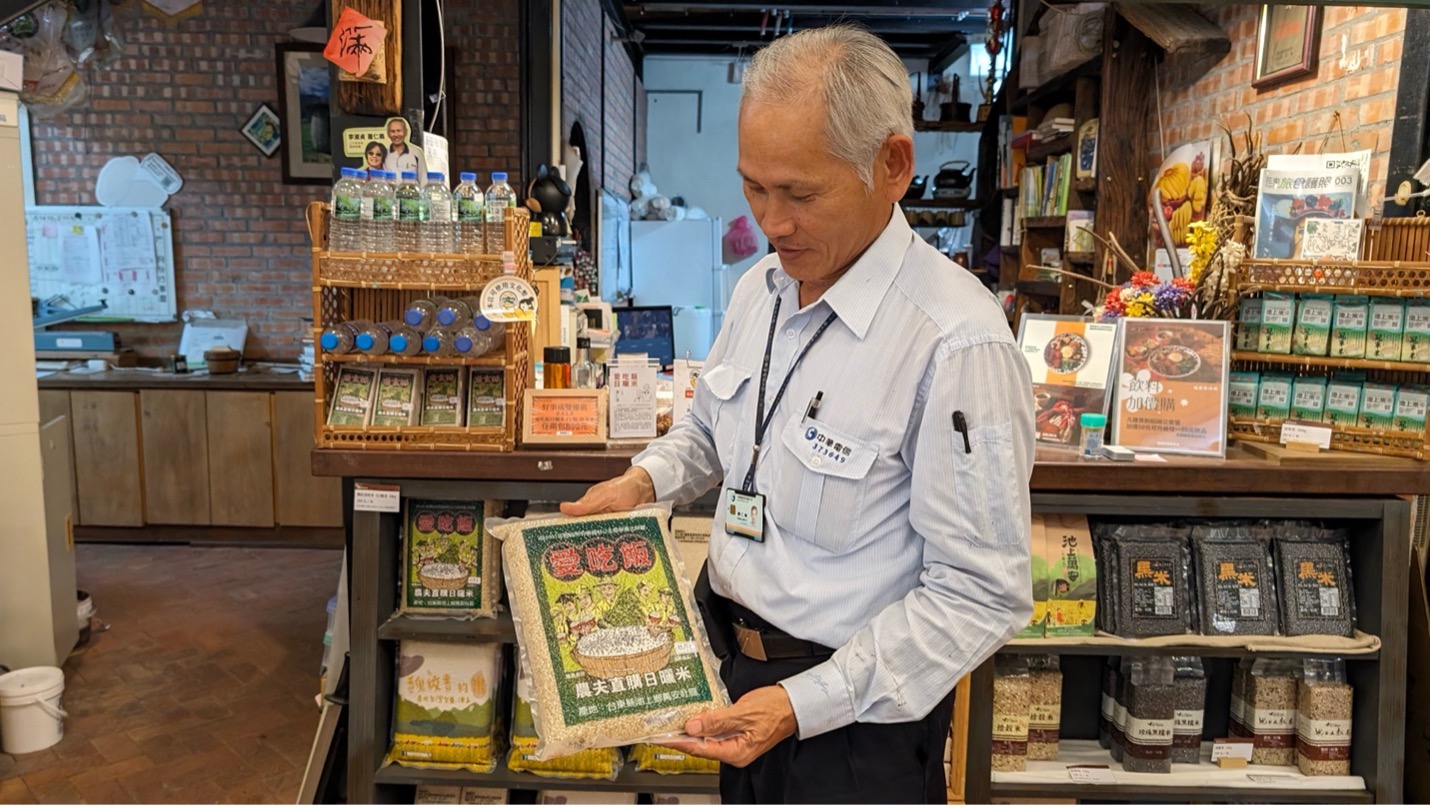
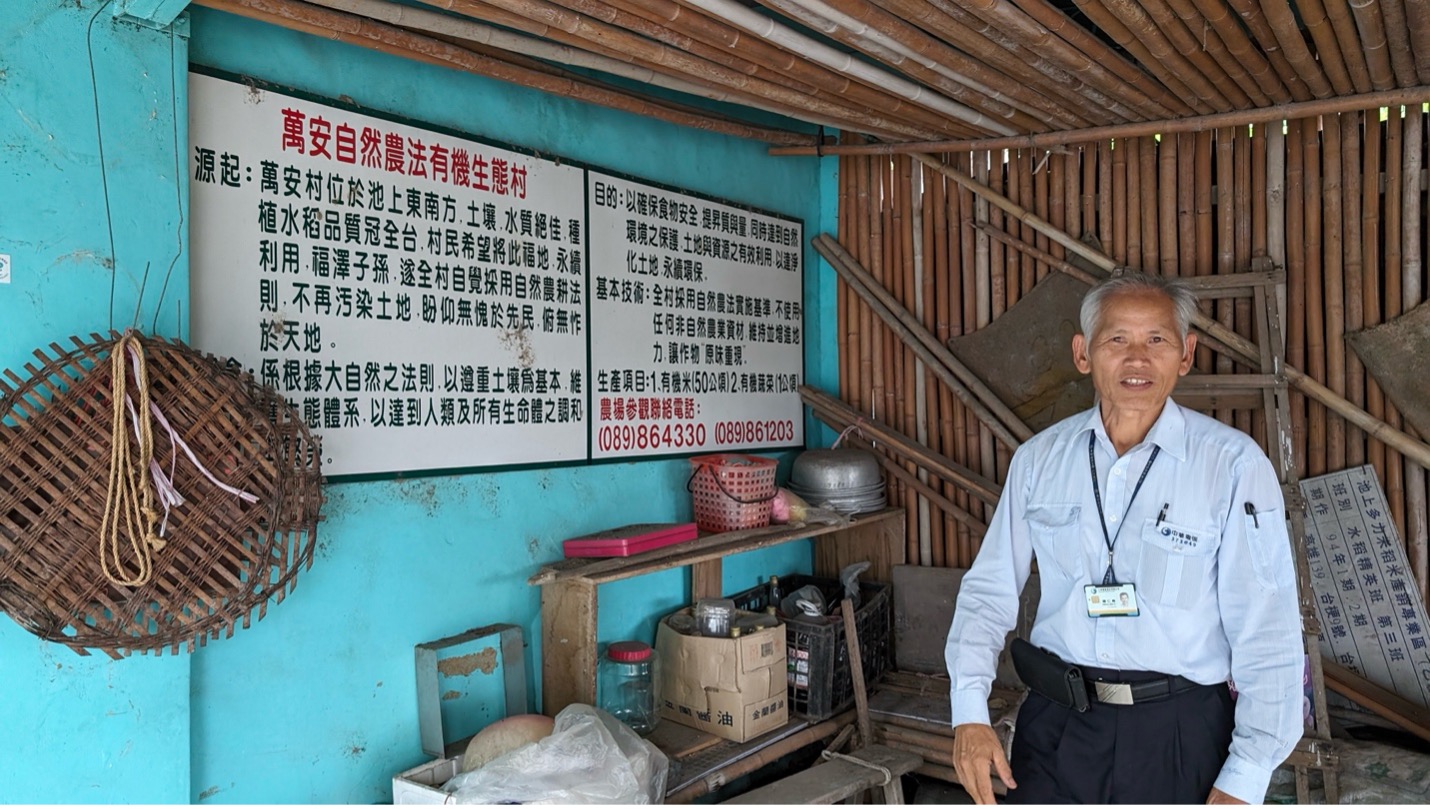
Hsiao Jen-yi, a rice farmer in Wan'an Community, Chishang, who works for Chunghwa Telecom, began promoting organic farming with the Wan'an community 30 years ago. He too was hit hard by Typhoon Kong-rey this time. With a wry smile he said: "I'm nothing special — plenty of farmers had it worse than me."
"Being a farmer means depending on the weather to eat," sighed Chishang rice farmer Hsiao Jen-yi after Typhoon Kong-rey. This year Chishang lost at least a third of its second rice crop.
Although news of all kinds of AI (artificial intelligence) fills the media, the ultimate question of "putting food on the table" still depends on the weather. No artificial intelligence can predict the weather and tell farmers how to prepare for its changes.
This year (2024), after the Autumn Equinox (22 September), two strange typhoons appeared: Krathon in early October and Kong-rey at the end of October. Both broke past records and all previous experience, and caused major agricultural losses in eastern Taiwan.
Krathon came in early October, before the rice harvest, so its impact was relatively mild, but flooding in Tainan and Kaohsiung caused great hardship for many farmers. The continuous heavy rain this summer had already badly damaged pomelos and other citrus; normally juicy oranges became dry and woody. Some escaped, of course, but overall quality was poorer.
At the end of October, visiting smallholders in Hualien and Taitung, I saw that Taitung sugar-apple farmer Wu Wei-chung's field had been washed out by Krathon. He still considered himself lucky — plenty of people had it worse: "farmers can only depend on the weather to eat".
The typhoon made landfall in Chenggong and blew the rice ears away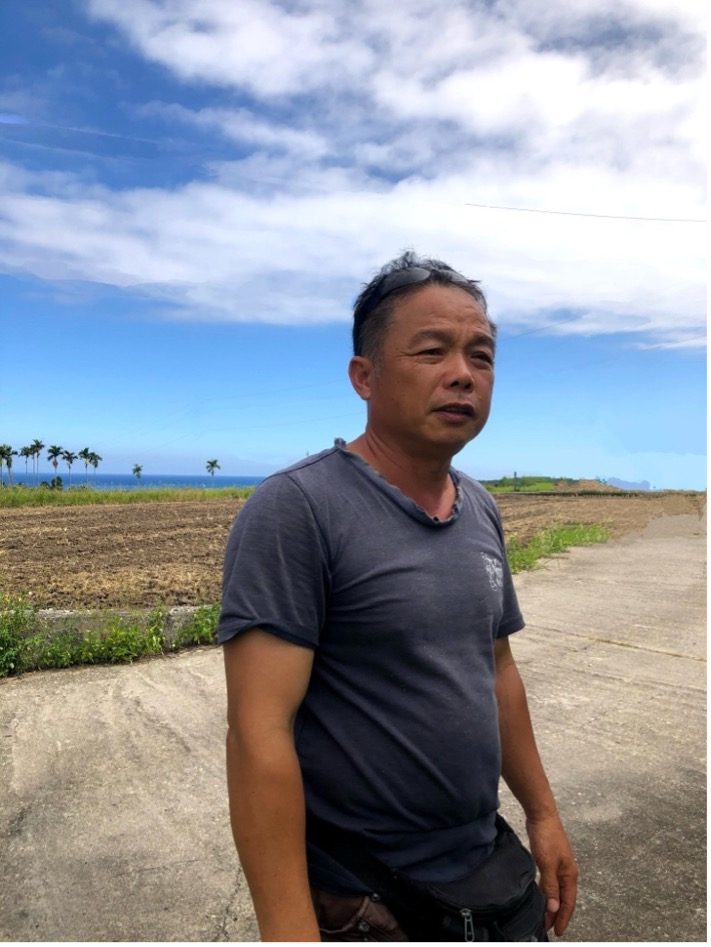
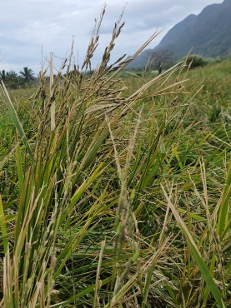
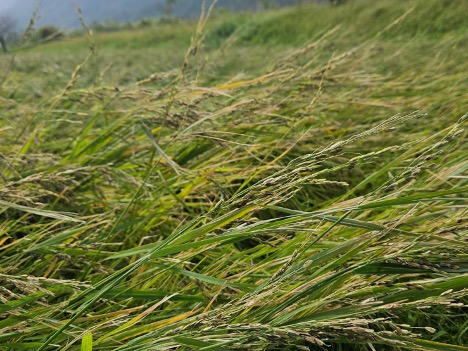
Kao Shih-yi, a smallholder in Pa'ongong community, Chenggong Township, Taitung, said that since the typhoon made landfall in Chenggong, it stripped his purple rice ears bare. Only 20–30% is left, not even enough to cover the cost of harvesting, but he still has to harvest it and deliver it to customers who ordered — he just worries the quality won't be good and he'll let them down.
On 28 October Chishang in Taitung held its Autumn Harvest Rice Art Festival in the rain. The crowds were undiminished, but local rice farmers were worried because Typhoon Kong-rey was about to make landfall in Hualien and Taitung. Many farmers harvested in the rain, afraid that if they were any slower the ears in the field would lodge, sprout after being soaked and be beyond saving. That is indeed what happened: most of the ripe ears that could not be harvested in time were doomed.
Not far from Chishang, Changliang Village in Yuli Township, Hualien, joined smallholder carbon farming the year before last. When Typhoons Saola in September and Koinu in early October struck last year, the rice was not yet ready for harvest, so the impact was small. But this year the typhoon arrived at the end of October, and everyone worked together to harvest as much as they could.
"The typhoon made a successful landfall" — this is not gloating, but a pun: it made landfall in Taitung's Chenggong ("success") Township. Kao Shih-yi, an Amis farmer, is known for growing native, ecologically grown white, purple and black rice. His land is small, but he has steady customers who love the rice he grows in Pa'ongong. This time he was right at Kong-rey's landfall point and once again bore the full brunt. "This year I don't know what to give my customers. One customer's daughter came back to Taiwan and wants to buy my purple rice — even if I gave her all of it, it wouldn't be enough," Kao said in distress.
"This year is even worse than last year. The rice wasn't ripe yet and I hadn't harvested it, and most of it was blown away!" Kao said helplessly. "Grain blown away by the wind?" What does that mean? Without a force-14 gale, it is impossible to "strip" the grains from the stalks.
Failing to see the looming food security crisis
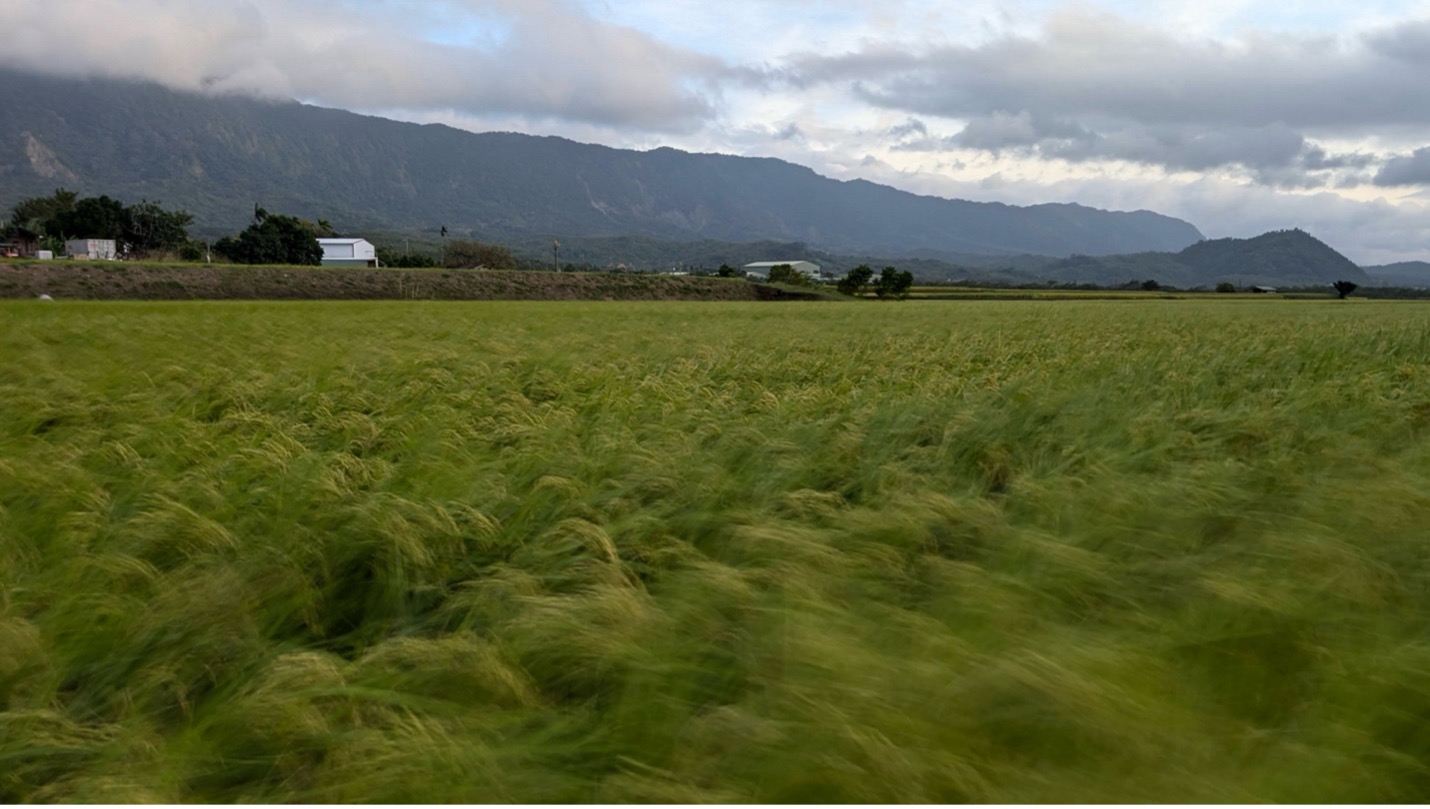
Taiwan has high mountains and fast rivers, plus strong earthquakes and frequent typhoons, making soil and water conservation — preventing problems from water and wind — essential.
During Typhoon Kong-rey, Taipei's strongest gusts reached about force 11 and reportedly more than 2,000 roadside trees fell, leaving Taipei residents complaining loudly. Yet this damage was a drop in the ocean compared with Hualien and Taitung. For Taipei it was a temporary problem of cityscape and traffic; for Hualien and Taitung smallholders it meant losing every grain of a year's or half-year's harvest.
Even with subsidies for agricultural losses, Taiwan's food supply remains a big problem. On 23 October Minister of Agriculture Chen Junne-jih reported to the Legislative Yuan that last year's food self-sufficiency rate was only 30.4%, the lowest in 18 years.
With this year's typhoons it will probably be even lower, and Taiwan's food security will become more unpredictable with climate change and the threat of war around the world. The two great rice exporters, India and Thailand, have both announced halts to rice exports in response to war and climate change. This should be a wake-up call for Taiwan's government and opposition alike, yet public debate in Taiwan would rather argue over whether to build small modular nuclear reactors — of which there is not yet a single successful example in the world — than discuss solutions to Taiwan's looming food and climate security.
Taiwan's population is shrinking faster than anywhere else in the world. Perhaps a shrinking population solves the root problem of "sustainability", but globally, by the 2050 net-zero target year, the world's population is expected to grow from more than 8 billion today to 10 billion, and the question of food must still be solved.
Over the past 20 years the UN Food and Agriculture Organization has actively worked on solutions for climate and food security. Climate change poses a serious threat to global food security; extreme weather events are becoming more frequent, making agricultural production more unstable. This instability is especially deadly for communities that depend on farming for their livelihood, particularly in developing countries. The FAO recognises that without effective measures, climate change will further worsen poverty and hunger.
The FAO promotes Climate-Smart Agriculture (CSA), which aims to raise agricultural productivity and incomes while strengthening resilience to climate change. CSA includes many measures, such as improving crop varieties for greater stress tolerance, improving irrigation to save water, and promoting sustainable land management.
Effective water management is vital in responding to climate change. The FAO encourages modern irrigation such as drip and precision irrigation to improve water-use efficiency. It also promotes protecting and restoring natural ecosystems such as forests and wetlands, which play an important role in regulating the water cycle and reducing flood risk.
The FAO stresses policy and institutional reform
The FAO stresses that governments should create policies and institutions that favour sustainable agriculture, including technical support and financial assistance to help farmers adopt climate-adaptive farming practices. It also calls on the international community to strengthen cooperation and establish a global food reserve mechanism to respond to sudden food crises.
The FAO works to promote the transfer of knowledge and technology to help developing countries raise agricultural productivity. This includes training courses, sharing best practices and using digital technology to make agricultural data more accessible and accurate. For example, the FAO works with countries to develop agrometeorological information services that help farmers adjust planting plans according to weather forecasts.
The FAO also recognises that community participation and gender equality are key to achieving food security. It advocates giving rural women more rights and resources, since they play an important role in agricultural production. It also encourages communities to jointly draw up and implement climate adaptation plans, so that these plans fit local needs and conditions.
From years of typhoon experience we have found that however advanced pesticide and fertiliser technology becomes, when it comes to the effects of climate and weather, what these "advanced technologies" can solve is a drop in the bucket. The real cause of falling yields is not chemical but physical: terrain, hydrology and climate.
The Global Soil Doctors Programme offers course content on everything from terrain to extreme weather, which smallholders should pay special attention to. First, avoid low-lying land, slopes and areas at risk of debris flows. If this is not handled well, years of hard work can be wiped out in one heavy rainstorm or typhoon.
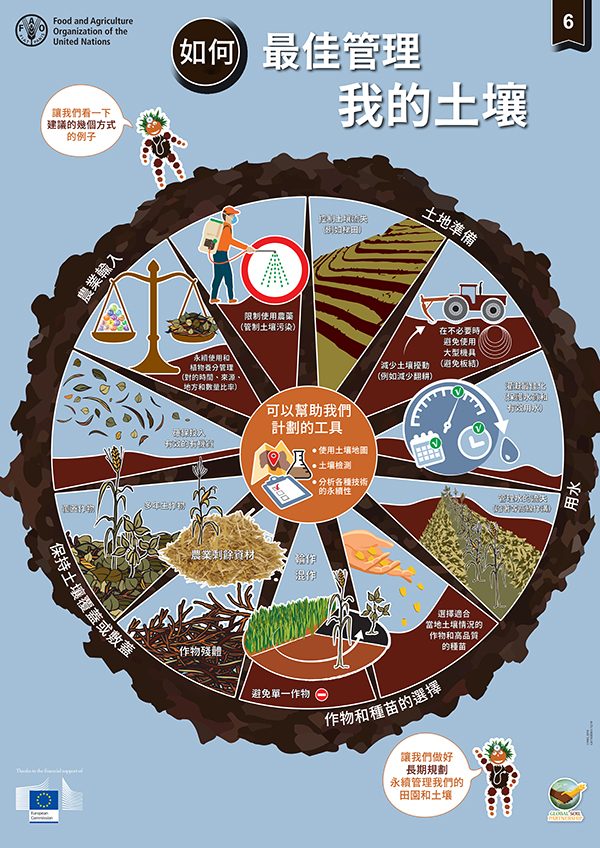
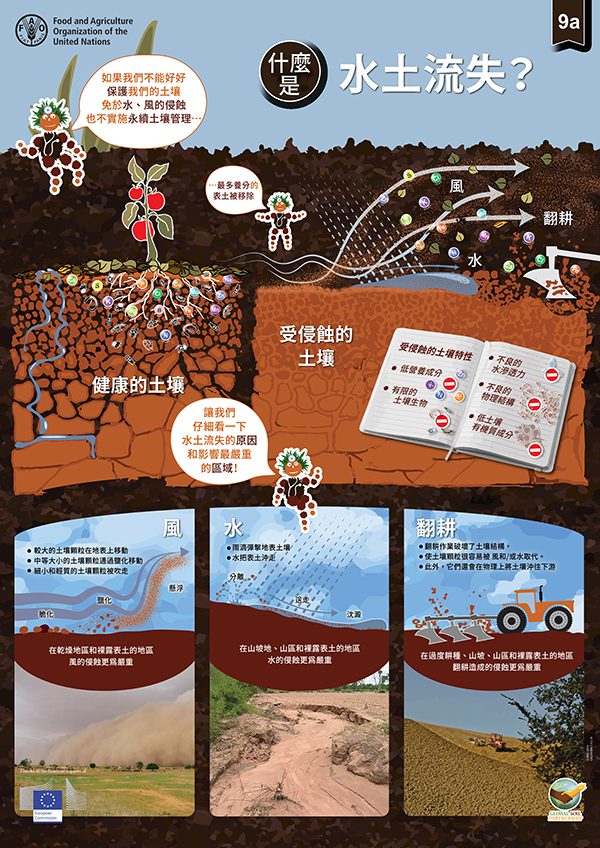 Farmland needs good "feng shui". In the Global Soil Doctors materials on how best to manage my soil, there are two things to do in soil preparation: 1) control soil loss (reduce exposure to floods or debris flows), and 2) avoid large machinery and minimise soil disturbance — an active way to prevent soil loss and compaction. As for water, pay attention to the safety of water sources, protect water quality and prevent water loss, which also reduces soil loss.
Once soil and water are lost, the losses are even greater. Whatever fertiliser you use, it is hard to change, and you only waste money and time. Taiwan has many slopes, so avoid the windward side exposed to strong winds and heavy rain, avoid leaving soil bare, and reduce unnecessary tillage, which actively increases soil loss.
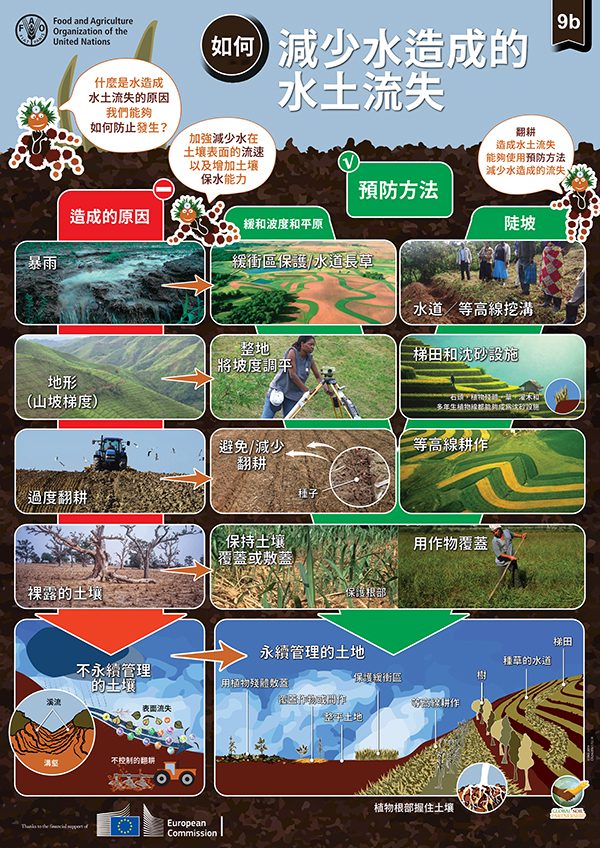
The Global Soil Doctors Programme recommends several local protective methods to prevent soil loss. When the wider environment is unfavourable, making some local corrections may help avoid some disasters:
- To face torrential rain, create buffer zones, for example by planting trees and grass.
- Level sloping land and build terraces, sediment ponds and similar structures.
- Avoid excessive tillage, which destroys the original stability of the soil. Where possible, use level terraces and farm along the contour.
- Practise sustainable soil management as far as possible, including mulching with plant residues, intercropping, converting slopes to terraces, or planting grass and trees to physically slow the impact of wind and water.
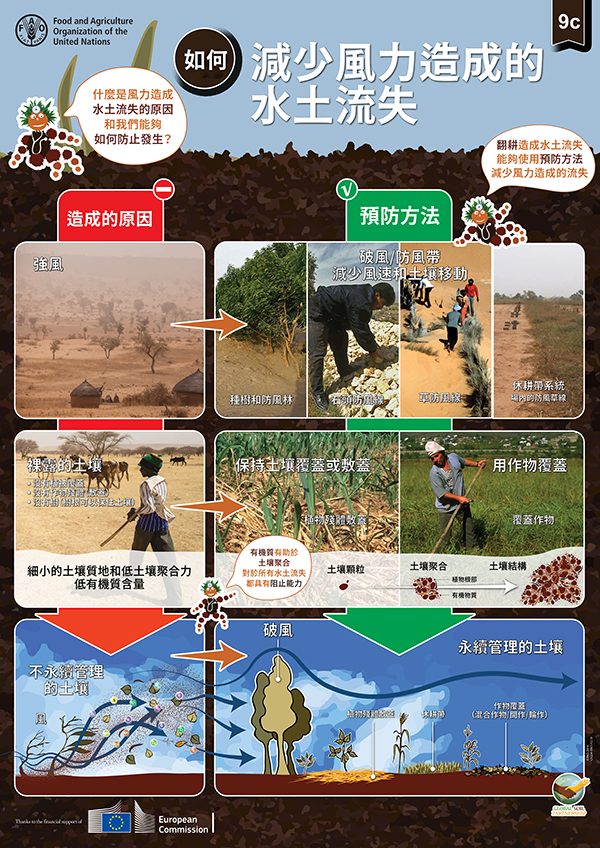
Wind can also cause soil erosion. The Global Soil Doctors materials suggest several practices:
- Plant windbreak trees or grasses, or build windbreak lines with stones. Jiang Yu-bao, an organic farmer in Shoufeng, Hualien, built a windbreak wall on the north side of his farm using Baiji netting (a tough mesh fabric) and recycled concrete utility poles, and it works very well.
- Reduce bare soil: cover harvested land with plant residues as much as possible, and plant green manure or intercrops during fallow periods to increase the soil's aggregate structure.
- Practise sustainable soil management: combine all of the above — choose land less exposed to gales, torrential rain and debris flows, reduce tillage and bare soil, and use suitable trees, grasses and structures to break the wind. These can reduce wind damage to the land.
Taken together, these soil protection measures also offer a good opportunity to increase soil organic carbon, so you can join smallholder carbon farming for emission reductions. On the one hand you reduce disaster losses; on the other you increase soil carbon sinks, which can be converted into internationally certified carbon credits and traded for extra income. Why not?