 努力小農
本文尚無譯文。
Smallholder of the Year 2024: Chang Huan-jui
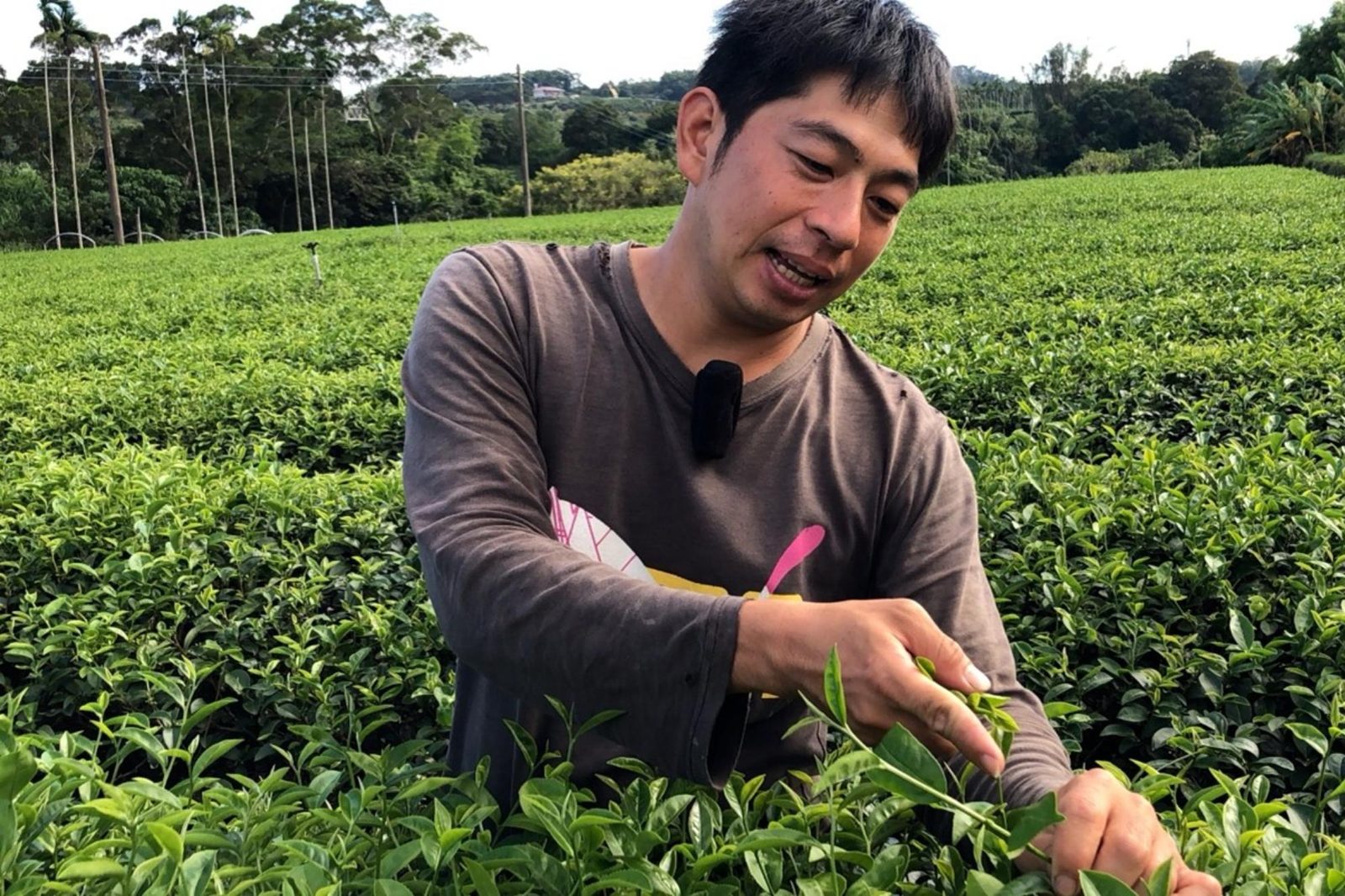
Chang Huan-jui looks for tea green leafhoppers in his tea garden — the little partners that red oolong's natural floral aroma cannot do without. (Photo: Jay Fang)
Every year at the Beginning of Spring, which is also Farmers' Day, we present the Smallholder of the Year award to a smallholder who made an outstanding contribution the previous year. This year the honour goes to Mr Chang Huan-jui of A-Shan-ge's Toxin-Free Hut in Yong'an Village, Luye Township, Taitung County.
Chang Huan-jui was born in 1983. At nine he went to Taipei for third grade, but kept going back and forth every year. Later he worked as a mechanic in a motorbike shop. Fed up with Taipei's restlessness and lack of warmth, and missing Taitung, he returned to Luye at 30. In the 12 years since coming home he has worked diligently, upbeat and ambitious. The only thing he lacks is a wife — he hopes this award will help him find the one.
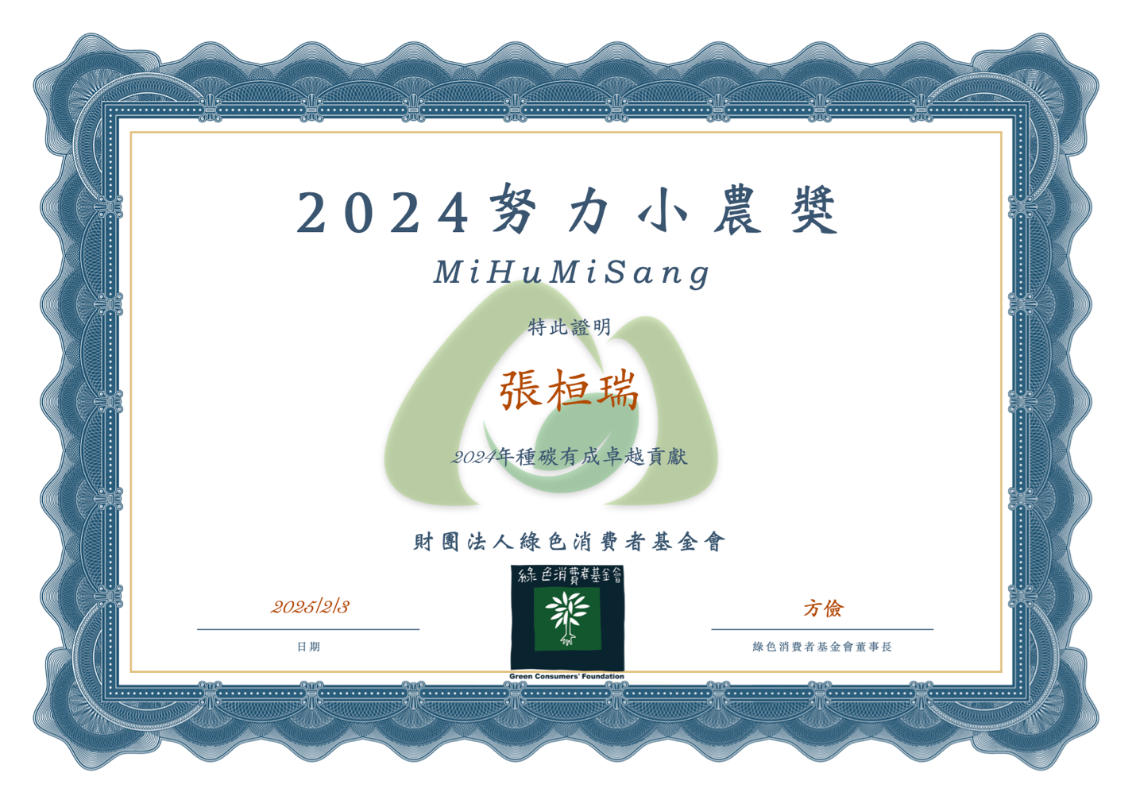
In fact A-Shan-ge's Toxin-Free Hut has entered the Luye red oolong tea competition for 12 years. It began winning in 2021; with two competitions a year, it has now collected nearly 30 gold medals.
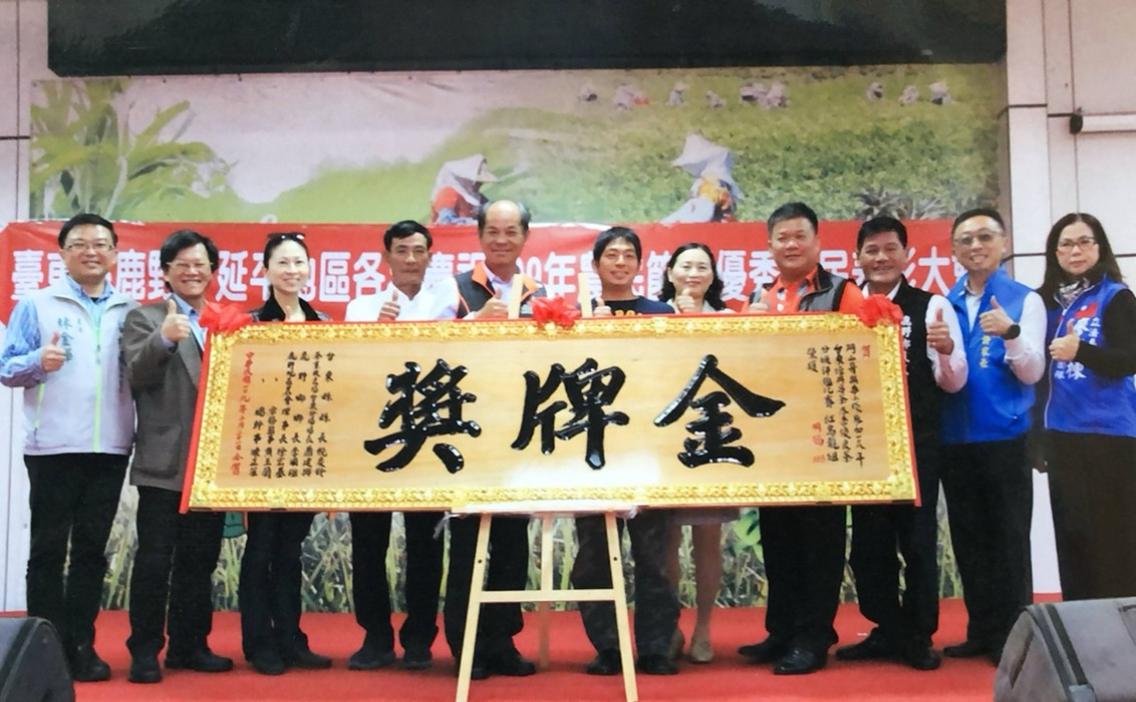
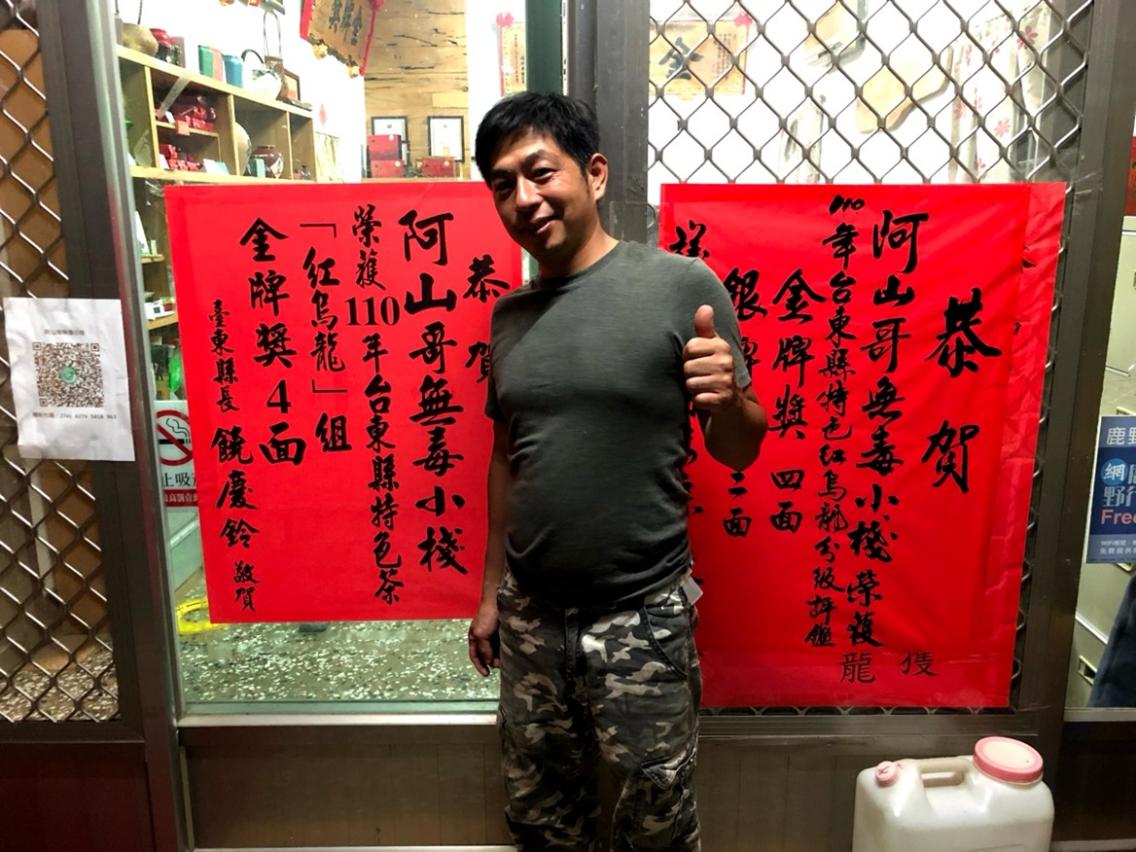
Young farmer Chang Huan-jui came home and started from the soil: growing good tea, making good tea and selling good tea, winning more than twenty gold medals. (Photo: Jay Fang)
Chang says he has always placed great importance on soil management. Since joining carbon farming he has learned to observe changes in soil, environment and living things systematically, and he has found constant change. Apart from the tea green leafhoppers, little has changed for now; there are more earthworms and microbes, the soil is softer, and there are insects. The soil must be well nourished for the tea to have depth of flavour.
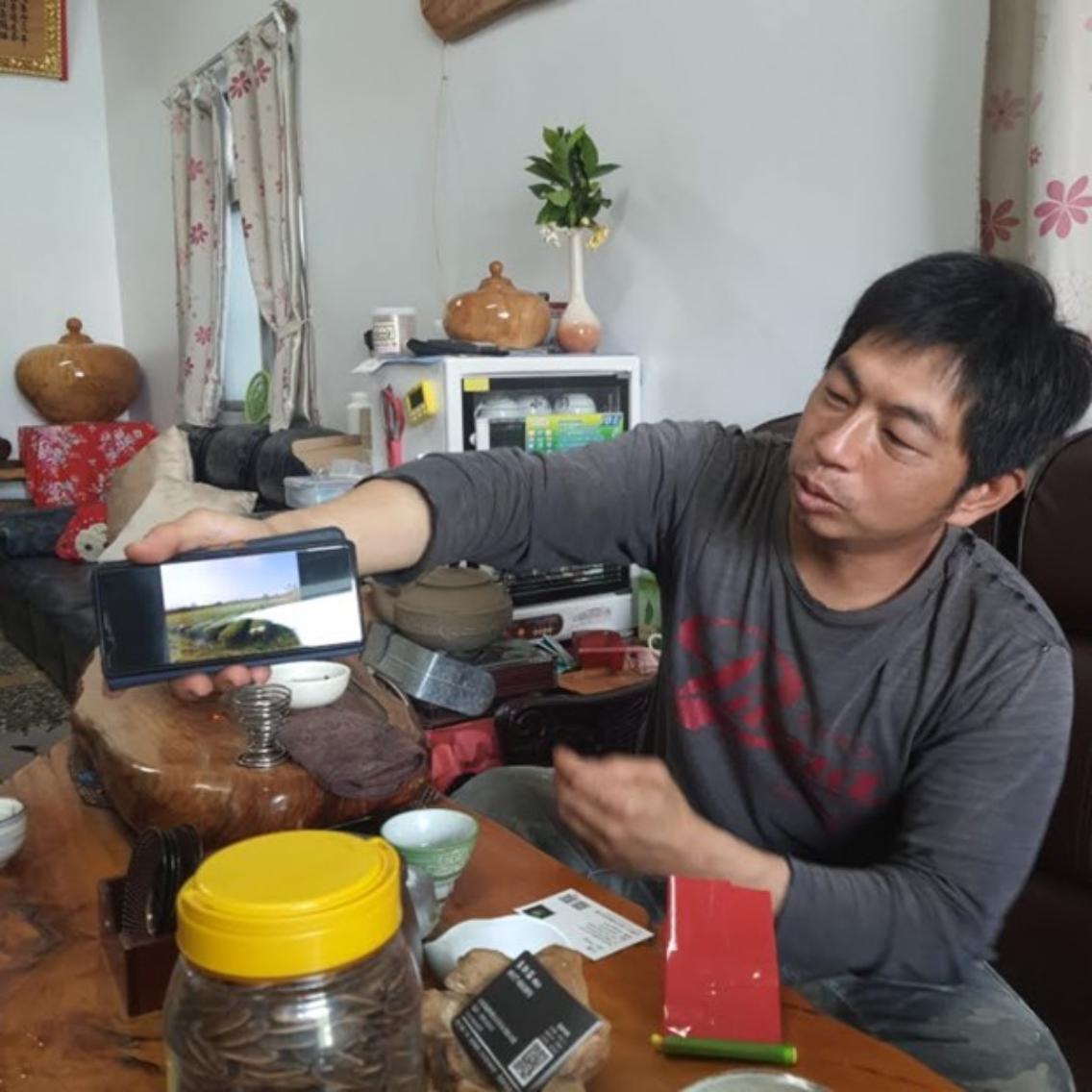
On my first visit to A-Shan-ge's Toxin-Free Hut in 2020, he explained how he cares for his tea garden. (Photo: Jay Fang)
Fed up with Taipei, A-Shan-ge went home to start farming from scratch
I met Chang Huan-jui in early May 2020, an energetic young man born in Luye. As a child his family moved to Taipei; later he studied mechanics and repaired motorbikes. As he approached 30 he felt Taipei was not his home and wanted to return to Luye to farm.
"If I can't make a living, I'll go back to work in the city." Driven by his own conviction, he went home to start farming.
At first he knew nothing and tried everything from scratch, planting all sorts of things to see what would grow. Besides watching the sky and the land, he also had to watch the wildlife. Chang came home determined to be "toxin-free". In the city he had to put up with polluted air, tap water that smelled odd, and "pretty" food grown who knows how. He had had enough, and back in Luye he wanted to avoid such pollution, so he named his place "A-Shan-ge's Toxin-Free Hut". He is the third child, and "san" (three) sounds like "shan", hence "A-Shan".
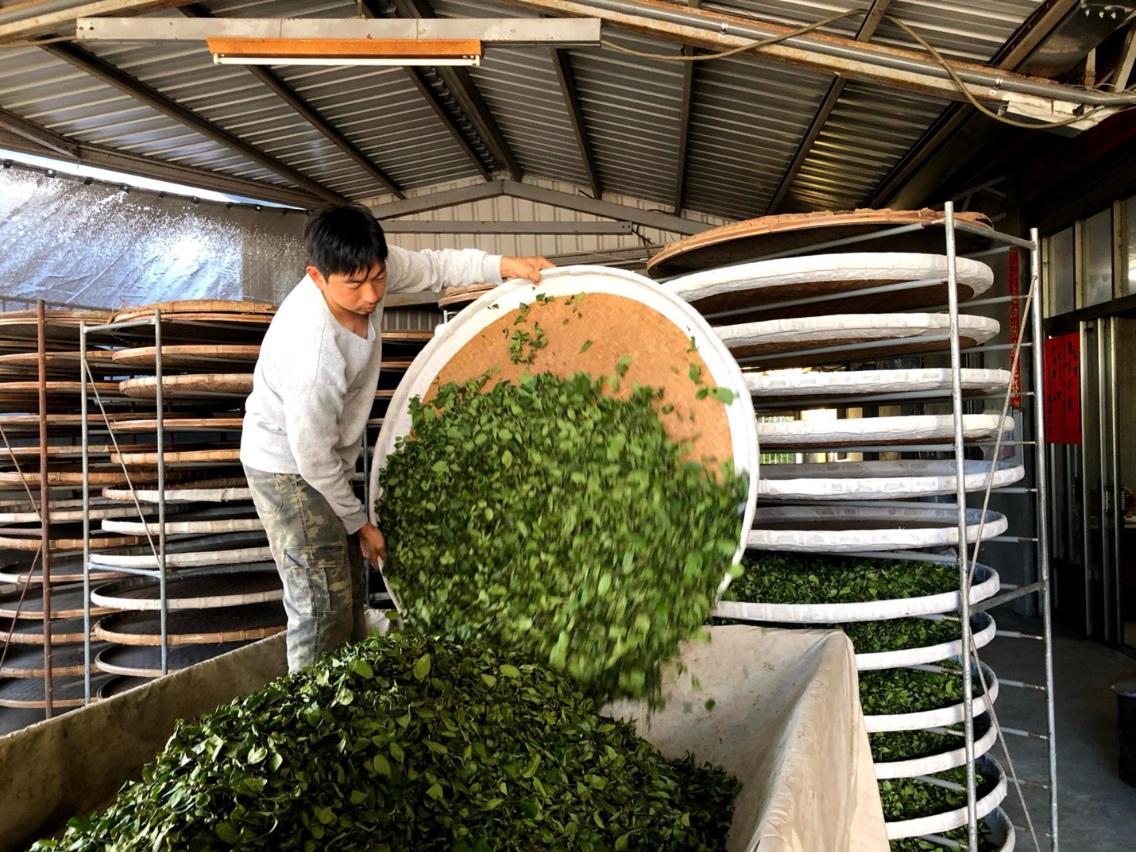
Tea making is physically demanding work: up at 4 or 5 a.m. to bring in the tea and sort the fresh leaves. (Photo: Jay Fang)
Yong'an Village in Luye is a place of outstanding land and people. It won the first Gold Medal Village award in 2018 for its community building and sustainable community development model. It sits on the Luye Highland, and its summer hot-air balloon festival has become a local highlight with great tourism value. Taking advantage of the location, Chang also runs farm experience activities, so life among beautiful mountains and water is never dull.
Tea green leafhoppers: the little partners red oolong's natural floral aroma can't do without
Tea is an industry with deep local cultural roots: each place's land and water nurture their own tea. Growing good tea is not easy, and it takes a tea master's skill to bring out the leaves' character. Yet the market is dominated by tea traders who use commercial packaging and hype to push certain teas to sky-high prices — Yunnan pu'er, Taiwan's Oriental Beauty — and tea has lost its original nature as an everyday drink for ordinary people.
Luye lies on Taiwan's periphery and started growing tea late. In the 1980s, when former president Lee Teng-hui was governor of Taiwan Province, he named the local tea "Fulu tea", a semi-fermented oolong. Later, influenced by the honey-scented black tea of Ruisui in Hualien, local makers fermented the oolong more deeply, close to black tea. Yong'an Village also "abounds" in the tea green leafhopper, which gives Oriental Beauty its distinctive floral, honey and fruity aroma. When leafhoppers bite the tender buds, the leaves blister like human skin after a mosquito bite; physiological changes inside the leaf produce special aromatic compounds, and after proper roasting a unique fragrance emerges, with every infusion tasting a little different. So in 2008 Luye named its half-oolong, half-black tea "red oolong" — a new variety among Taiwan's many teas.
Chang came to tea farming from another career and holds to a toxin-free philosophy, so his tea garden teems with tea green leafhoppers. Working with tea master Mr Hsiao, he roasts and develops red oolong, Jin Xuan and other Luye specialty teas.
Boosted by his mechanic's experience, Chang's technique improves every year and wins countless awards
Tea making is a craft that needs culture, experience and talent in equal measure, because tea is alive: the quality of each season's and each year's leaves changes with terroir and weather. When I first met Huan-jui five years ago, frankly his tea quality was not yet stable; it lacked character of its own and he was not very confident. In fact red oolong is itself a new type of tea whose definition is still unclear — oolong fermented deeply but not quite to black tea — with countless craft details in between, all of which must suit the character of that season's leaves.
Thanks to his experience as a motorbike mechanic, Chang is good at repairing and operating machinery, so he can handle the machines used in growing, picking and processing tea and master the right heat. His technique improves every year, and the quality of his tea is now controlled and stable.
Red oolong's character depends on bites from tea green leafhoppers. Taking Taiwan's most popular Oriental Beauty as the benchmark, floral, fruity and woody notes are the distinctive, captivating flavours that emerge when brewing — and floral notes are the hardest to achieve, requiring the right timing, place and people to produce the best floral aroma.
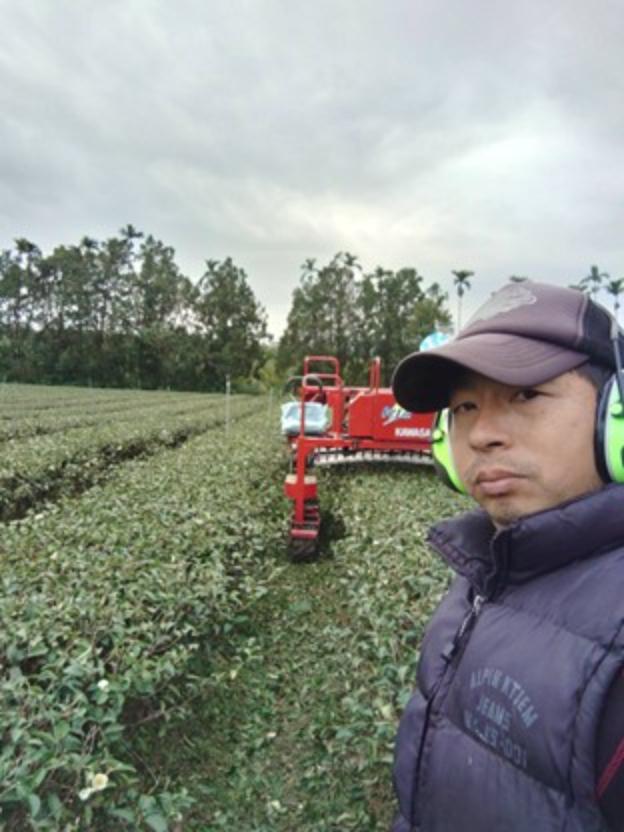
Good tea needs the right time, place and people to have a chance; Chang Huan-jui has found his own way. (Image courtesy of Chang Huan-jui)
Good tea starts with good soil
Soil is crucial to tea quality, because trace substances in the soil are the main source of every tea's flavour. Organic matter in particular determines how many aromatic compounds the tea plant contains: the more soil organic matter, the richer the organic compounds transferred into the tea plant, and the more appealing the flavour. Our sense of taste likes flavours that are good for the body, and drinking tea releases dopamine that makes us happy. But in recent years food chemistry has advanced, and with all its technology and "hard tricks" all sorts of artificial flavourings fill our food, designed to fool the neurons of our senses — even to make us addicted.
Good natural tea needs both nature's gifts — soil, microbes, insects, earthworms, climate and that year's weather — and the cultural heritage of growing, picking and making tea. It is a craft thousands of years old, turned into teas of all different flavours.
I spent more than two years researching stable isotope analysis for tracing tea's origin, and found that it is genuinely hard to buy tea on the market that really comes from where it claims. Tea supply chains can be long; the famous teas generally on sale have been bought up, packaged and labelled by traders. Good traders clearly mark origin and quality, but driven by profit, "passing off fakes as genuine" and "selling low grades as high" are unavoidable. Whether a tea tastes good depends on the trader's sales talk — which is why many people find that tea they tasted in a shop tastes different when they brew it at home. It's not that the leaves, the water, the temperature or their brewing skills changed; it's that the suggestive context of the moment is gone.
In the tea market, few people do everything themselves from start to finish — growing, making and selling. Tea must first of all be safe and toxin-free, and it must also guarantee basic consistency and reliability. So for the past few years I have bought Chang Huan-jui's floral red oolong for my own family to drink and as gifts for friends and relatives: we drink it with peace of mind, and it's a gift I'm not embarrassed to give.
I especially recommend cold-brewing Chang Huan-jui's red oolong. Just use 1 gram of tea per 100 cc of cold water and leave it in the fridge overnight; the next day you'll have a delicious tea to drink. At room temperature, about two hours is enough.
Because red oolong is made with the ball-rolled oolong technique, repeatedly compressed in the "lotus" roller, it is very tight and can be infused many times, with each infusion tasting different.
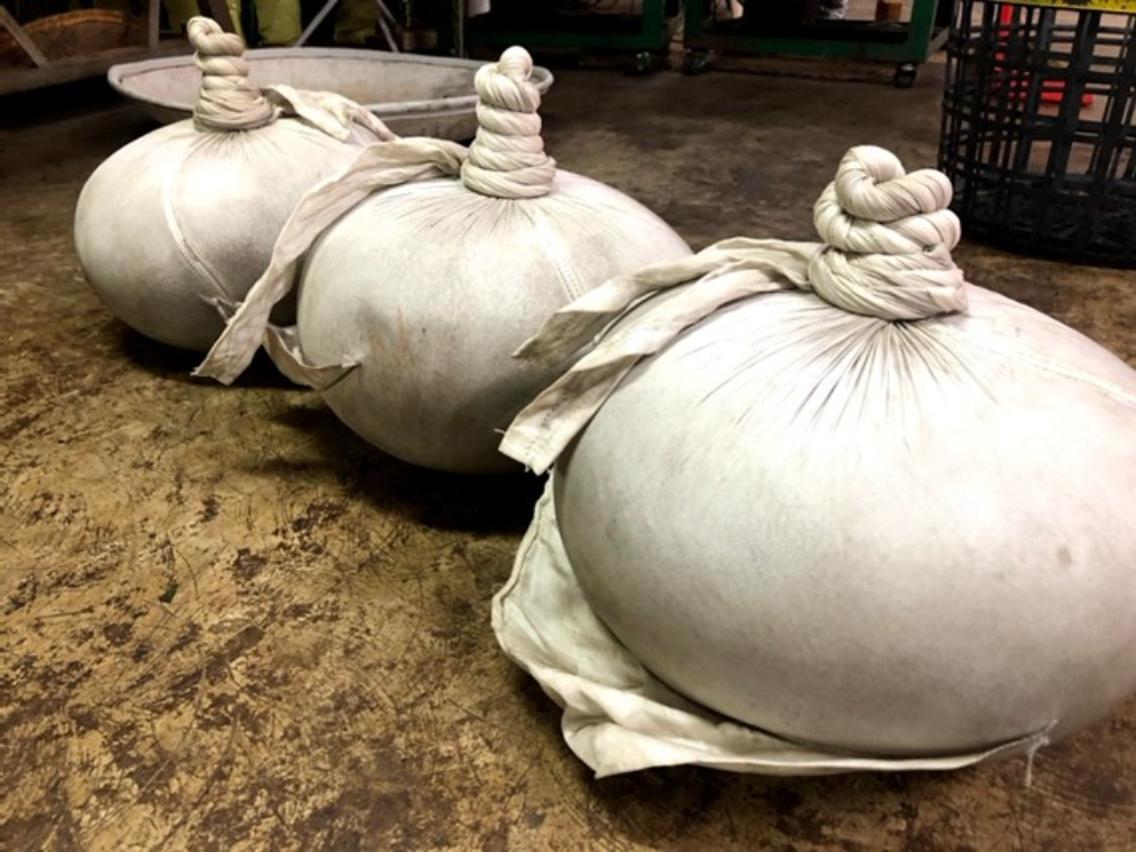
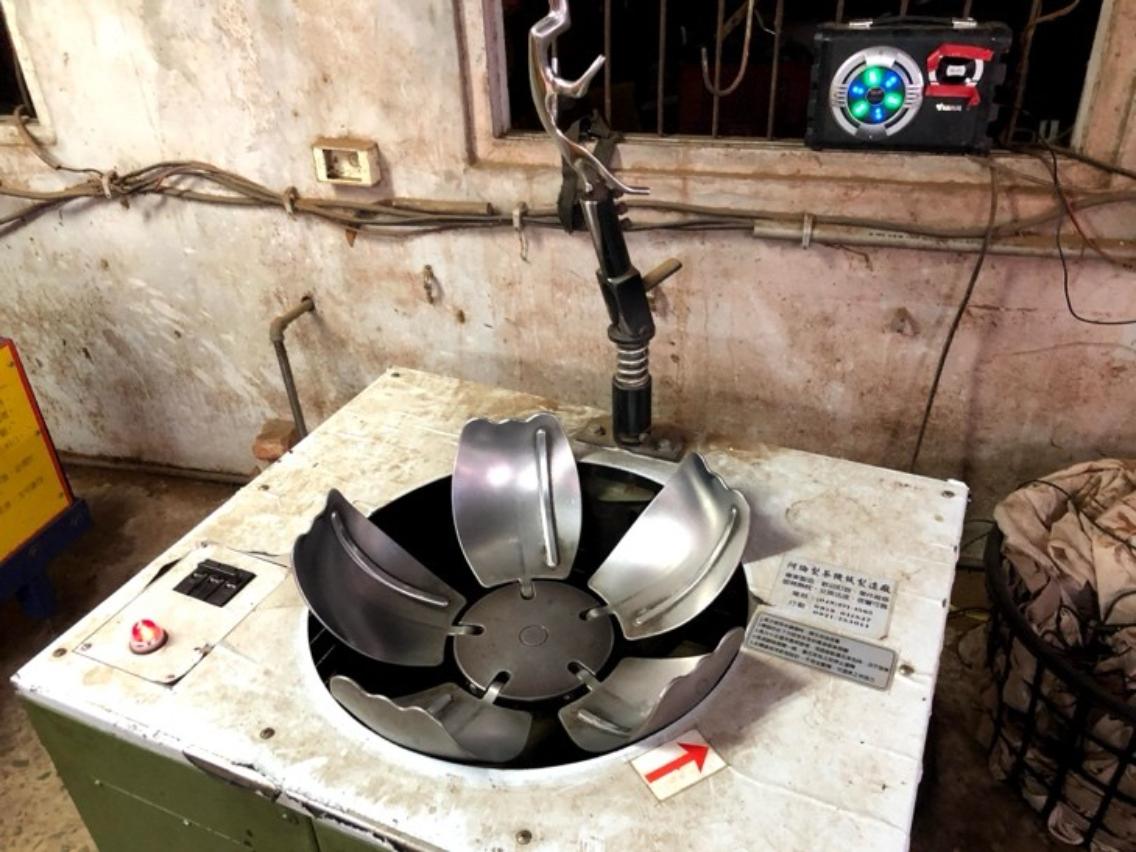
Red oolong is ball-rolled oolong kneaded firmly by a steel "lotus" machine; the leaves are very tight, so they can be infused seven or eight times. (Photo: Jay Fang)
It also affects the tea's flavour, which is a little different from others', with a special taste; the floral aroma is related to the soil.
If you'd like to buy the tea Chang Huan-jui carefully makes, you can buy directly from him through his Facebook page.
Source: CM Media ( https://www.cmmedia.com.tw/home/articles/52344 )


