 努力小農

本文尚無譯文。
About the soil organic carbon laboratory of the Taiwan Smallholder Carbon Farming Project
The Taiwan Smallholder Carbon Farming Project follows the certification principles and requirements of the Gold Standard for the Global Goals and related technical documents such as the Soil Organic Carbon Framework Methodology, taking the rules for sustainable development and emission-reduction certification as its standard. (Image: Muffin Creatives@pexels)
Note: this is a technical explanation, based on the expert consultation meeting of the Taiwan Smallholder Carbon Farming Project on 19 February 2025, so it involves many terms from international standards and methodologies. Its purpose is to explain the conformity of the laboratory commissioned by the Taiwan Smallholder Carbon Farming Project and to disclose information. Because the experts at the consultation meeting raised questions and comments about sampling, another expert consultation meeting on sampling and statistics will be held within 30 days.
A laboratory set up according to international certification rules and standards
The Taiwan Smallholder Carbon Farming Project follows the certification principles and requirements of the Gold Standard for the Global Goals (GS4GG) and theSoil Organic Carbon Framework Methodology and related technical documents, taking the rules for sustainable development and emission-reduction certification as its standard.
Because Taiwan has no peer-reviewed academic literature on soil organic carbon sequestration to support it, the project developer verifies soil organic carbon content by actually testing smallholders' soil, as the basis for the CO2 equivalent stored in the soil each year.
According to Chapter 16, "Monitoring", of theSoil Organic Carbon Framework Methodology:
16 Monitoring
16.1 Monitoring frequency and performance review
The project proponent must submit a monitoring report at each verification and performance review in accordance with the Principles and Requirements.
In addition, the project proponent must submit an annual report containing at least the information listed in the Principles and Requirements using the annual report template, and the information marked as annual in the monitoring table below.
The project proponent must also collect and record evidence that the applicability conditions of the methodology are met at all times. The project proponent must:
• archive electronically all monitoring data collected in the previous crediting period for up to 2 years after the end of the crediting period;
• and ensure that measuring equipment is certified to national or international standards, calibrated against national standards and reference points or international standards, and recalibrated at appropriate intervals according to the manufacturer's specifications.
ISO 17025 laboratory quality assurance requirements
For laboratory management standards, we follow ISO 17025:2017 (General requirements for the competence of testing and calibration laboratories) for laboratory quality assurance, and Eco-affinity Inc. has purchased a licensed copy of the standard from the International Organization for Standardization.
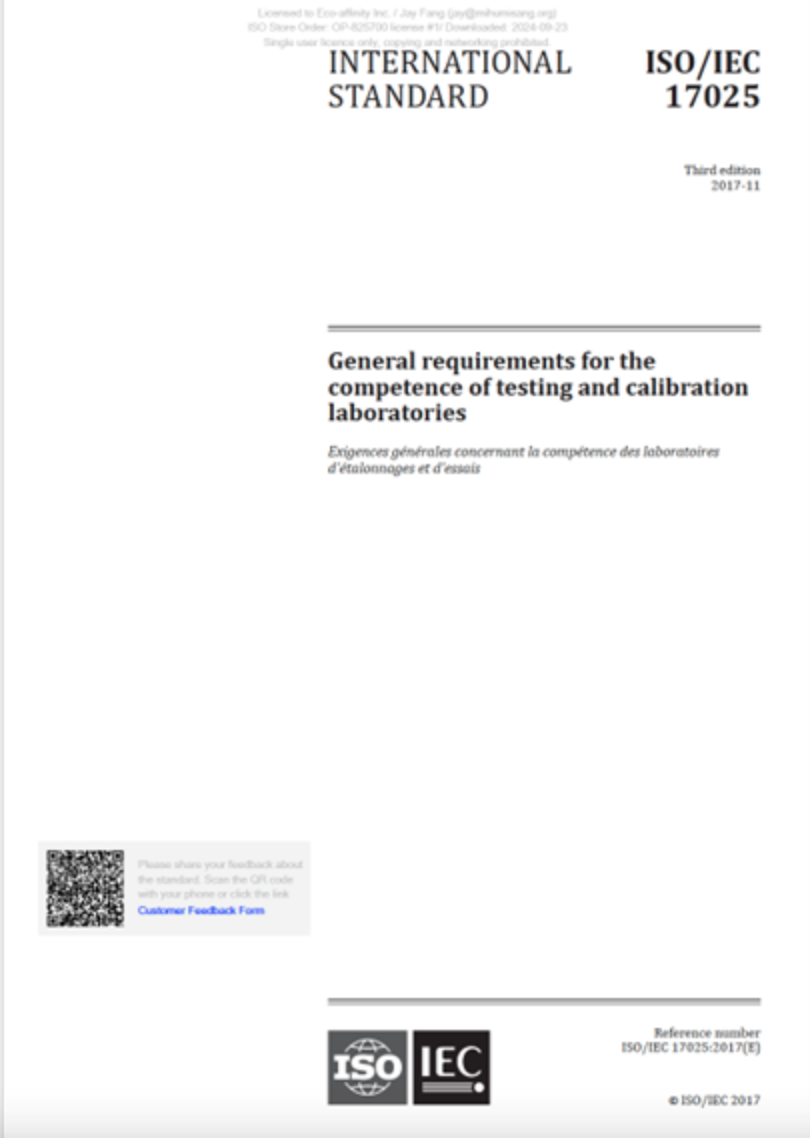
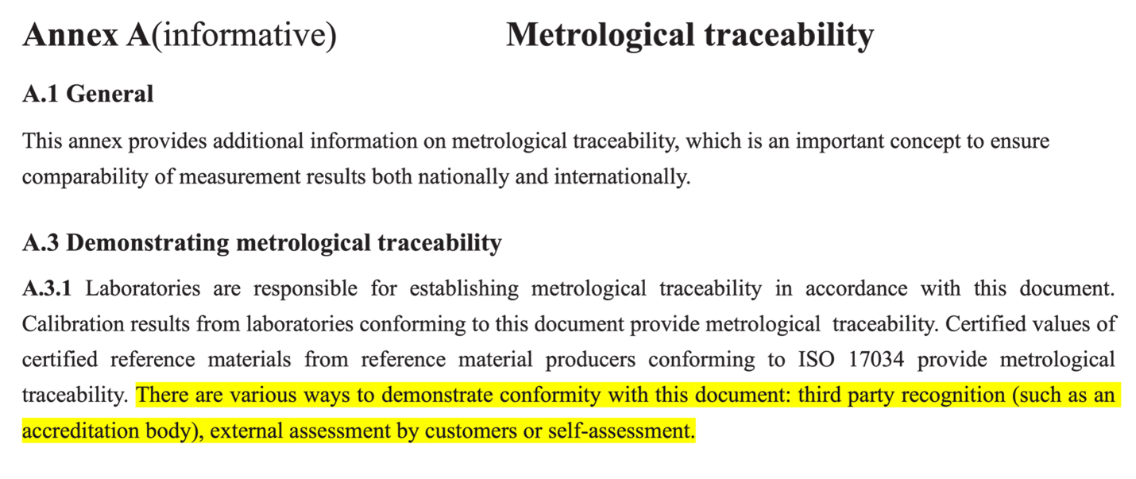
Besides implementing the standard faithfully, the laboratory must confirm metrological traceability according to Annex A of ISO 17025. We carry out conformity assessment by the second party (the client) and the first party (the laboratory).
In line with the Gold Standard's requirements for transparency, inclusiveness, professionalism and verifiability, the project developer invited relevant experts to review the laboratory and livestreamed the whole process (https://youtube.com/live/Ra5jJuQopVk)
We also commit to regularly disclosing information about the laboratory in future, including our contract with the laboratory, Tianzu Sustainable Agriculture Co., Ltd.
The laboratory contract, made public
Soil organic carbon testing contract: Eco-affinity Inc.
commissions Tianzu Sustainable Agriculture Co., Ltd.
Eco-affinity Inc. (Party A) commissions Tianzu Sustainable Agriculture Co., Ltd. (Party B) to provide testing services according to the following requirements:
Purpose:
To obtain Gold Standard SDG impact international certification for the Taiwan Smallholder Carbon Farming Project, Party A commissions Party B to carry out soil organic carbon testing. Party B's testing must meet the requirements of ISO 17025:2017 (General requirements for the competence of testing and calibration laboratories), theGold Standard (Gold Standard for Global Goals)Sustainable Development Goals(Sustainable Development Goals, SDG)Impact certification (Impact Registry) requirements, and the rules defined by Party A according to theIntegrity Council for the Voluntary Carbon Market (Integrity Council for the Voluntary Carbon Market, ICVCM)Core Carbon Principles (Core Carbon Principles, CCP). Party B shall provide high-quality soil organic carbon testing services for emission-reduction certification (CER/VER). The work and its implementation must follow the above standards, rules and requirements; if Parties A and B disagree, the matter shall be interpreted and explained according to the above standards, rules and requirements.
1.requirements:
1. Party B must comply with the relevant clauses of ISO 17025:2017 General requirements for the competence of testing and calibration laboratories, which are deemed part of this contract; Party B must comply with all applicable clauses.
2. Based on the Gold Standard principles of openness, transparency and inclusiveness, Party A must, in accordance with the GS Stakeholder Consultation Engagement Requirements, invite stakeholders and experts to review the laboratory testing procedures, make improvements in line with the consultation meetings, publish the records and report them to the Gold Standard.
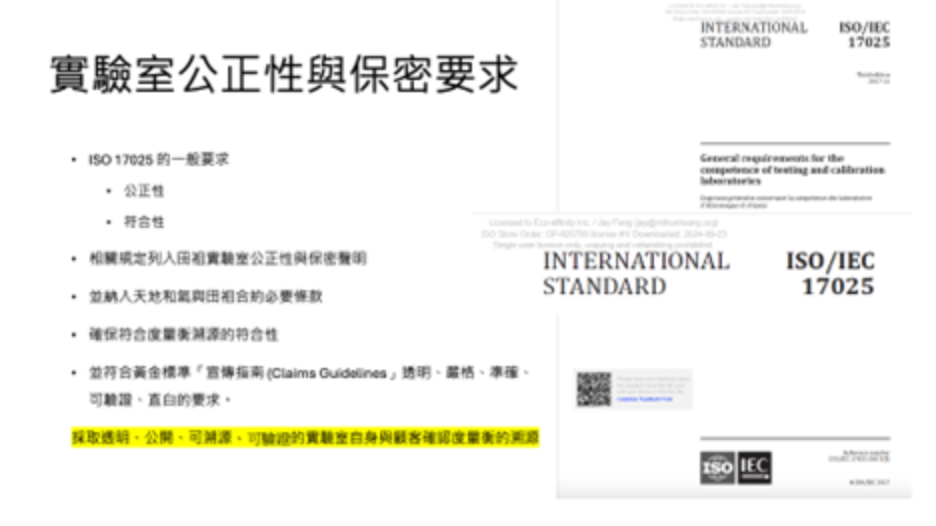
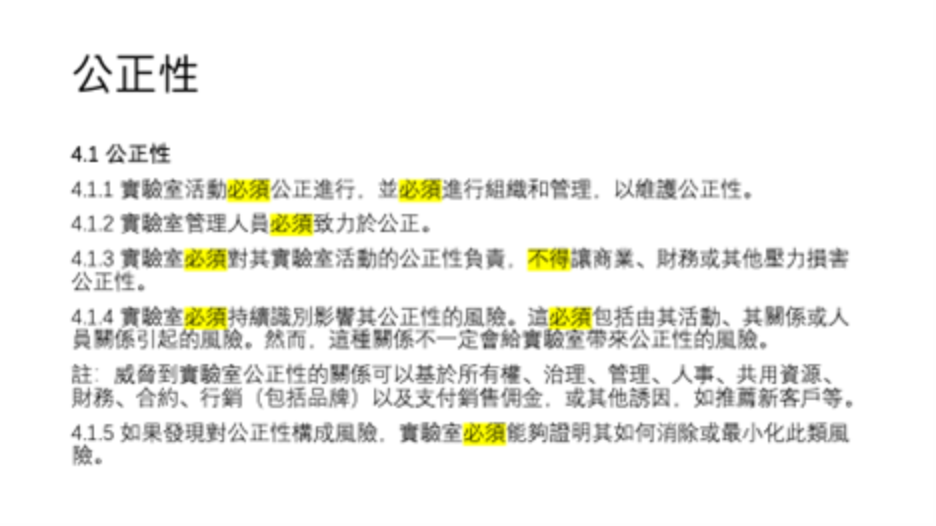
3. Party B must meet the impartiality and confidentiality requirements of ISO 17025. Party A must not, for any reason, interfere with or breach Party B's impartiality and confidentiality.
4. Party B must establish metrological traceability for laboratory testing according to ISO 17025:2017 Annex A, Metrological traceability.
5. In accordance with Annex A.3 on demonstrating metrological traceability, Party A agrees to confirm conformity through Party B's internal conformity review and Party A's external review of Party B. The review procedures and reports must be carried out annually and made public to the public or stakeholders. If a serious laboratory nonconformity occurs, testing must be suspended until Parties A and B have identified the cause, and no testing may take place until both parties have confirmed that the cause has been eliminated. Where necessary, experts should be engaged to take part in the review and confirm that the cause has been eliminated. In the event of a serious nonconformity, Party B should conduct its own review and Party A should conduct an external review; the review reports must be published within one month of completion.
6. Party B's testing method must follow the currentTARI S201.1B Determination of soil organic matter – combustion/infrared method and the testing method must be updated regularly.
7. Party A requires Party B to keep all data from the testing process, including sample receipt, intake, preparation, weighing, instrument runs, raw data generated by the equipment, data processing (distinguishing acceptable and unacceptable results) and test reports. Party B must deliver the previous month's data, forms and reports to Party A by the 10th (calendar day) of each month.
8. Test results and reports are public. Except for smallholders' personal data, the above data will be published regularly by Party A by the 15th of each month.
9. All soil testing data are subject to Party A's publication. Unless authorised by Party A, Party B may not provide the above data in advance or individually to any other person or organisation. If data published by Party A differ from Party B's, the data must be updated and then published by Party A.
10. Fees and costs. Given that this contract serves to meet Gold Standard certification requirements, its public-interest nature, and Party B's reasonable operating costs and profit, fees and costs will be agreed between Parties A and B and published through the stakeholder consultation meeting.
11. Disclosure of the contract: this contract will be disclosed to the stakeholder consultation meeting, expert meetings and the public. Any amendment must be disclosed within one month of its completion.
2. Amendment and termination of the contract
1. If, owing to force majeure such as international rules or domestic policy, the contract cannot be performed or requires major amendment, Parties A and B shall agree on the matter at that time, and neither party shall bear the legal liability provided for in this contract.
2. Matters not covered by this contract shall be handled in accordance with the laws and regulations of the Republic of China and the rules of the competent national authorities.
3. After the contract is signed, if one party wishes to amend or terminate it, it must notify the other party in writing 30 days in advance; the contract may be amended or terminated by mutual agreement.
4. Based on the principles of equality, voluntariness, fairness and good faith, Parties A and B may sign supplementary contracts by mutual agreement; any supplementary contract forms part of this contract.
3. Settlement of disputes
1. Any dispute arising in the performance of this contract shall be settled amicably through negotiation between the parties; if negotiation fails, either party may bring a suit in the Taipei District Court or seek mediation by a local mediation committee.
4. Term of the contract: from 1 November 2024 to 31 December 2032.
5. This contract is made in two originals, one held by each party.
Note: In this document the following verbal forms are used:
— "shall" indicates a requirement;
— "should" indicates a recommendation;
— "may" indicates a permission;
— "can" indicates a possibility or a capability.
Party A: Eco-affinity Inc.
Seal
Party B: Tianzu Sustainable Agriculture Co., Ltd. Seal
Address: B1, No. 119, Sec. 2, Minsheng E. Rd, Zhongshan District, Taipei
Mailing address: PO Box 11-239, Mingde Post Office, Beitou District, Taipei
Address: 1F, No. 66, Nanhua 2nd St, Nanhua Village, Ji'an Township, Hualien County
Representative: Jay Fang Signature
Representative: Hsieh Ching-kuei Signature
Annex 1: Related documents
1. Related information includes: (as defined in ISO 17025:2017)
2. Laboratory organisation chart
3. Laboratory external contact phone, email and website
4. Laboratory criteria for accepting samples
5. Laboratory testing procedures
6. Laboratory information management
7. Criteria for temporary storage, storage and disposal of test samples
8. Confirmation of laboratory staff qualifications
9. Laboratory proficiency testing
10. Laboratory test result reports
11. Laboratory internal/external quality audit reports
12. Laboratory equipment maintenance and calibration records
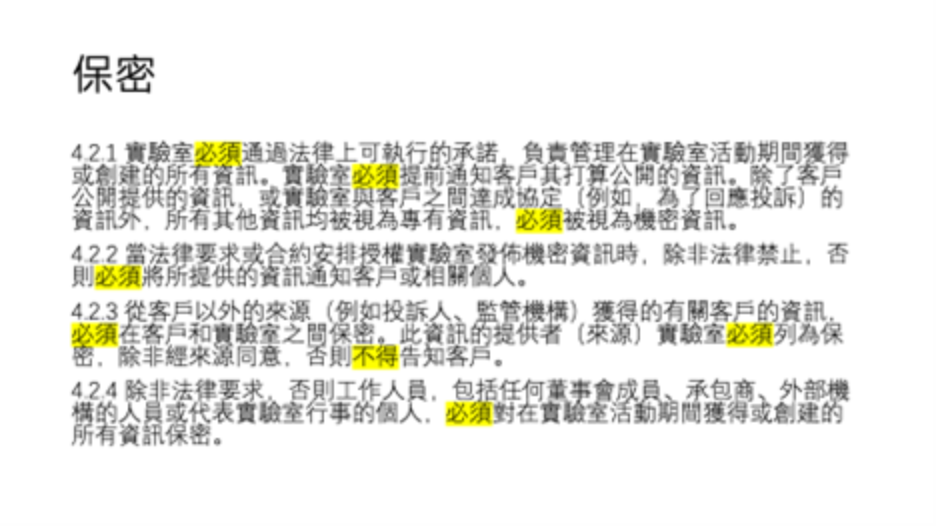
Ensuring the laboratory's impartiality and confidentiality
The contract thus includes what will be disclosed in future and how, as well as an agreement to accept internal and external oversight. Most important of all are ISO 17025's impartiality and confidentiality requirements, which the laboratory must observe.
During the 30-day public review period anyone may submit comments, and any issues that arise afterwards can also be raised publicly. This was the first expert meeting; expert and public consultation meetings will continue to be held regularly (at least once a year) or as needed, as a driver of continual improvement.
For any questions, please contact:[email protected] and someone will get back to you.
Source: CM Media ( https://www.cmmedia.com.tw/home/articles/52688 )


