 努力小農
本文尚無譯文。
Think carefully about human manure instead of natural gas
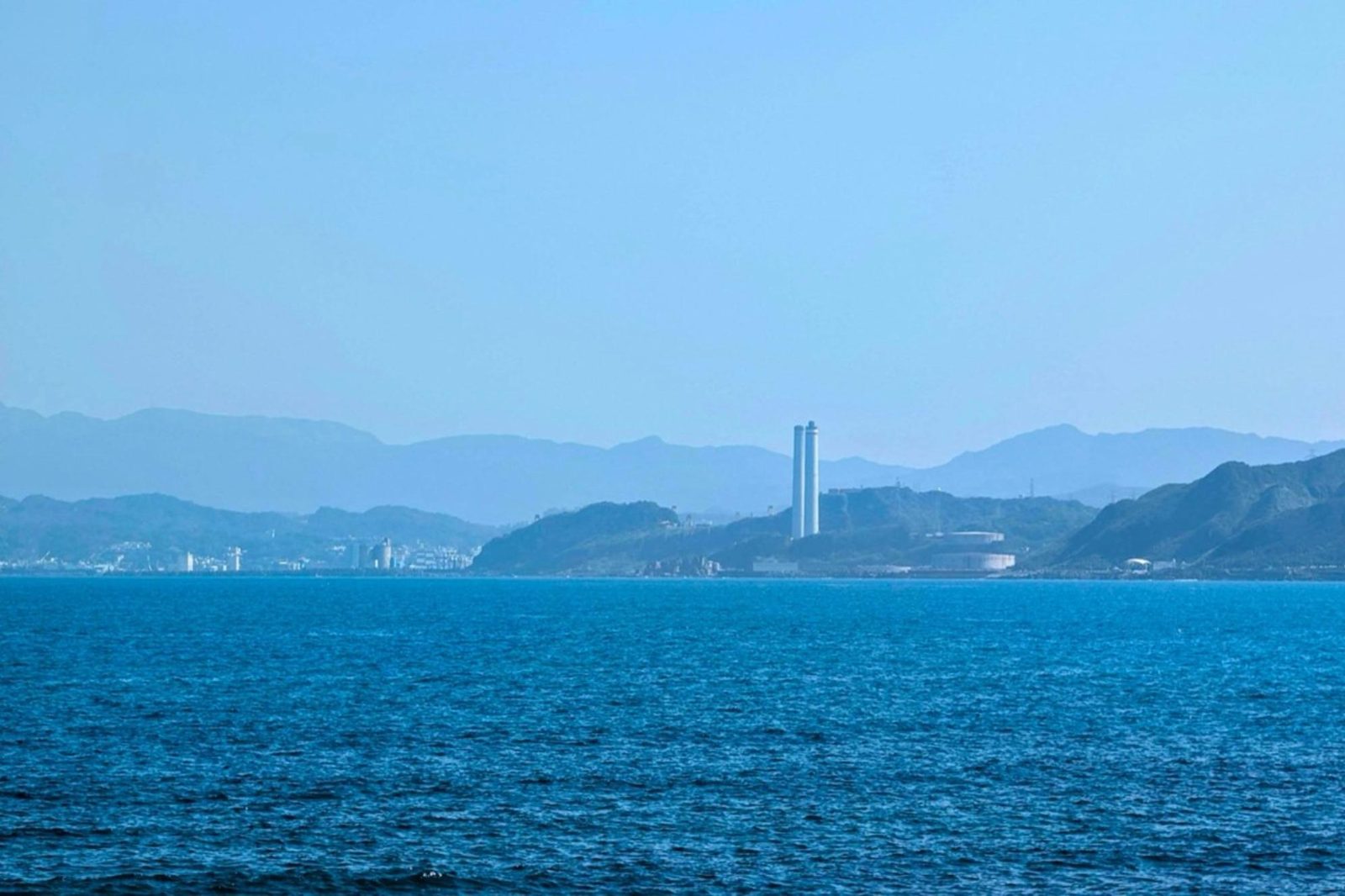
The Waimushan site of the fourth LNG terminal lies behind the hillside, hard for most people to see. But in 1876 the great Keelung tsunami struck, and this area was among the worst hit. (Photo: Jay Fang)
On 26 February the environmental impact assessment for the fourth LNG terminal in Keelung ended in a physical scuffle in the meeting room — another dark page in Taiwan's environmental history. Taiwan seems not to have considered whether external energy sources such as natural gas and nuclear power could, as conflicts intensify, cause what the Russia–Ukraine war did: shortages of natural gas and nitrogen fertiliser that brought a double energy and food crisis to European countries.
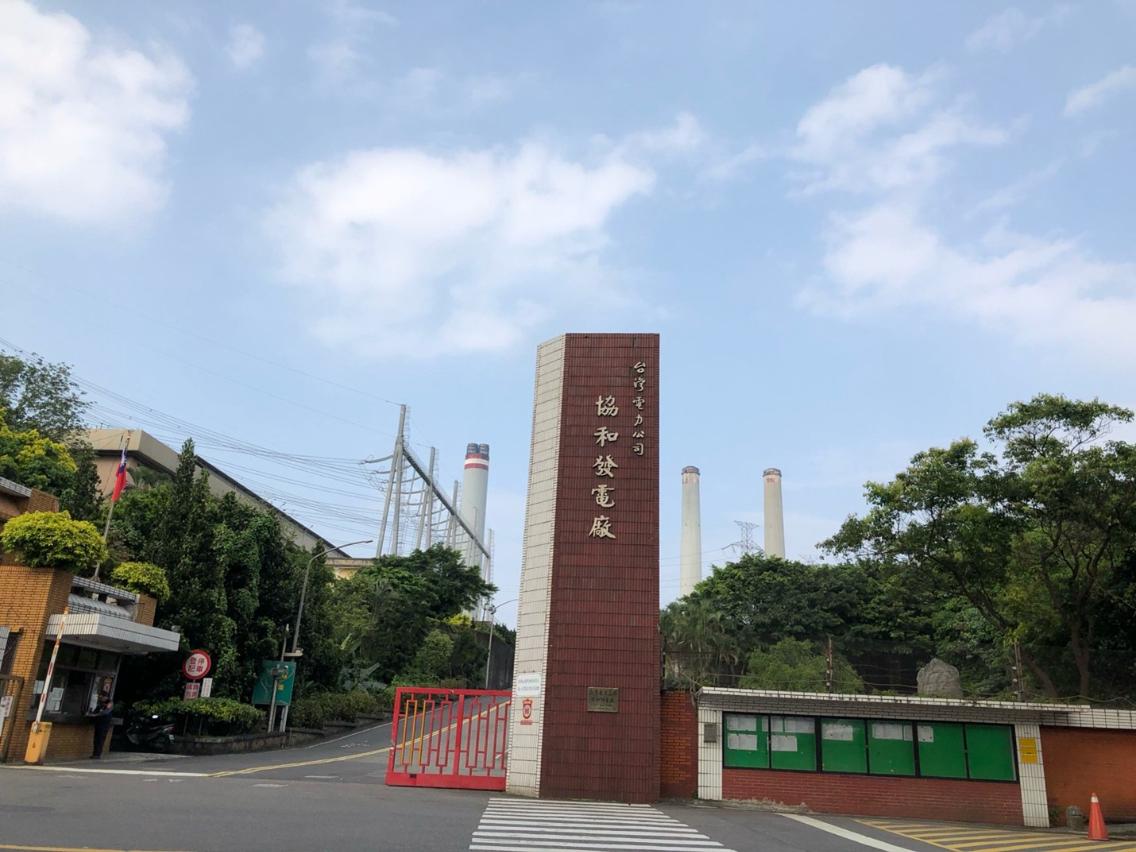
The supply-chain crisis caused by war and the innovative responses to it hold lessons for Taiwan too. Since the war broke out in 2022, it has had far-reaching effects on the European and global economy. Natural gas, an important energy source for industrial production, was badly hit, most notably in nitrogen fertiliser production. Nitrogen fertiliser is vital to agriculture, directly affecting the quantity and quality of food. But tight gas supplies led to fertiliser shortages that posed major challenges for European agriculture; combined with climate change, agriculture and food have become a new issue in geopolitics.
Natural gas is not only an important source of household heating and industrial fuel, but also a key raw material for nitrogen fertiliser. Making nitrogen fertiliser uses natural gas (methane, CH4) and nitrogen, which makes up 80% of the air, combined to form ammonia (NH3). This requires a great deal of energy, and the ammonia is then converted to urea (CH4N2O) and made into fertiliser. Russia is one of the world's largest natural gas producers, and Ukraine an important gas transit route. When the war broke out, the gas supply chain was badly disrupted, prices soared and supply fell sharply. Companies relying on natural gas to make nitrogen fertiliser struggled to carry on, and fertiliser output fell.
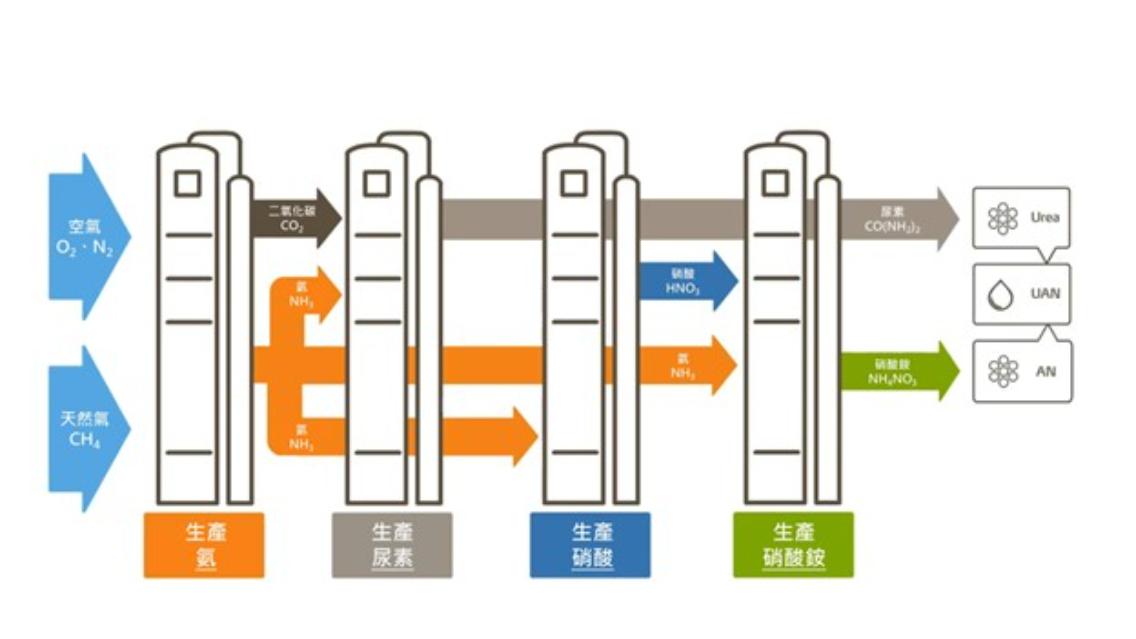
Making nitrogen fertiliser from natural gas. (Image: Dachong Agriculture Facebook)
The impact of nitrogen fertiliser shortages
Nitrogen fertiliser is one of the essential fertilisers in agriculture, mainly used to promote crop growth and raise yields. Shortages directly raise production costs and lower grain output, which in turn affects food prices and supply stability. Farmers in many European countries faced unprecedented challenges and had to look for alternatives to cope with the shortage.
Human manure as a substitute for nitrogen fertiliser
Against this background of fertiliser shortages, some European countries began considering human manure as a substitute for nitrogen fertiliser. Human manure — human excreta treated for use as fertiliser — was historically widely used in agriculture. Advances in modern technology make its treatment more efficient and hygienic, so it can effectively replenish the nitrogen the soil needs.
Using human manure as a substitute for nitrogen fertiliser not only helps ease shortages but also helps reduce the cost and environmental burden of waste treatment. Treated human manure is rich in organic matter and many nutrients, which can improve soil structure and raise crop growth and yields.
Restarting the carbon and nitrogen cycles
Humans are part of nature. Organic matter consists essentially of five elements — carbon, nitrogen, hydrogen, oxygen and sulphur — plus potassium, phosphorus, magnesium, calcium, manganese, zinc and others. Whether we consume crops directly (vegetarian) or indirectly (meat), we are consuming this organic matter as part of the Earth's element cycle. Returning urea (nitrogen) to the fields is only natural.
Many European countries are actively exploring and promoting the use of human manure. Countries such as Sweden and Denmark have already begun using it as a substitute for nitrogen fertiliser, with notable results. Swedish agricultural research institutions say treated human manure contains nitrogen, phosphorus, potassium and other nutrients that help improve soil fertility.
In addition, some countries have set up dedicated research institutions to develop more efficient and safer human manure treatment technologies. Denmark's agricultural authorities, for example, are carrying out several studies to improve the efficiency of human manure use and ensure its safe application in agriculture. Governments have also stepped up support for farmers, encouraging them to use human manure as a substitute for nitrogen fertiliser.
Taiwanese agricultural research institutions are also studying the use of digestate (liquid and solid) from pig manure and urine as fertiliser for farmland, which can both reduce chemical fertiliser use and cut carbon.
The natural gas and nitrogen fertiliser shortages caused by the Russia–Ukraine war seriously affected European agricultural production. Yet in the face of crisis, countries innovated actively and adopted a range of responses, including using human manure. These measures not only help ease fertiliser shortages but also advance sustainable agriculture. In future, with continuing technological progress and stronger international cooperation, Europe may achieve even more in tackling fertiliser shortages.
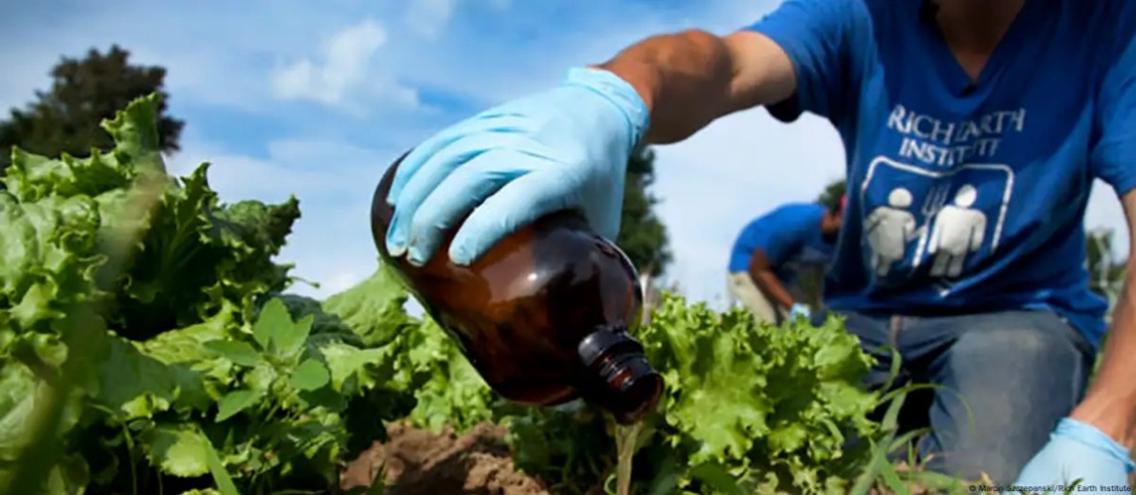
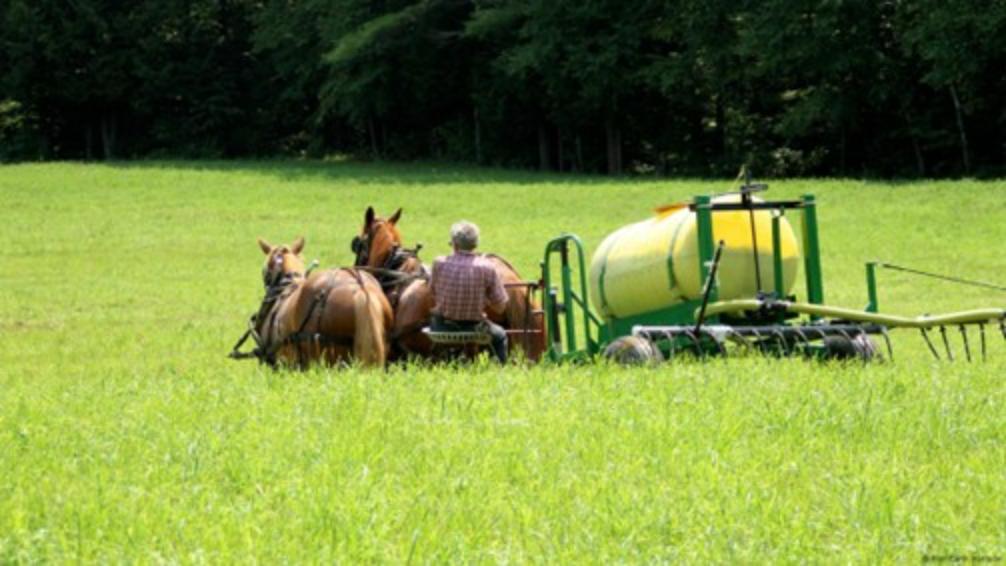
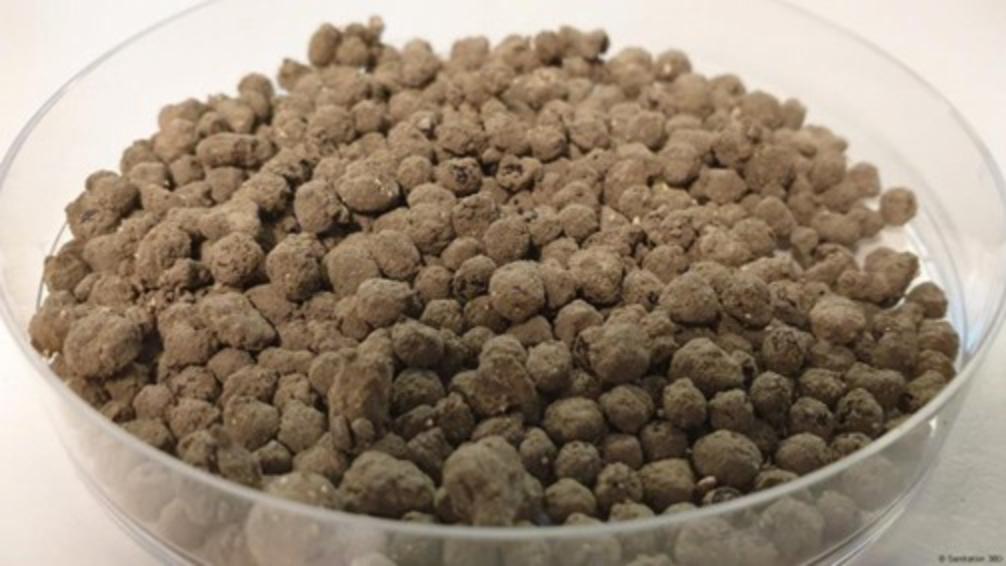
As early as 14 May 2022, three months into the Russia–Ukraine war, Deutsche Welle reported on German research into replacing nitrogen fertiliser with urine. (Top) disinfected urine used as fertiliser for vegetables; (middle) more than 200 farmers took part in the trials; (bottom) urine made into solid fertiliser.
Lessons for Taiwan
Learning from the past to understand the future, Taiwan can prepare for a rainy day from Europe's fight-for-survival experience. A shortage of imported energy is not a problem that building LNG terminals can solve. In recent years incinerators around Taiwan have also reached the end of their service lives, and new incinerators are unwanted public facilities that face many difficulties. We can rethink the following points:
1. Resource circulation and sustainable development. Taiwan is geographically small with limited resources. If natural gas or imported raw materials were cut off, developing a home-grown circular economy would be especially important. Europe's attempts to replace fossil raw materials inspire Taiwan to further integrate agriculture and the recovery of waste resources:
• Reusing waste resources: promote organic agriculture and turn properly treated organic waste (such as food waste, agricultural by-products and even urban sludge treated to standard) into valuable organic fertiliser, reducing dependence on imported chemical fertilisers.
• Building circular systems: combine wastewater treatment with resource-recovery technology, not only solving environmental problems but turning waste into agricultural resources to support sustainable agriculture.
2. Diversifying energy and supply chains. The Russia–Ukraine war reminds us that global instability can affect the stable supply of energy and energy-related raw materials such as natural gas. Taiwan could consider:
• Promoting the green energy transition: accelerate the development of solar, wind and other renewables to fundamentally reduce dependence on imported energy while also promoting a low-carbon economy.
• Flexible supply-chain planning: plan multiple sources and alternatives for key industrial raw materials in advance, so that adjustments can be made quickly even if the international situation changes.
3. Technological innovation and better regulation. If Taiwan considers developing similar alternative fertiliser technologies in future, innovation and regulation must advance together:
• Hygiene and safety technology: develop advanced treatment and disinfection technologies so that organic fertilisers meet food safety and environmental standards when used.
• Policy and standard-setting: learn from European cases to accelerate the creation and improvement of regulatory standards and certification schemes, increasing public and farmer acceptance of new organic fertilisers.
4. Crisis management and industrial transformation. Global geopolitical and market risks remind Taiwan's decision-makers and businesses:
• Risk prevention and stockpiling strategies: when the international situation is turbulent, prepare key resources such as energy and agricultural raw materials in advance, or establish emergency supply chains, to reduce the impact of supply disruptions.
• Encouraging industrial innovation: crises often spur change. Taiwan's agriculture and recycling industries can seize this opportunity to invest more in renewable resources and low-carbon technology and achieve industrial transformation and upgrading.
Can Taiwan produce enough nitrogen fertiliser itself?
To do this we need to know how much natural gas Taiwan imports (domestic gas can be taken as zero), how much of it is made into nitrogen fertiliser, and how much nitrogen fertiliser is imported.
1. Taiwan's natural gas imports
According to recent statistics from Taiwan's government and Energy Administration, Taiwan imports roughly 4 to 5 million tonnes of liquefied natural gas (LNG) a year.
• Volume: depending on the terminals (regasification facilities) and conversion efficiency, data for different years correspond to several billion to over ten billion cubic metres of natural gas.
• Main uses: imported natural gas in Taiwan is mainly used for power generation, industrial fuel and some chemical feedstock; making synthetic ammonia (and thus nitrogen fertiliser) accounts for only a small part.
2. Taiwan's nitrogen fertiliser imports
Data show that agricultural and some industrial demand make Taiwan largely dependent on imported nitrogen fertiliser.
• Scale of imports: annual imports of nitrogen fertiliser (including urea, ammonium sulphate and other main products) are about 200,000 to 300,000 tonnes.
• Market situation: although Taiwan's arable land is relatively limited, because of fertiliser effectiveness and industry demand, this figure reflects Taiwan's reliance on high-yield crop production and its dependence on imports.
3. Share of imported natural gas used to make nitrogen fertiliser
In the chemical industry natural gas is mainly a feedstock for synthetic ammonia, which is further converted into urea and other nitrogen fertilisers. Based on general industry data and Taiwan's industrial structure, we can estimate: roughly 5% to 10% of imported natural gas goes to synthetic ammonia production — the part used as feedstock for nitrogen fertiliser.
• Synthetic ammonia production is energy-intensive. By industry standards, producing one tonne of ammonia takes about 28 to 30 GJ of natural gas energy (equivalent to 7,784–8,340 kWh of electricity), depending on technology and efficiency.
• Since Taiwan mainly uses natural gas for power generation and diverse industrial uses, the amount allocated to fertiliser production is relatively small and accounts for only a small share of total imports.
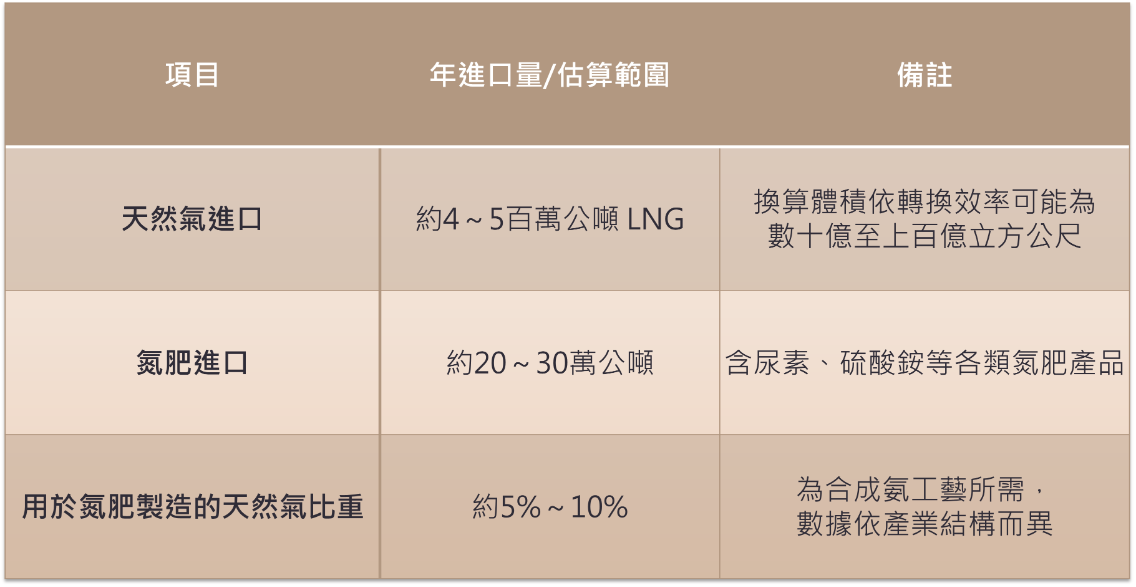
Based on the above, the nitrogen fertiliser Taiwan makes from imported natural gas can be ignored; imports are about 300,000 tonnes a year.
Home-produced nitrogen fertiliser
How much excreta do Taiwan's people produce in a year, and roughly how much nitrogen fertiliser could it make? Here is a rough estimate, for reference only. Actual figures vary with individual differences, diet and water intake, but it gives us a general idea:
1. Estimated total excreta in Taiwan
Taking Taiwan's population of about 23 million, and assuming each person produces daily:
• Faeces: about 150 g/day
• Urine: about 1.5 kg/day
Calculation:
1. Annual output per person
• Faeces: 150 g/day × 365 days ≈ 54.75 kg/year
• Urine: 1.5 kg/day × 365 days ≈ 547.5 kg/year
2. Annual output for all of Taiwan
• Faeces: 54.75 kg/person/year × 23,000,000 people ≈ 1.26 million tonnes
• Urine: 547.5 kg/person/year × 23,000,000 people ≈ 12.6 million tonnes
Total: about 13.86 million tonnes of excreta (faeces and urine)
2. Nitrogen content of excreta and potential fertiliser output
The key is to recover the nitrogen to make nitrogen fertiliser. By general estimates:
• Faeces: about 2% nitrogen
• Urine: about 0.9% nitrogen
Annual nitrogen per person:
• Nitrogen from faeces: 54.75 kg × 2% ≈ 1.095 kg/person/year
• Nitrogen from urine: 547.5 kg × 0.9% ≈ 4.93 kg/person/year
Total: about 6 kg of nitrogen per person per year
Annual total nitrogen for Taiwan: 6 kg/person × 23,000,000 people ≈ 138,000 tonnes of nitrogen
3. Potential output converted to nitrogen fertiliser
Taking the common fertiliser urea, which contains about 46% nitrogen: if this nitrogen could in theory be 100% recovered, the amount of urea that could be produced is about:
Urea output = total nitrogen ÷ 0.46 ≈ 138,000 tonnes ÷ 0.46 ≈ 300,000 tonnes
In other words, if all the nitrogen excreted by Taiwan's people each year were recovered and made into urea containing 46% nitrogen, it could theoretically produce about 300,000 tonnes of urea.
• Theory and practice: the figures above are theoretically possible, but in practice there are losses and challenges at every stage from collection, treatment and disinfection to nitrogen recovery. Hygiene and safety, environmental regulation and social acceptance also require in-depth planning and technological R&D.
• Implications: if the nitrogen in human excreta could be recovered and used effectively, it would not only reduce dependence on imported chemical fertilisers but also be an innovative step towards a circular economy and sustainable agriculture. Europe tried similar approaches during its energy transition crisis; Taiwan, with its limited resources, can draw even more lessons from it.
In short, Taiwan's "home-made nitrogen fertiliser" could be "self-sufficient". But another problem arises: Taiwan's food self-sufficiency is only 30%. In other words, if war broke out and food could not be imported, people would go two-thirds hungry — and then nitrogen fertiliser output would probably fall by two-thirds too.
It seems that Taiwan, which lives on imported food and imported energy, will find it hard to cope with the threats of war, blockade or natural disaster under international geopolitics.
Source: CM Media ( https://www.cmmedia.com.tw/home/articles/53342 )


