 努力小農
本文尚無譯文。
How owner-farmers can save themselves in turbulent times
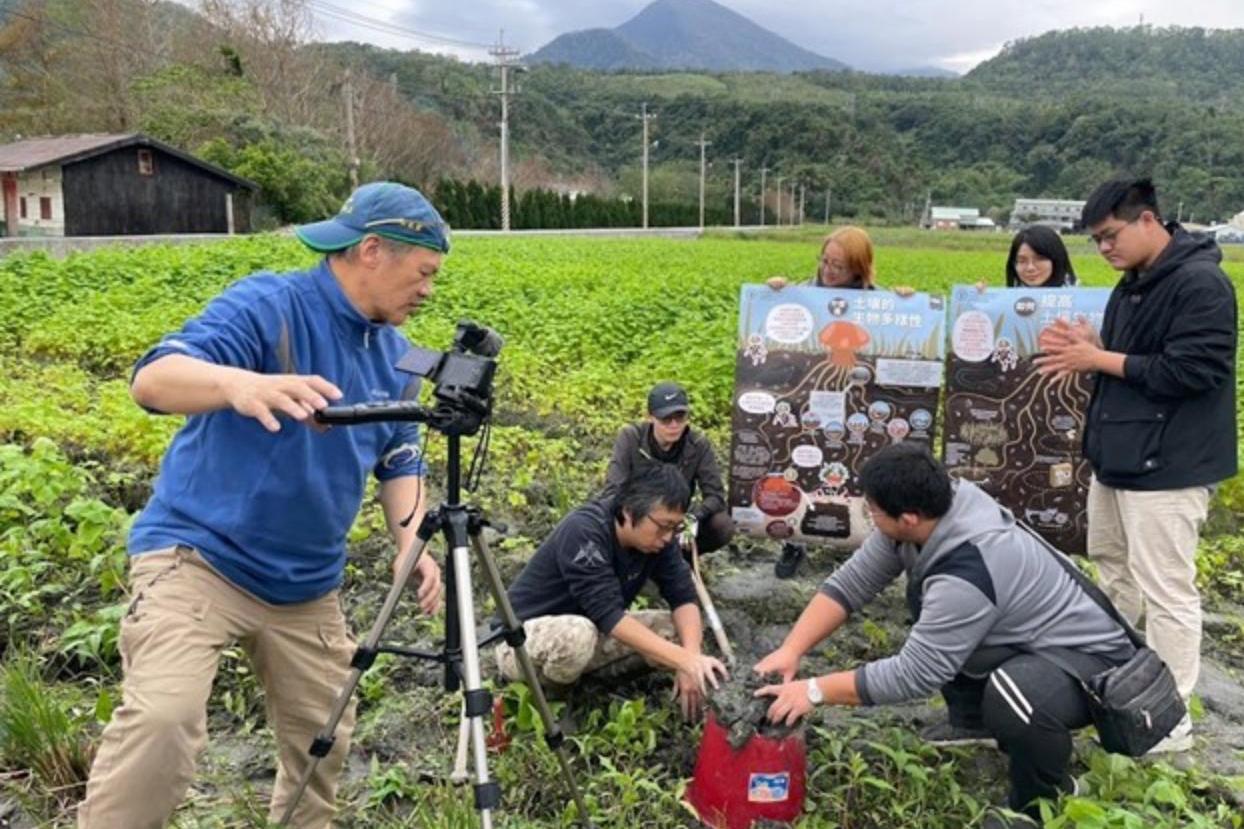
Hsieh Ching-kuei (left) attends a Global Soil Doctors course with smallholders, hoping to find a way of farming that smallholders can follow, that can be sustained and that helps solve Taiwan's food security problem. (Photo: Jay Fang)
Gold or rice in times of war
Growing up, from birth to age ten, I was immersed in my elders' stories of war and turmoil. Perhaps these were the "fairy tales" that shaped my life; looking back now, they may have been the collective memory of my elders' war trauma. Of these stories, what struck me most was that my maternal grandfather, an air force officer, fleeing Shanghai, had to choose between gold and rice of almost equal weight — and chose white rice, not gold.
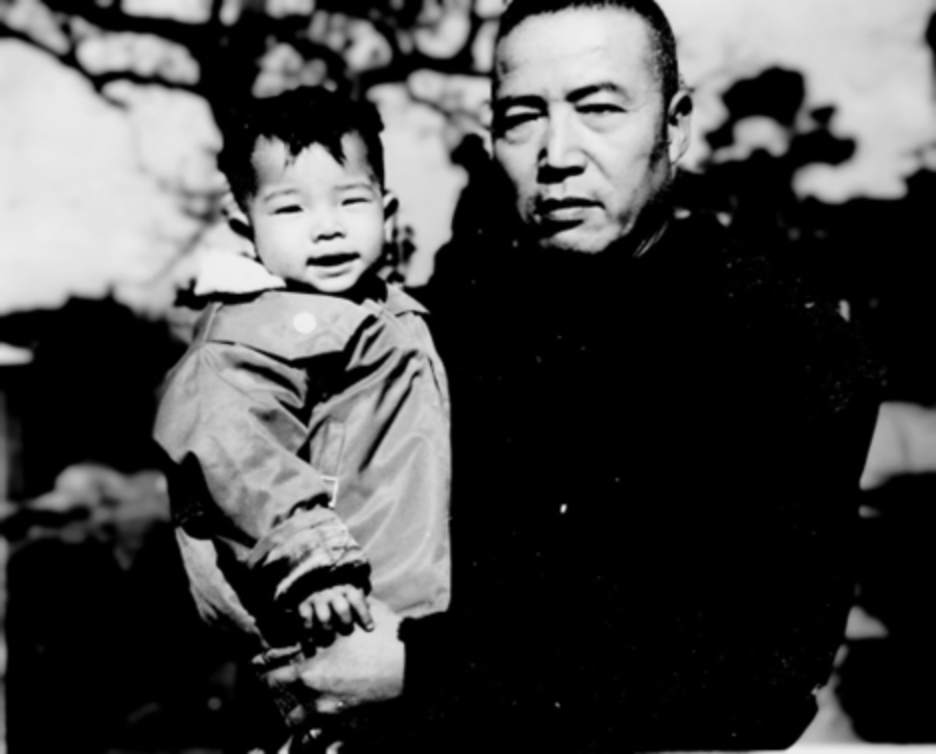
When my grandfather withdrew from Shanghai to Taiwan, he chose to bring rice rather than gold, thinking Taiwan would have nothing to eat and that they would soon fight their way back. But he never regretted it: wealth is external; staying alive is what matters. In his arms is Jay Fang, just over a year old. (Image courtesy of Jay Fang)
When my grandfather's plane flew from Shanghai to Taiwan and was landing at Shuishang Airport in Chiayi, he saw large rice paddies below and began to regret bringing rice instead of gold. He had thought Taiwan must be very poor with little to eat, and in his experience, if there was nothing to eat, gold was useless. Besides, coming to Taiwan was supposed to be temporary, so there was no need to bring much money; rice was more important — perhaps they would retake the mainland before it was even eaten.
Clearly this air force communications group commander was not well informed and made the wrong decision. Taiwan was rich in rice and would not run short of food, and what was supposed to be a "temporary redeployment" lasted decades, with no way back. Instead, the gold he left behind caused great trouble for relatives who stayed in Shanghai. Nearly 50 years later, when I met my eldest aunt in Shanghai, she still mentioned the huge impact that gold had had on her.
I am fortunate to have been born in 1960 and never to have truly experienced war, only several turning points in history, ideas, culture, the economy and politics. Compared with my elders, who faced life and death, hanging by a thread under gunfire and living long in turmoil not knowing if they'd see tomorrow, my experiences are nothing.
But after Trump's second inauguration as US president, he set off a global trade war, and some in Europe and America think this is already "World War III". Of course, watching the news, some in Taiwan still seem smug about making a fortune from war — I find them inexplicably lucky.
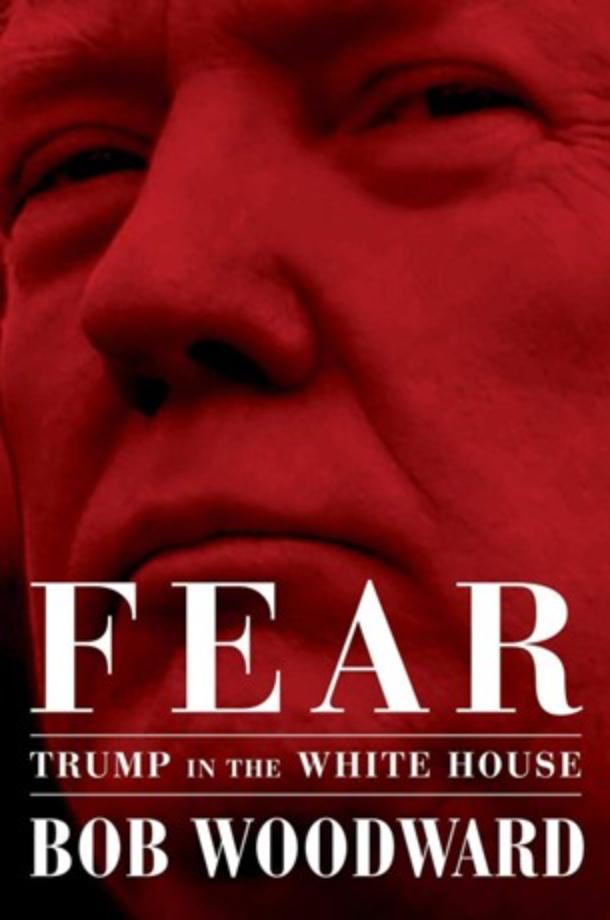
"Fear" is Trump's weapon in dealing with people. His ready "You're fired" makes those who work with him afraid, and fear comes from uncertainty. That's what court politics means by "the emperor's will is unfathomable" — but moved to 21st-century democratic, free America, it may well become a global disaster, and the disaster hasn't really begun yet! (Image: from the internet)
In "war", whether military conflict or a trade and tariff conflict, the greatest fear is uncertainty. Trump makes full use of human fear, as if we were back in the cave age, not knowing what monster lurks beyond the dark cave mouth, ready to swallow us whole. As in Fear: Trump in the White House by Bob Woodward, who broke the Watergate story, Trump is good at using people's fear and negotiation to get his way.
Indeed, in his first 90 days in office Trump's "unfathomable will" has ruled America through fear and spread it to the whole world. Lately I hardly watch Taiwan's news, focusing instead on American and European news and YouTubers' reports and commentary on Trump's trade wars (note: wars — the "s" means several wars, so this is only the beginning). Most believe Trump's reckless actions are harming world trade and order. The huge uncertainty has strained international politics and economics: not only rising prices and inflation and a possible depression, but a sharp rise in the chance of geopolitical military conflict.
Hsu Lan-hsiang's way of making her own living
Perhaps this is an "alternative war" encountered in life. Ordinary people don't know what to do and can only drift with the tide — what else can they do? This reminds me of two friends, Hsu Lan-hsiang and Hsieh Ching-kuei. Both believe that one day uncertain disasters, natural or man-made, will happen, so they store grain widely to prepare for when disaster strikes.
Hsu Lan-hsiang is a Hakka from Taoyuan. In the 1990s we fought side by side against golf courses in Hsinchu and Taoyuan. We then lost touch for many years until 2019, when, on my way to Orchid Island, my flight from Taitung Airport was grounded by the weather. I contacted Hsu, who had moved to Dulan in Taitung, and visited her long-running "Dawan Flower Farm" for the first time, seeing the farm and her vinegar-brewing workshop.
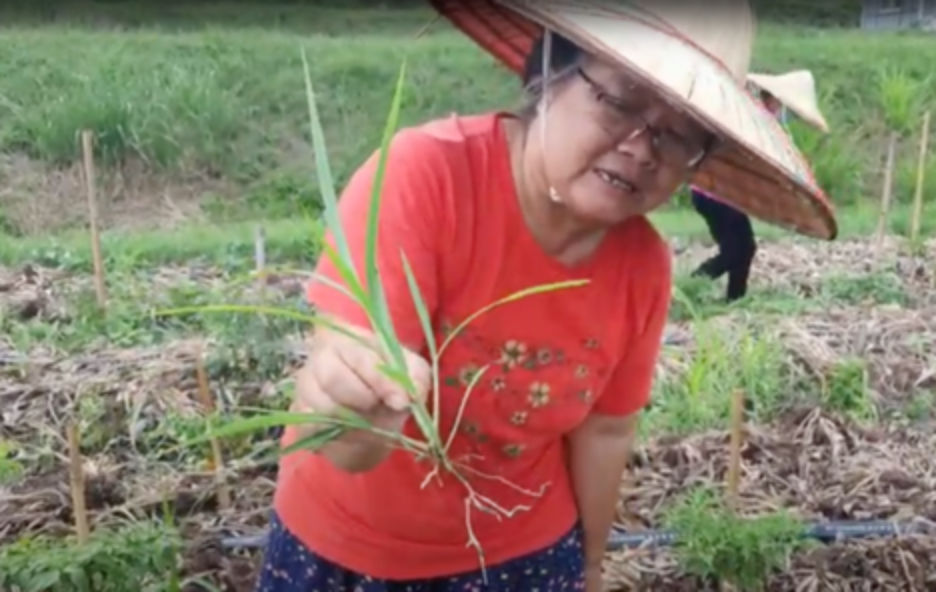
In the field, Hsu Lan-hsiang experiments with using water hyacinth to suppress weeds. (Photo: Jay Fang)
The Hakka have long been a people displaced by war and turmoil, so fear of and preparation for an uncertain future have been in their genes for a thousand years. Hsu often says: "Humans mess things up like this; if you bring disaster on yourself, you can't escape it — sooner or later there'll be a reckoning." In recent years she has become a Christian, and I believe she has a deeper understanding of the end times.
Hsu has carried forward the Hakka traditional skills of producing and preserving food that she remembers from childhood. Thirty years ago, penniless, she drifted to Dulan with two young daughters and began to support herself and put down roots, relying on farming and food processing and on her resilient, hard-working spirit and drive. Today she has a home and several hectares of land.
She believes that in Taiwan, as long as you work hard, you will be rewarded. So she holds to the Hakka traditional spirit, growing rice, vegetables and fruit trees, raising earthworms and using their castings as fertiliser, and using water hyacinth mats instead of plastic film to suppress weeds — fully expressing the Hakka farming culture of diligence and thrift. In today's fashionable professional jargon, this is "regenerative agriculture": wisdom of living with nature accumulated over hundreds and thousands of years.
Crops have set seasons from growth to harvest, and preserving seasonal produce is a big challenge. Hsu uses traditional Hakka drying and pickling techniques to brew vinegar and make dried radish and salted mustard greens. Anything she grows herself, or any ingredients she can get, can become raw material for pickling.
Hsu's vinegar, brewed by traditional methods, is very well known. Because it is hard to make, it sells at a good price and has become a prized item in a niche market. Hsu doesn't want to scale up and turn it into an industrial product. "I don't want to add things — chemicals I can't even pronounce."
Hsu's first job when young was as a factory worker. Even then she thought the large amounts of solvents and chemicals used in the factory must be harmful to health, and they made her very uncomfortable. So later she stood up in her hometown against pesticides, then against golf courses, and when she came to Taitung and encountered the illegal development of the Miramar resort, she joined the protests too.
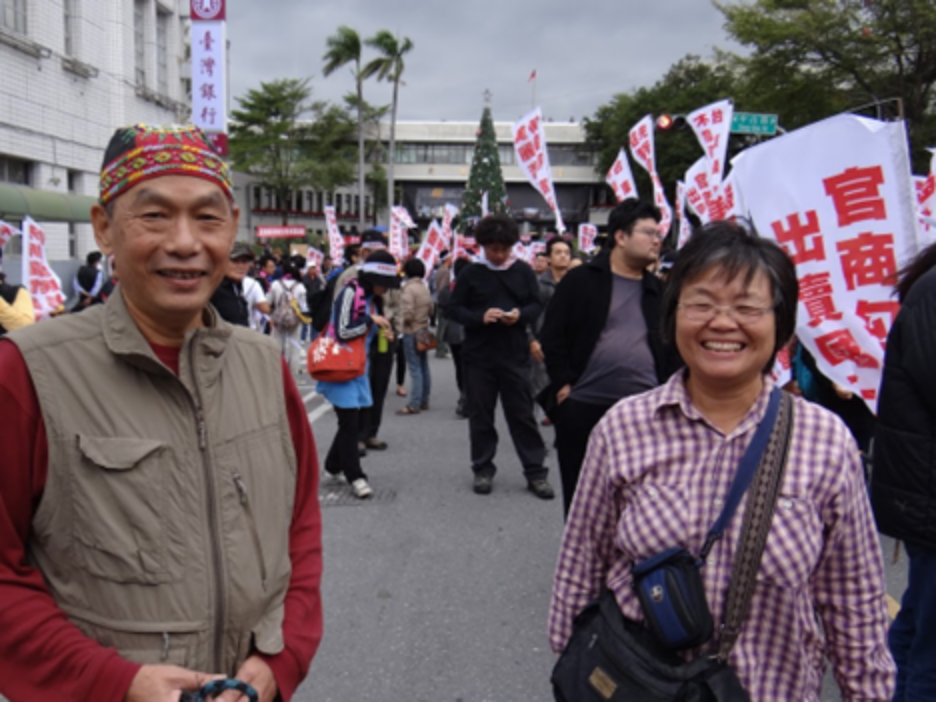
In 2012 Hsu Lan-hsiang and old friends marched in the streets of Taitung City against the illegal development of the Miramar resort. (Photo: Jay Fang)
Taiwan's problem is actually more serious, but no one feels a sense of crisis. Taiwan's food self-sufficiency is currently below 30%, with 70% relying on imports. Government subsidies even encourage fallowing, and farmers' grain prices have long been depressed, so farmers often prefer to take subsidies and give up farming. Under such policies, Taiwan's food self-sufficiency will naturally keep falling.
Now Trump's tariff and trade war has only just begun. Among the many ministries in the cabinet, no one will risk sacrificing the "sacred mountain protecting the nation" (TSMC) or using it as a bargaining chip; policies that sacrifice farmers and the whole nation's food safety are surely coming soon, which will make Taiwan's food security problem even more severe.
Ironically, no one in public debate has talked about this in recent years. Every time the PLA holds exercises encircling Taiwan or threatens a blockade, a crowd comes out to talk about energy. But if Taiwan were really blockaded, would it still need to produce for export? If Taiwan could not import food in time of war, given its position as an island, the fear is not an armed assault encircling the island but strangulation by a static blockade: without sending a single soldier or firing a single shot, with nothing to eat, there would be chaos. Cut off food for a month and it would probably surrender on its own. Such a major national security issue is only mentioned lightly in the Legislative Yuan as raising food self-sufficiency, while in fact the door to food imports is thrown wide open — a total lack of national security awareness.
Hsieh Ching-kuei, through international disaster relief work, realised that humanity already faces food shortages. During the North Korean famine of 1994–1998 he wanted to buy food to help the victims. Besides the North Korean government's trust problems, the bigger problem was that there was no surplus food in the world to help North Korea. Looking deeper, he found that unstable global food production, plus climate change and a growing human population — multiple systemic causes — were causing a global food crisis.
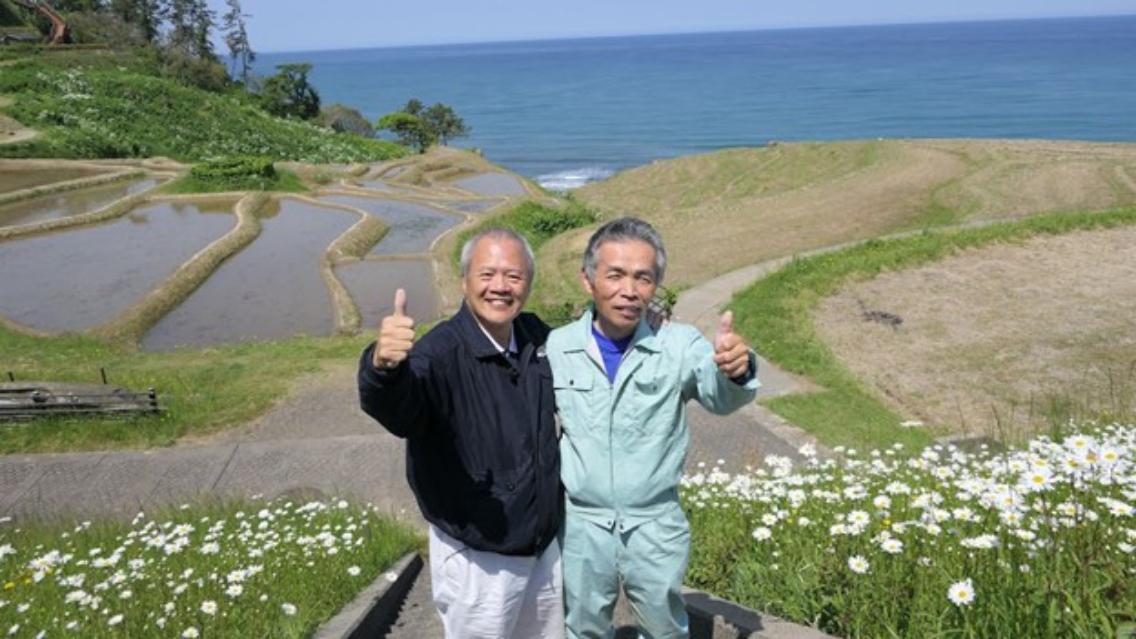
After the great Noto earthquake in Japan on 1 January 2024, within half a month Hsieh Ching-kuei went deep into the Noto disaster zone with Tzu Chi staff and volunteers. In the subsequent reconstruction work, he recommended smallholder carbon farming to farmers at Shiroyone Senmaida and in the Machino area, so that they too could try joining smallholder carbon farming as a witness to the Sustainable Development Goals (SDGs). (Photo: Jay Fang)
Hsieh is often on the front line of international disasters. The first step is always to make sure victims have food, especially hot meals: only when they are fed is there hope, and only then can relief, reconstruction or evacuation proceed. At such disaster scenes, the reality that "food is heaven for the people" is especially evident.
More than ten years ago Hsieh bought farmland in Ji'an Township, Hualien, changed careers to farm it himself, and built his "ark" dream house, surrounded by fields, with a pond beneath the house and solar panels for power. He recently installed backup batteries that can supply ten days of electricity.
Trying to survive independently without outside help, and even to help nearby communities, is Hsieh's wish. Ten years ago he and his neighbours set up the "Mitian Sharing Sustainable Agricultural Production Cooperative". The name alone says "circular and self-sufficient"; they hope to form a new agricultural value chain. They never use pesticides or chemical fertilisers, relying on their own fields to keep life going. Yields are small but stable, and in recent years some members' yields have been no lower than conventional production in neighbouring fields — just as described in The One-Straw Revolution by Japanese natural farming pioneer Masanobu Fukuoka: without fertilisers or pesticides, crops can be healthy and nature's productivity can flourish.
Three years ago Hsieh and his partners discovered the Taiwan Smallholder Carbon Farming Project, which aims for Gold Standard certification of emission reductions and Sustainable Development Goals. This fits their purpose exactly, and through certification and methodology they can bring in more smallholders for a long-term agricultural transition — from competing on yield to competing on sustainability. Only through international certification can the quantified performance of sustainability goals be demonstrated, qualifying for the extra "Payment for Ecosystem Services (PES)" for natural carbon sinks recognised internationally. Then farmers' produce gains, on top of good quality, an added value chain of ecosystem services — the only way to truly help Taiwan's smallholders turn losses into profits.
The unavoidable work of subtraction
We are living in turbulent times unknown to humanity. Every time Trump holds a press conference, the impact on the American and global economy and trade is no less than setting off a nuclear bomb, because no one — not even Trump himself or his advisers — knows what will change in the next minute.
Over the past 70 years, under the free and democratic world values of the international free-trade and financial system led and built by the United States, the world's countries have become conjoined twins, sharing vital organs, systems and functions. Trump's sweeping reforms are like performing a separation surgery with a butcher's knife — and it may turn into a dismemberment. No one has assessed its risks or effects; a few people are simply fulfilling campaign promises in the name of being elected. Personally, I think this will be a change humanity has never experienced, for better or worse.
In such a world, what can smallholders do? Smallholders are the smallest food-producing units in society, toiling every day face to the earth and back to the sky. Yet smallholders should be the most likely of all trades to be self-sufficient. However, most smallholders depend on imported fertilisers, pesticides, herbicides, machinery and fossil fuel energy. So smallholders should take stock of what they depend on imports for, which of these imports can be replaced with substitutes, and how to obtain them.
Circular agriculture is not a slogan but the way for agriculture to survive in future. Agriculture is made up of the cycles of the Earth's elements — carbon, nitrogen, hydrogen, oxygen, sulphur, phosphorus, potassium, calcium, magnesium, silicon and more. As long as we maintain the basic principles of these cycles, that is the beginning of sustainability, and it can also bring the emission-reduction and sustainability effects of carbon farming.
Source: CM Media ( https://www.cmmedia.com.tw/home/articles/53949 )


