 努力小農
本文尚無譯文。
Laudato Si': the late Pope Francis's legacy of sustainable universal values
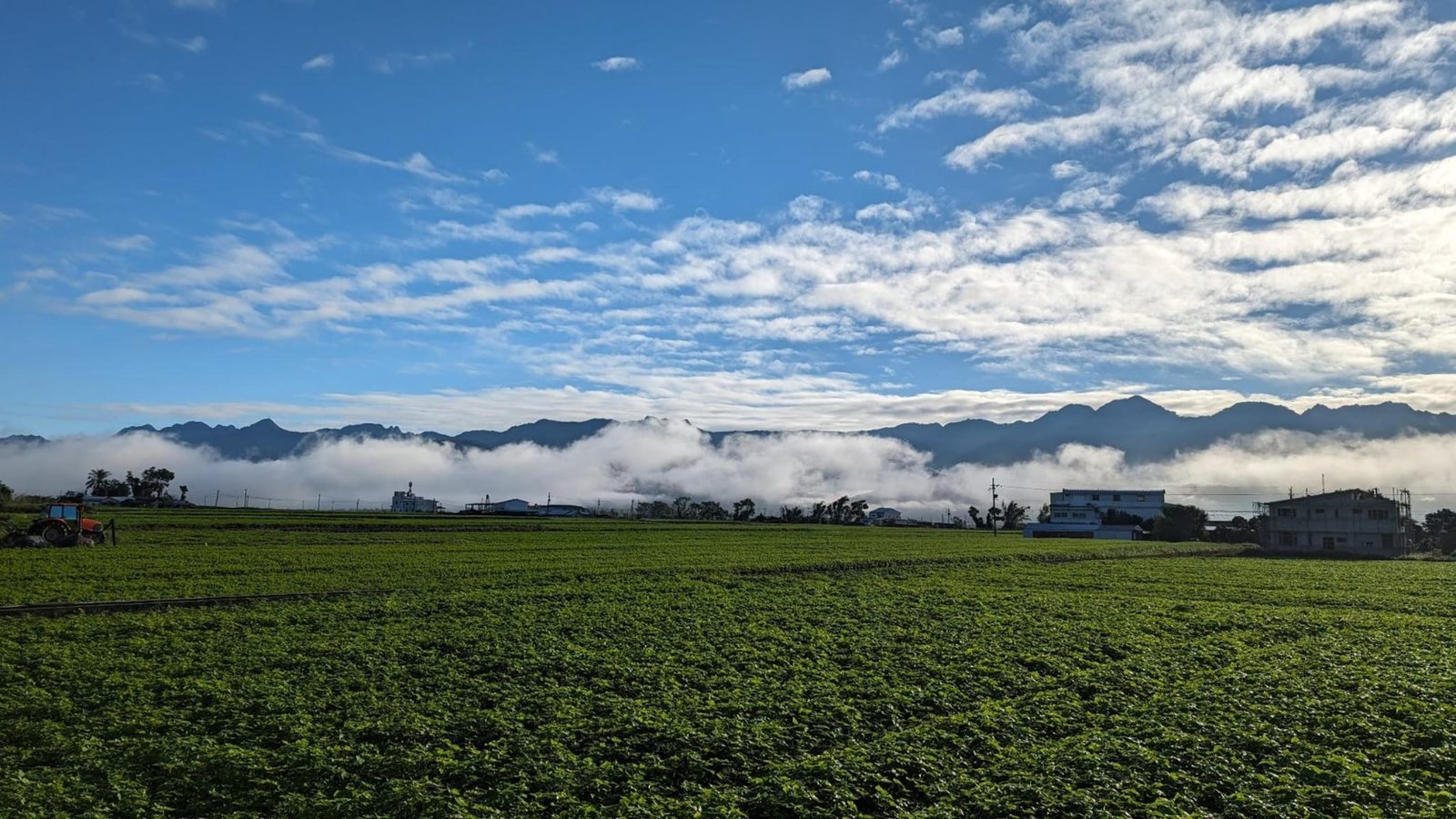
In the Bible, God took a handful of dust and breathed into it, forming humankind. In fact, body and soil are one: we are what we eat, what we eat comes from the soil, and in the end we return dust to dust, earth to earth — a cycle we are breaking and throwing out of balance. Pope Francis's Laudato Si' is not only a Catholic encyclical but a crystallisation of humanity's universal values. (Pictured: winter green-manure carbon farming in Changliang Village, Hualien. Photo: Jay Fang)
We respond to and honour this pope through the Taiwan Smallholder Carbon Farming Project.
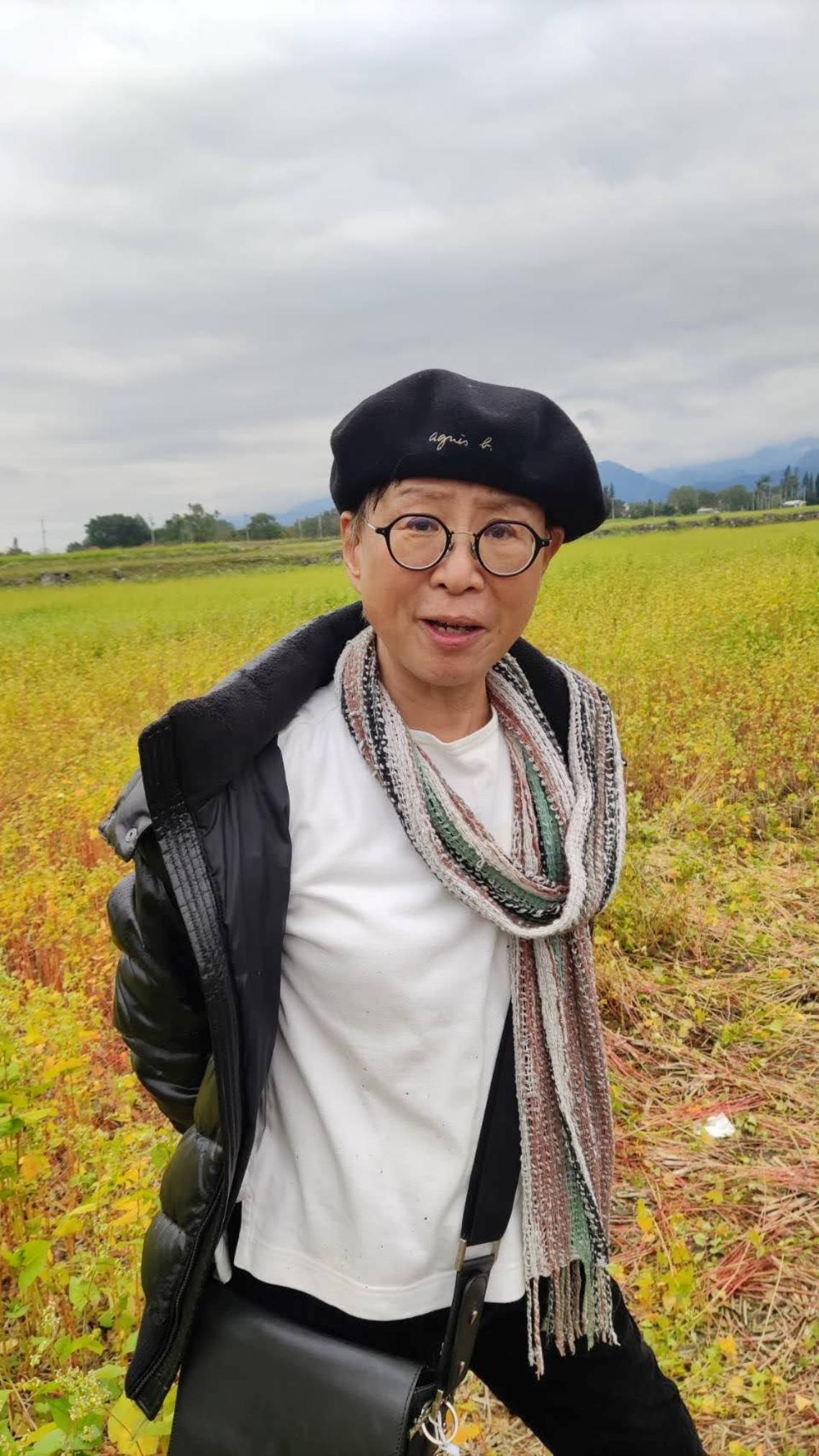
Last year Kuo Chung-tuan invited me to join Fu Jen Catholic University's sustainable campus planning project, giving me the chance to encounter the papal encyclical — which turned out to coincide with the UN SDGs. Universal values truly seem to be humanity's common heritage. (Photo: Jay Fang)
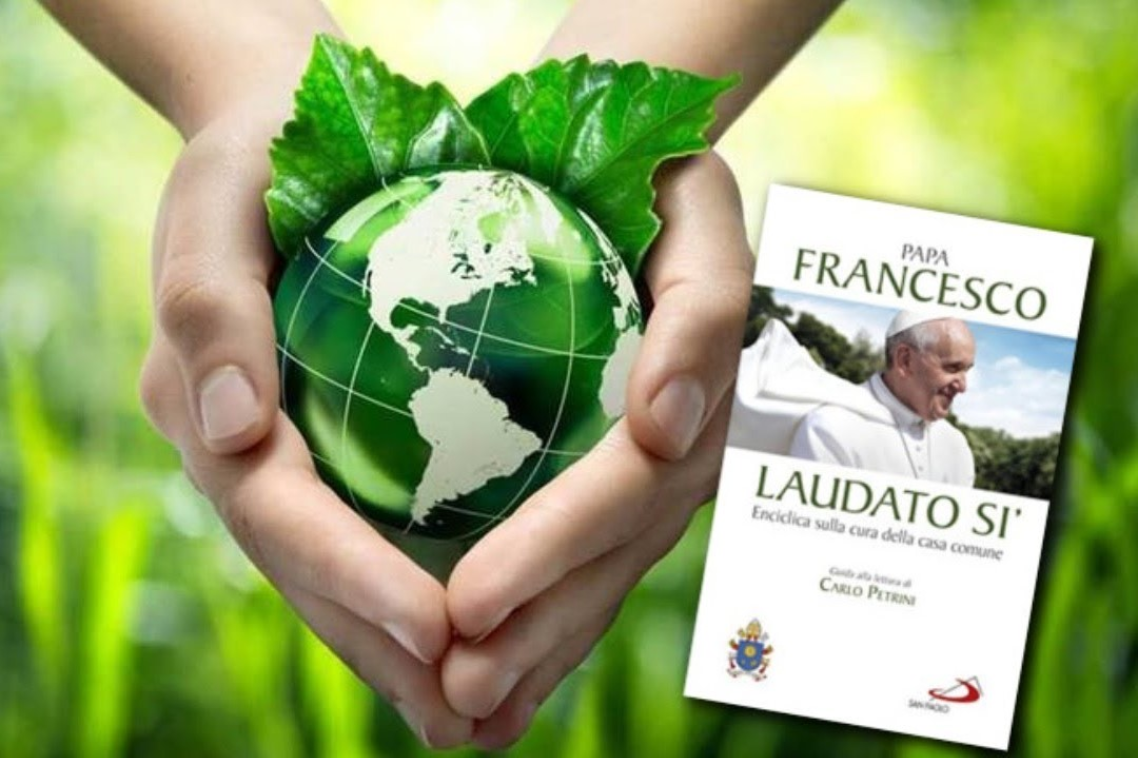
Pope Francis, who came from Argentina, left Laudato Si' as a legacy of universal values shared by all humanity and a vision for its future. (Image courtesy of Jay Fang)
Losing a pope who stood for universal values
Life can be so dramatic and unexpected. On 20 April foreign news reported that the long and gravely ill Pope Francis had just received US Vice-President J.D. Vance. The pope was clearly not of one mind with Trump and Vance, and Vance was the last foreign political leader the pope met. The very next day, 21 April (the day before Earth Day), news came of the pope's death — one can only call it an "arrangement".
Last year the devout Catholic landscape architect Kuo Chung-tuan invited me to take part in Fu Jen Catholic University's "sustainable campus planning", with Laudato Si' as the guiding theme. Reading Laudato Si' closely, I discovered that this encyclical, issued ten years ago in the third year of his papacy (24 May 2015), already set out the global environmental and humanitarian crises we face today, along with ecological solutions from Christian teaching.
I am not a believer and know little about religion, so I avoid interpreting doctrine. I offer only a limited view of the parts of Laudato Si' that concern sustainability, together with insights from my recent work on smallholder carbon farming, in memory of this extraordinary pope who struck such a deep chord in me.
The full text of the encyclical can be downloaded from the Chinese Regional Bishops' Conference in Taiwan. It has six chapters, including:
Introduction (paragraphs 1–16) quotes several predecessors and points out that "nothing in this world is indifferent to us" and that we are "united by the same concern".
Laudato Si': the pope's legacy to all humanity
Chapter 1: What is happening to our common home? (paragraphs 17–61)
It points out that humanity's current relationship with the Earth and with one another has produced: I. pollution and climate change; II. the issue of water; III. loss of biodiversity; IV. decline in the quality of human life and the breakdown of society; V. global inequality; VI. weak responses; VII. a variety of opinions.
Seeing Trump 2.0 eagerly sign executive orders on his first day — killing off diversity, equity and inclusion (DEI), turning it into DIE, withdrawing from the Paris climate agreement and more — I believe we have reached the point where things can only get better.
Chapter 2: The Gospel of creation (paragraphs 62–100). Although this chapter discusses "the convictions of believers", the pope notes that he is aware some reject or merely tolerate this perspective. The chapter mainly concerns faith and wisdom in the Bible and the Catholic interpretation of scripture, which I dare not interpret. One passage resonated with me: "It also affirms that the gifts of the earth and the fruits of the land belong to everyone. Those who till and keep the land must share its fruits, especially with the poor, the widow, the orphan and the foreigner in their midst: 'When you reap the harvest of your land, you shall not reap your field to its very border, neither shall you gather the gleanings after your harvest. And you shall not strip your vineyard bare, neither shall you gather the fallen grapes of your vineyard; you shall leave them for the poor and for the sojourner' (Lev 19:9-10)."
Chapter 3: The human roots of the ecological crisis (paragraphs 101–136). This covers the benefits and harms of technology and the conflicts that technological globalisation brings, with a technology-centred approach producing negative economic, political, ecological and cultural effects — much like Francis's recent call for reflection on AI. The crisis and consequences of modern anthropocentrism point to the harm caused by putting humans first and technology at the centre, dominating all things. Doesn't this sound like a wake-up call to "America First" (MAGA, Make America Great Again)?
Chapter 4: Integral ecology (paragraphs 137–162). This chapter points out that everything is closely interconnected and must be seen as a whole. We must understand an "integral ecology" that respects human and social dimensions and attends to every layer in order to grasp the whole relationship between people and their ecosystems; we cannot look at social and environmental matters separately, treating the head when the head aches and the foot when the foot aches. We must also consider "cultural ecology": the overall problems caused by globalisation and consumerism, which disregard humanity's rich and diverse cultural heritage and indigenous ways of thinking, producing huge problems of justice in society and between generations.
The direction set out in the encyclical
Chapter 5: Lines of approach and action (paragraphs 163–201). The encyclical calls for international dialogue and cooperation, citing the sustainability advocated by the 1992 Earth Summit and the 1972 Stockholm Declaration, and the related international conventions on environmental and ecological protection, fairness and justice. A warning worth heeding is paragraph 171: "The strategy of buying and selling 'carbon credits' can lead to a new form of speculation which would not help reduce the emission of polluting gases worldwide. This system seems to provide a quick and easy solution under the guise of a certain commitment to the environment, but in no way does it allow for the radical change which present circumstances require. Rather, it may simply become a ploy which permits maintaining the excessive consumption of some countries and sectors." This is what I have always strongly argued: smallholder carbon farming is not just about the volume of emission reductions or how much they sell for, but about the "sustainable value and impact" that climate action brings through the process of carbon farming. This chapter coincides with Agenda 21 and the Sustainable Development Goals (SDGs), proposing systemic, structural and comprehensive solutions and stressing transparent, open communication at every level — the same concept and practice as the "stakeholder consultation meetings" that smallholder carbon farming holds continuously.
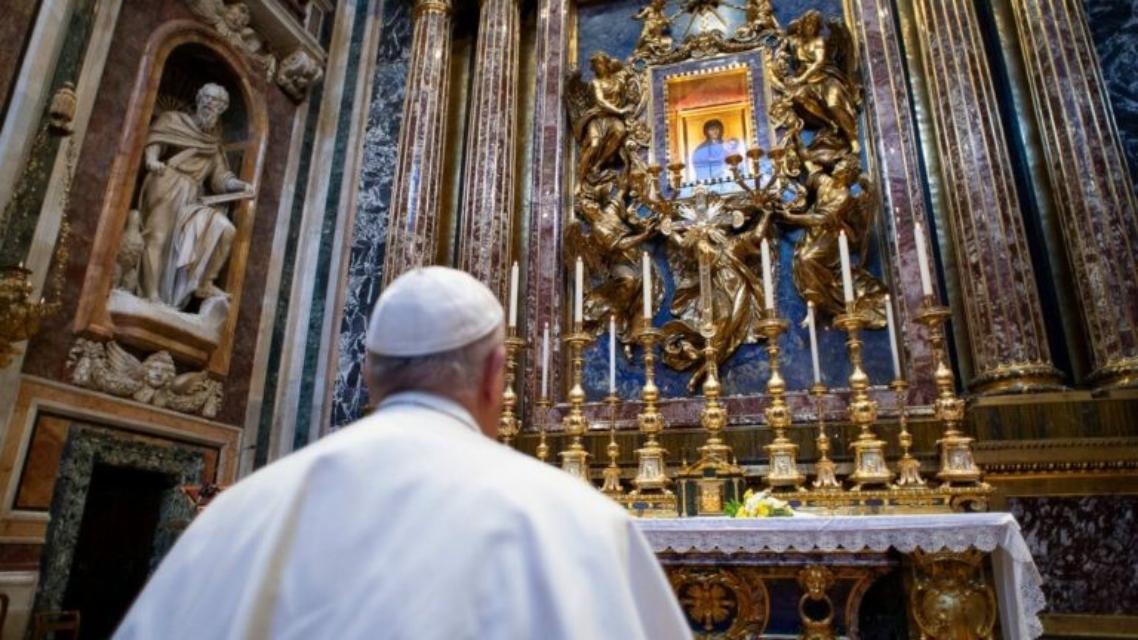
After his death Pope Francis was buried simply in the Basilica of Santa Maria Maggiore in Rome, rather than in the Vatican, where most late popes rest — living out simplicity to the end. (Photo from the internet)
Chapter 6: Ecological education and spirituality (paragraphs 202–246). Francis himself strove for simplicity: he refused luxury cars and rode only in small ones, declined the papal apartments and lived in a simple guest room, and even asked for a simple funeral and burial in a plain niche in Santa Maria Maggiore, with the tombstone inscribed only "Franciscus". The encyclical stresses that "the market tends to promote extreme consumerism in an effort to sell its products, people can easily get caught up in a whirlwind of needless buying and spending. Compulsive consumerism is one example of how the techno-economic paradigm affects individuals."
"The Earth Charter asked us to leave behind a period of self-destruction and make a new start, but we have not as yet developed a universal awareness needed to achieve this. Here, I would echo that courageous challenge: 'As never before in history, common destiny beckons us to seek a new beginning… Let ours be a time remembered for the awakening of a new reverence for life, the firm resolve to achieve sustainability, the quickening of the struggle for justice and peace, and the joyful celebration of life.'" Hence the call for "ecological conversion": the rich spiritual heritage of Christianity, the fruit of two thousand years of personal and communal experience, can make a precious contribution to the renewal of humanity.
It ends with two prayers, for justice, love and peace for humanity, bringing the 77-page text to a close.
Trump makes us cherish universal values all the more
Reading Pope Francis's 77-page encyclical felt like reviewing most of my life. Without reaching this age, it would be hard to have such insights. I have enjoyed technology and experienced great material civilisation and globalised consumerism, and now see society, politics and ecology lying in ruins. Through democracy, Americans have together chosen a "greedy, insatiable and indiscriminately voracious" president, rejecting the universal values of diversity, equality and inclusion that humanity spent half a century building, and returning to a barbaric age where the strong prey on the weak. On the positive side, Trump is a negative example that makes us realise more deeply how fragile humanity's universal values are, and how much harder we must fight to uphold them.
As it happens, next week the on-site audit of the Taiwan Smallholder Carbon Farming Project begins, visiting dozens of smallholder sites across Taiwan — places where we put the universal values of the SDGs into practice. Small as we are, no darkness, however great, can swallow the faint light of a single firefly. This is our way of responding to and honouring this compassionate, far-sighted pope together.
Source: CM Media ( https://www.cmmedia.com.tw/home/articles/54068 )


