 努力小農
本文尚無譯文。
The change that wasn't a change
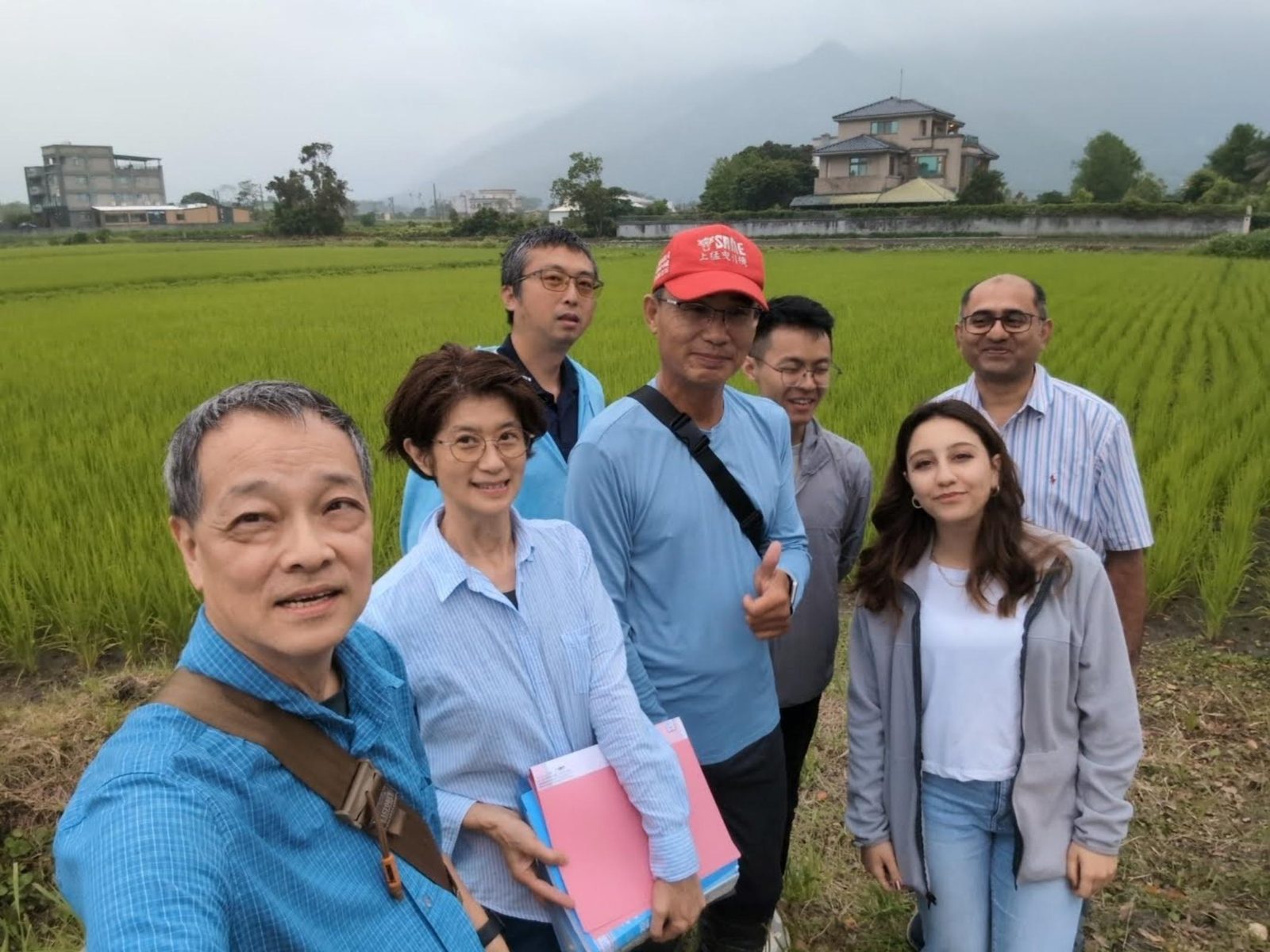
Only when smallholders looked at their records from the past two or three years did they realise how much had changed in that time — they just hadn't noticed. (Image courtesy of Jay Fang)
"We haven't changed anything in our farming!"
When auditors from Re Carbon, the validation and verification body approved by the Gold Standard, asked farmers in the Taiwan Smallholder Carbon Farming Project what had changed since they joined, almost every smallholder said with one voice: "Nothing much."
Every emission-reduction certification project must involve change after joining; if there really is no change, the project doesn't stand. Most projects involve clear "construction" — wind turbines, solar panels, facilities to improve energy efficiency. But smallholder carbon farming involves no construction; on the contrary, it is "engineering by subtraction". Once things are taken away you can't see them, so it seems nothing has changed.
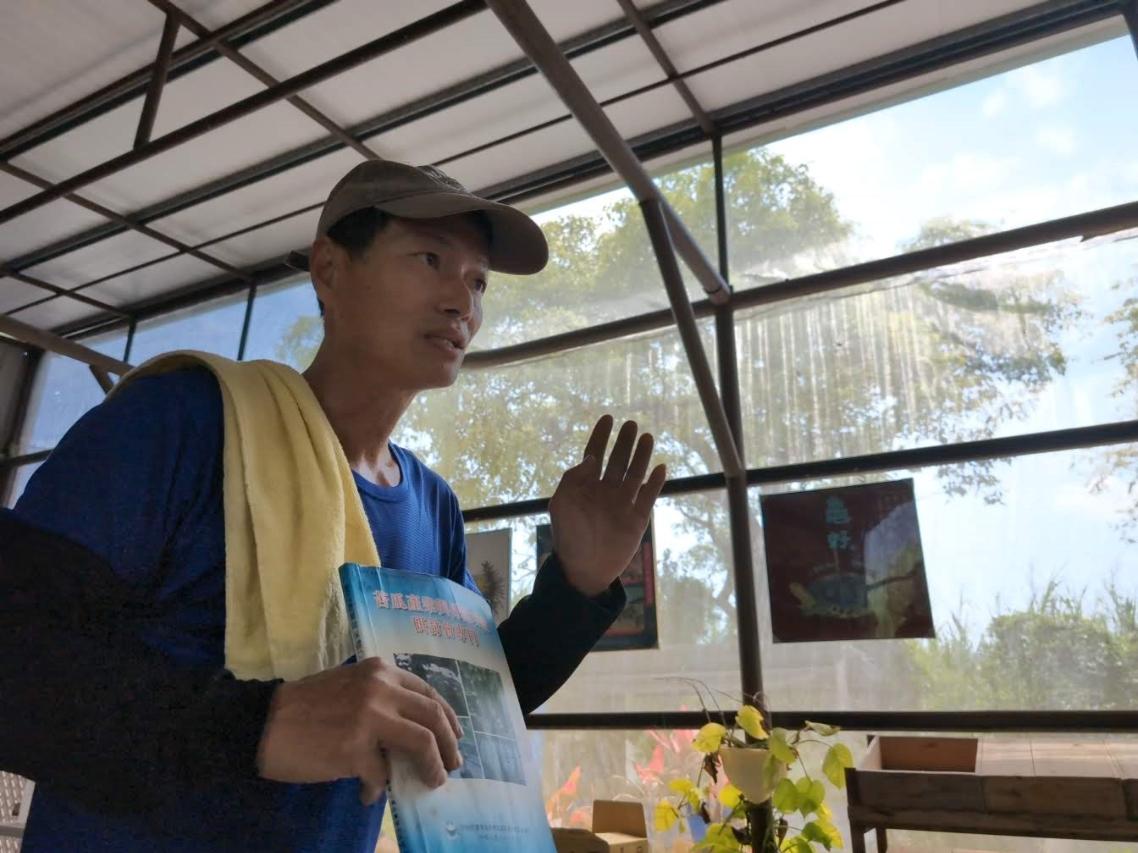
Jiang Yu-bao, with 30 years of organic farming experience, is a master of the craft, and even he has made changes in his two years in the project. (Image courtesy of Jay Fang)
From 28 April to 2 May, over five consecutive days, auditors sampled smallholders farming nearly 200 hectares in Hualien, Taitung, Tainan, Chiayi and Yunlin, confirming their basic eligibility to farm legal, qualifying land, and learning how they carry out the carbon farming project, how their farming methods have changed, and what they have learned before and after.
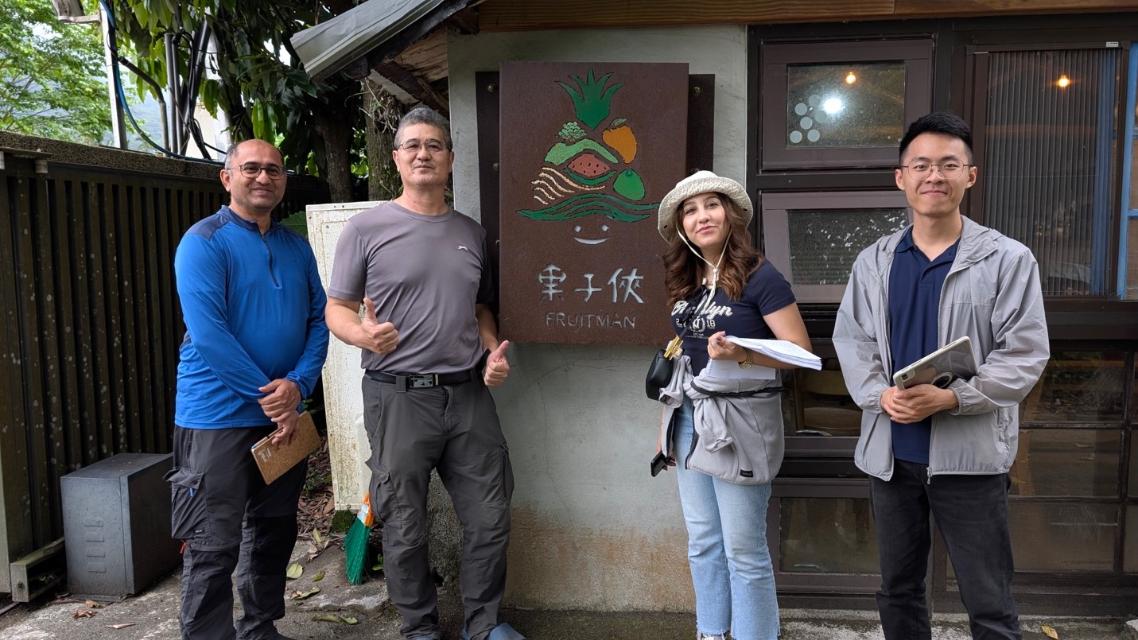
Guozixia's field is very small, but it has value for environmental and food-and-farming education and is an important embodiment of ecosystem services. (Image courtesy of Jay Fang)
At 8 p.m. on 18 April we held the "Pre-audit briefing for the Taiwan Smallholder Carbon Farming Project". First, I told all participating smallholders that my only request when facing the auditors was "honesty, honesty, honesty". We must face our achievements and shortcomings together; in such a highly uncertain project, shortcomings are inevitable.
In the past I have audited more than 400 companies in many countries and taken part in witness audits. Many were mere formalities, going through the motions — or a cat-and-mouse game, with auditors desperately hunting for faults and the audited (actually the paying clients) constantly dodging and covering up problems.
I was lucky to be trained by ISO/TC 176 from the start. First, ISO standards are voluntary, so everyone "voluntarily" adopts the same standards as a systematic P-D-C-A communication tool, and auditors and auditees work together for the purpose of "continual improvement".
It's like a health check: the aim is to find the root of the problem. If the person being examined uses every trick to "look" healthy, they are hiding their illness and avoiding the doctor, and all that cleverness ends up costing them their life.
Driven by market interests, auditing and certification have become structural fraud or a zero-sum game — what benefit do they actually produce? If everyone just goes through the rituals without finding opportunities for improvement, it's merely a waste of time and money for the sake of "feeling good". The CDM (the Kyoto Protocol's Clean Development Mechanism, a carbon-trading mechanism) came in 2005, 18 years after ISO 9000 was published in 1987, and a single CDM certificate could be worth tens of millions of US dollars — "pie falling from the sky". It became a collective carnival of fraud that wrecked the CDM and thoroughly stigmatised "carbon trading".
Looking at today's global voluntary carbon market, total trading from 2020 to 2024 was US$7.5 billion over five years, with large swings — from US$500 million to US$2.39 billion — because the actual emission-reduction performance is still very opaque. In recent years renewable energy has created more problems than it solves; natural carbon sinks (forestry, agriculture, land use, etc.) have overtaken renewables, with higher prices per tonne, rising from over US$700 million in 2023 to US$2.39 billion in 2024.
Smallholder carbon farming focuses on how much organic carbon is stored in the soil each year, which is highly uncertain: changes in the natural environment, climate, pests and diseases; farmers' farming methods and inputs; sampling and testing. Apart from testing, every step is highly uncertain. Unfortunately, in anti-greenwashing actions in recent years many agricultural emission-reduction projects (such as reducing flooding time in rice paddies to cut methane emissions) were found to have filed claims for farmland that did not exist at all, severely damaging the credibility of natural carbon sinks.
To ensure that smallholder carbon farming produces carbon credits of high quality, high credibility and high ecosystem-service value, our concrete response is transparency, openness and inclusion of all views. We will publish the entire carbon farming and audit process and the final audit report, laying them out in the sun like the crops smallholders grow, for a kind of "scientific and social photosynthesis". On the one hand everyone can witness the whole project and question and challenge it; on the other, it is an important public participation and education movement in natural carbon reduction.
Agriculture and food account for one-third of human carbon emissions. If they can be reduced "moderately", that would be an important boost towards net zero in 2050 — while also meeting the food needs of a world population growing from 8 billion to 10 billion and tackling poverty, hunger, health and education, the first four SDGs.
This audit was delayed by more than a year, because this is the first certification under the Gold Standard Soil Organic Carbon Framework Methodology and no validation and verification body (VVB) had experience. We wrote to all qualified VVBs and finally chose Re Carbon of Turkey. Its head, Christian Johannes, is German; he went to Turkey to develop wind farms, married and settled there, and founded the verification body, specialising in carbon credit certification.
The lead auditor, Sandeep Kanda, is an Indian expert with extensive certification experience who has worked for several multinational organisations over more than 20 years. He knows all kinds of certification rules and has studied the Gold Standard methodology closely, so we had lively discussions throughout, putting our views forward to calibrate them against each other. This is a very important process: certification rules and methodologies are documented requirements that must be met, but real-world conditions must be adapted to local circumstances. That takes in-depth discussion and field observation and interviews to confirm each smallholder sub-project's eligibility, suitability and future performance.
For example, at Yuemeiqiao Ecological Farm in Fenglin and Wanrong, Hualien, Sandeep pointed out that Hsieh Ching-po and Lu Ling-ling's family of three farmed 35 hectares of soybeans, black beans and buckwheat, which seemed not to fit the definition of a smallholder farming less than 10 hectares. I found the FAO's original definition of smallholders: besides an area within 10 hectares, it also includes the criterion that family members are the main farmers — so they met the requirement on the source of labour.
Then at Kantiantian Organic Farm, located at the "Aogu Wetland Forest Park" within a 30-hectare Taiwan Sugar special agricultural zone, when Sandeep saw "Aogu Wetland Forest Park" he questioned whether it violated the methodology's rule against wetlands. I had to dig out the official Ministry of the Interior data I had used in my assessment to prove that Kantiantian's farmland was not in a wetland or protected area, and only then could I explain its conformity.
As for the laboratory that determines soil organic carbon content in the certification process, it has the lowest uncertainty of all. We use the infrared spectrometry method for soil organic carbon announced by the Ministry of Agriculture for high-precision testing, and when the certification process reaches a milestone we will publish all testing procedures and raw records. Any professional will be able to see the records of sampling, sample receipt, preparation, testing, statistical analysis and reporting — including failed or invalid test data and the corresponding corrective actions.
Smallholders don't really know about the complex, tedious certification process. They only need to choose one or two improvement methods for increasing soil carbon that they can carry out without affecting yields, and implement them step by step. Even today's science cannot fully quantify the mechanisms of change in soil carbon sinks; they can only be determined by annual testing.
The MiHuMiSang App we developed proved especially important in the certification: smallholders just had to show their photo, check-in and upload records — tamper-proof records that increased the project's credibility.
Only when smallholders looked at their records from the past two or three years did they realise how much had changed in that time — they just hadn't noticed.
How fortunate we are to have more than 300 smallholders working together to create the record of the Gold Standard's first soil organic carbon project. And we believe that, given time and as more people understand, we can expand both the number of participants and the area.
-----------------
Source: CM Media ( https://www.cmmedia.com.tw/home/articles/54161 )


