 努力小農
本文尚無譯文。
Green manure is a smallholder's best friend — beyond cutting and farming carbon, it brings income and scenic value
Adding green landscapes gives villages a chance at tourism income around Lunar New Year while fulfilling the carbon farming mission, increasing soil fertility and reducing tillage and fertiliser costs — killing several birds with one stone.
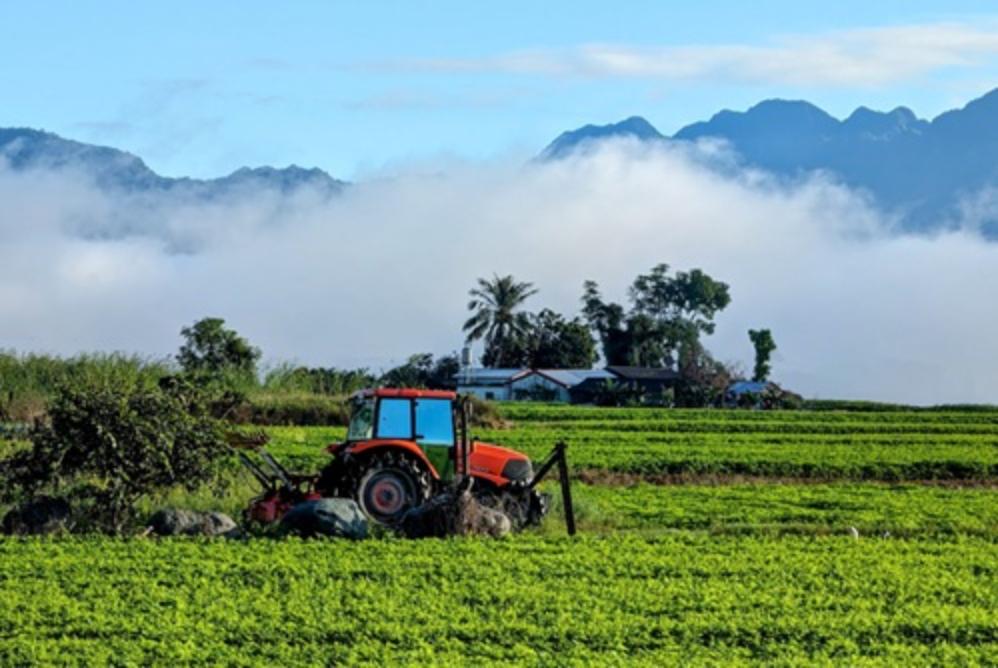
Every year around Lunar New Year, villages hold spring outings such as radish pulling and viewing rapeseed and other flowers, which always attract whole families, young and old. Changliang Village in Yuli Township, Hualien, has already held five Changliang Radish Festivals. After the November harvest, as the fallow period begins, village chief Chen Wen-hua sows white radish seed on one or two hectares of his fields and lets the seeds grow as nature provides, so radishes grow naturally in the fields. Each year in early January local people and visitors come to pull radishes in the fields.
Changliang Radish Festival joins carbon farming action to create a new look for sustainable villages
Because we are now in the third year of the Smallholder Carbon Farming Project in Changliang, with two years of emission-reduction results, we can verify that keeping the land green during Changliang's winter fallow does indeed confirm the theoretical opportunity to increase soil organic carbon.
I used to think, like most people, that overcropping makes land infertile. But working on smallholder carbon farming in recent years, I have found that this idea is flawed. Plants growing on the soil surface don't suck away the land's fertility. On the contrary, every day plants photosynthesise, turning CO2 into glucose and releasing oxygen, beginning the journey of inorganic carbon in the atmosphere becoming biological organic carbon. At night, respiration turns this glucose into the plant's organic matter, and through metabolism organic matter is stored in the soil. Soil microbes absorb, digest and break it down, turning it into biomass and into humus and humic acids that can be stored long-term — forming the plant's self-sufficient carbon cycle.
These principles may be hard to grasp, but look at Taiwan's forests and wild land: the Earth God plants grass and trees with no one tending them, no fertiliser and no irrigation, yet towering trees and lush forests grow, and soil organic matter increases to saturation. Even grassland and meadows are full of life.
Tillage harms soil health; letting the land rest naturally is more sustainable
Through photosynthesis the sun's energy is constantly poured into the soil, relying on the symbiosis of plants above ground, microbes in the soil and small creatures such as earthworms and insects to compose the symphony of soil life. But most people treat soil microbes as enemies, so they plough. As a result, symbiotic bacteria and organisms in the soil die en masse when exposed to the sun's ultraviolet rays, and large amounts of soil organic carbon turn into CO2 — the key to the loss of organic matter and the rise of atmospheric CO2.
This is an idea (a consensus) built up over the past 60 or 70 years, almost two generations. Ploughing with big machines is so satisfying that once isn't enough — up to seven or eight times a year. Each ploughing costs about NT$5,000, no small expense. How much produce must be sold to recover it?
During fallow periods farmers plough at least once, even two or three times, to make sure no weeds grow — partly to show they are diligent and hard-working, partly for peace of mind that weeds won't steal the crops' nutrients. But doing this changes soil fertility in exactly the opposite way to what we imagine.
If green manure seed is sown within a week of the harvest before the fallow period, it will just germinate. Green manures are generally tough, hardy plants; once they grow, they block sunlight and suppress "weeds".
Here are examples of the plants generally used as green manure in Taiwan, or that also have economic value, and their benefits:
1. Leguminous green manures: the mainstay of nitrogen fixation
- Sunn hemp (Crotalaria juncea)
- Nitrogen fixation: 100–150 kg per hectare, the highest among legumes (Taiwan Agricultural Research Institute, 2020).
- Adaptability: drought- and acid-tolerant, suited to sandy soils in the south; completes its growth cycle in 60–90 days.
- Sesbania (Sesbania cannabina)
- Salt tolerance: still grows at an electrical conductivity (EC) of 4 dS/m; the first choice for coastal areas.
- Biomass: produces 8 tonnes of dry matter per hectare; its fibre structure lengthens the decomposition cycle of organic matter.
2. Grass green manures: the core of carbon sinks
- Italian ryegrass (Lolium multiflorum)
- Organic matter contribution: soil organic matter rises by 3–5% after incorporation (Taichung District Agricultural Research and Extension Station, 2021).
- Soil and water conservation: root density of 15–20 roots per square centimetre effectively reduces topsoil loss.
- Oats (Avena sativa)
- Cold tolerance: keeps growing at 5°C; suited to winter fields in the north.
3. Brassicas and special green manures
- Rapeseed (Brassica napus)
- Phosphorus mobilisation: secretes oxalic acid to dissolve iron–phosphorus compounds, increasing available phosphorus by 30–50%.
- Tourism value: the sea of flowers attracts visitors; around Mr Brown Avenue in Chishang, Taitung, it has spawned photography, honey and other businesses.
- Buckwheat (Fagopyrum esculentum)
- Phosphorus mobilisation mechanism: roots release citric acid and phosphatase, with marked effects on phosphorus-deficient soils (available P <20 ppm).
- Short-term benefit: a 60-day growing period; incorporating the fresh plants provides fast-acting organic matter; suitable for intercropping in orchards.
Of course everything has pros and cons, and with green manure you also need to watch out for the following problems:
1. Technical limitations
- Conflict over incorporation timing: delaying incorporation for flower-sea tourism lets the plants turn woody, so a "rotating zones" system is needed, opening only part of the area each day.
- Volunteer seed problem:Ripe buckwheat seeds scatter and become weeds. Solutions include:
- Mechanically harvesting the plants before they mature.
- Mixing in ryegrass to suppress volunteer buckwheat seedlings.
2. Improving economic viability
- Cost-sharing mechanisms:
- Government subsidies for green manure seed (currently NT$4,500 per hectare).
- Tourism revenue fund: set aside 10% of revenue for a dedicated soil improvement account.
- Tourism income:
- It's now fashionable to talk about the "sixth industry", in which the tertiary sector is tourism that boosts local produce sales, along with the income from homestays and eco-tourism.
The Taiwan Smallholder Carbon Farming Project places special emphasis on "payment for ecosystem services": farmers change their production activities to carbon farming (increasing soil organic carbon) and contribute to the Sustainable Development Goals SDG 2 food security, SDG 3 good health and well-being, SDG 4 quality education, SDG 8 decent work and economic growth, SDG 12 responsible consumption and production, and SDG 13 climate action. All of these can be fully recorded and quantified, becoming part of the carbon credits and increasing the value and price of produce.
The benefits of green manure outweigh the drawbacks, and it costs little — every smallholder can afford it and can do it. There are five months until the next green manure season, so start planning and preparing now!
----------------
Source: CM Media ( https://www.cmmedia.com.tw/home/articles/54529 )


