 努力小農
本文尚無譯文。
Bringing IFRS S1 and S2 into smallholder carbon farming projects
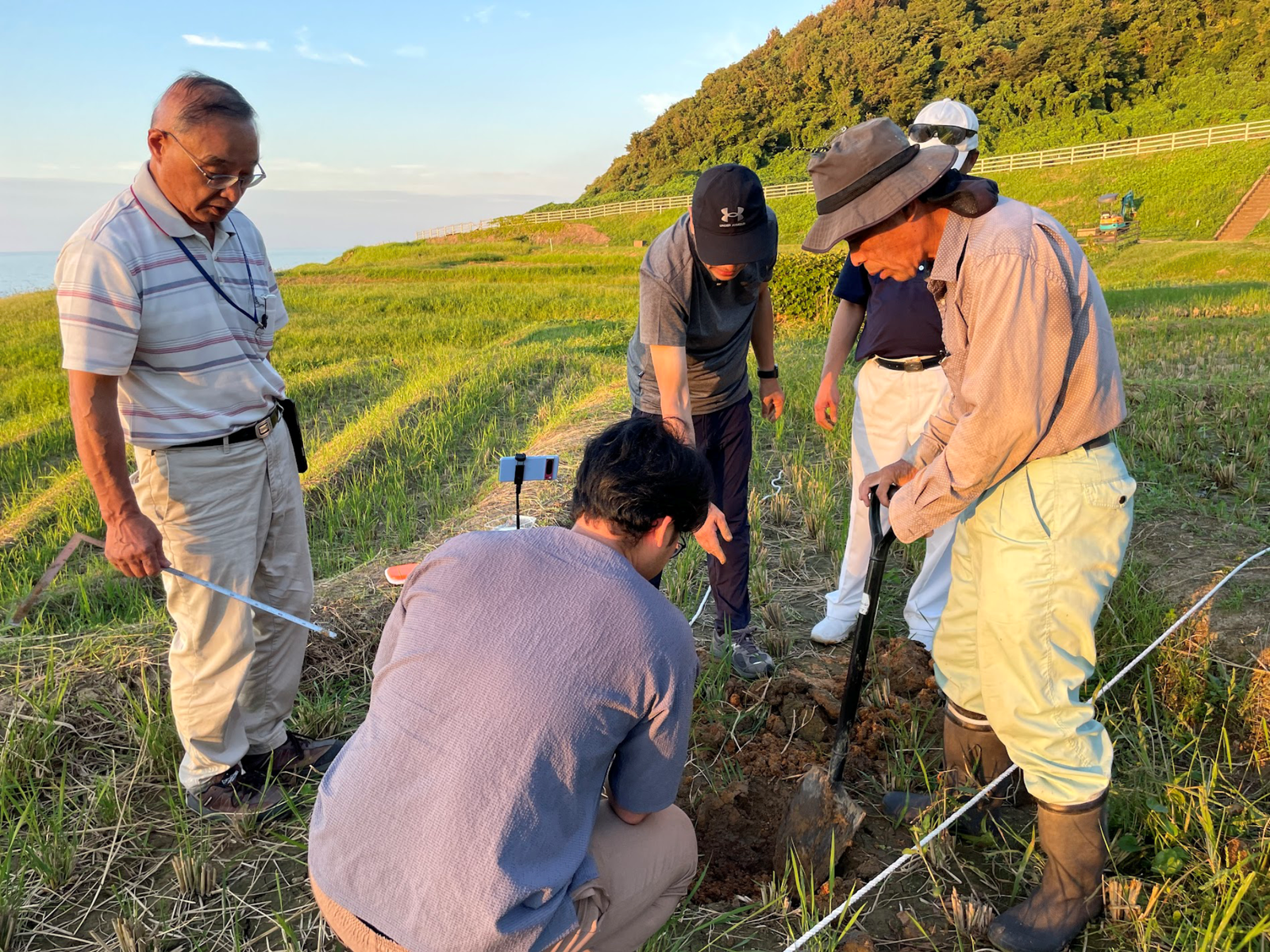
Smallholder carbon farming projects offer a platform for companies and farmers to move towards sustainability together. Pictured: satoyama farmers on Japan's Noto Peninsula learning the soil sampling method for smallholder carbon farming. (Photo: Yang Ching-hui; courtesy of Jay Fang)
Listed companies are the strongest backers of carbon-farming smallholders
"Sustainability" should not be a legendary "Holy Grail". Companies, NGOs and governments around the world are discussing sustainability, but it needs financial and accounting "proof" to become real and to get the attention of top management in business and government.
To speed up sustainable development among Taiwan's listed companies, the Financial Supervisory Commission, building on the "Sustainable Development Roadmap for TWSE/TPEx-Listed Companies" and earlier "Corporate Governance Roadmap" policies, issued the "Sustainable Development Action Plan for TWSE/TPEx-Listed Companies". One of its actions is to "improve sustainability disclosure", expanding its scope:
Listed companies with paid-in capital of NT$2 billion or less must prepare and file sustainability reports from 2025 (for the 2024 reporting year).
The sustainability report rules were amended in 2023 so that companies subject to them must strengthen disclosure of SASB "sustainability indicators" by industry in their sustainability reports; from 2025 all listed companies must disclose "sustainability indicators".
International Financial Reporting Standards (IFRS) S1, on sustainability-related financial disclosures, and S2, on climate-related financial disclosures, are key frameworks for improving the transparency and consistency of sustainability reporting across industries. IFRS S1 emphasises disclosing material sustainability-related financial information needed for informed decisions. IFRS S2 focuses specifically on climate-related disclosures, including risks, opportunities and strategic responses. Together these standards mark a key step in integrating financial reporting with environmental, social and governance (ESG) goals.
International accounting standards become the vanguard of sustainability
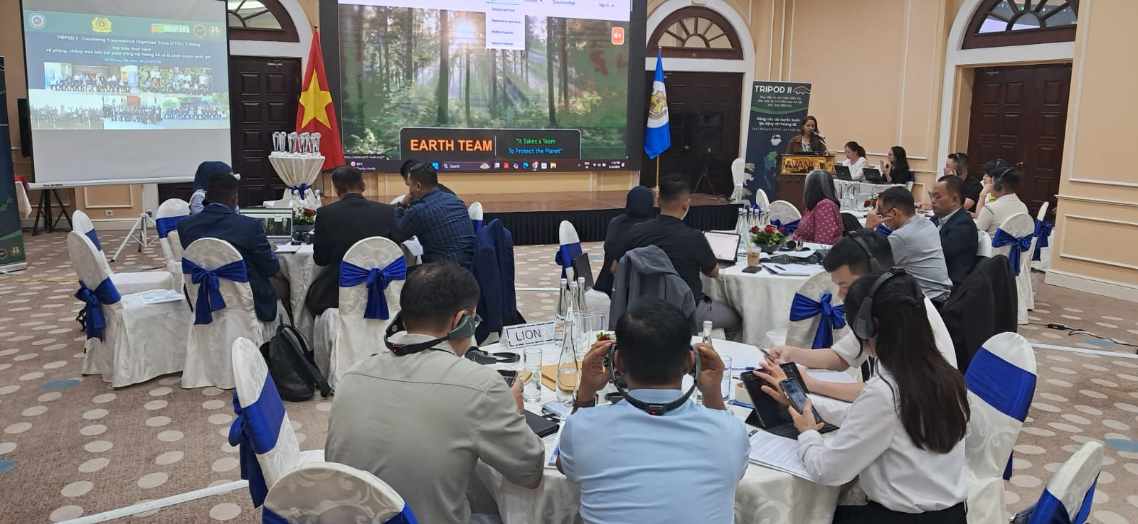
Companies, NGOs and governments around the world are discussing sustainability, but it needs financial and accounting "proof" to become real and to get the attention of top management in business and government. (Source: Earth Team)
I recently interviewed some senior executives. They treat their companies' ESG (environmental, social and governance) sustainability reports as extra work. Whether at board meetings or shareholder meetings, everyone just talks about "sustainability"; when it comes to action, it's the usual "package tour" — beach clean-ups, environmental clean-ups, protecting wildlife, joining Earth Day — spending the sustainability "budget" in the annual financial plan and calling it done. Sustainability reports are "good deeds retrospectives" without the substance of looking ahead and setting sustainability goals. Carry on like this and sustainability becomes a synonym for greenwashing: companies don't become sustainable but instead fake it, which is a serious obstacle for business, society and the environment.
In view of the environmental and ecological crises facing the planet, global finance is undergoing a profound transformation, with investors and stakeholders increasingly demanding transparent, comparable sustainability information. Through its International Sustainability Standards Board (ISSB), the IFRS Foundation has issued the IFRS sustainability and climate disclosure standards (IFRS S1 and IFRS S2), setting a global baseline for such disclosures.
Most importantly, the ISSB framework strategically incorporates the industry-specific guidance of the Sustainability Accounting Standards Board (SASB) standards, requiring companies to consider SASB standards when identifying sustainability-related risks and opportunities beyond climate. This integration addresses the fragmentation of earlier voluntary reporting initiatives and promotes a more consistent, comparable and efficient reporting ecosystem. Global adoption is gaining momentum, with many jurisdictions moving towards mandatory implementation, turning sustainability reporting from a voluntary activity into a formal part of financial disclosure.
This shift turns sustainability reporting from a "voluntary choice" into a "global baseline", showing that the field is maturing — no longer just a PR-driven activity but a core part of financial market infrastructure. It raises sustainability information to the same rigour as traditional financial data, requiring similar levels of assurance and depth of integration. Institutionalising sustainability reporting under the IFRS Foundation means capital allocation decisions will increasingly be influenced by sustainability performance. Through market mechanisms, this may in turn steer investment flows towards more sustainable entities and put pressure on companies with poor environmental, social and governance (ESG) performance, accelerating a broader sustainability transition.
Smallholder carbon farming: aimed at solving sustainability for both agriculture and business
The Taiwan Smallholder Carbon Farming Project: an important part of SDG 13 climate action
Smallholder carbon farming projects involve a range of changes in farming practice that increase carbon storage in soil and biomass. Besides reducing greenhouse gas emissions, the soil turns photosynthesised CO2 into organic matter beneficial to farming, storing atmospheric CO2 and generating carbon credits. These practices include agroforestry, crop rotation, conservation tillage and cover crops. By strengthening the soil's capacity to store carbon, smallholder carbon farming helps mitigate climate change, improves soil health and strengthens agriculture's resilience to changing climate conditions.
Aligning with global climate action goals
Applying IFRS S2 in smallholder carbon farming projects helps align them with international climate action frameworks such as the Paris Agreement. IFRS S2 ensures detailed disclosure of climate-related contributions, including emission reductions and carbon sequestration, improving transparency and credibility. This not only builds confidence among stakeholders but also attracts investment in initiatives that demonstrate measurable climate impact.
Enhanced financial and sustainability reporting
Adopting IFRS S1 in smallholder carbon farming initiatives helps unify the reporting of sustainability-related financial data. Given the multifaceted financing mechanisms often associated with these projects — government subsidies, private investment and carbon credit schemes — IFRS S1 establishes a clear framework for communicating the interaction between financial activities and sustainability outcomes, creating a coherent narrative for all stakeholders.
Risk assessment and management
Under IFRS S2, smallholder carbon farming projects must, in line with the Gold Standard methodology and certification rules, assess and disclose climate-related risks, including extreme weather events, long-term drought and potential policy changes. By identifying these risks, project managers can develop mitigation strategies to protect the long-term viability and success of smallholder carbon farming practices. This proactive approach is essential to ensuring such programmes are scalable and reliable.
Contribution to the Sustainable Development Goals (SDGs)
SDG 13: Climate Action
Smallholder carbon farming strengthened by IFRS S2 directly supports SDG 13 by reducing greenhouse gas emissions and strengthening soil-based carbon storage. Transparent reporting of these outcomes enables credible assessment of progress towards climate neutrality, further amplifying their impact.
When companies invest in smallholder carbon farming and buy farmers' produce, they are in effect helping farmers cut carbon — a contribution to their own environmental and governance performance.
SDG 2: Zero Hunger
By promoting soil health, smallholder carbon farming raises agricultural productivity and promotes global food security, contributing to SDG 2. Adopting IFRS S1 helps quantify and communicate these dual benefits effectively, ensuring stakeholders fully understand the intersection of food production and climate resilience.
When companies invest in smallholder carbon farming and buy farmers' produce, they also directly help smallholders achieve food security goals.
SDG 3: Good Health and Well-being
Within smallholder carbon farming areas, recycling agricultural waste and reducing air pollution, water pollution and waste all promote the health of farmers, communities and the environment, realising the UN's "One Health" approach.
When companies invest in smallholder carbon farming and buy farmers' produce, and their employees eat this produce, food safety risks fall and health and well-being improve.
SDG 4: Quality Education
The project developer offers the FAO's Global Soil Doctors Programme, a "farmer-to-farmer dialogue" education developed by international experts, helping farmers use simple, practical methods to understand their land, soil and crop problems and improve their soil and farming environment, which helps raise yields (SDG 2).
When companies invest in smallholder carbon farming and buy farmers' produce, they can sustain environmental and food-and-farming education, turning words into example — a demonstration of quality education by business.
SDG 8: Decent Work and Economic Growth
Smallholders are the front-line victims of climate disasters. Being able to build agricultural soil organic carbon sinks and take part in international emission-reduction certification is an honour and a reward for them, and their produce, backed by international certification, becomes more competitive and commands better prices.
When companies invest in smallholder carbon farming and buy farmers' produce, they directly support smallholders and take part in their climate action, encouraging them and raising their incomes. Companies can communicate these results internally and to customers and suppliers, building corporate culture and value chains.
SDG 12: Responsible Consumption and Production
Farmers in the project reduce their use of agrochemicals (pesticides, fertilisers), benefiting the health of farmers, the environment and crops while also protecting consumers.
Investing in smallholder carbon farming and buying farmers' produce is the best form of responsible consumption for companies, and encourages farmers to join the sustainable action of smallholder carbon farming. Companies can also encourage their supply chains to buy and consume produce from smallholder carbon farming, forming a sustainable value chain.
Source: CM Media ( https://www.cmmedia.com.tw/home/articles/54924 )


