 努力小農
本文尚無譯文。
In the face of climate disaster, no one is an outsider
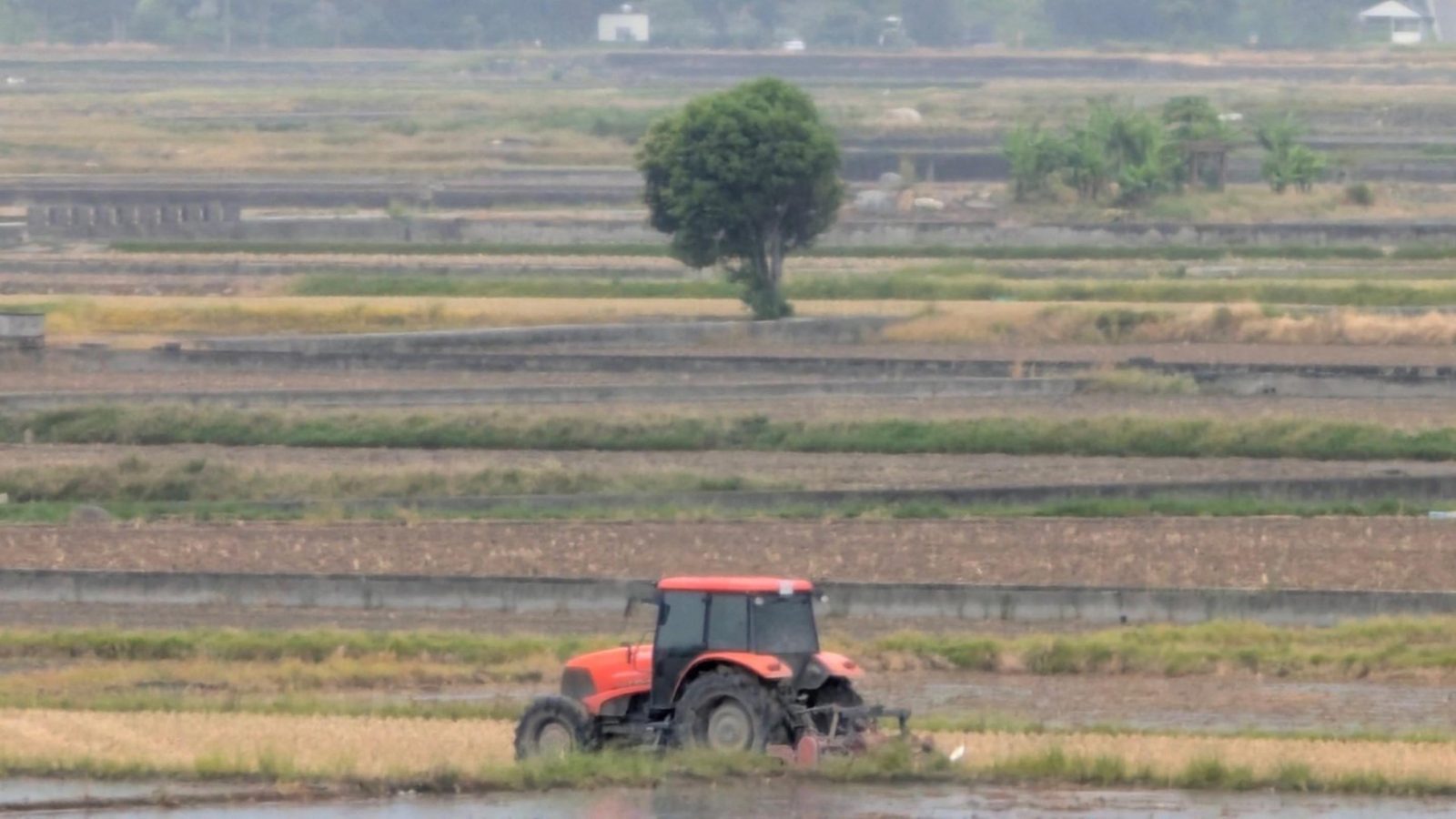
Hualien and Taitung escaped damage from Typhoon Danas. Chishang farmers enjoyed a bumper first crop and have begun preparing the land for the second rice crop. (Photo: Jay Fang)
From January to June this year Taiwan's trade surplus with the US hit a record: exports reached US$53.32 billion, up 33.7% year on year; second-quarter exports were US$153.71 billion, up 34.1%; and first-half exports totalled US$283.26 billion, up 25.9% — all three record highs. This fully reflects the spirit of "drink today while there's wine today". Perhaps people care more about the tariff "lottery" numbers Trump will announce this week, and have grown numb to news of an ever-hotter climate. Yet recent climate events are even more alarming.
On 4 July — America's Independence Day — torrential rain in Texas caused the Guadalupe River to burst its banks in a once-in-a-century disaster that killed more than a hundred people. Following the California wildfires half a year earlier, there is no longer any dispute that climate-driven flood and fire show no mercy.
In Europe, Spain, Portugal, France, Italy and other countries endured abnormal heat above 40°C, even close to 50°C, causing about a thousand heat deaths, along with wildfires in many places that destroyed thousands of hectares of forest.
India and China, home to a third of the world's population, also suffered scorching heat, torrential rain and floods.
Typhoon Danas formed rapidly off Taiwan's south-west coast and, for the first time in 120 years, made landfall in Chiayi, heading straight for Taiwan's granary on the Chiayi–Tainan plain and causing severe agricultural losses. The Mid-Autumn seasonal fruit, pomelo, was already ripening in the Madou growing area; nearly 90% was lost.
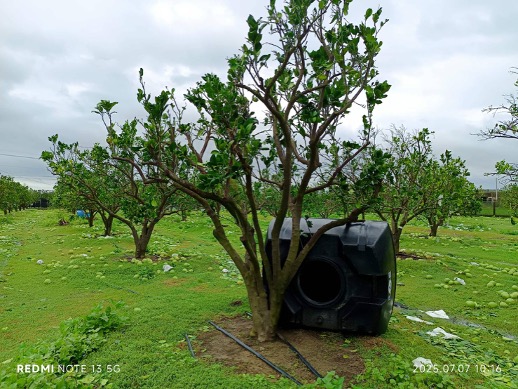
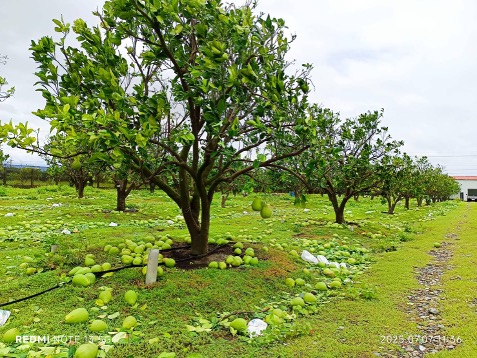
Tainan Madou pomelo smallholder Chan Ming-jung said: "My orchard is on the east side of the motorway. On the west side, a two-storey steel-framed sheet-metal building was blown down, so it's no surprise my orchard was blown upside down!" (Photo: Chan Ming-jung, Youer Orchard)
Pomelo farmers Chan Ming-jung and Hsieh Chung-nieh, who are in the Taiwan Smallholder Carbon Farming Project, are in great distress, watching a year's hard work vanish overnight and leaving their pomelo orchards devastated. They are beyond tears.
Kantiantian Organic Farm at the Aogu Wetland in Dongshi, Chiayi, has been hit by devastation again. Besides almost all its fields being under water, a power cut of more than three days affected a cold store full of carrots; the losses are hard to estimate.
Farmers in the east were comparatively less affected by this typhoon. Take Kao Shih-yi, a smallholder in Chenggong, Taitung: in the previous two years several typhoons wiped out his painstakingly developed "Ichiro Rice", leaving him without a grain. He was so shaken that he didn't dare plant rice in the first half of this year; he'll see in the second half whether there's a chance.
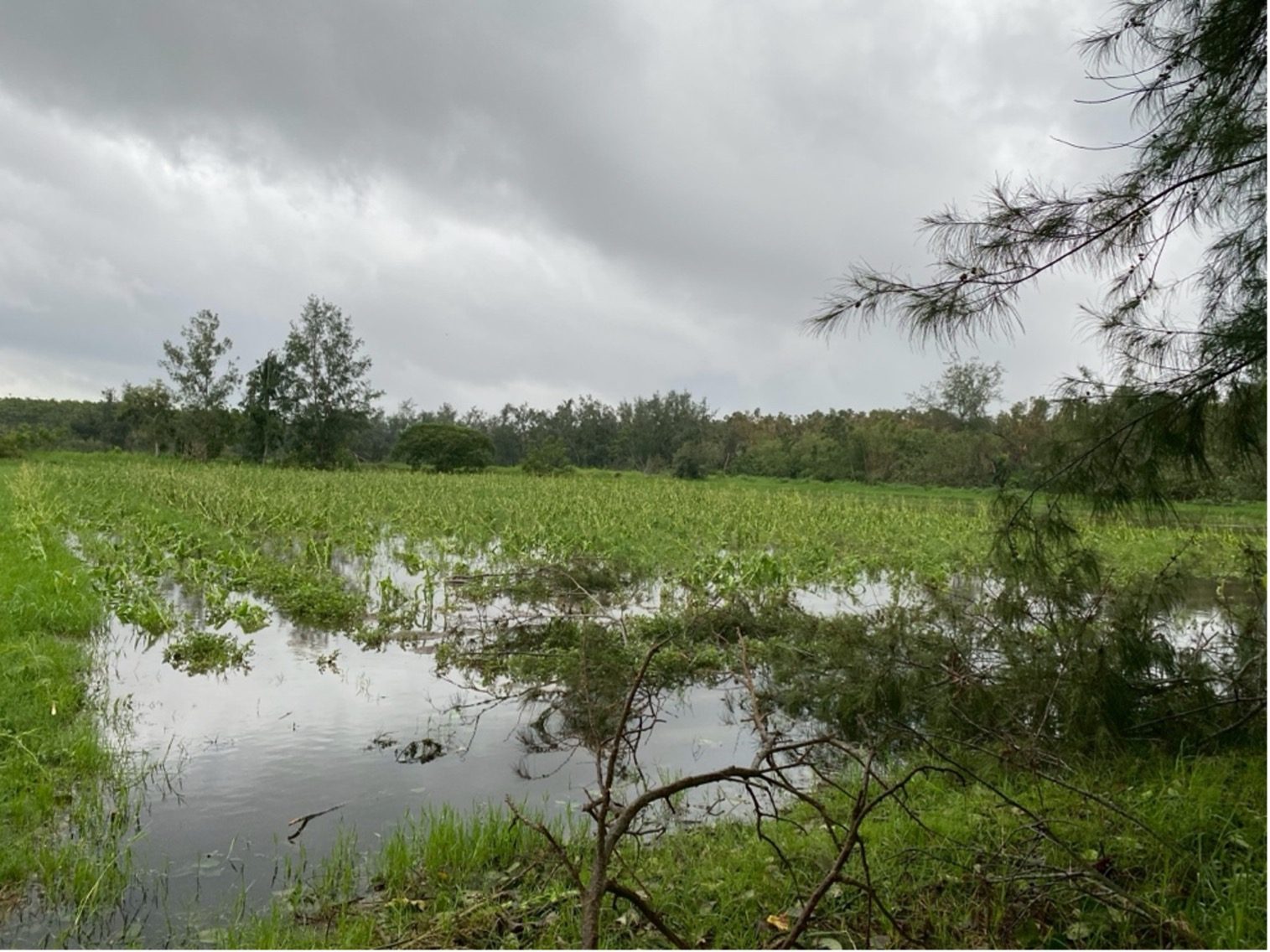
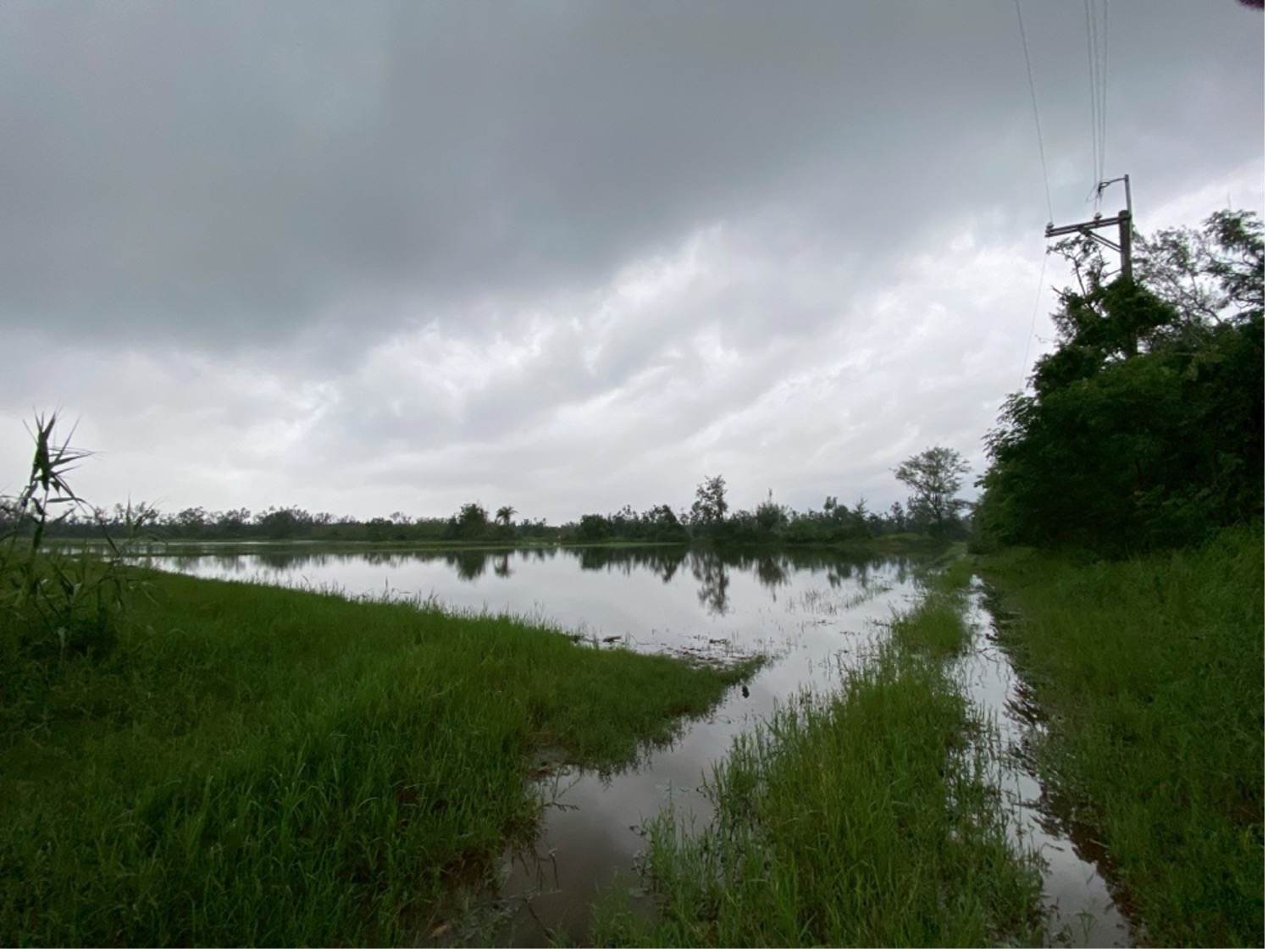
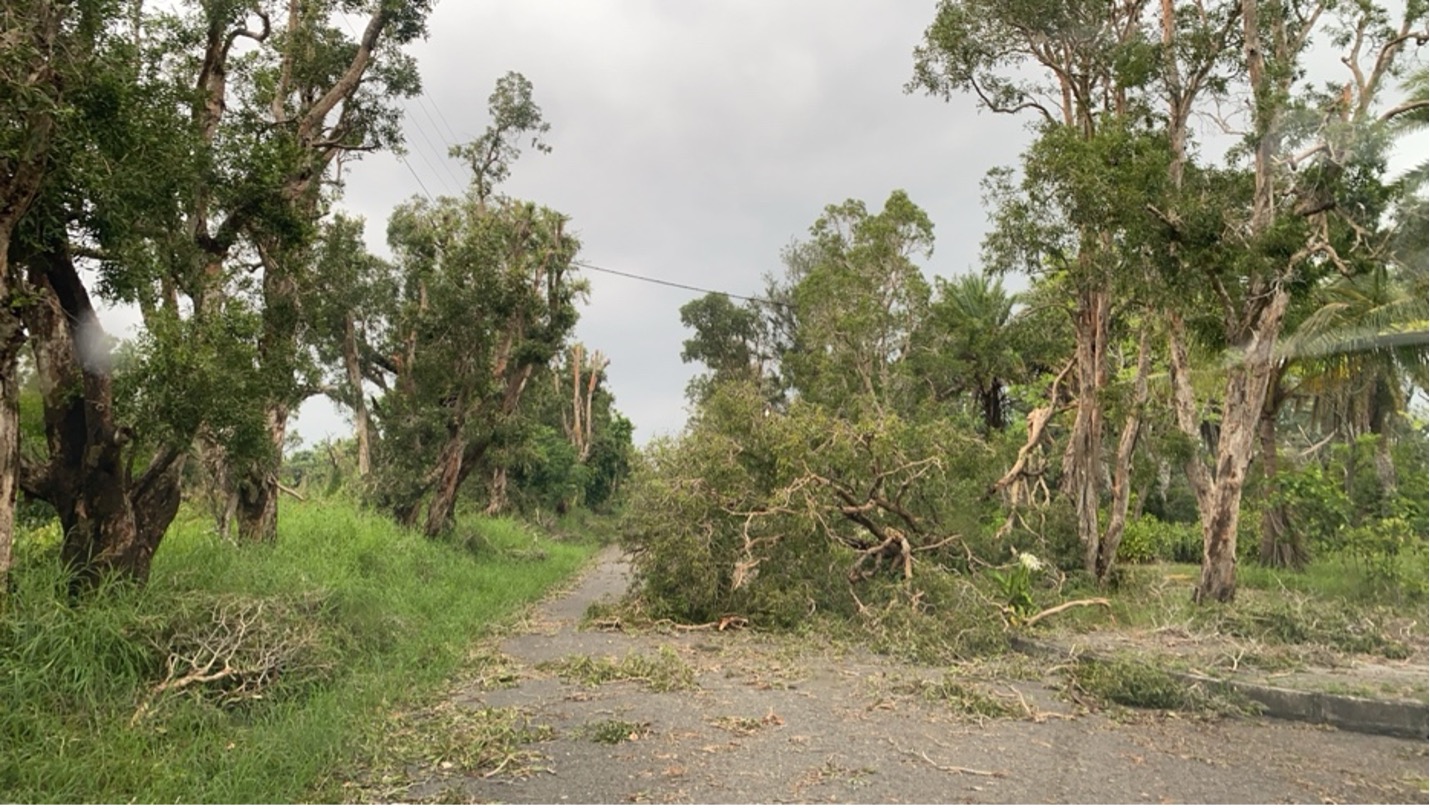
Kantiantian in Dongshi, Chiayi, bore the brunt of the first typhoon in 120 years to make landfall in Chiayi — true to its name, "depending on heaven's face". (Photo: Kuo Ming-hsien, Kantiantian Organic Farm)
Farmers are dwindling as disasters strike them in turn
Last October Chishang's rice farmers lost nearly half their harvest to two powerful typhoons, Krathon and Kong-rey. Fortunately, by early July this year most of the rice had been harvested, and it was one of the best harvests in years; they were relieved to have escaped.
Whether from a micro or a macro perspective, farmers are the ultimate victims of climate change, and even harsher climate challenges are bound to come. This is not just Taiwan's problem but a test of global food security. The farmers who produce food are merely survivors of the climate disaster "Russian roulette", and as farmers age, they are dwindling away. There seems to be no solution.
Since 2020, natural and man-made disasters have intensified, and the rules of nature and of human politics have been rewritten again and again. The globalised trade and supply chains created since the 1970s brought human progress and well-being, but also caused environmental and natural impacts from wasting and exhausting all kinds of resources. The upside was spreading risk; the downside is that risk has steadily risen into global disasters — climate change and its intensification, forest destruction, loss of biodiversity.
After the Second World War, the US led globalisation, changing the industrial ecology of every sector, and America enjoyed most of the benefits: 4% of the population consuming a quarter of the world's resources and energy, living comfortably, with obesity everywhere. This exhaustive consumerism became the aspiration of every developing country, accelerating the extraction of energy and resources. Trump's emergence is America's backlash against globalisation, because over-nourishment can also harm you. But it is easy to go from frugality to luxury and hard to go back. If you can make quick money with financial instruments, who would go back to manufacturing for slow, hard-earned money?
Greatness too big to manage
Who doesn't want their country to be great? Or does it backfire and become a tail too big to wag? Musk, dreaming of reaching the heavens, succeeded in becoming the "kingmaker", unstoppable. The Department of Government Efficiency (DOGE) was like Judge Bao's dog-head guillotine for cutting redundant departments, stirring up waves for a while — only for Musk to fall out quickly with Trump over the "big, beautiful" budget bill and found the "America Party". The plot is more thrilling and spicy than the American drama House of Cards.
Musk also reminds me of Shang Yang 2,400 years ago and the idiom about him: "caught in one's own trap". He too may end up a victim of the DOGE dog-head guillotine. It also brings to mind the "five techniques for controlling the people" in The Book of Lord Shang that Shang Yang left behind: make the people ignorant, weak, exhausted, humiliated and poor. These seem to be Trump's five magic weapons for being "a sage within and a king without". Don't the strategy and tactics of the so-called "tariff war", at home and abroad, fit the core values of the "five techniques"? Which country today has not been made ignorant, weak, exhausted, humiliated and poor by US tariffs?
As the wind blows, the grass bends: once the great power has started, other countries follow suit. In such an international situation, even if you wanted to retire to farm and read like Tao Yuanming of the Jin dynasty, or withdraw to Walden Pond like the American writer Henry David Thoreau 200 years ago, you'd probably be ambushed by ever-present, ever-possible climate disasters, with nowhere to escape between heaven and earth.
Calamities sent by heaven can be escaped; calamities you bring on yourself cannot. Man-made disasters are more terrible than natural ones and harder to resist — tyrannical government is fiercer than a tiger. Even in the democratic age it is hard to escape domination by the "five techniques", and the internet, big data and AI can help the wicked even more effectively.
Food is heaven for the people: our shared challenge
Water can carry a boat, and it can also capsize it. Throughout history, at home and abroad, farmers have played a key, fundamental role in times of upheaval, yet they have always been used, without awakening from within. Today's farmers have the same chance to use the internet, big data and AI. We need to gather more like-minded people to serve farmers together — from climate, meteorology and weather to soil, fertilisers and microbes, to biodiversity and sustainable farming methods. Even more important is changing market outlets and rules so that farmers deal directly with consumers (whether individuals or large institutions), reducing the gaming costs in agricultural trade (such as climate, resource monopolies and storage losses).
Human survival depends on stable, safe supplies of food and water. US dollars bear the words "IN GOD WE TRUST", but however the future world changes, it cannot change "IN FOOD WE TRUST" — food is heaven for the people. Food security is more serious and important than other sustainability issues. Which is worse: money without food, or food without money? Without food security there can be no health and well-being.
Today, for the sake of industrial and so-called economic development, countries around the world sacrifice agriculture in exchange for "development"; eating copper and iron matters more than eating rice and noodles. Governments use all kinds of "subsidies" and "incentives" for agriculture, while farmers have traded away their production bases and resources and been left with nothing.
Only by reorganising the market environment and rules, making the production, processing and sale of food more genuine and transparent, is there a chance to change the unjust rules of the market game, truly benefit front-line farmers with fairness and justice, and set things right.

