 努力小農
本文尚無譯文。
Weigh the benefit to the whole world: has Trump won by quitting the Paris Agreement?
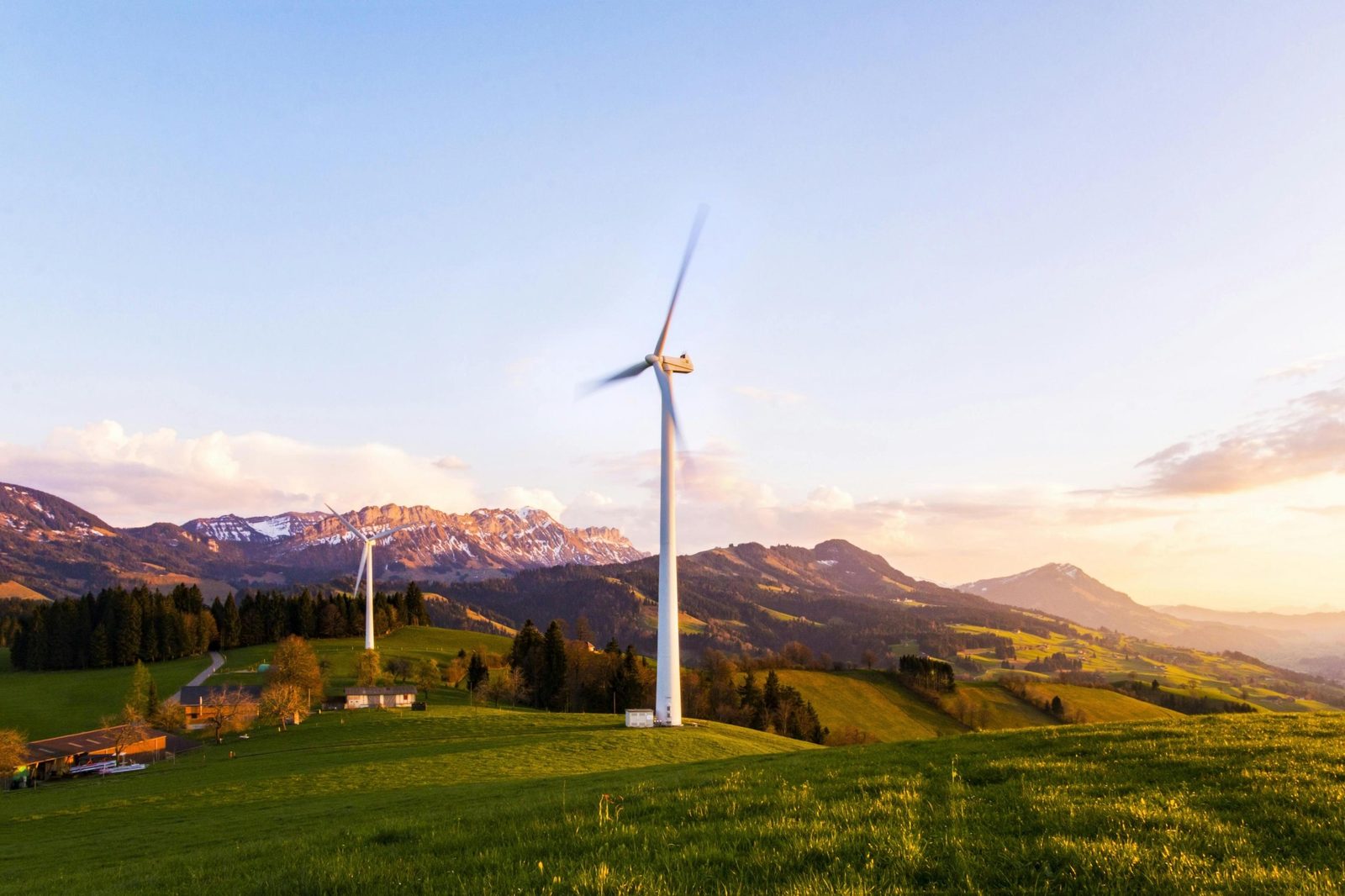
Smallholder carbon farming offers scientific, credible, traceable and genuine environmental, social and governance benefits, good for others and for oneself, turning traditional agriculture into an innovative niche for corporate sustainability. (Image: PEXELS)
Amid huge changes in the world — accelerating crustal movement, extreme climate disasters (droughts, floods, wildfires), AI's rapid growth set to consume ever more energy, and Trump's unpredictability — humans still have to eat every day. Smallholder carbon farming makes the food supply chain the basis of a sustainable value chain, turned into sustainable value and price through sustainability financial reporting standards. It is also a chance for companies to give back to smallholders, agriculture, rural ecosystems and community society.
Has Trump won by quitting the Paris Agreement?
"Windmills are a disaster," Trump said at a press conference at the Turnberry golf course in Scotland, next to British Prime Minister Keir Starmer, to whom he said: "You're paying massive subsidies to have these ugly monsters all over the place."
Whatever exists is truth. On taking office, US President Trump fulfilled his campaign promise by signing an executive order to withdraw from the UNFCCC Paris Agreement, and stopped talking about ESG (corporate environmental, social and governance). Recently the US Environmental Protection Agency moved to stop treating CO2 as an air pollutant, effectively lifting the greenhouse-gas "golden headband" from American companies, letting them emit as much carbon as they like. And while on a golf holiday in Scotland, he attacked wind power again.
But Trump's troubles with wind turbines now have global impact. He has banned renewable energy projects on federal land and signed a spending bill that kills the tax credits that were driving a boom in new clean energy supply. This also enraged his "former best friend" Musk, who even formed the "America Party" to oppose Trump.
Over the more than 30 years since I took part in and witnessed the Earth Summit in Rio, Brazil, in early June 1992, I have always felt that on sustainability issues such as biodiversity, forests and climate, international governments and businesses include too many open scoundrels and hypocrites. These international conventions are just lip service, which is why every year is the hottest in 100,000 years. So don't be surprised that this July Hokkaido in Japan also saw temperatures of 40°C.
Add the great earthquake and tsunami off the Kamchatka Peninsula, affecting countries across the North Pacific all the way to Hawaii: earthquakes plus extreme climate are reshaping the future of human society.
Big solar, big blackouts
Typhoon Danas, which formed off south-west Taiwan, headed north straight for Taiwan's west coast and caused damage in southern Taiwan. Curiously, the Tainan coast, with the most solar power, was also the area with the worst power cuts — baffling and infuriating.
When a reporter reported that the support frames of an offshore solar farm in Pingtung had been blown down — implying solar panels could have fallen into the sea — the Ministry of Economic Affairs threatened to sue the reporter for false reporting, yet could not say where the panels "stowed away before the typhoon struck" had gone.
Then the Ministry of Environment set out to clear the stigma that "solar panels that fell into the sea are toxic"… Since when did renewable energy become an unwanted facility? Add Trump's clear dislike of solar and wind and American companies shaking off the carbon "golden headband", and I expect Europe's carbon tariff (the Carbon Border Adjustment Mechanism, CBAM) will soon be unworkable too. Whether China can stick to its goals of peaking carbon by 2030 and carbon neutrality by 2060 is also in doubt.
As tariffs for Japan, Korea, the EU and others were announced one after another before 31 July, Taiwan dragged on until the last minute before its 20% tariff was announced, affecting the direction of the economy, politics and society. But one can predict that internationally no one will talk about "carbon tariffs" any more.
So-called "green collar" — now green in the face
Carbon trading markets, whether compliance or voluntary, will keep sinking with it — and this won't change even after Trump leaves office; they may even collapse because of it.
In fact Trump has torn off the fig leaf of pretentious carbon reduction and sustainability. After the energy crisis of the Russia–Ukraine war, many countries and companies couldn't stand having to cut carbon as well. Trump played the villain, and all the other "good guys" breathed a sigh of relief.
Has Trump won? I think only for a while, because the climate problem will keep troubling humanity, governments and companies for decades. We have already wasted more than 30 years on empty talk. Real carbon reduction and sustainability must come back to financial structures, so that the external environmental and social costs appear in financial reports.
In future, real change may no longer come from the flowery words of international summits but from concrete, honest interactions between companies and consumers. Only when environmental and social costs are concretely included in every financial report and in the price of every product can we see the real impact of carbon reduction. The world is at a turning point. If the climate policies of the past 30 years were mostly compromise and trade-offs, every step forward will be harder but more pragmatic. Only when all parties drop their hypocrisy, face reality, and redesign incentives and regulation on the basis of science and economics can carbon reduction and sustainability take root.
In this shift, public awakening will be key to driving policy change. We may no longer believe a single convention can save the planet, but every consumer decision, every investment choice and every boycott of an irresponsible company adds up to the power of change. Future sustainability will no longer be the preserve of a few policy elites but a way of life in which everyone takes part. Along the way we may experience more setbacks and disappointments, but we will move step by step towards truly responsible social and economic structures.
Back to financial sustainability and sustainable finance
People shout about sustainability, but sustainability can't be eaten — yet to be sustainable you have to eat (make money). For a long time commercial accounting has counted only an industry's internal costs and benefits. Everyone focuses on their own benefit and ignores the negative impacts on the environment, society and culture. Under the banner of each pursuing its own interests, sustainability has been undermined by killing the goose that lays the golden eggs and draining the pond to catch the fish, causing long-term, collective harm to the environment and society and exhausting the Earth's finite resources. This is the real, inner situation facing companies worldwide. Benefits must be recalculated and reflected in financial statements, so that people inside and outside the company, investors and stakeholders share a common concept of value and price.
With the IFRS Foundation issuing S1 (General Requirements for Disclosure of Sustainability-related Financial Information) and S2 (Climate-related Disclosures) in 2023, global industry and capital markets face a whole new financial language and set of metrics for sustainability and climate risks and opportunities. Taiwan's Financial Supervisory Commission made corresponding requirements the same year, asking listed companies to align with international rules step by step. However, the political and economic uncertainty of US President Trump and frequent global climate disasters mean Taiwan must plan its response carefully to stand firm amid change and drive real transformation.
The core of IFRS S1/S2: S1 emphasises financial disclosure by companies of all material sustainability issues (including but not limited to environmental, social and governance), while S2 focuses on the climate risks and opportunities companies face, requiring disclosure of their specific impacts on financial performance and the responses taken. Pressure on global industrial chains: the standards not only improve corporate transparency but also embed sustainability risks and opportunities into investment, financing and supply-chain decisions. Companies with poor ESG performance or inadequate disclosure will find it harder to win international funding and market recognition.
Taiwan's alignment challenge: the Financial Supervisory Commission plans to introduce S1 and S2 in phases, requiring large listed companies to disclose first and then extending to small and medium-sized enterprises, and including disclosures in review and evaluation indicators. Next year, listed companies with capital of NT$10 billion or more will have to complete financial reports disclosing sustainability and climate risks and opportunities under these standards.
IFRS S1 emphasises financial disclosure of all material sustainability issues (environmental, social and governance), and S2 focuses on climate risks and opportunities, requiring companies to disclose their specific financial impacts. These standards not only improve corporate transparency but embed ESG risks and opportunities directly into decision-making on investment, financing and supply chains.
Smallholder carbon farming is scientific and credible — sustainability you can eat
"Carbon farming" means smallholders adopting sustainable soil management, changing today's yield-only farming that damages the environment and soil, so that soil becomes a long-term carbon sink. They take part in creating carbon sinks and contribute to slowing climate change, while also having positive impacts on food security, health and well-being, quality education, life on land and below water, and biodiversity. This allows the value of farmers' "ecosystem services" to be recognised and embodies new agricultural value in responsible consumption and production. Products from sustainable soil management are of better quality and more nutritionally balanced, making consumers and society healthier and the environment safer and more stable. Companies adopting S1 and S2 can buy and consume products from carbon-farming smallholders to gain quantified, certified SDG sustainability performance, integrating it into their operations and future development. This turns hollow "sustainability" into food that employees can actually "eat", while embodying the sustainable value of the food supply chain between smallholders and companies, reflected in sustainability and climate financial disclosure standards.
Smallholder carbon farming offers scientific, credible, traceable and genuine environmental, social and governance benefits, good for others and for oneself, turning traditional agriculture into an innovative niche for corporate sustainability.
Source: CM Media ( https://www.cmmedia.com.tw/home/articles/55937 )


