 努力小農
本文尚無譯文。
Remembering the 823 Artillery Bombardment: a lesson in scientific reasoning on the Maanshan nuclear referendum, between the US–China contest
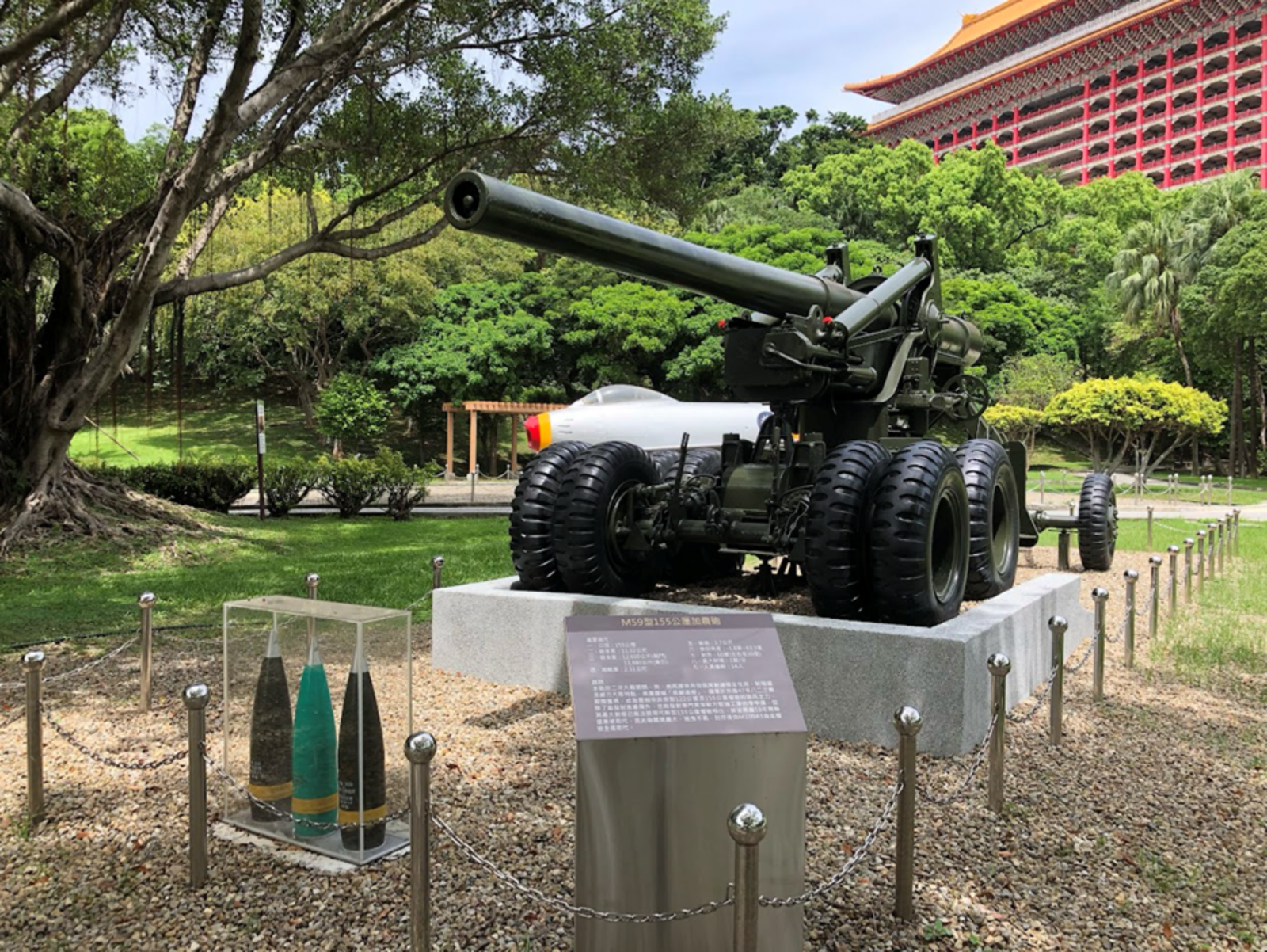
The 823 Artillery Bombardment Memorial Park below Taipei's Grand Hotel, where the cannon of that time stand alone for visitors to reflect on. (Photo: Jay Fang)
Two years after the 2011 Fukushima nuclear disaster, I entered the Fukushima exclusion zone ten times to carry out in-depth investigations of the effects of radiation on soil, food and people's health (especially schoolchildren) after the disaster, and to measure radiation on site. In short: if Taiwan suffered a nuclear disaster half the scale of Fukushima, at any of its nuclear plants, Taiwan's brief prosperity would instantly become history.
This year marks the 80th anniversary of the end of the Second World War. Let us look back at the 823 Artillery Bombardment 67 years ago and rethink the choice in the 23 August referendum on restarting the Maanshan nuclear plant. The difference between the two is that with the bombardment we had no choice, while the referendum is a citizens' choice built on the fruits of democracy accumulated in the 37 years since martial law was lifted.
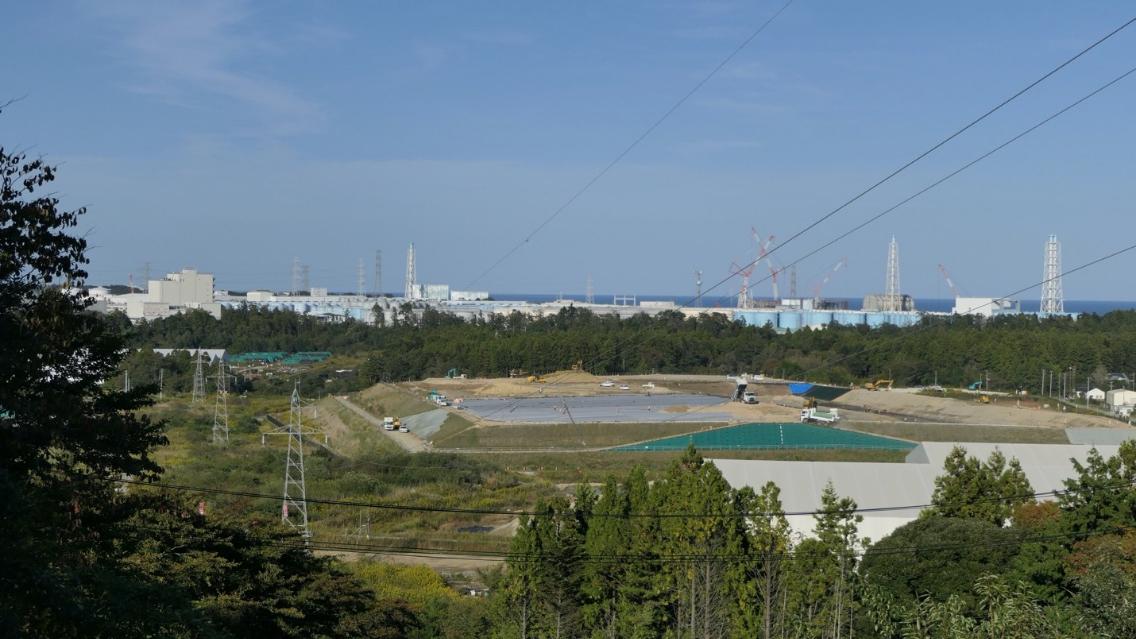
The threat of war across the Strait is frightening, but the economic, political and livelihood damage it causes may be less than that of a single small nuclear disaster. Pictured: the landfill for nuclear-contaminated soil in Okuma, Fukushima, with the Fukushima plant and its radioactive water storage tanks behind. (Photo: Jay Fang)
Remembering 823
The 823 Artillery Bombardment of Kinmen in 1958, also known as the Kinmen bombardment or the Second Taiwan Strait Crisis, was a major military conflict between the People's Republic of China and the Republic of China. It came at the height of the Cold War, when cross-Strait tensions were high and the division between the Kuomintang and the Communists was already established. After the PRC was founded in 1949, the Nationalist government retreated to Taiwan but kept outlying islands including Kinmen and Matsu. Kinmen and Matsu became the front line where the two armies faced each other, and a sensitive hotspot in the Cold War in East Asia.
In 1954 the United States signed the Sino-American Mutual Defense Treaty with the Republic of China, pledging to help defend Taiwan and its associated islands — an important security guarantee for Taiwan internationally. But the treaty did not explicitly cover Kinmen and Matsu, which set the stage for the later Communist military action against Kinmen.
The deeper causes of the 823 bombardment lay in the cross-Strait sovereignty dispute and the geopolitics of the Cold War. The PRC regarded Kinmen and Matsu as Chinese territory and was determined to unify; the ROC insisted on its legitimate statehood and saw Kinmen and Matsu as key bases for retaking the mainland.
At 5:30 p.m. on 23 August 1958, the People's Liberation Army suddenly bombarded Kinmen and its smaller islands with more than 470,000 shells. Kinmen's garrison and residents were caught off guard and suffered heavy casualties. The first day's bombardment was fierce, with almost the whole island covered by a net of fire, destroying many buildings and facilities. The Communists also sent naval and air forces to cut Kinmen's supply lines and tighten the blockade.
The bombardment lasted from 23 August to mid-October. From late October the PLA switched to a pattern of "shelling on odd days, stopping on even days". After 1959 the shelling gradually weakened to symbolic fire, but the standoff continued for many years.
Déjà vu: the 823 scenario returns
The bombardment caused heavy military and civilian casualties on Kinmen. According to official Taiwanese figures, about 587 ROC soldiers were killed and about 1,293 wounded, and civilian casualties exceeded a hundred. On the Communist side, data remain classified; outsiders generally estimate losses similar to or higher than the ROC's, but there are no clear figures. Houses and facilities on Kinmen were badly damaged, and some villages were almost razed. The battle also displaced many people and had a lasting impact on residents' lives.
The reasons the bombardment ended are complex. First, the Communists failed to achieve their strategic goal of "forcing the ROC army to withdraw", and the US intervened actively, showing firm support for Taiwan. International opinion also leaned towards calling for a peaceful settlement, and the protracted fighting increased internal and external pressure on the Communists.
The US and the Communists communicated informally through diplomatic channels, gradually reducing military friction. On 25 October 1958 the Communists announced that from then on they would shell on odd days and stop on even days, and would fire only at military targets; the bombardment effectively entered a cooling-off period. Although there was occasional shelling afterwards, its scale was greatly reduced, and only after the US and the PRC established diplomatic relations in 1979 did the state of bombardment formally end.
Today the international situation and cross-Strait relations seem to have returned to the murkiness of 60 or 70 years ago — a sense of déjà vu, with Taiwan caught again in the contest between China and the US. For the sake of so-called "AI", Taiwan cries out that the semiconductor industry needs more electricity. The director of the American Institute in Taiwan says he will give Taiwan small modular reactors (SMRs), while also wanting to sell Taiwan fossil fuels and pressing TSMC and the semiconductor industry to move to the US — a completely contradictory stance that would wring Taiwan dry. Taiwan's government and opposition seem to buy it wholesale and pledge loyalty to the US. The only change is swapping China's artillery shells for nuclear power that could "implode".
Taiwan's baby boom after 823
Many people don't know that before 823, unmarried ROC soldiers who had come to Taiwan in 1949 were not allowed to marry. Only after 823 ended, ten years on, did the Ministry of National Defense allow them to marry. I am part of the Taiwanese baby boom that followed 823. I was born in 1960, the year Taiwan had the most births. Perhaps that is connected to hundreds of thousands of soldiers being allowed to marry, but at least I was indeed one of the babies of that wave.
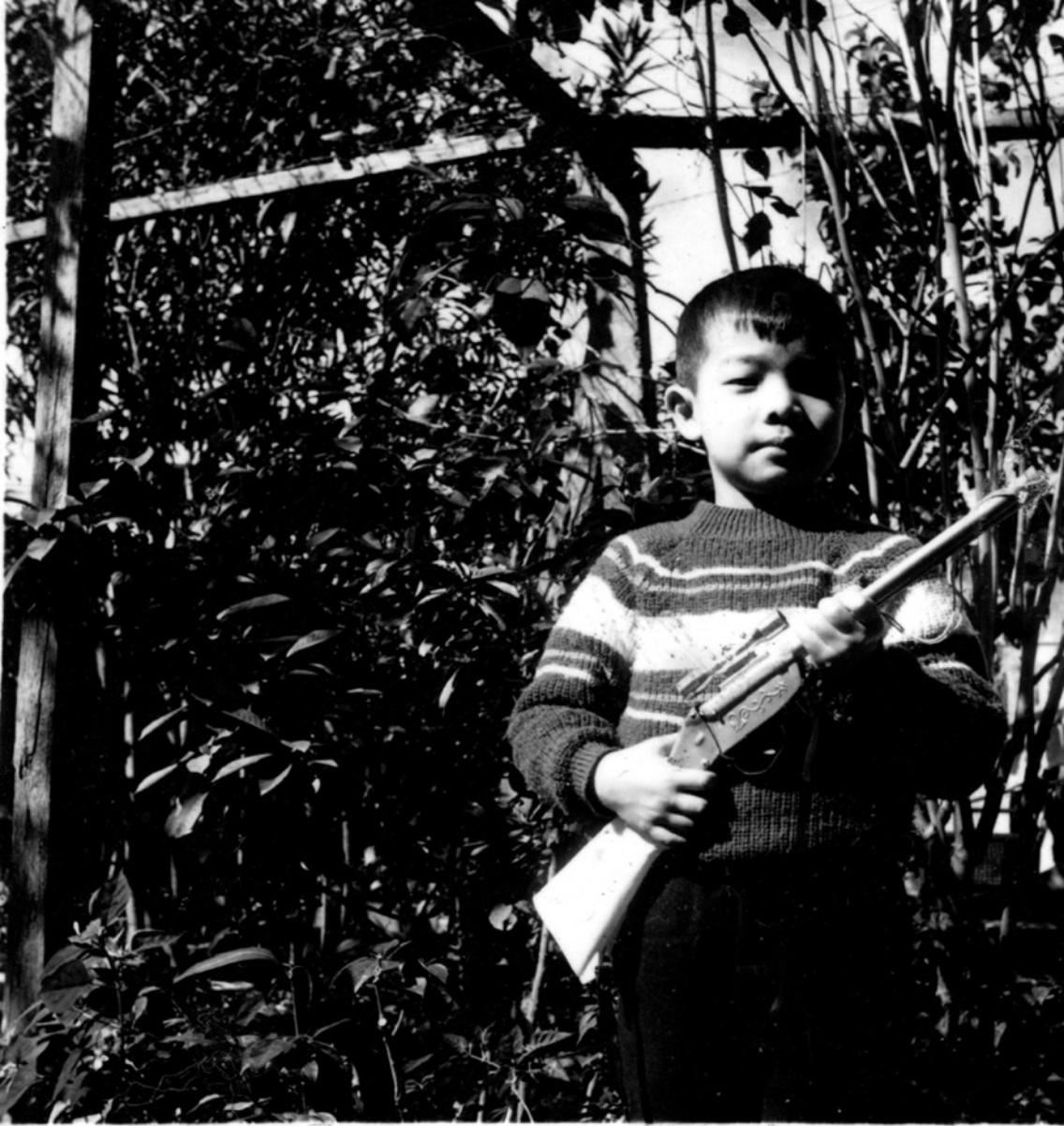
As part of Taiwan's 1960 baby boom, the author received military training from childhood, ready to go to war at any time. (Image courtesy of Jay Fang)
The 1960s baby boom was also Taiwan's demographic dividend, driving the economic boom from the 1980s. Interestingly, that boom actually came about because the two Chiangs sought nuclear weapons from the US to counter China's "two bombs and one satellite" (atomic bomb, missile and satellite) from the mid-1960s. In the end the US gave only nuclear power plants, because light-water reactors are the best source of plutonium-239, the main material for nuclear weapons. So the first island chain — Japan, Korea, Taiwan and the Philippines — all strategically deployed nuclear plants; the Philippines' plant, like Taiwan's fourth nuclear plant, was never completed because of corruption and mismanagement.
Many think the Ten Major Construction Projects included nuclear plants, but in fact it was because the nuclear plants generated so much electricity that the other nine energy-hungry projects existed — the big steelworks, petrochemical plants, shipyards, railway electrification, motorways and so on. Without these energy-intensive industries and infrastructure, Taiwan in the 1970s would have needed only 30 billion kWh a year, while the three nuclear plants generated 40 billion kWh a year. Today Taiwan uses about 250 billion kWh a year, and the nuclear plants' 40 billion kWh is a small share.
The fatal flaws of nuclear power plants
Setting aside nuclear disasters and nuclear waste, people may think: since nuclear plants generate so much power without emitting air pollution or CO2, why not use nuclear power for the whole island? Nuclear plants have several inherent fatal flaws:
1. Slow start-up: it takes more than 24 hours to go from shutdown to generating.
2. Nuclear output cannot be adjusted, so it cannot respond quickly to changes in demand.
3. Nuclear plants need 45 to 90 days of overhaul, during which other power sources must fill in.
4. For safety, nuclear plants shut down automatically ("trip") in unsafe situations, instantly creating a large gap in supply.
These are nuclear power's biggest problems. Large interconnected grids, such as North America's at about 1,280 GW, have enough slack to cope with nuclear trips and overhauls. Taiwan's grid is only 75 GW, and a nuclear unit is about 1 GW, so any trip affects grid stability. Taiwan therefore spends huge sums building redundant, highly polluting thermal plants to cover nuclear plants' contingencies.
Seen this way, nuclear plants need large coal plants as "escorts", on standby even when not generating (like a car idling without moving), ready at any moment — releasing huge amounts of air pollution and waste. These so-called "ancillary service costs" should be counted in the cost of nuclear power, but in Taiwan they are charged to thermal plants.
Seventy or eighty years ago we had no chance to choose between war and peace. But after more than 70 years of precarious peace in Taiwan, we have by good fortune become East Asia's most democratic example. Yet a public lacking scientific literacy — "Mr Science" — seems unable to enjoy the fruits of "Mr Democracy".
When democracy outpaces science, the result is a sham democracy that keeps people ignorant. Democracy has a cost. I hope this NT$1.1 billion referendum will give Taiwanese a small lesson in scientific reasoning.
Source: CM Media ( https://www.cmmedia.com.tw/home/articles/56356 )


