 努力小農
本文尚無譯文。
2025 Annual Report
Amid ever more frequent climate disasters, our smallholder carbon farming projects are now in their fourth year. Besides the Taiwan Smallholder Carbon Farming Project, which began in 2023, in 2024 we developed the Noto (Japan) Smallholder Carbon Farming Project and the Chishang (Taiwan) Smallholder Carbon Farming Project, while actively pursuing Gold Standard design and performance certification.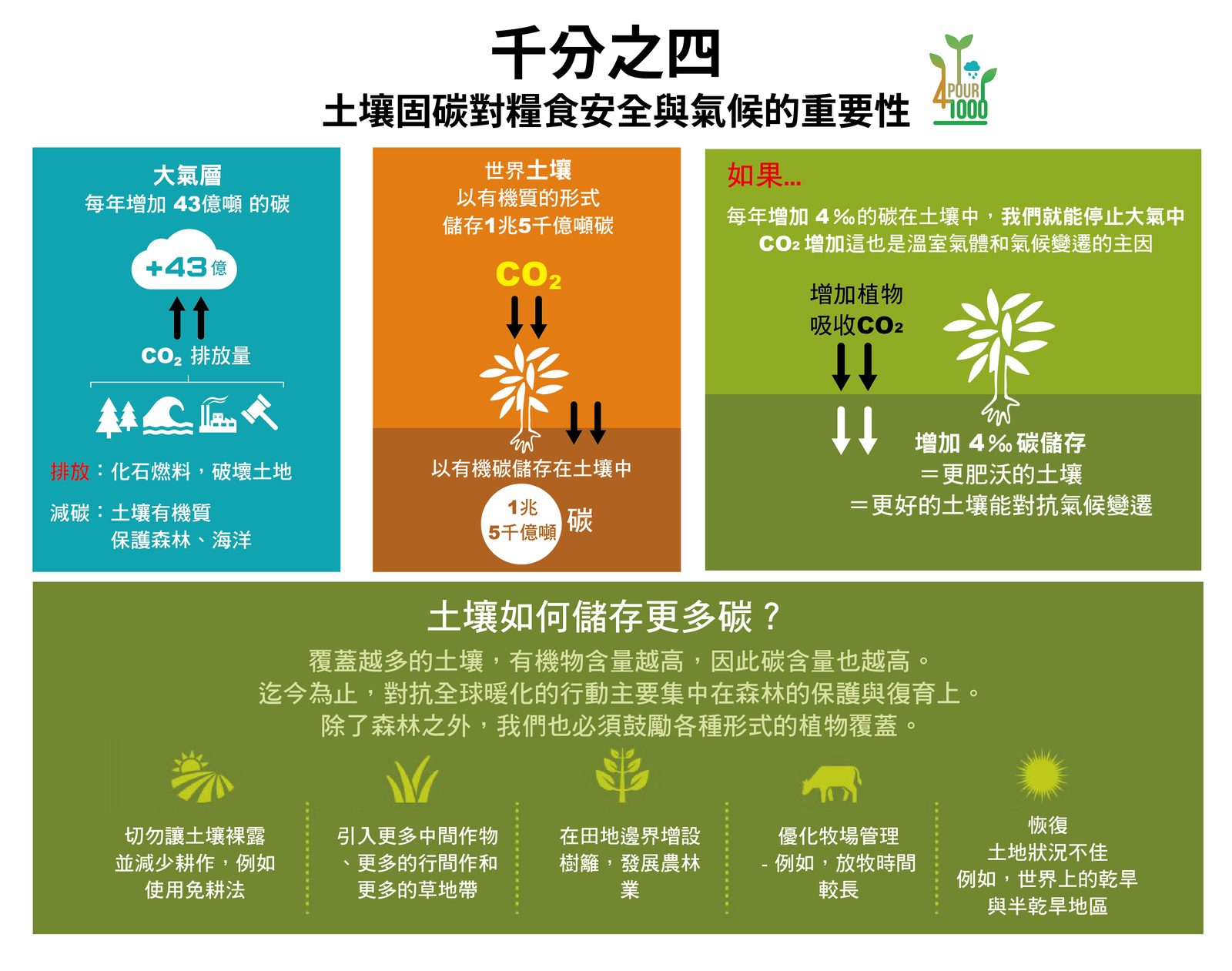
In 2015, with the international 4 per 1000 Initiative, Taiwan's former Council of Agriculture minister Tsao Chi-hung also proposed the 4 per 1000 Initiative in Taiwan. Scientific evidence estimates that if the carbon stock in the world's topsoil (about 30–40 cm deep) increased by 0.4% (four per thousand) a year, it would offset the total CO2 emitted by human activities each year.
This is a way to solve the climate and food crises at once. In 2021 the Dawushan Cultural and Educational Foundation and the Green Consumers' Foundation launched Taiwan smallholder carbon farming, with Eco-affinity Inc. as project developer, and applied to the Gold Standard for the Global Goals (GS4GG, the Gold Standard for short), founded with backing from the World Wide Fund for Nature (WWF), for the first project under the Soil Organic Carbon Framework Methodology — the Taiwan Smallholder Carbon Farming Project.
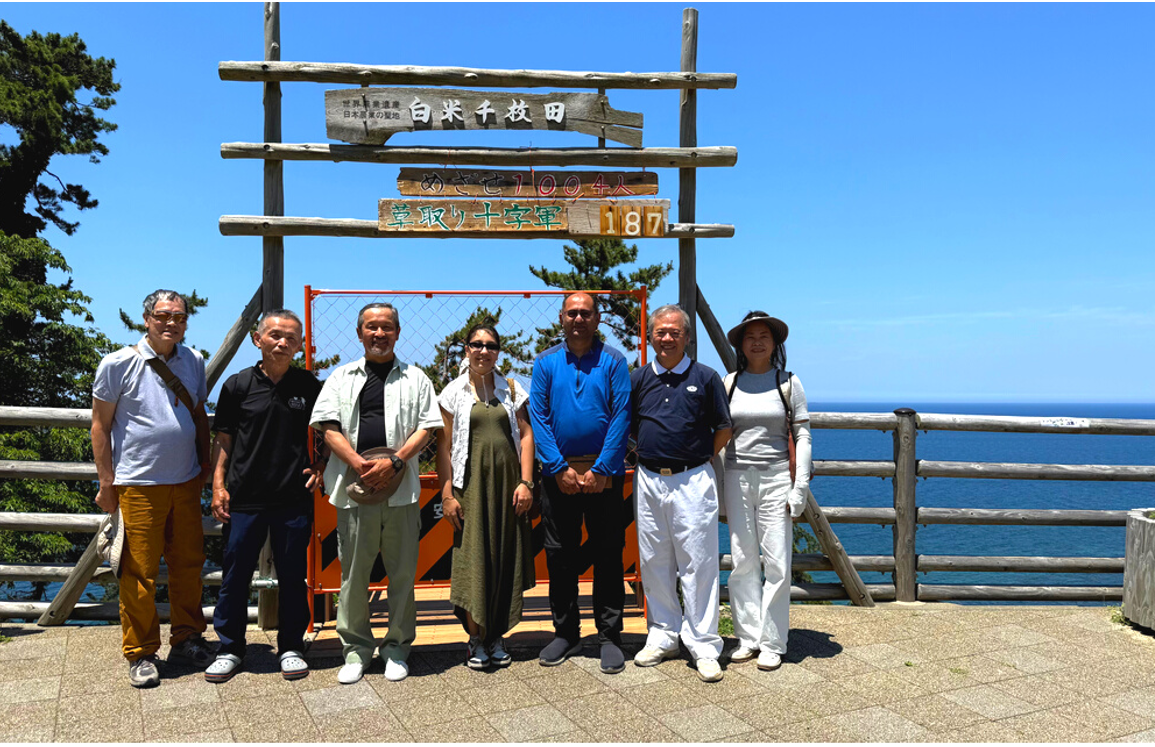
After the Noto Peninsula earthquake in Japan on 1 January 2024, Taiwan's Tzu Chi Foundation sent a relief team to Noto and found that it is a birthplace of the UN's Satoyama Initiative. Then, on 20 September 2024, massive torrential rain and debris flows struck. Deeply aware that natural disasters had dealt a heavy blow to the sustainability of Noto's satoyama, the Tzu Chi Foundation sponsored the Noto Satoyama (Japan) Smallholder Carbon Farming Project.
In October and November 2024, Taiwan was hit by rare autumn typhoons — two in succession — which devastated farmers in Hualien and Taitung. The Wan'an Community Development Association in Chishang Township, Taitung County, with its long-standing farming landscape culture (and winner of the 2024 Gold Medal Village award), also proposed joining the smallholder carbon farming project.
Both of these projects were registered with the Gold Standard in 2025.
We overcame countless hardships to create the first internationally certified soil organic carbon project in Taiwan — indeed in Asia
Certification status of smallholder carbon farming
Agricultural soil organic carbon is an emerging nature-based solution, and certification is especially rigorous; long timelines are normal. Emission-reduction performance certification should be achieved in 2026.
Among Taiwan's many certification bodies, not one does international voluntary agricultural emission-reduction certification, because Taiwan's land is small, farmland shrinks every year, and agricultural soil organic carbon needs vast areas of land — not an obviously profitable business. Over the past three years we approached four or five Gold Standard-approved verification bodies abroad; some even started work for a year, but all declined or halted the audit because the certification process was complex and the market too small. Finally, in April 2025 we signed with Re Carbon and carried out on-site audits of the project design of the Taiwan and Noto smallholder carbon farming projects. The first year of performance verification is expected in 2026.
Because the carbon credit market has been attacked for greenwashing in recent years, drawing attention from international NGOs, investigative bodies and the media, the Gold Standard has changed its certification rules several times in the past two years to rule out greenwashing or false certification. But this has also increased the difficulty, time and cost of certification.
This is good for smallholder carbon farming, protecting us from bad money driving out good. With our belief in and practice of openness, transparency and public participation, we proactively help smallholders around the world pass rigorous certification and earn internationally recognised carbon credits.
Taiwan Smallholder Carbon Farming Project
Made up of smallholders growing all kinds of crops in Taiwan, the project has run since contracts were signed in 2022 and Gold Standard registration in February 2023. It was the first smallholder carbon farming project, and smallholders have been added every year, which has also made certification harder: certification of later-joining smallholders must wait until the first year of the project is fully certified. Thank you all for your patience. Because we are honest, open and transparent and accept review from all sides, we are confident we can complete it. Preliminary performance calculations suggest the results should be quite substantial.
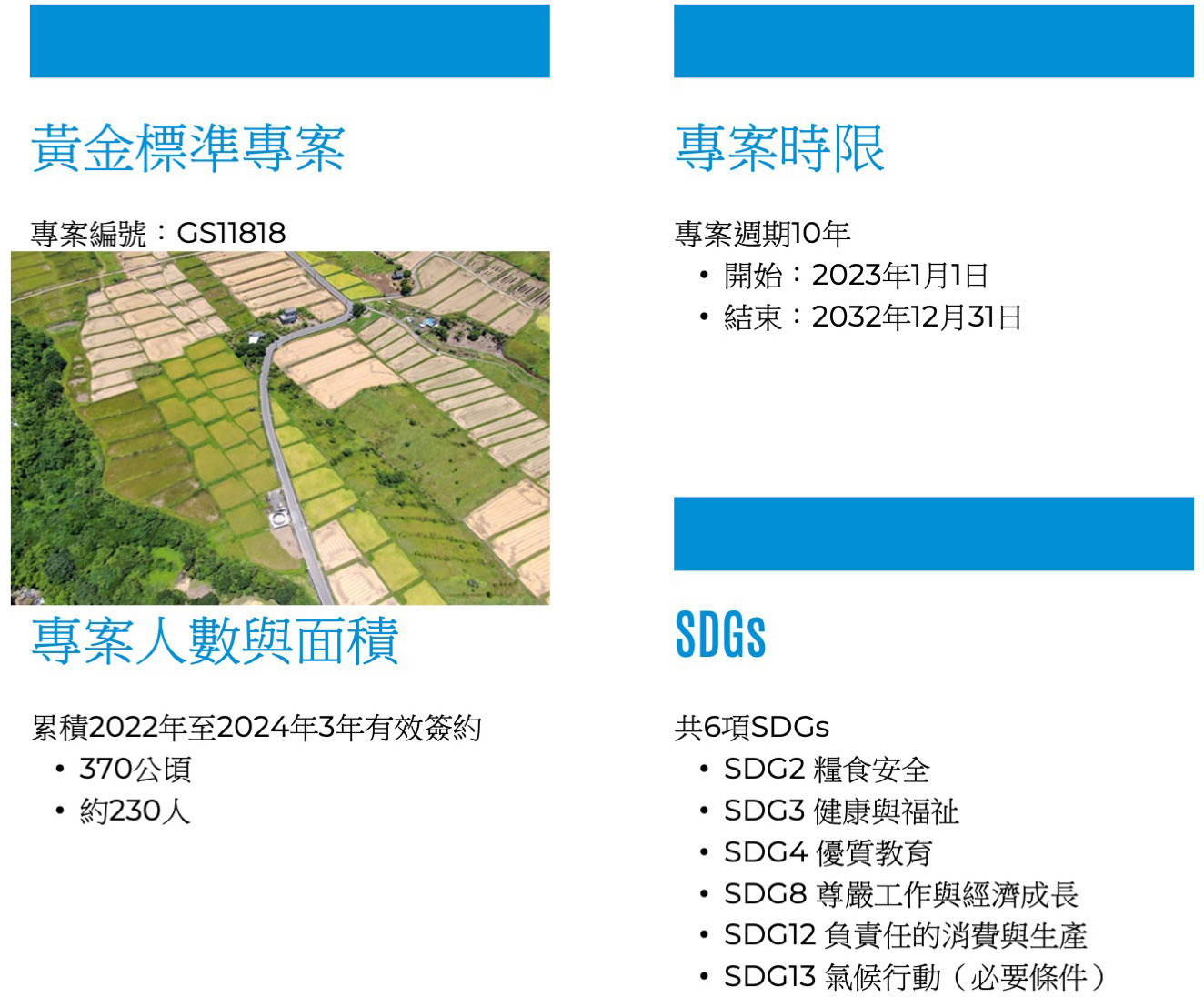
More than 300 hectares are now in the Taiwan Smallholder Carbon Farming Project. Although the project was set up three years ago, on-site validation of the project design only began in 2025. Because there are many farmers of all kinds, we are now completing the first year's project design validation, and this year project performance verification will take place; only then will the Gold Standard issue carbon credits and SDG performance.
Noto Satoyama (Japan) Smallholder Carbon Farming Project
Rebuilding after a natural disaster needs a sound international sustainability recognition system as its guide. Besides immediate relief — distributing ¥2 billion in sympathy payments to elderly people living alone — the Tzu Chi Foundation invited Eco-affinity Inc. to help local farmers with smallholder carbon farming to support revitalisation, using international SDG criteria to measure satoyama farmers' progress on the road to recovery.
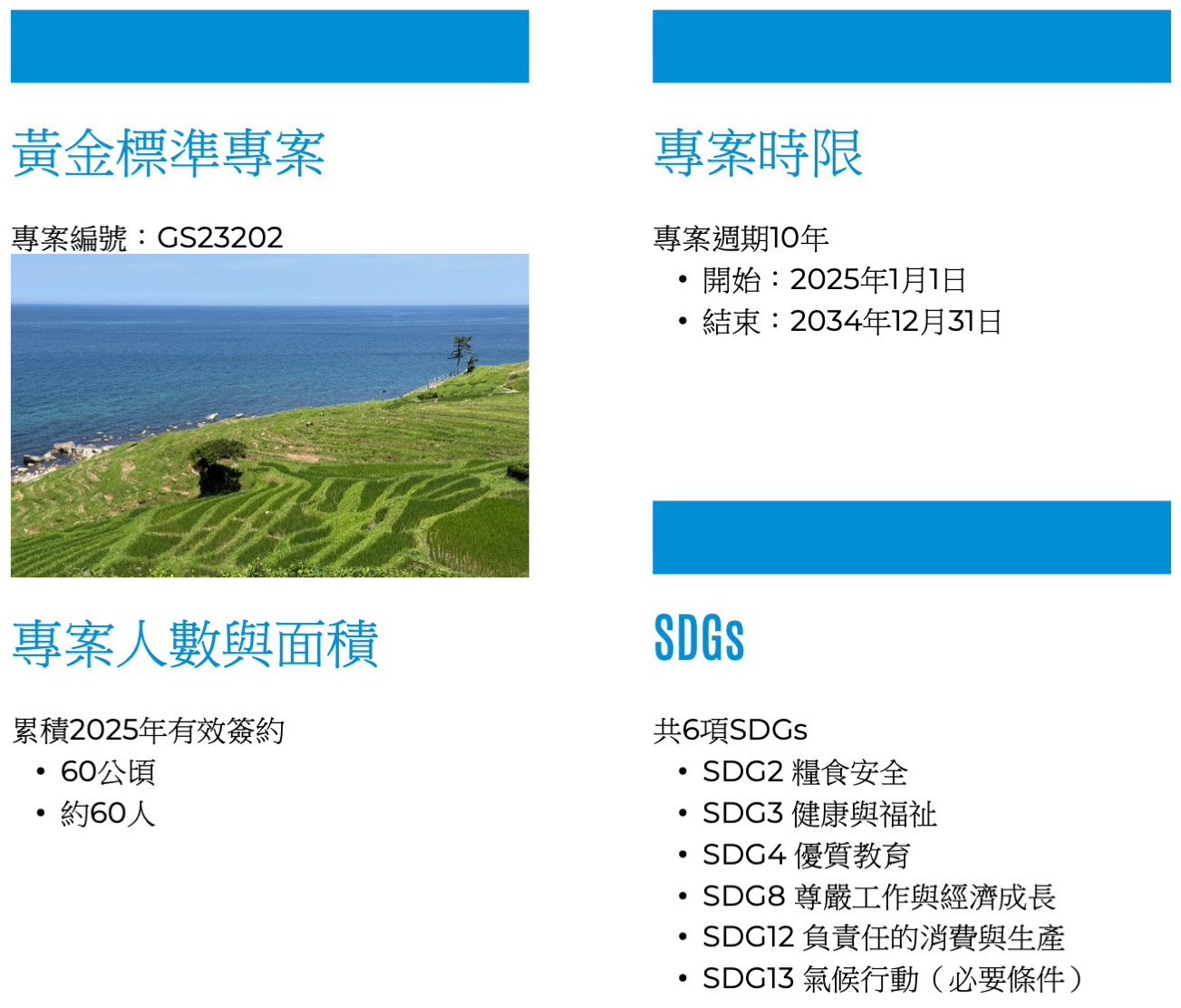
Under the Tzu Chi Foundation's medium- and long-term plan after its 2024 Noto relief, the project initially covers 60 hectares of terraced rice fields at Senmaida in Shiroyone, Wajima City, and Machino in Noto Town, with 60 farmer members now rebuilding and revitalising after the disaster. Besides carbon farming, we hope to attract young farmers to carry on sustainable satoyama farming.
Chishang Smallholder Carbon Farming Project
Typhoon Kong-rey hit Chishang hard at the end of October 2024, making farmers feel the force of climate change — farmers are always the front-line victims. After more than half a year of stakeholder consultation meetings, the Wan'an Community Development Association signed a project development contract with Eco-affinity Inc. Chishang farmers take part voluntarily, mainly increasing soil organic carbon through green manure during fallow periods and improved tillage. The project began on 1 May 2025 and runs for 10 years.
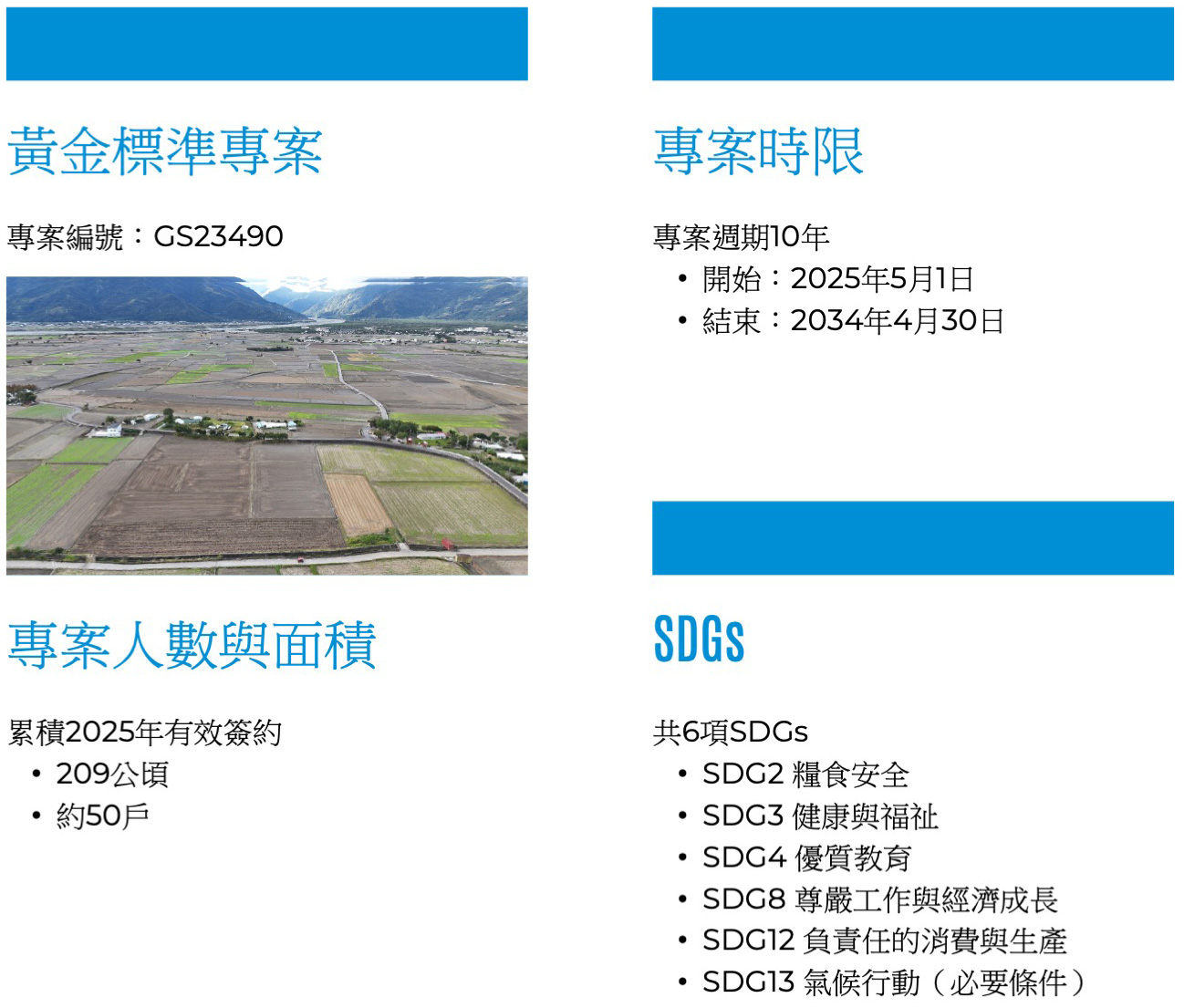
Chishang's paddy fields stretch as far as the eye can see, and their beauty has made them a favourite for adverts and check-ins. Beyond agriculture, Chishang has a boundless cultural heritage: this is a world-class rural landscape in Taiwan that also carries the spirit and potential of sustainable agriculture. We are honoured to have the chance to serve Chishang.
SDGs and IFRS S1 & S2
Companies' machinery should run on net-zero green energy, and employees should all the more eat food certified for international emission reductions and the SDGs in their canteens — good for employees' health, helping smallholders reach net zero, making a substantive contribution to corporate ESG sustainability and reducing environmental, social and governance risks.
- The Financial Supervisory Commission has required all listed companies in Taiwan to comply with the international financial disclosure standards S1 and S2 by 2028. Smallholder carbon farming products have six quantified SDG targets that are traceable and verifiable, meeting the relevant requirements; consuming carbon-farmed produce provides companies with sustainability performance. Below are the sustainability goals from the farmer's side to the company's side. This is the most basic SDG package, to which companies can add other relevant SDG targets and indicators.
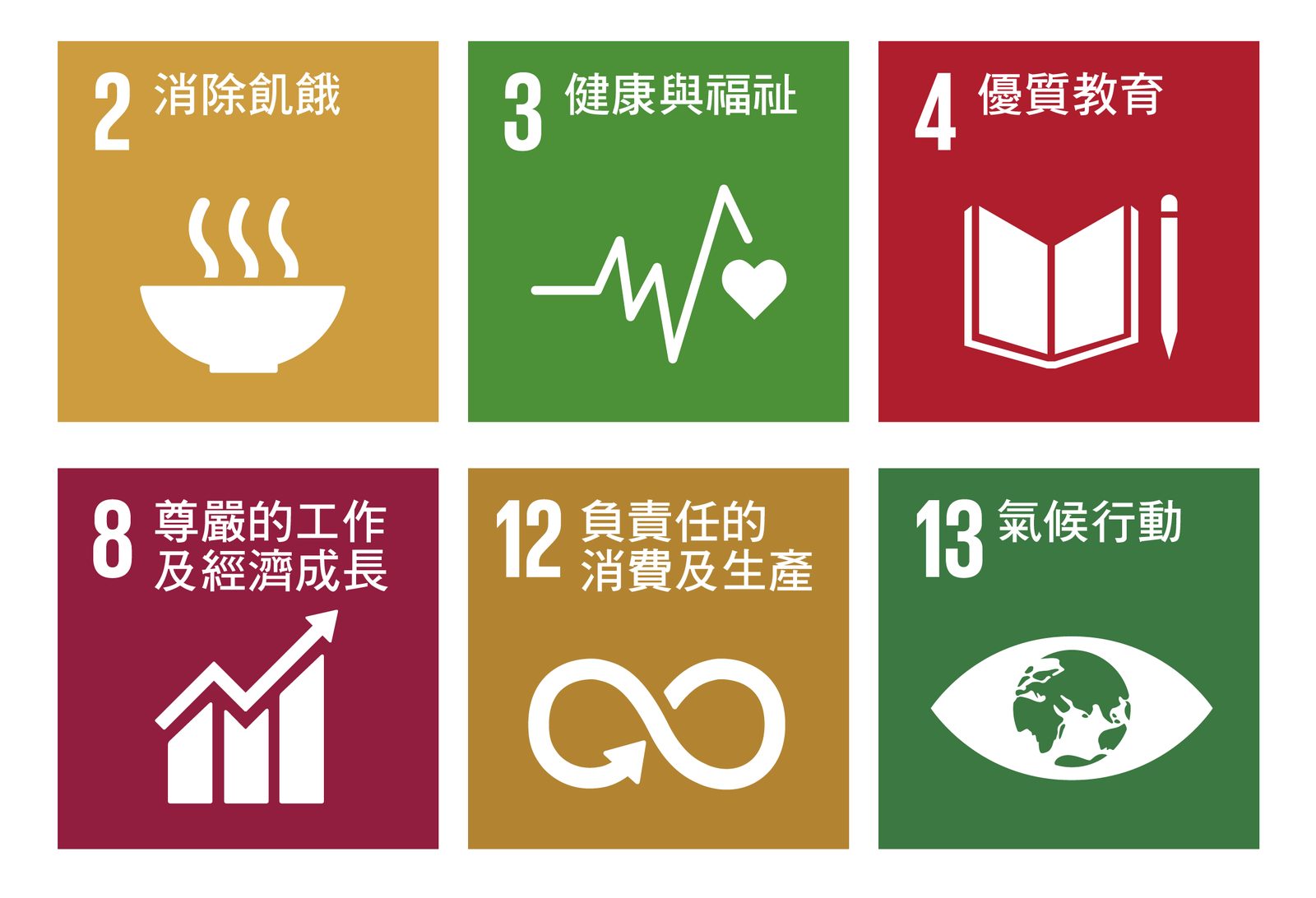
- SDG 2 Food security
Smallholders with verified production areas genuinely increase domestic food production by increasing soil organic carbon, ensuring Taiwan's food security.
- SDG 3 Good health and well-being
Reducing chemical use in the soil where crops are grown and across the production life cycle, with full production records, promotes food safety, reduces food contamination and benefits employees' health.
- SDG 4 Quality education
Besides smallholders receiving the full FAO Global Soil Doctors farmer-to-farmer learning system, farmers also share their own experience, offering eco-tourism education on sustainable agriculture and landscapes.
- SDG 8 Decent work and economic growth
Companies buying SDG-compliant products directly from smallholders recognise smallholders' produce, reduce unnecessary intermediate waste, packaging and market risk, and substantively raise smallholders' incomes.
- SDG 12 Responsible consumption and production
Turning the food chain of corporate food supply into a sustainable value chain, delivering real net-zero carbon reduction and sustainability performance for companies — genuine, credible and in line with international financial standards — killing several birds with one stone and creating a multi-win outcome.
- SDG 13 Climate action
This is a mandatory condition of Gold Standard certification. Buying smallholders' produce directly sponsors smallholders in reducing carbon in the global atmosphere, in line with the goal of the international 4 per 1000 Initiative. (Carbon credits for offsetting must be purchased separately.)
Outlook for 2026
After six years of hard work, this year should be a year of harvest: we expect to pass project design and performance certification, helping ESG smallholders make a real profit.
Over these years we have found that smallholders face an extreme crisis of distributive justice. Smallholders are the biggest victims of global climate change, and the most helpless. Farming smallholders often cannot make ends meet, because facing climate, natural disasters, pests and diseases, yield and quality, and market risk, they bear the greatest risk costs in the food supply chain. If farming can't make money, Taiwan will struggle to have sources of environmentally and ecologically friendly produce, food and food products. Helping ESG smallholders genuinely make a profit is our goal.
Download the 2025 Annual Report》https://mihumisang.org/web/data/tmp/20260121/20260121mf5waf.pdf


