努力小農
本文尚無譯文。
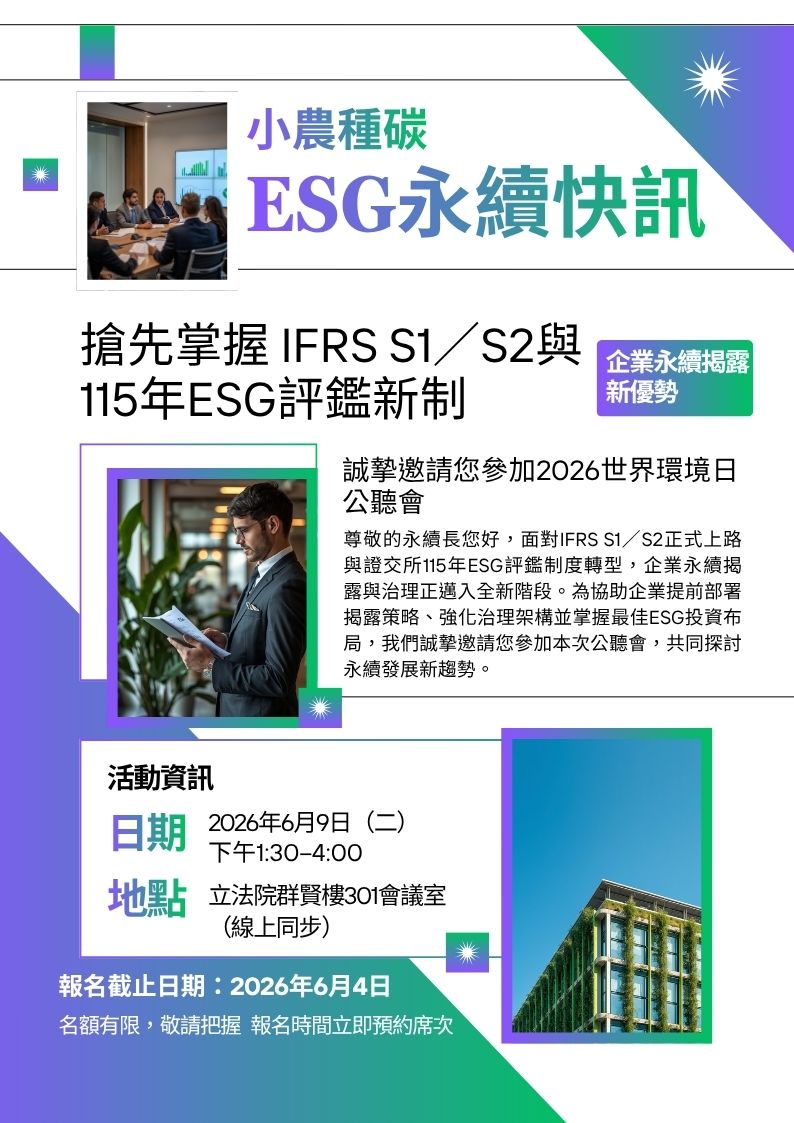
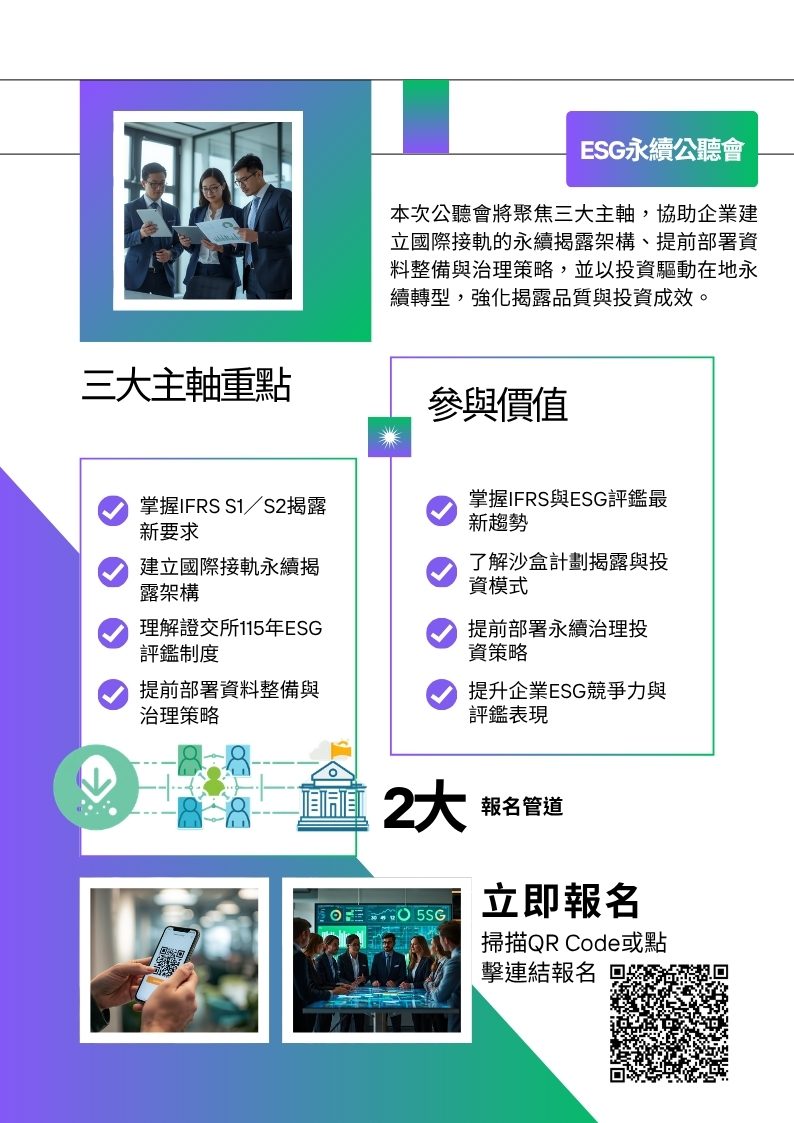
9 Jun 2026: Public hearing on corporate ESG evaluation and sustainable development
2026 World Environment Day public hearing on corporate ESG evaluation and sustainable development
Get up to speed now on IFRS S1/S2, trends in the TWSE's 2026 ESG evaluation, and the best ESG investment choices
Time: 9 June 2026, 1:30 – 4:00 p.m.
Venue: Room 301, Qunxian Building, Legislative Yuan
Registration deadline: end of the working day on 4 June 2026
Please note: places are limited; only 30 can attend in person. The meeting is both online and offline. The online meeting link will be sent to your designated email by 7 June. For in-person attendance, a meeting notice from Legislator Chung Chia-pin's office will be sent to your designated email by 7 June. Please make sure you have registered and bring the meeting notice to enter the Legislative Yuan.

Why should listed companies attend?
- Grasp three major trends in one go — IFRS S1/S2, the TWSE's 2026 ESG evaluation, and ESG investment strategy — helping companies plan their disclosure, evaluation and governance strategies early.
- Learn directly about the participation model of the ESG Green Shinkansen sandbox programme, its disclosure value and how investment results are assessed, as an important reference for companies evaluating the best ESG investment choices.
- Exchange views with policy, sustainability, investment and practice experts, shortening the distance between understanding the rules and putting them into action, and improving the effectiveness of sustainability governance and capital-market communication.
With sustainability disclosure requirements being implemented faster, the TWSE's 2026 ESG evaluation about to begin, and capital markets paying ever more attention to corporate sustainability performance, listed companies face a critical moment to upgrade their disclosure, evaluation and investment strategies at the same time.
This public hearing focuses on three main themes: understanding IFRS S1/S2 and new ESG disclosure requirements; understanding the TWSE's 2026 ESG evaluation system and key indicators; and assessing the ESG investment choices that best fit each company's development path.
For listed companies wanting to strengthen sustainability governance, improve evaluation performance, plan for climate transition and find high-quality ESG investment targets, this is not just an information exchange but a practical opportunity to position early for the next stage of competitiveness.
We warmly invite directors, senior executives and sustainability, finance, investment, compliance and internal control teams of listed companies to register now, to be the first to grasp changes in the rules, exchange practical perspectives and assess the most appropriate ESG investment strategy for their company.
1. World Environment Day and the background of climate governance
In 1972 the UN conference in Stockholm, Sweden, designated 5 June as World Environment Day. The first World Environment Day was celebrated in 1973 with the theme "Only One Earth". Since then it has grown into a platform for raising awareness of environmental issues such as air pollution, plastic pollution, illegal wildlife trade, sustainable consumption, sea-level rise and food security. World Environment Day also helps drive changes in consumption patterns and the development of national and international environmental policy.
Since its founding, under the leadership of the UN Environment Programme (UNEP), World Environment Day has become the world's largest environmental outreach event, drawing a vast global audience in more than 150 countries to tackle today's most urgent environmental challenges together.
Taiwan left the UN in 1971 and missed this international event, but in 1992 civil society environmental groups formed a delegation to attend the Earth Summit in Rio de Janeiro, Brazil, taking part directly in Agenda 21, the Framework Convention on Climate Change, the Forest Principles and the Convention on Biological Diversity — four environmental and ecological agreements whose influence continues today.
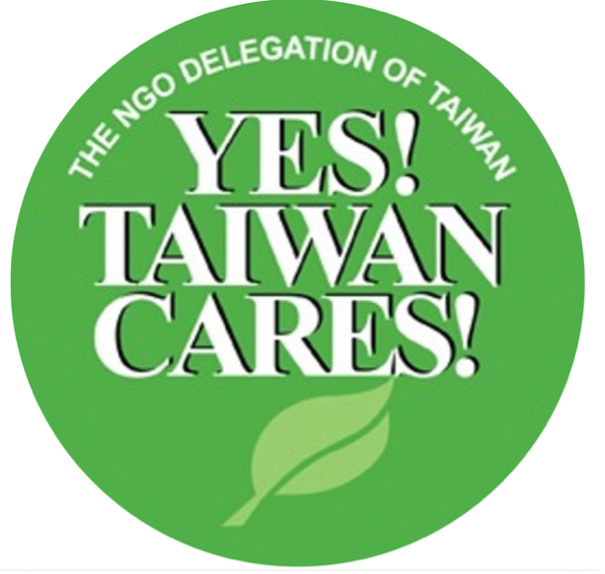
Caption: a delegation of environmental groups behind Taiwan's Earth Day attended the 1992 Earth Summit under the banner "YES! TAIWAN CARES" — the first time Taiwanese civil society groups took part in a UN international event.
More than 30 years on, the global environment faces unprecedented pressure from human activity; war, wildfires and desertification have never ceased. In recent years the rise of AI and its demand for computing power have driven large-scale power development, putting even greater strain on the Earth's ecosystems.
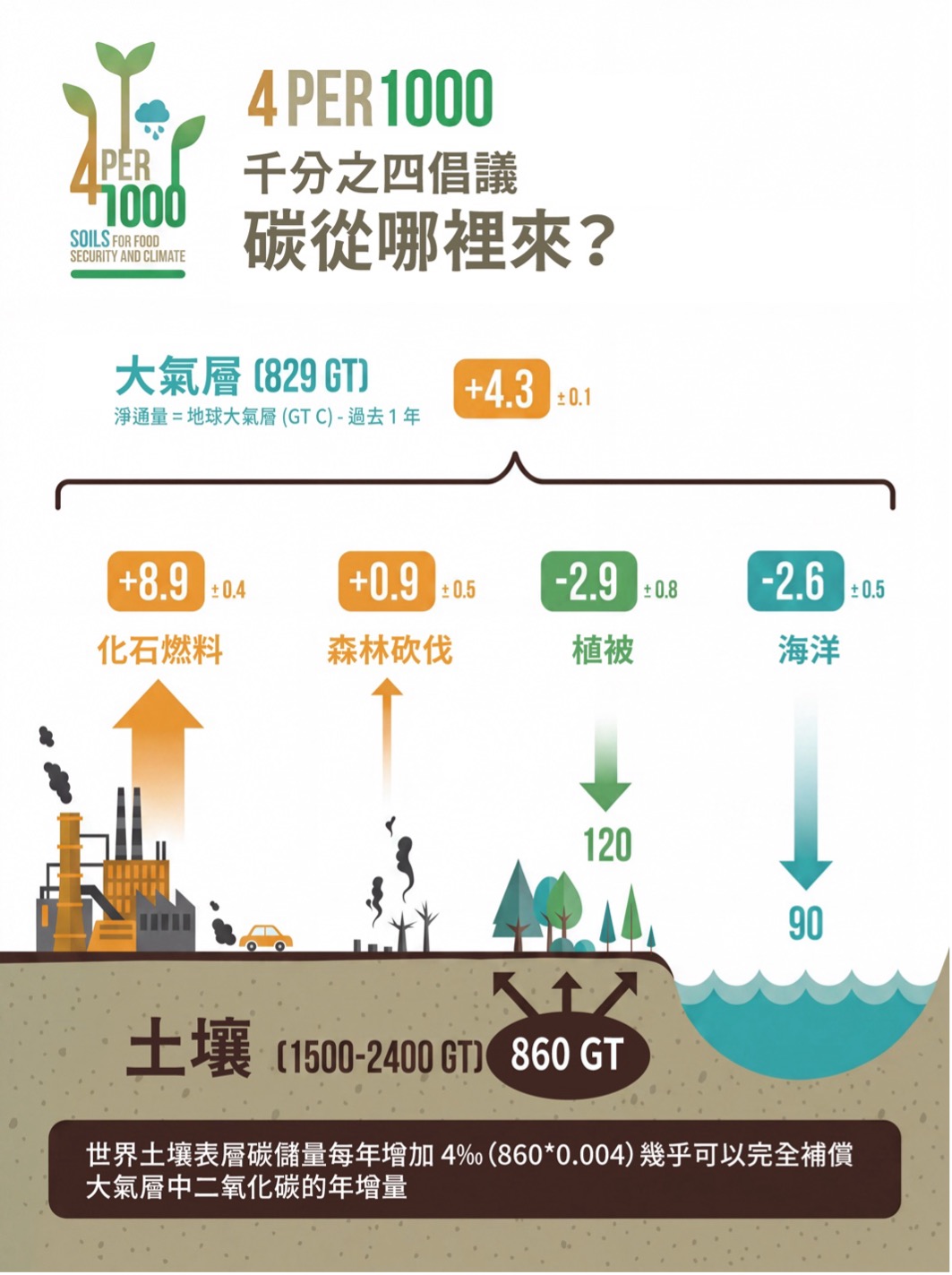
This year CO2 concentrations exceeded 430 ppm (parts per million) and are still rising. Since 1960 humans have monitored atmospheric CO2 on remote Mauna Loa in Hawaii; together with monitoring data from elsewhere, this shows global CO2 concentrations rising very steeply. Looking closely at these curves, they zigzag up and down each year, peaking every May. Many people don't understand the reason for this long, stable oscillation. In fact it is related to large-scale ploughing during spring planting in the northern hemisphere each year, which turns organic matter stored in the soil the previous year into CO2 and releases it into the atmosphere in large amounts — possibly an even bigger effect than part of the emissions from heating or cooling. From June onwards CO2 concentrations fall rapidly, which is related to summer photosynthesis: plants absorb CO2 from the air and store it in the soil. Because soil is the Earth's largest carbon store, holding 1.5 to 2.4 trillion tonnes of carbon, the "international 4 per 1000 Initiative" argues that increasing soil carbon by four parts per thousand each year could neutralise humanity's main CO2 emissions.
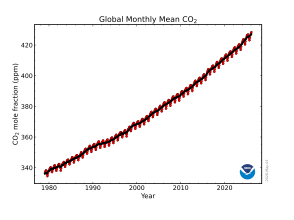
Caption: CO2 concentrations rising year after year. (Source: NOAA)
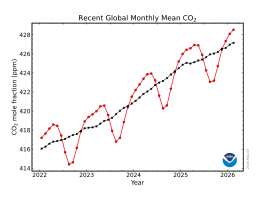
Caption: the rising curve shows a sawtooth upward trend.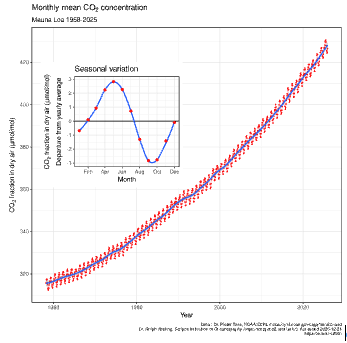
Caption: looking at seasonal changes within each year, May is the peak, caused by large-scale ploughing in the northern hemisphere turning soil organic matter into CO2 released into the atmosphere.
Why promote the 4 per 1000 Initiative: how does soil affect food security and climate?
As is well known, human activities release large amounts of carbon dioxide (CO2) into the atmosphere, intensifying the greenhouse effect and accelerating climate change.
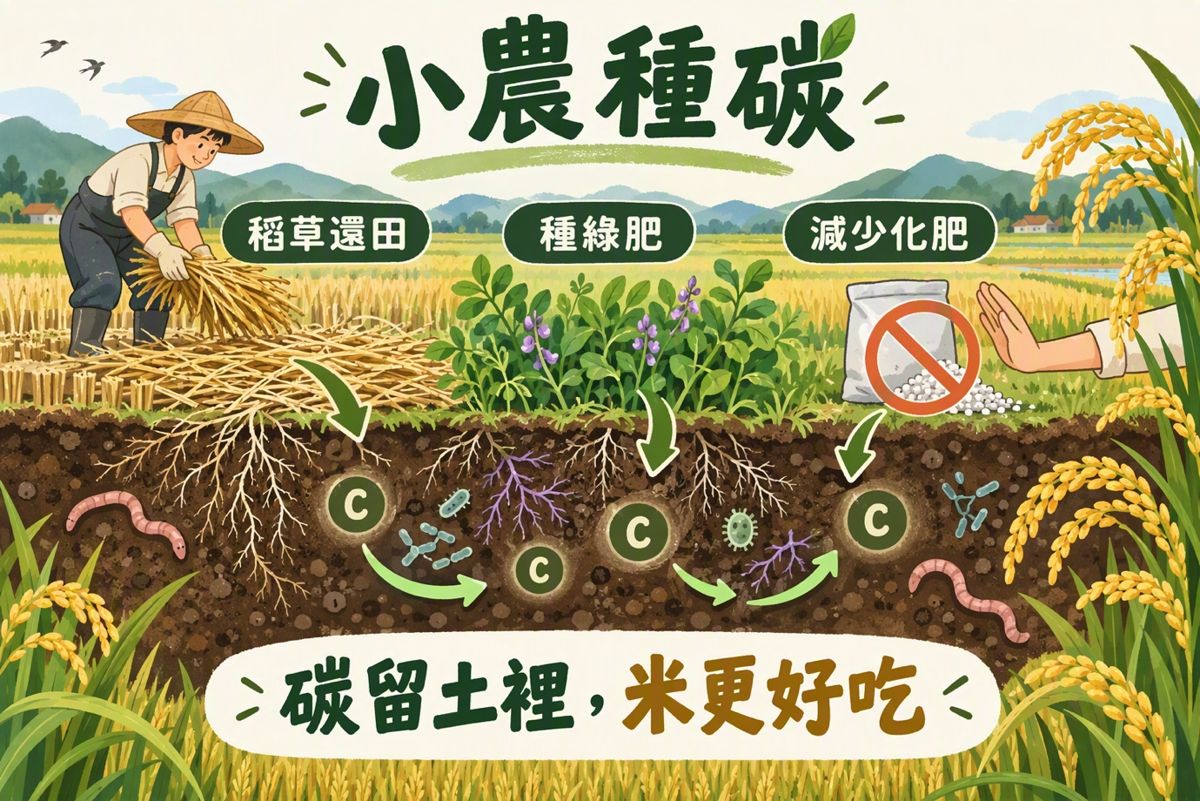
What is less well known is that about 30% of this CO2 is absorbed each year by plants through photosynthesis. Then, when plants die and decompose, soil organisms such as bacteria, fungi and earthworms turn them into organic matter. This carbon-rich organic matter is vital to human nutrition, because it retains water, nitrogen and phosphorus, which are essential for plant growth.
Soil also has huge potential for carbon storage: the world's soils contain about 2 to 3 times as much carbon as the atmosphere. If carbon stocks in the top 30 to 40 cm of soil increased by 0.4% (or 4‰) a year, the annual growth of CO2 in the atmosphere would fall significantly.
Increasing soil carbon stocks by 4‰ a year is not a normative target for every country, but a direction to follow.
This is what the "4 per 1000 Initiative: Soils for Food Security and Climate" proposes.
2. From climate pressure to soil carbon sinks: the scientific basis for the sustainability transition
This public hearing will help companies quickly grasp the new sustainability disclosure framework and build basic capacity from interpreting the rules to applying them in practice.
3. IFRS S1, S2 and the new framework for corporate sustainability disclosure
IFRS S1 and IFRS S2 were developed by the International Sustainability Standards Board (ISSB), established by the IFRS Foundation in 2021, and formally issued in June 2023. Their aim is to set a globally consistent, comparable and verifiable baseline for sustainability disclosure, in response to growing demand from investors, creditors and other capital-market participants for sustainability-related financial information. IFRS S1 sets out how companies should disclose financial information about their overall sustainability risks and opportunities; IFRS S2 focuses on climate-related disclosure and carries forward the four core pillars of the Task Force on Climate-related Financial Disclosures (TCFD): governance, strategy, risk management, and metrics and targets. Both standards apply to annual reporting periods beginning on or after 1 January 2024, marking a new stage in which corporate sustainability disclosure is moving towards international standardisation and integration with financial reporting.
With the TWSE's 2026 ESG evaluation about to begin, companies can use this public hearing to learn in advance the evaluation methods, key indicators and disclosure direction, and prepare their internal governance and data early.
4. The TWSE's 2026 ESG evaluation: background, methods and key points
1. Background
- The 2026 ESG evaluation is the first edition of the system after the former "corporate governance evaluation" was formally transformed from 2026, marking a shift in Taiwan's capital market from a governance focus to an integrated sustainability evaluation covering environment (E), social (S) and governance (G).
- The transformation responds to the strong interest of investors, regulators and international markets in corporate sustainability disclosure and governance performance, helping stakeholders identify listed companies' sustainability performance and management maturity.
- Its policy basis includes the regulator's "Sustainable Development Action Plan for Listed Companies (2023)", Taiwan's 2050 net-zero policy and the goal of making Taiwan an Asian asset management hub, and it echoes global trends in sustainable finance and responsible investment.
- The indicators for the first, 2026 ESG evaluation were announced on 31 October 2025. They apply from 1 January to 31 December 2026, and results are expected to be published by the end of April 2027.
2. Evaluation method
- The 2026 ESG evaluation changes the four dimensions of the former corporate governance evaluation into three: environmental (E), social (S) and governance (G), with 75 indicators in total.
- According to the announcement, the first evaluation adds 12 indicators, revises 17 and deletes 7, with 5 changes to question types — showing that the system has not just been renamed but substantively improved in line with sustainability trends and market needs.
- Evaluation is mainly based on reviewing and scoring companies' publicly disclosed information, including annual reports, sustainability reports, disclosures on the Market Observation Post System and company websites.
- The assessment uses scoring guidelines, operating manuals and question design for consistent review, improving comparability, fairness and credibility of results across companies.
- The overall method stresses the principles of "public disclosure, verifiability and comparability", encouraging companies to demonstrate their sustainability management capability through institutionalised disclosure and governance mechanisms.
3. Main evaluation content
- Environmental (E): key areas include energy management, energy efficiency, greenhouse gas inventory and reduction, resource use management, waste management, circular economy, biodiversity, natural carbon sinks, and capacity to manage climate-related risks and opportunities.
- Social (S): key areas include human rights policy and practice, employee care, occupational safety and health, a friendly, diverse and inclusive workplace, talent development, supply-chain management, stakeholder communication, investor engagement and support for innovative start-ups.
- Governance (G): key areas include board structure and independence, board operation and oversight, protection of shareholder rights, information transparency, ethical management, risk management, sustainability governance structure, quality of sustainability disclosure and internal control.
- Advanced items: including whether there is a chief sustainability officer or dedicated unit, whether the board regularly oversees sustainability matters, whether share buybacks are disclosed, and whether industry-specific indicators are disclosed with reference to international standards such as SASB.
- Overall direction: not only whether companies have systems in place, but whether those systems are implemented, whether disclosures are of high quality, and whether they align with international sustainability disclosure trends.
4. Related links
- TWSE Corporate Governance Center ESG evaluation section: https://cgc.twse.com.tw/esgEvaluation/listCh
- FSC press release — corporate governance evaluation to become ESG evaluation from 2026: https://www.fsc.gov.tw/ch/home.jsp?id=96&parentpath=0,2&mcustomize=news_view.jsp&dataserno=202511200001&dtable=News
- Documents that can be downloaded from these sections include the 2026 ESG evaluation system operating manual, the 2026 ESG evaluation indicators and the scoring guide for the first ESG evaluation.
Beyond understanding the disclosure and evaluation systems, what companies care about more is how to invest next to balance sustainability performance, governance quality and local impact. The ESG Green Shinkansen sandbox programme is one of the key proposals at this public hearing, aiming to help companies assess the best ESG investment choices with disclosure value and investment results.
5. The ESG Green Shinkansen sandbox programme: investment-driven local sustainability transition
1. Concept and positioning
- The "ESG Green Shinkansen sandbox programme" is a demonstration mechanism centred on ESG investment, climate finance, natural capital and local sustainability projects. Piloted as a sandbox, it helps companies assess investment structures, performance measurement, data quality and disclosure feasibility within a controlled scope.
- The programme takes Hualien and Taitung as its priority demonstration area, focusing on agricultural sites with high climate risk, clear local resilience needs and natural capital value, to build local investment cases that combine environmental benefits, social value and governance transparency.
- For participating companies, the point is not simply putting in money, but using institutional design to link investment targets, use of funds, impact results and disclosures into a complete framework that can be integrated into board governance, sustainability reports and investor communication.
- This public hearing will further explain how companies can join the sandbox programme in stages and choose the ESG investment model best suited to their industry, investment strategy and sustainability goals.
2. Fit with IFRS S1/S2 and the TWSE's 2026 ESG evaluation
- Fit with IFRS S1: IFRS S1 stresses that companies should disclose sustainability-related risks and opportunities and how they affect strategy, business model and financial performance. The Green Shinkansen sandbox can help companies or investment platforms turn natural capital, local sustainability projects, impact investment and climate transition funding into sustainability opportunities and strategic actions with a clear management logic, which can then be disclosed.
- Fit with IFRS S2: IFRS S2 focuses on climate-related risks and opportunities, with particular emphasis on governance, strategy, risk management, and metrics and targets. If the sandbox includes investment performance data on soil carbon sinks, regenerative agriculture, climate-resilience projects and emission reductions, these can form part of climate adaptation and transition action, supporting climate disclosures.
- Fit with the TWSE 2026 ESG evaluation: the programme also corresponds to the evaluation's environmental, social and governance requirements. Environmentally, it links to carbon management, natural carbon sinks, climate investment and nature-positive benefits; socially, it shows funding for regional revitalisation, smallholder support, food security and shared social benefit; in governance, board oversight, investment decision mechanisms, information disclosure and third-party verification can improve institutional completeness and comparability.
- Better disclosure quality: because both the TWSE evaluation and IFRS sustainability disclosure place growing emphasis on verifiability and consistency, if the sandbox can establish standardised investment processes, supporting documents, records of fund use and impact tracking, it will help companies make their disclosures more credible and reduce greenwashing concerns.
3. Suggested implementation methods
- Define investment targets and scope: companies first confirm investment themes, sites and expected results — such as natural carbon sinks, regenerative agriculture, climate resilience or regional revitalisation projects — forming a manageable, assessable scope of participation.
- Set measurable indicators: design KPIs including amount invested, area benefiting, carbon sink or emission-reduction benefits, local income, number of farming households benefiting, social impact and completeness of disclosure, as the basis for investment management and disclosure.
- Introduce digital data and tracking systems: build digital records from investment targets and fund flows to implementation progress and outputs, improving traceability and making it easier to link to sustainability reports and annual report disclosures.
- Bring in third-party verification and due diligence: establish checks on project authenticity, carbon sink or emission-reduction benefits, beneficiaries, use of funds and results; where necessary, have accountants, verification bodies or professional advisers issue bridging reports to strengthen data credibility.
- Integrate into governance: it is recommended that the board, sustainability committee or investment review mechanism regularly review the sandbox's progress, with sustainability, finance, compliance, investment and internal control units taking part, bringing it into formal governance processes.
- Link to sustainability disclosure and evaluation: organise sandbox results according to the IFRS S1/S2 and TWSE 2026 ESG evaluation frameworks, producing disclosure material that can be cited directly and value-adding content for evaluation.
- Pilot in phases: start with a single project, production area or investment theme, then gradually expand to diverse targets, multiple regions and multi-party cooperation, reducing implementation costs and risks in the early stage of building the system.
4. Expected benefits and applications
- For companies and financial institutions, it can serve as an integrated tool for sustainability disclosure, climate finance, capital allocation, post-investment management and adding value in ESG evaluation, helping to turn abstract sustainability goals into investment results that are actionable, verifiable and disclosable.
- For capital markets, it helps make corporate disclosures more genuine, more local and more comparable, and strengthens investors' understanding of corporate sustainability governance, climate strategy and transparency in the use of funds.
- For agriculture and local communities, long-term funding, capacity building and results-oriented mechanisms can strengthen local resilience and support smallholders' transition, making the sustainability transition deliver both environmental and social benefits.
- For policy, the sandbox can serve as a pilot ahead of future institutionalisation, standardisation and wider rollout, accumulating local cases and workable methods as a basis for future policy design, sustainable finance promotion or guidance of industrial investment.
6. Who should attend
This public hearing is especially suitable for directors, presidents' offices and senior executives of listed companies, as well as sustainability, finance, investment, compliance, risk management, internal control and public relations departments. It is also suitable for corporate teams planning sustainability disclosure, improving ESG evaluation performance, assessing climate investment or looking for concrete local sustainability investment proposals.
7. What you will gain
- Grasp three key areas: IFRS S1/S2, the TWSE's 2026 ESG evaluation and ESG investment strategy.
- Understand the implementation framework, disclosure value and ways of participating in the ESG Green Shinkansen sandbox programme.
- An important reference for companies assessing the best ESG investment choices and their next stage of sustainability planning.
8. Register now
Places are limited — please register in time to secure your place.
Registration link: https://forms.gle/MztPZmgbHWimVRBPA (deadline: before 5:00 p.m. on 4 June)