 努力小農
本文尚無譯文。
Corporate Action: Why Smallholder Carbon Farming + the ESG Green Shinkansen Is the Best Way for Companies to Invest in Agricultural Carbon Sinks
Carbon Farming Digest No. 2 · In-depth feature · Minor Heat 2026
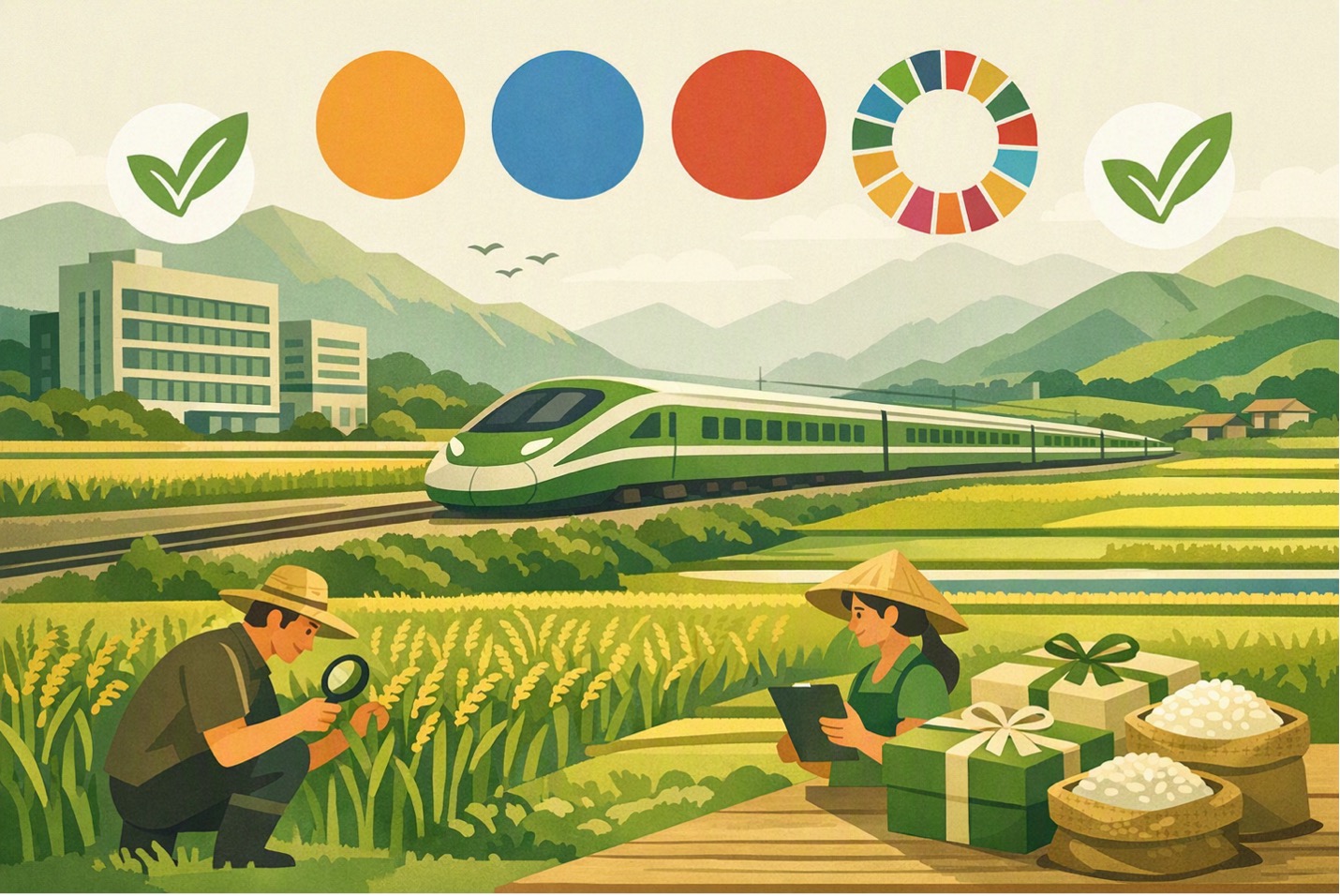
Now that the carbon fee is here, most companies' first thought is "where can we buy carbon credits to offset it?" But treating agricultural carbon sinks as just a tax receipt underestimates their value. Through the "ESG Green Shinkansen" sandbox programme on the CARBON platform, a company investing in smallholder carbon farming in Hualien and Taitung solves four things with one investment: carbon fee compliance, ESG disclosure, local supply chains and employee benefits — and each of them stands up to scrutiny rather than being self-declared.
Start with compliance and disclosure. What the company obtains is Gold Standard–certified emission reduction credits of roughly 1–4 tonnes of CO₂e per hectare per year. This figure is not the company's own estimate; it is calculated with Gold Standard methodologies and issued as formal credits that can be registered and audited externally. It meets the "reasonable and supportable" disclosure requirement of IFRS S2 paragraph 29, so accountants can issue an assurance opinion on it. On top of that come six quantified performance indicators corresponding to SDGs 2, 3, 4, 8, 12 and 13, which can go straight into the company's sustainability report without commissioning a separate ESG narrative. This is preparation on a completely different level from buying international carbon credits of unclear origin on the market: a credit with no story and no local context can only answer an audit with "we bought it", whereas smallholder carbon farming credits can say exactly "which field, which farmer and what method".
Next, local supply chains and employee benefits. Party B (carbon-farming smallholder groups such as the Mitian Sharing Cooperative in Hualien, the second and third high-quality rice production and marketing groups of Changliang Village in Yuli, and the Wan'an Community Development Association in Chishang Township) or Party C (agents such as Tianzu Sustainable Agriculture and the Chen Hsieh-ho rice mill) will supply high-quality Hualien–Taitung rice with a taste value of 65 or above, worth NT$100,000 at market prices, for the company to use as employee benefits, in staff catering or as solar-term gifts. This means employees' everyday meals are themselves a concrete practice of the company's ESG supply chain policy, rather than something that only counts when a beach clean-up or donation is organised. Among the Financial Supervisory Commission's 2026 ESG evaluation indicators, G-32 (sustainability implementation results) explicitly requires disclosure of purchase amounts and quantified performance relating to social enterprises and smallholders — exactly the kind of bonus points smallholder carbon farming can deliver directly.
The most important difference lies in preventing greenwashing. The ESG Green Shinkansen uses a three-layer evidence chain: the MiHuMiSang App records field data in real time (GPS locations and tamper-proof timestamps) → a third-party VVB (validation and verification body) audits on site → public registration with Gold Standard. Every step leaves an auditable record that any stakeholder can inspect. This mechanism is not a verbal promise; it is written into the "ESG Green Shinkansen Four-Party Cooperation Sandbox Agreement", jointly signed by Party A (the investing company), Party B (smallholder groups), Party C (agents) and Party D (Eco-affinity Inc. and the Dawushan Cultural and Educational Foundation, responsible for due diligence). The agreement requires claims to follow the six integrity principles of the Gold Standard Claims Guidelines and provides for prior review, annual self-assessment, third-party verification and whistleblower protection. In other words, what the company receives is not a marketing line saying "we are sustainable", but a legally binding contractual relationship under third-party oversight.
Furthermore, under the PES (payment for ecosystem services) contract, more than 70% of the investment goes directly into the accounts of participating smallholders — not a subsidy whittled away by layer after layer of commissions, but real rural income. Compared with buying international carbon credits of unclear origin on the market, which lack local context and bring no local supply chain or employee benefit, smallholder carbon farming achieves "carbon fee compliance", "ESG disclosure", "local supply chains" and "employee benefits" all at once, with every link verifiable, traceable and open to third-party review. It is the most practical and most defensible agricultural carbon sink option for companies at this stage.
A joint initiative of the Dawushan Cultural and Educational Foundation × Eco-affinity Inc.
Turn your carbon fee budget into a verifiable agricultural carbon sink investment with stackable benefits.
→ Learn about the "ESG Green Shinkansen" sandbox programme
Contact: Eco-affinity Inc. [email protected] 0906 892 567


