 努力小農
本文尚無譯文。
When “organic certification” is faked too: why ESG due diligence, audits and accountant assurance all failed together
The question the organic label didn't answer
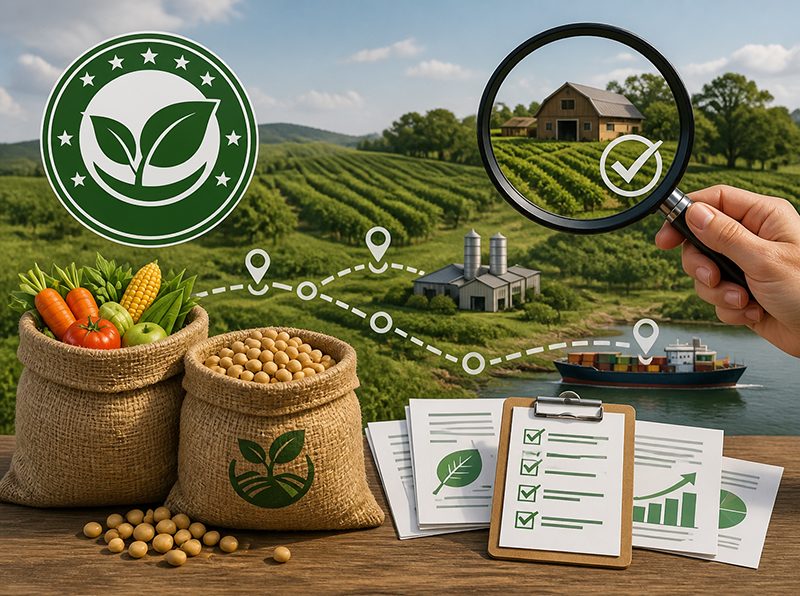
The most unsettling part of this food-safety storm was not traditional bulk oil going wrong, but that even oils marketed as “organic” were found with carcinogens over the limit. Most consumers understand “organic” to mean clean and trustworthy from origin and cultivation through to processing. But this case exposed an institutional grey zone: some organic certifications actually only verify that “no chemicals were added during processing”, and do not necessarily cover the true origin or full history of the raw materials. In other words, an organic label may not answer the most basic question at all — where did this raw material actually come from? That is a design gap in the certification system itself, not just one manufacturer's moral failing.
During the investigation, the contract manufacturer involved kept changing its account of where the raw materials came from: first it said a certain supplier provided them, then it switched to another company, and both later denied any relationship. Officials also said publicly that the business could not clearly explain its claims of local production, and strongly suspected that it actually relied on imported raw materials while selling them under the banner of contract farming with local smallholders. These shifting accounts show that the so-called “traceability mechanism” was useless at the very moment it needed to be tested. What actually happened upstream in the supply chain, even the business itself could not explain — let alone consumers.
Three gaps in ESG checks
Viewed through the framework of corporate ESG governance, the problem lies in at least three links. The first is materiality assessment: raw-material authenticity and supply-chain traceability should be among the food industry's most central material topics, but they were clearly not given enough audit resources or frequency. The second is third-party due diligence: if organic certifiers or supply-chain auditors had really checked purchase receipts and origin records on site regularly, such a discrepancy should not have gone undiscovered for so long. The third is accountant assurance: if the assurance of supply-chain disclosures in sustainability reports does not extend to substantive verification of raw-material traceability, what it can guarantee is ultimately only that the documents are formally complete, not that their content is true.
If any one of these — a company's ESG materiality assessment, third-party due diligence or accountant assurance — had really held the line, an incident like this should not, and could not, have happened in theory. That is the core of the problem: Taiwan does not lack certification systems; what it lacks is anyone behind the certificate who actually checks, checks deeply enough, and takes responsibility afterwards. If a certifier's business model is built on “charging fees to issue certificates” rather than “ongoing audits”, there is an inherent risk of conflict of interest. That is why independent, transparent third-party due diligence matters so much.
The risk of origin laundering in global supply chains
It is worth noting that this is not a uniquely Taiwanese problem. Internationally, markets including the EU have also seen disputes over “origin laundering” in recent years — imported raw materials are given simple processing and then sold under a local place name to avoid tariffs or earn an origin premium. Such practices persist because the technology and systems for verifying raw-material traceability cannot keep pace with the globalisation of supply chains. Truly solving this will probably take more than tightening the requirements for labels; it requires a raw-material flow database that can be spot-checked at any time and cross-checked across borders, so that “where did this batch of raw material really come from?” is no longer a question answered only by the business's own word and hard to verify.
If the pages of certification labels and qualification certificates in a sustainability report cannot withstand a single question about raw-material traceability, what do those labels actually mean? Consumers, investors and corporate customers are willing to pay a premium for labels such as “organic”, “sustainable” and “smallholder contract farming” — in essence, they are paying for trust. When that trust is hollowed out by an institutional grey zone, the price is paid not only by the companies involved, but by the credibility of the whole certification system — including qualified producers who really do carry out proper checks, who may be dragged down with them.


