 努力小農
本文尚無譯文。
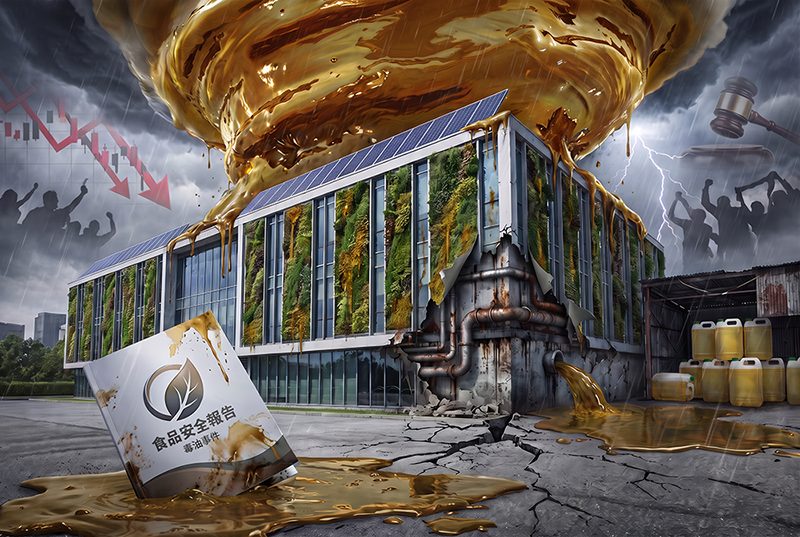
ESG greenwashing risk seen through the toxic-oil storm: where did the three lines of defence in sustainability reporting fail?
ESG is not PR — it is risk management
ESG is often misunderstood as a cosmetic project for corporate image: hire a few consultants, publish a glossy sustainability report, hold a few charity events, and the job is done. But this toxic-oil scandal has proved painfully that ESG was never cosmetics for companies; it is the most solid way for a business to face operating risk and secure business continuity. If a company cannot even be sure of the authenticity of raw materials in its own supply chain, no sustainability report, however beautiful, can withstand the full impact of a food-safety incident on its share price, brand and customer relationships.
The companies involved did have sustainability reports, and did have some third-party verification. But when the most basic material issue — the authenticity of supply-chain raw materials — was not built into day-to-day management, no report, however thick, could hold back the storm: administrative charges of delayed reporting and misreported output; a corporate governance crisis of material-information briefings at the stock exchange and public bows of apology; and what may follow — labour disputes, collective consumer claims and criminal liability for executives and managers. These were never extra risks “outside ESG”; they are exactly the core risks an ESG governance framework is meant to identify and prevent. When a company treats ESG as the PR department's business rather than core work for risk management, the gap will sooner or later show up as a real operating crisis.
The three lines of defence in sustainability reporting
Breaking down the three lines of defence a sustainability report should have: the first is materiality assessment. A company must honestly face which risks, if they occurred, would really shake the business — supply-chain traceability and raw-material authenticity should clearly be near the top, not ranked below energy efficiency and cutting plastic in the office. The second is third-party verification, whose scope and depth must extend to on-site audits rather than stopping at document review and sample interviews. The third is accountant assurance: the disclosures covered must include whether these material risks have corresponding internal controls and response procedures, not just whether the numbers add up. If any one of these lines loosens, a seemingly complete sustainability report may crumble in the face of real risk.
Governance risk has become real
From a corporate governance perspective, the incident also shows that legal risk for executives and management has become concrete. Beyond administrative penalties, if malicious delays in reporting or misreported output are confirmed, those responsible may face criminal liability; workers whose rights are affected by response measures (shutdowns, inspections) may bring labour disputes; and consumers may seek compensation through class actions or consumer-protection mechanisms. These risks used to be classed as “compliance” or “PR” issues, handled separately from ESG governance. But this case shows that ratings on the governance (G) dimension are inseparable from real operating risk.
From the capital-market perspective, the incident again shows that the link between ESG ratings, share prices and credit ratings is growing stronger. International rating agencies have shown repeatedly in recent years that when a company is hit by a major governance or food-safety controversy, its ESG rating is often downgraded faster than its financial statements reflect the problem, because agencies treat such incidents as direct evidence of “inadequate governance capacity” rather than one-off accidents. For Taiwan's listed companies, this means ESG governance is no longer an optional bonus, but a core risk-management item that directly affects the cost of capital and investor confidence.
The question a sustainability report should answer has never been “what good things have we done?”, but “do we really know what is happening in our supply chain?” Only when ESG is properly understood as a risk-management tool will companies be willing to put resources where they can truly prevent crises — deeper supply-chain audits, faster anomaly reporting, more transparent disclosure — rather than spending budgets on the layout and wording of their reports. That is the most direct lesson this toxic-oil storm leaves for every listed company.

