 努力小農
本文尚無譯文。
Microsoft's US$228 million soil carbon deal: farmers' revenue share and the role of stakeholders
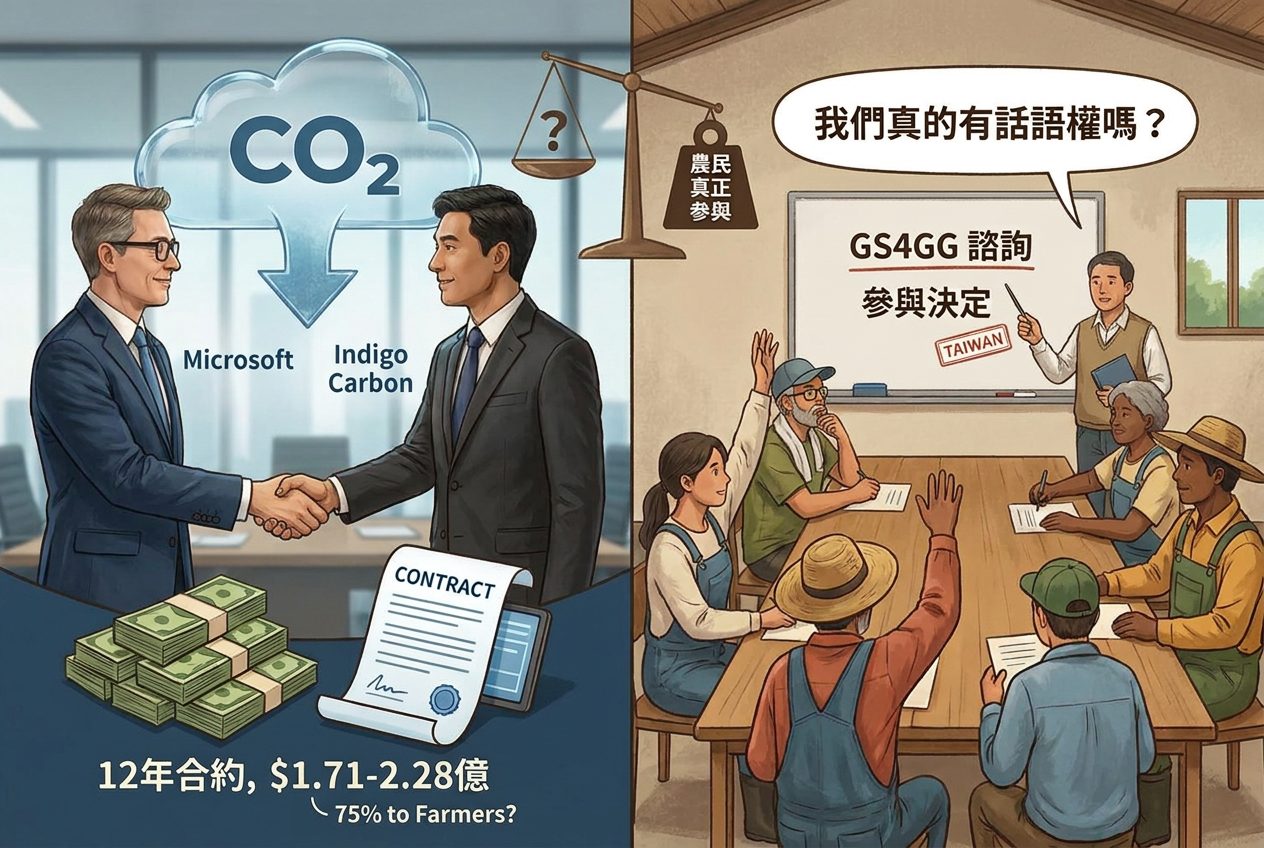
Earlier this year Microsoft signed a contract with US agritech company Indigo Carbon that sent shockwaves through the agricultural carbon sink world: 2.85 million soil carbon credits over 12 years, with a total contract value of between US$171 million and US$228 million — the largest soil carbon credit deal ever. The most eye-catching clause: Indigo has committed that farmers will receive up to 75% of the carbon credit revenue.
The figure stands out because the agricultural carbon sink market has long been dogged by a nagging doubt: it is farmers who pay the price of changing how they farm, but the profits from carbon credit trading tend to flow to the developers, verifiers and buyers in between, leaving farmers with scraps. By writing “farmer revenue share” directly into the contract, the Microsoft–Indigo deal is, to some extent, the market's response to this structural problem.
A good revenue-share number doesn't mean the process was transparent
But it is worth asking calmly: how was the 75% share negotiated? Before the contract was signed, did farmers have a chance to help design the revenue-sharing mechanism, understand the contract terms, or even object? If farmers are simply told at signing that “you can get 75%”, rather than being invited to the project-design table from the start, then that 75% is, in a sense, still something “given” rather than “decided together”.
That is exactly the core problem the Gold Standard for the Global Goals (GS4GG) stakeholder consultation requirements aim to solve. GS4GG's rules don't just require projects to “take care of” farmers' economic interests; they require the consultation process itself to be open, accessible and exclude no one. Invitations must go out at least 30 days before meetings; information must be presented in language and formats farmers understand; meeting times and places must take into account farmers' work patterns and accessibility; and opportunities for women and disadvantaged groups to take part must be actively created rather than passively awaited. In other words, GS4GG cares not only about the outcome — how much farmers get — but also about the process: whether farmers genuinely took part in deciding that outcome.
From an international case back to Taiwan
The Microsoft–Indigo case holds a double lesson for Taiwan. On one hand, it proves that international buyers are willing and able to write farmer-friendly revenue-sharing terms into contracts — a positive benchmark for Taiwan's developing agricultural carbon sink market. When negotiating carbon credit purchases with international companies in future, the farmer revenue share should be an explicit negotiating item rather than glossed over.
On the other hand, it reminds us that the revenue-share ratio is only the outcome; the process is what really determines whether a project stands up to scrutiny. From the outset, the Small Farmers' Carbon Farming Project in Taiwan (GS11818) and the Chishang Smallholder Carbon Farming Project (GS23490) chose to follow the GS4GG stakeholder consultation requirements: holding in-person consultation meetings, opening written feedback periods of at least a month, and establishing an ongoing grievance mechanism. These seemingly “troublesome” procedures are there to ensure that, whatever revenue share is eventually agreed, farmers make their own choices fully informed and fully involved.
The 3 September consultation meeting puts this process into concrete practice. We warmly invite everyone who cares about farmers' rights and whether ESG investment really reaches the ground to come and see for themselves how, in Taiwan, the revenue share and terms of an agricultural carbon sink project are laid out and discussed step by step in front of stakeholders.


