 努力小農
本文尚無譯文。
Momentum in the global carbon farming market: why 2026 is called “the year soil carbon took centre stage”
Carbon Farming Digest No. 5 · End of Heat|Seasonal feature
A market picking up speed
If one phrase sums up the agricultural carbon sink market in 2026, “full of momentum” is probably the most fitting. A new report from carbon market analysts AlliedOffsets says 2026 is the year soil carbon has drawn the most attention so far: issuance approved under the Core Carbon Principles (CCP) keeps climbing, showing that a carbon sink category once seen as “niche and hard to standardise” is gradually entering the mainstream.
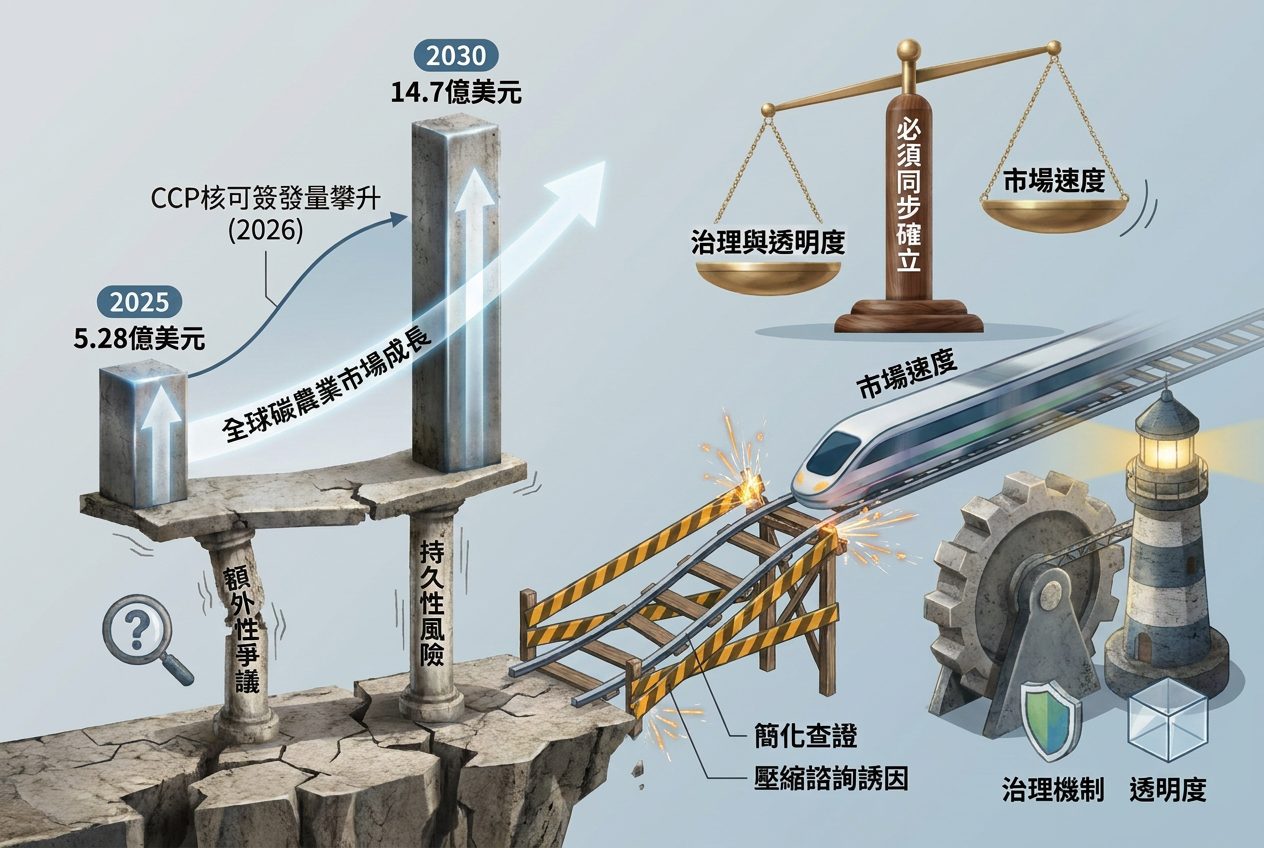
Market research forecasts confirm the trend: the global carbon farming market is expected to grow from US$528 million in 2025 to US$1.47 billion in 2030, a compound annual growth rate of 22.7%. This momentum comes partly from governments strengthening their climate policy frameworks — including Taiwan's carbon fee system, which formally took effect in 2026 — and partly from a sharp rise in corporate demand for “verified carbon removal”. The US$228 million soil carbon deal between Microsoft and Indigo Carbon is the most dramatic expression of this corporate demand.
The faster the growth, the more governance matters
But faster momentum also means risks are growing just as fast. The two long-standing controversies in soil carbon markets — “additionality” (whether the emission reductions would have happened anyway) and “permanence” (whether carbon stored in soil could be released again if farming practices change in future) — will not resolve themselves just because the market gets bigger. In fact, the hotter the market, the greater the temptation to simplify verification and compress consultation timelines in the rush to get in — exactly the risk pattern the Indian case warns of.
That is why certifiers such as the Gold Standard for the Global Goals (GS4GG) keep revising their soil organic carbon activity modules: to raise the rigour of methodologies, and the requirements for stakeholder consultation and engagement, in step with the market's rapid growth, rather than letting the market's speed sacrifice the quality of governance. The recent effect of the methodology revisions on the certification progress of the Small Farmers' Carbon Farming Project in Taiwan (GS11818) and the Chishang Smallholder Carbon Farming Project (GS23490) is, in a way, a concrete example of “governance keeping up with the market” — a delay in the short term, but a necessary investment in making the projects stand up to scrutiny in the long term.
Back to the tracks
In 2026 the story of the soil carbon market is bound to be filled with huge deal values, growth curves and market reports. But what really decides whether the market can go the distance has never been these numbers themselves, but the invisible yet most fundamental link behind every deal: whether farmers were truly asked, truly involved and truly benefited.
That is the bottom line the 3 September stakeholder consultation meeting aims to hold. However strong the market's momentum, the tracks must be laid first: openness, transparency and public participation are the key to keeping this “ESG Green Shinkansen” running steadily and for the long haul.


