 努力小農
本文尚無譯文。
Autumn deepens: time to start “building up” in the mornings and evenings
Carbon Farming Digest No. 6 · White Dew|Seasonal feature
White Dew is the third autumn solar term among the twenty-four, usually falling around 7 or 8 September; this year it falls on 7 September. The name comes from the marked drop in night-time temperatures at this time of year, when moisture condenses as dew on grass and trees and mornings open onto a white sheen of dew — the most tangible sign that autumn is deepening. Traditional Chinese medicine notes that after White Dew the gap between morning and evening temperatures widens further, making it one of the solar terms with the biggest day–night swings of the year, and a peak time for seasonal colds, allergies and stomach upsets.
Diet: moisten the lungs and nurture the stomach, balancing warm and cool
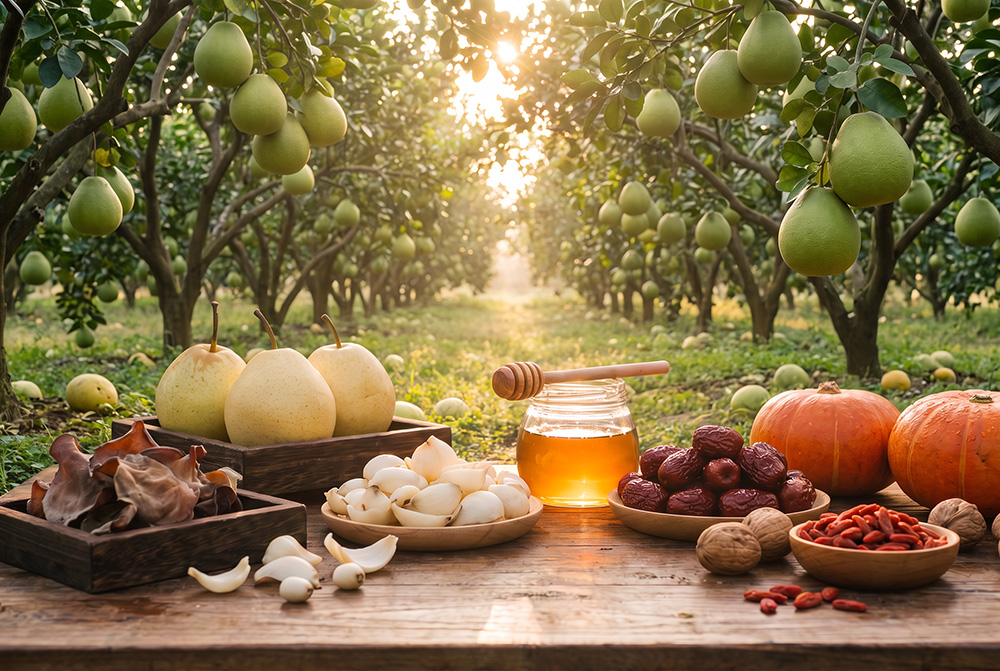
Autumn dryness intensifies around White Dew, and with mornings and evenings turning cool, the dietary principle is to “moisten the lungs without harming the stomach”. Nourishing, moistening foods such as white fungus, Asian pears, lotus root, Chinese yam and pumpkin remain the stars of the season. At the same time, as mornings and evenings get cooler, start cutting back on raw fruit and iced foods to avoid chilling the stomach. A folk saying goes, “At White Dew, don't bare your body”, a reminder to adjust what you wear too. In your diet, gradually add warming foods such as ginger, pumpkin and chicken soup, to help the body move smoothly from summer's heat-clearing mode to the warming, nourishing mode of autumn and winter.
Daily rhythm: early to bed, early to rise; protect your nose, mouth and stomach
After White Dew the day–night temperature difference can exceed 10°C, so keep warm when sleeping — especially your belly and ankles. When going out in the morning or evening, take a light jacket to avoid colds caused by temperature swings. This season can also trigger allergic rhinitis, asthma and other respiratory problems; people with sensitive constitutions should take particular care to keep their nose and mouth warm and to control humidity at home. Going to bed early, rising early and exercising regularly help strengthen immunity and prepare for the more noticeable autumn chill ahead.
White Dew in the fields: farmers' own sense of the season
For those who farm, White Dew is when the autumn harvest gets fully under way. The second rice crop in central and southern Taiwan is ripening and being harvested, and fruit trees such as pomelos and wendan pomelos are entering the early part of their season. More morning and evening dew helps some crops build up nutrients but also raises the risk of disease, so field patrols and timely pest and disease control cannot slacken. Experienced farmers know that the weather turns quickly around White Dew, and getting the timing of harvest and storage right directly affects the quality and losses of the whole season.
Bodies need care in step with the seasons, and so does the land. Moving from “moistening dryness” to “warming and nourishing” is the body's rhythm of welcoming the autumn cool; moving from field management to the full autumn harvest is the land's rhythm of reaping a year's hard work. This is exactly what the carbon farming platform and the MiHuMiSang app want to do together with you: turn the old wisdom of “following the seasons, step by step” into everyday practice that can be seen and tracked.
Once White Dew arrives, autumn is in full swing and the cool will become ever more noticeable. Taking good care of our bodies, and of the land, is what this solar term truly teaches us.
#WhiteDew #DayNightTemperatureSwings #MoistenLungsNurtureStomach #FollowTheSeasons #CarbonFarmingDigest


