 努力小農
Openness and transparency are the best disinfectant
本文尚無譯文。
Openness and transparency are the best disinfectant
Report of the stakeholder consultation meeting for the GS11818 / GS23490 smallholder carbon farming projects
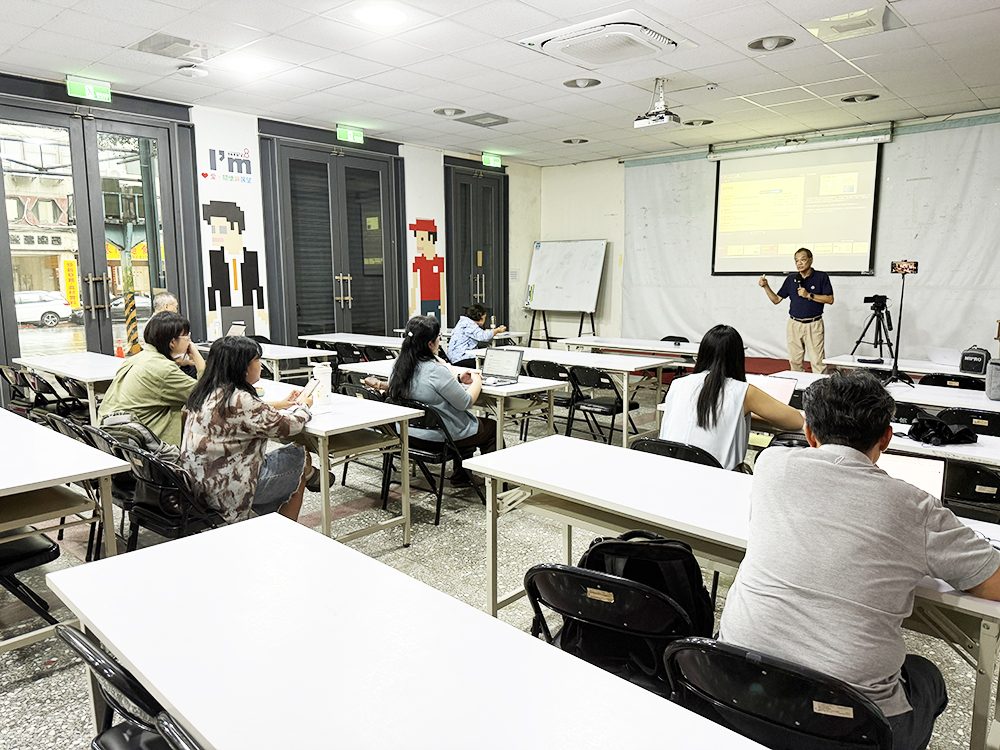
“Today's meeting is being livestreamed. I won't delete it, and I take full responsibility for everything I say.” So said Jay Fang, chairman of Eco-affinity Inc., at the very start of the meeting. On the afternoon of 3 September, despite heavy rain in Taipei, nine people braved the weather to come to NGO House, while 31 more joined online, for a consultation on carbon sink projects that span Changliang Village in Yuli, Hualien, Chishang in Taitung and elsewhere, and affect the livelihoods of more than a hundred smallholder households.
- Meeting
- GS11818 / GS23490 smallholder carbon farming projects — Stakeholder Consultation Meeting
- Time
- Thursday 3 September 2026, 14:00–16:30
- Venue
- NGO House, Taipei (No. 8 Qingdao East Road, Taipei); livestreamed online
- Organiser
- Eco-affinity Inc.
- Co-advocates
- Tawushan Cultural and Educational Foundation, Green Consumers' Foundation
- Attendance
- 9 in person + 31 online, 40 in total; peak of 34 online at the same time
1. Project progress: about to emerge from the tunnel
Jay Fang described the project — launched in 2020 and planned to run for ten years — as “about to come out of the tunnel and see the light”. New farming households kept joining over the past three years, but the verification body gradually struggled with data that grew more mixed each year. The project team therefore paused new registrations and went back to re-inventory the lease and ownership records for all 180 land parcels covering 162.77 hectares, establishing 2022 as the common baseline year.
| Item | Status |
|---|---|
| Project IDs | GS11818 (Changliang Village, Yuli, Hualien, etc.) / GS23490 (Chishang, Taitung) |
| Baseline year | 2022 (only farmland that had not used cover crops in the previous five years is eligible) |
| Monitored area | 162.77 hectares, about 180 land parcels |
| Soil sampling | New round of 2026 sampling from October (at least three months after harvest with no fertiliser disturbance) |
| Testing laboratory | Industry-Academia Collaboration Center, Kaohsiung Medical University (equipment installed in July, documentation completed in August, proficiency testing in September) |
| New farmer registration | Paused, to clarify data for existing farmers under the 2022 baseline year |
| Corporate clients | Ruiyang Information (currently the only company making formal purchases) |
| PDD revisions | About 20 versions so far, due to ongoing changes in methodology rules |
The story of the sampling laboratory was the most moving part of the meeting. Testing had originally been commissioned from Tianzu Sustainable Agriculture, led by Dr. Hung Chien-che. When disaster struck Guangfu Township last September, Dr. Hung joined the relief effort (as one of the volunteers dubbed “shovel superheroes”) and was injured. He went on to develop cellulitis, was then found to have leukaemia, and passed away on 25 May this year. The team subsequently moved the whole laboratory to Kaohsiung Medical University's Industry-Academia Collaboration Center. After three stages — equipment installation, documentation and proficiency testing — this year's new round of soil sampling is expected to begin in October.
2. What farmers gain — and what they won't lose
Jay Fang stressed several times that carbon credits are only a small part of the project's value: “Getting a few hundred dollars a year from carbon credits is already remarkable — a few thousand, at most ten thousand per jia of land; it's not that much. But if a jin of paddy can sell for one or two dimes more, that's tens of thousands more a year.” What the project really aims for is a price premium for produce through SDG certification, and it commits to a concrete figure:
When consumers pay 100 dollars, 70 dollars will go into smallholders' pockets — that's our guarantee. What other ESG project today dares to make that kind of guarantee? — Jay Fang, Chairman, Eco-affinity Inc.
Three things farmers won't lose
- Land-use rights: leases are de-identified, and farmers' existing land-use rights are not changed.
- Freedom to farm as they choose: the project does not restrict farmers from choosing the crops and farming methods that suit them best. Jay Fang said that if future methodology revisions touch on this, “I will certainly argue our case.”
- The right to leave at any time: the project charges no fees and farmers can leave whenever they wish; however, once certification is granted, soil testing costs will become the farmers' own out-of-pocket expense.
On safeguarding, the project follows the principle of FPIC (Free, Prior and Informed Consent) for fields on indigenous reserve land, and Chen Man-li serves as convener of the stakeholder consultation meetings, responsible for grievance channels for gender issues and disadvantaged groups. Chen said no grievances have been received so far, mainly because the carbon credits have not yet been sold and revenue sharing has not begun — “but whether there will be any unfairness when revenue is actually shared remains to be seen.”
3. Hot topics among stakeholders
Q1 Where exactly are the buyers? Hsu Wen-yen, board member, Fair Trade Association
Hsu proposed that the scope of stakeholders should in future include farmers' existing customers, and asked directly whether current buyers really understand the project's progress and are willing to keep supporting it. Chen Cheng-hung, manager of the Chen Hsieh-ho rice mill, responded on the spot that the mill currently offers a guaranteed-price purchase mechanism: even if farmers' rice is not bought by companies, the mill will still help sell it, and rice from the project “will be specially kept separate” rather than mixed with ordinary farmers' rice.
Q2 How is the life cycle defined? Could there be carbon leakage? Associate Professor Chen Yi-chun, Chinese Culture University / Chiao Kuo-ping, lead auditor, BELL International Certification
Chen Yi-chun, a soil scientist, noted that cover crops can add about 1 to 2 tonnes of carbon per hectare per year, but soil itself may release carbon again — should monitoring continue? Jay Fang replied that the project uses a business-as-usual scenario comparison; actions such as reduced tillage and cutting fertiliser and pesticide use are currently conservatively counted as zero, and there is not yet systematic research that can precisely offset the contribution of methane emissions. If future research proves that cover crops do more harm than good, “that's the worst case, and we would accept it.”
Q3 What difficulties will farmers face as the project scales up? Yeh An-chieh, graduate student, National Taiwan University
Jay Fang answered with cases from the front line: one farmer switched from Chinese silvergrass to passion fruit after damage from birds and wild boar, only to be hit by monkeys; Shifeng Orchard in Heping District has likewise suffered from wildlife; and the bananas at Zhuhu Mountain Lodge, which used to yield 20,000 jin a year, were “all gone” — the farm eventually switched to chestnuts. He admitted that whether farmers switch crops, rotate or cut back to a single crop a year, “I have no right to limit their choices.” The project's only bottom line is that farmers' incomes and yields must not fall.
Q4 Why not apply for Taiwan's domestic carbon credits? Lin Tsung-han, Taiwan Sugar Corporation
Lin asked whether, since Taiwan approved a domestic soil carbon sink methodology last year, the project would consider applying for domestic credits instead. Jay Fang explained two key reasons: SDG certification is Gold Standard's greatest strength — even Verra does not offer it — and the same land cannot be counted both domestically and internationally (double counting). He also revealed that, in response to rule changes, the words “small farmer / smallholder” have been removed from the English documents and the additionality argument must be rewritten accordingly — “in effect upgrading rules meant for smallholders into a version that applies to large-scale operators.”
Q5 How big is market demand, really? Liang Shang-kun, Taiwan Sugar Corporation / Hsu Wen-yen, board member, Fair Trade Association
Asked about market size, Jay Fang shared a real quote: in 2023 he asked TSMC what price it would pay for a tonne of carbon, and was told NT$300 — the same as the carbon fee at the time. “Unless it's cheaper than 300 dollars, it's not competitive.” Hsu Wen-yen shared his observation that the buyers who really support such schemes steadily over the long term are often not prominent listed companies but low-profile small and medium-sized business owners — “it's just that the boss likes it” — each setting aside a budget with someone dedicated to carrying it out. He suggested the project need not fixate on formal matchmaking events: “Maybe try something like low-carbon mini tours, taking buyers to see for themselves.”
During the meeting Jay Fang also tossed out a quick question: “Before today, how many of you had heard the term ‘taste value’?” No one raised a hand. He explained that this technique, which originated in Japan and has a history of fifty or sixty years, is little known because most rice on the market is blended by large rice merchants — “like instant coffee, it won't tell you which estate it came from.” Only smallholders have the will, and the reason, to lay their soil and taste data on the table. That is exactly the direction the project wants to take next: letting farmers talk directly with consumers, backed by scientific data.
4. Next steps: a 30-day comment period
- Over the next 30 days, the project team will compile the comments raised by participants (including those online), and will then publish its full responses over a further 30 days.
- This year's soil sampling begins in October, followed by a series of certification reviews.
- Anyone with concerns or grievances about the project can contact Chen Man-li (convener of the stakeholder consultation meetings), contact Jay Fang directly, or write to Gold Standard ([email protected]). An online questionnaire is also open.
5. Participating organisations (selected)
| Organisation | Representatives | Role |
|---|---|---|
| Eco-affinity Inc. | Jay Fang (Chairman), Chang Yen-chen (Executive Secretary) | Project developer |
| Taiwan Sugar Corporation | Lin Tsung-han, Liang Shang-kun, Teng Chih-cheng, Li Ping-feng | Partner farmland / technical unit |
| Mitian Sharing Cooperative (Yuli, Hualien) | Chiu Chui-lung, Pan Jou-chen, Tien Ching-hua, Huang Chia-hsiang, Chung Shui-mu and others | Local farmer representatives |
| Chen Hsieh-ho Rice Mill | Chen Cheng-hung (Manager) | Wan'an community partner rice mill |
| BELL International Certification Co., Ltd. | Chiao Kuo-ping (Lead Auditor) | Third-party certification body |
| Department of Land Resources, Chinese Culture University | Chen Yi-chun (Associate Professor) | Academia / soil science |
| National Taiwan University | Yeh An-chieh (master's student) | Academic research |
| Mom Loves Taiwan Climate Action Alliance | Wu Yun-fang, Tseng Yun-an | Climate advocacy NGO |
| Fair Trade Association | Hsu Wen-yen (board member) | Fair trade advocacy |
| Office of Sustainable Development, Tzu Chi University | Chiang Yun-chih (Director) | Academia / sustainable development |
| Wan'an Community | Hsiao Jen-yi (Honorary Chair) | Local community representative |
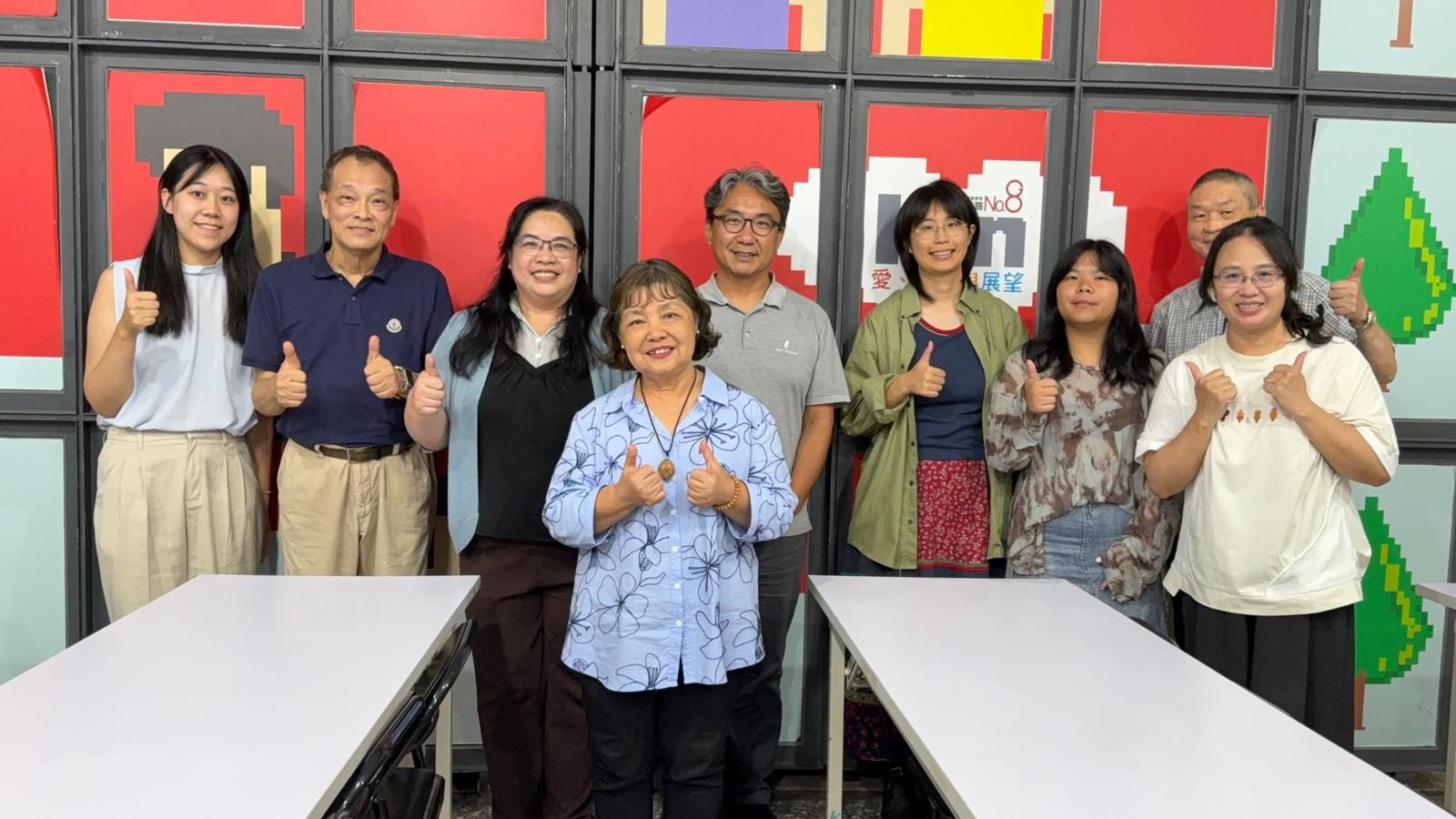
“One great thing about Taiwan is that everyone can do what they want to do based on their own ideas,” Chen Man-li said in summing up at the end of the meeting. The two-and-a-half-hour consultation produced no grand conclusions, but it left an open, transparent record, a full page of questions awaiting answers, and an invitation to come and taste for yourself in the fields of Chishang on 8 September.


