 努力小農
The last solar term of autumn: time for the body to start “building up”
本文尚無譯文。
Seasonal feature / Frost's Descent
The last solar term of autumn: time for the body to start “building up”
Frost's Descent is the last autumn solar term among the twenty-four, usually falling around 23 or 24 October; this year it falls on 23 October. The name means temperatures drop sharply and moisture meets the cold and condenses as frost — the last stage of autumn turning from cool to cold, and the prelude to winter. Taiwan is subtropical, so real frost is not always seen, but at this time the north-east monsoon strengthens, mornings and evenings are noticeably cold and the day–night temperature gap is large. Traditional Chinese medicine sees this as a period when “dryness and cold arrive together”, most likely to trigger respiratory illness, stomach upsets, aching joints and cardiovascular problems, and the focus of self-care shifts from moistening dryness to “warming nourishment and caring for the stomach”.
Diet: nurture the stomach with warming nourishment; build up with the season
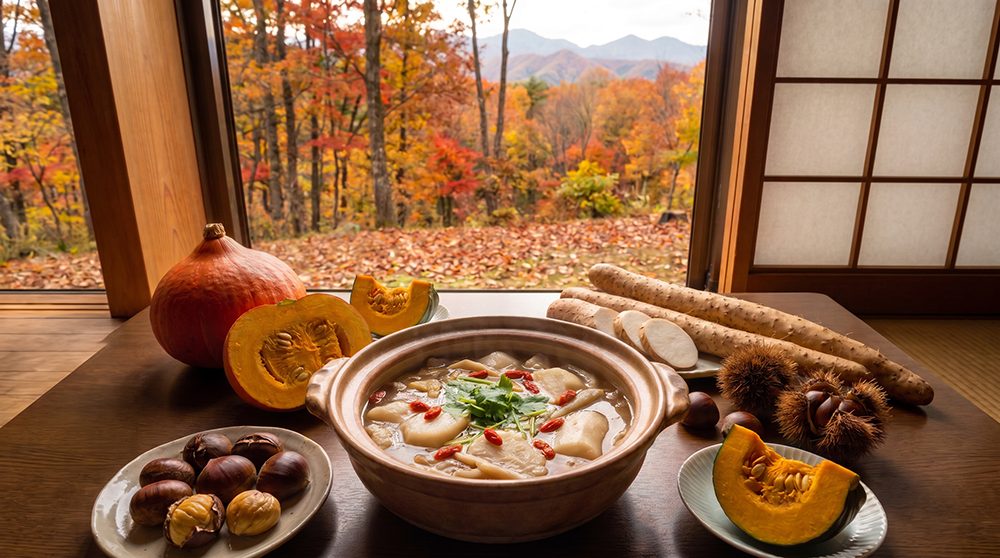
Frost's Descent is one of the best solar terms of the year to start building up; as the folk saying goes, “build up at Frost's Descent, and you'll fight tigers in winter”. The dietary principle for this season is “gentle, warm, moistening nourishment that cares for the stomach and strengthens the spleen”. Roots and tubers such as daikon, lotus root, Chinese yam, pumpkin, chestnuts and sweet potatoes both moisten dryness and gently warm the spleen and stomach; autumn fruits such as persimmons, pomelos, apples and pears are at their peak and can be eaten in moderation. Taiwan also has the custom of “eating persimmons at Frost's Descent”, said to keep out the cold, but persimmons are cooling by nature: people with weak stomachs should not eat many, especially on an empty stomach, and they should not be eaten together with crab or sweet potatoes. Building up is best done gently and warmly; for rich tonic dishes such as ginger duck and mutton hotpot, it is advisable to go step by step according to your constitution, rather than overdoing it all at once and overheating.
Daily rhythm: keep warm against the cold; protect joints and stomach
After Frost's Descent temperatures fall noticeably, and the cold mornings and evenings can easily trigger aching joints, stomach pain and cardiovascular discomfort. Keeping warm is the first task — especially the neck, belly, knees and feet should not get cold. Older people and those with chronic illnesses should pay particular attention to blood pressure in the early morning and at night, and avoid sudden exposure to cold. Routines can gradually shift to “early to bed, later to rise”, giving the body enough sleep to rest and recharge; moderate exercise such as walking, tai chi and hiking helps circulation and boosts immunity, but avoid strenuous exercise on an empty stomach early in the morning.
Keep warm:neck / belly / knees / feet
Frost's Descent in the fields: farmers' own sense of the season
For those who farm, Frost's Descent is the turning point where the autumn harvest wraps up and winter cropping gets fully under way. The second rice crop is mostly harvested and fields enter fallow, land preparation or ploughing, while winter crops such as vegetables, beans, buckwheat and rapeseed are sown one after another. In orchards, late-autumn fruits such as persimmons, pomelos, apples and tangerines enter peak season, and the timing of harvest and keeping them fresh in storage and transport matters especially. Experienced farmers know that around Frost's Descent the north-east monsoon strengthens and rain increases in the north, while the centre and south tend to be dry, so irrigation and drainage must be managed to suit local conditions; low temperatures also pose a risk of cold damage to some crops, so timely covering and protection against the cold are essential.
Bodies need care in step with the seasons, and so does the land
Bodies need care in step with the seasons, and so does the land. Shifting from “moistening dryness” to “warming nourishment” is the body's preparation for winter; shifting from autumn harvest to fallow and winter crops is the land's rhythm of resting and recharging. Planting green manure crops and covering fields with rice straw or organic matter during fallow not only protects the soil from wind erosion and runoff, but is also the most direct way to sequester carbon. This is exactly what the carbon farming platform and the MiHuMiSang app want to do together with you: turn the old wisdom of “following the seasons, step by step” into everyday practice that can be seen and tracked.
When Frost's Descent arrives, autumn comes to an end and winter's footsteps draw near. Taking good care of our bodies, and of the land, is what this solar term truly teaches us.


