 努力小農
Typhoons that skip north and strike south: what are smallholders facing under climate change?
本文尚無譯文。
Climate resilience / Smallholder carbon farming
Typhoons that skip north and strike south
What are smallholders facing under climate change?
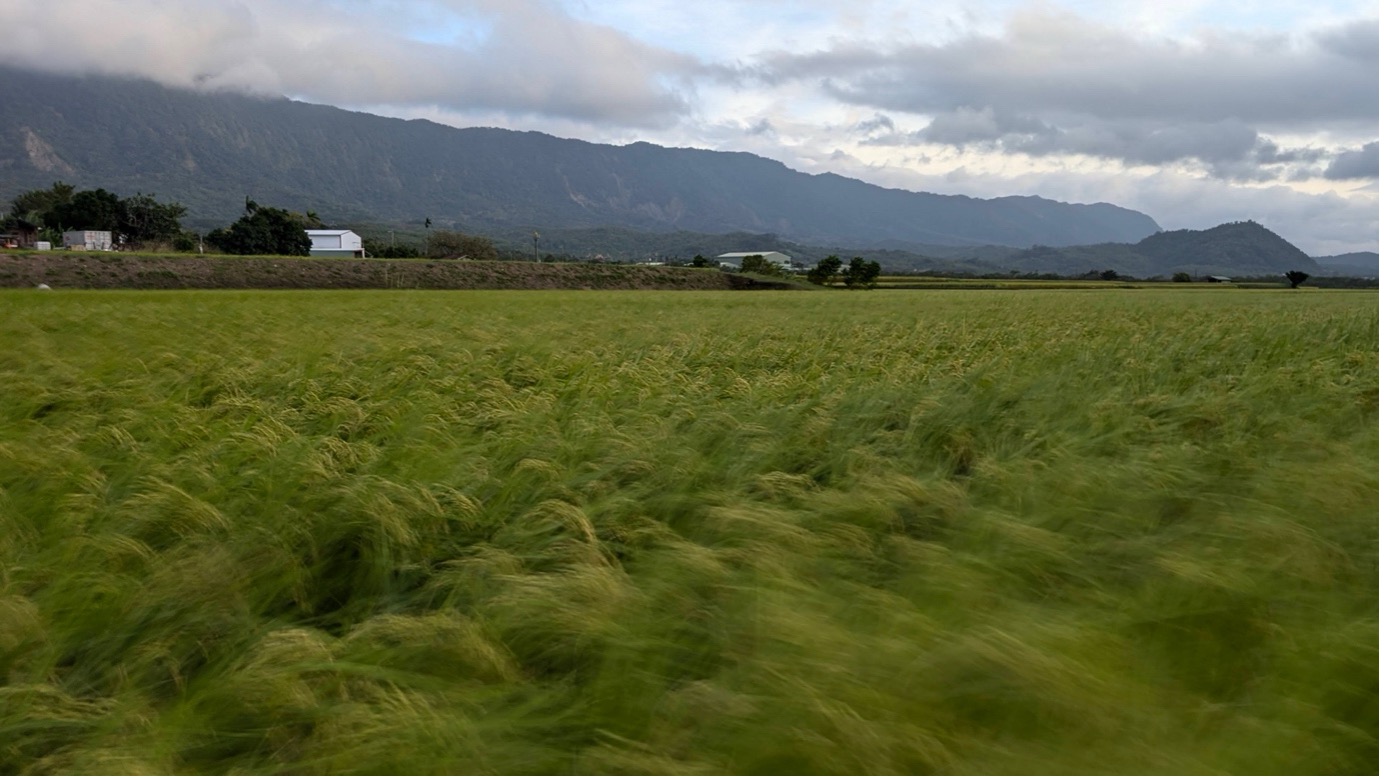
In recent years, the climate change we have felt most directly in the fields is not the temperature itself, but changing typhoon tracks. In the past, summer typhoons mostly headed straight for Taiwan; the clear trend recently is that summer typhoons tend to veer north, skirting Taiwan or even heading straight for Japan and Korea — and then in autumn and winter, when the typhoon season should be nearly over, they turn back and strike Taiwan. In October and November of both 2024 and 2025, two years running, typhoons at this “atypical” time hit carbon farming smallholders around Chishang, Taitung, and Yuli, Hualien, hard: strong winds flattened crops, torrential rain washed away field ridges, organic matter in the topsoil of some plots was lost for a time, and the carbon farming gains built up over previous years were cut back overnight.
In the past
Summer typhoons mostly headed straight for Taiwan.
In recent years
In summer they tend to veer north, skirting Taiwan or heading for Japan and Korea; in autumn and winter they turn back and strike Taiwan.
Madou pomelos: it really happened to our partner farmers
It is not only the east. The wendan pomelo growing area of Madou in Tainan was not spared either. Last summer's days of heavy rain left Madou smallholder Chan Ming-jung's pomelo orchard with almost no harvest at all — a whole year's work washed away. This year, even though he cultivated carefully and his pomelos won a quality award, the harvest was only 30% of the same period last year. These stories, which really happened to farmers we work with, have made us realise all the more deeply that for smallholders, climate change has never been an abstract term in the news, but harvest losses that are concrete and hard to predict, time after time — sometimes taking several growing seasons to slowly recover from.
Last summer
Almost no harvestDays of heavy rain; a whole year's work washed away
This year, quality won an award
Harvest only 30%Compared with the same period last year
For smallholders, climate change has never been an abstract term in the news.
An early observation: losses in carbon farming fields seemed somewhat lighter
One encouraging early observation: under the same typhoons, our carbon farming fields seemed to suffer somewhat lighter losses than neighbouring fields farmed conventionally. We suspect this may be related to the cover crops carbon farming fields keep over the long term, their higher soil organic matter and their healthier soil aggregate structure — exactly the key factors that help soil hold water, resist erosion and reduce runoff. But we must be honest: this is an observation from only two years and two typhoon seasons; the sample is still very small and has not been through rigorous statistical testing, so we cannot hastily conclude that “carbon farming fields resist typhoons better”.
Next: letting the hypothesis be confirmed or overturned
From here on, we will keep sampling and comparing in every monitoring unit before and after each typhoon season, extend the timescale of observation, and try to include neighbouring non-carbon-farming fields as a control group, so that this hypothesis can be more rigorously confirmed or overturned. If carbon farming really can win smallholders a little more resilience in extreme weather, that would be another carbon farming benefit worth verifying beyond soil organic carbon monitoring data — and one closer to smallholders' real lives.
- Sampling and comparing in every monitoring unit before and after each typhoon season
- Extending the timescale of observation
- Including neighbouring non-carbon-farming fields as a control group
Investing early in climate resilience for the supply chain
Climate change won't wait for our research to finish, but at least we can keep protecting smallholders' livelihoods while finding the answers bit by bit. For corporate partners, this is also a signal worth watching: climate risk disclosure (such as IFRS S2) is not only about a company's own emissions, but also the physical climate risks borne by producers upstream in the supply chain, such as smallholders. Supporting carbon farming is, to some extent, also investing early in climate resilience for your own food chain and supply chain.
Supporting carbon farming is, to some extent, also investing early in climate resilience for your own food chain and supply chain.


