 努力小農
Monkeys ate a whole orchard: how can companies help a Shumei natural farming smallholder?
本文尚無譯文。
Human–wildlife conflict / Nature-friendly farming
Monkeys ate a whole orchard
How can companies help a Shumei natural farming smallholder?
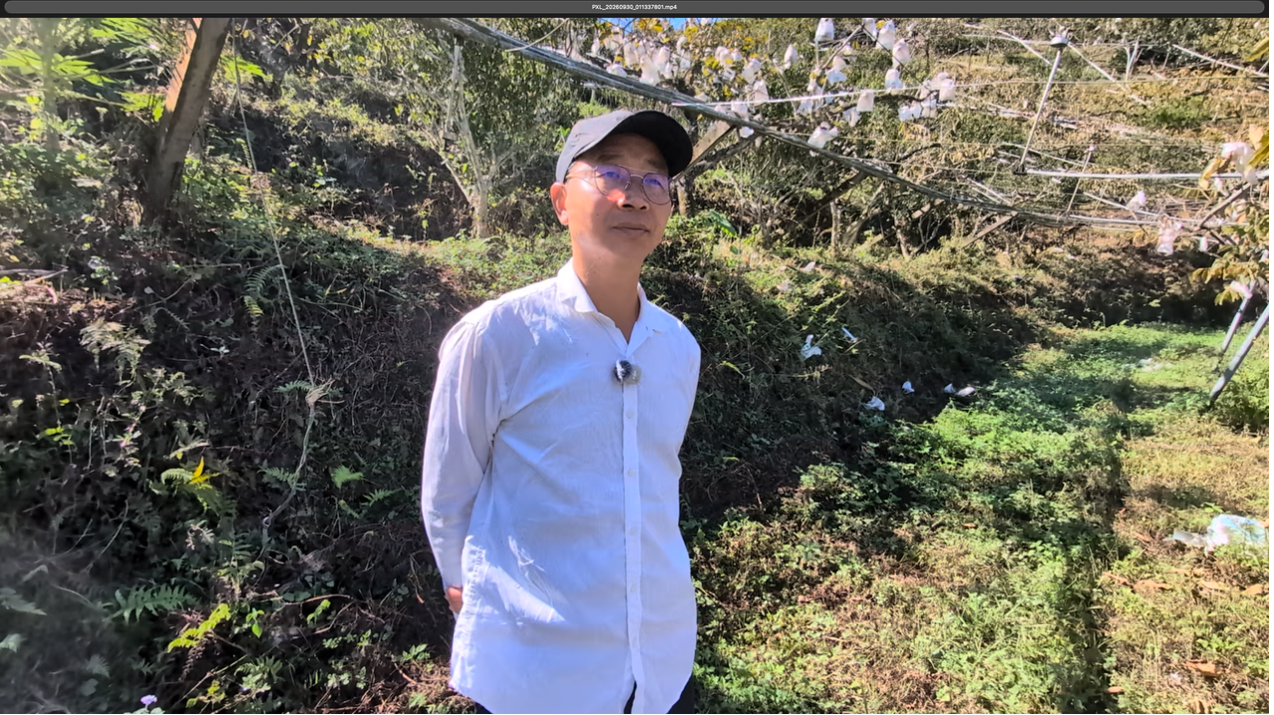
In the mountains of Heping, Taichung, Lin Shih-feng has farmed using Shumei natural farming for 15 years. Shumei farming uses no chemical pesticides or chemical fertilisers, and stresses following nature and respecting life — which is why, when wild animals began raiding his orchard, he chose not to drive them off or kill them, but to “share”.
He chose not to drive them off or kill them, but to “share”.
From giving up 10–20% to almost everything
In recent years the macaque population in the Heping mountains has clearly grown, and wild animals come into farmland to forage more and more often and more and more seriously. At first Lin didn't mind much; he even deliberately took the attitude of “leaving some for the monkeys”. A devout Tibetan Buddhist who does not want to harm any living being, he originally planned to give up 10 to 20% of his harvest as the price of coexisting with the mountain forest. But over the past two years the situation has gone far beyond what he expected: the monkeys have eaten almost the whole orchard, and what he gives up is no longer 10 to 20% but nearly all of it. By rough estimate, he loses several hundred thousand NT dollars of income a year as a result.
Between faith, livelihood and reality
In early October we visited Lin Shih-feng's orchard. What we saw was neither anger nor giving up, but a smallholder who has kept to nature-friendly farming for fifteen years, torn between faith, livelihood and reality. He has no intention of changing his beliefs, but he admits that losses like these are close to more than he can bear. Lin made a video of this journey, recording daily life in the orchard and what living alongside wild animals really looks like — we have included the video in this article so everyone can feel more directly the situation he faces:
Easing human–wildlife conflict: what others do internationally
Smallholders like Lin, who farm in nature-friendly ways yet must bear the cost of wildlife conflict alone, are not uncommon. Internationally there are many “human–wildlife conflict mitigation” approaches to learn from, such as putting up physical netting that doesn't harm animals, planning buffer zones where some crops serve as food for wildlife, or having companies and conservation groups jointly fund compensation for crop damage caused by wildlife. The core idea behind all of these is that, without harming any life, smallholders should not have to bear the cost of ecosystem services alone.
smallholders should not have to bear the cost of ecosystem services alone.The core idea behind these approaches
An invitation to corporate partners
Through this article we want to extend an invitation to corporate partners: beyond buying carbon credits, could you also set aside some resources to support nature-friendly smallholders like Lin Shih-feng, and work together on solving the problem of wildlife conflict? This is not just helping one farmer, but protecting a future for farming that we all hope to see.
This is not just helping one farmer, but protecting a future for farming that we all hope to see.
Email[email protected]
Phone0906-892-567


