 努力小農
When Charity Steps Back, a Sustainable Economy of Virtuous Cycles Can Emerge
本文尚無譯文。
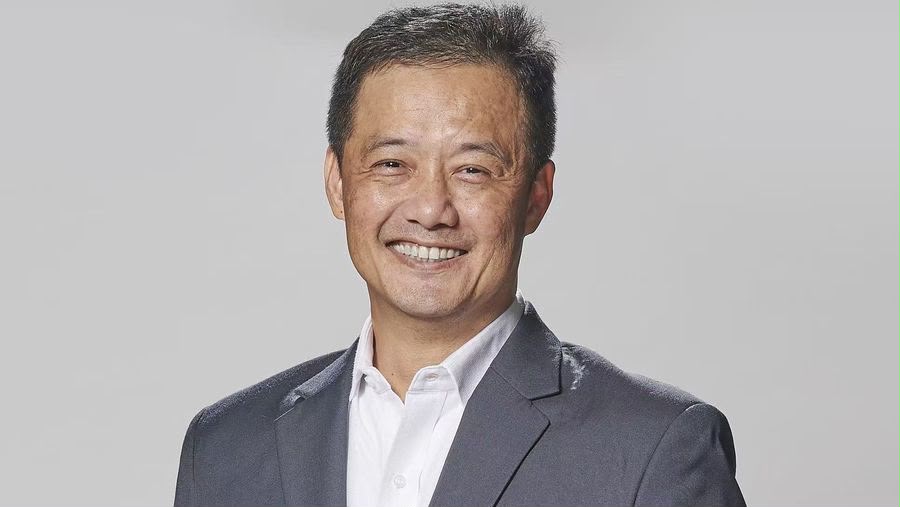 Ng Boon Heong, CEO of Temasek Foundation (image: Financial Times)
[Global Views ESG Column]
When charity steps back,a sustainable economy of virtuous cycles can emerge
From "sponsorship" to "bearing early-stage risk": the five layers of impact investment in the ESG Green Shinkansen
I believe philanthropy's greatest contribution is its willingness to bear early-stage risk, especially in areas where the social value is clear but solutions are not yet mature enough to attract government or commercial funding.Ng Boon Heong, CEO of Temasek Foundation
Published in Global Views ESG: https://esg.gvm.com.tw/article/129335
Ng Boon Heong, CEO of Singapore's Temasek Foundation (who served 27 years in the Singapore Armed Forces and has led the foundation since 2020), recently gave an interview to FT Chinese titled "Let Charity Step Back". The phrase pinpoints a long-standing blind spot in Taiwanese corporate philanthropy and ESG (environmental, social and governance) investment: we are too used to "sustaining" and rarely "invest". Ng said that the recent string of extreme weather and natural disasters reminds us that the impact of a disaster rarely stays in one area — it quickly spreads from climate and environment to public health, infrastructure, food supply and people's livelihoods. Challenges such as climate change, cross-border infectious disease, food security and even artificial intelligence are hard to place in a single domain and cannot be solved by one institution alone.
From "sponsorship" to "bearing risk"
Taiwan's charitable tradition centres on "sponsorship" — sponsoring a child, a low-income household, or a long-term bedridden patient in a vegetative state. Sponsorship comes from goodwill and is indispensable, but its structure is a one-way, open-ended payment: you pay this year and next year, the recipient's situation does not necessarily change, and the donor has no way to step back.
The philanthropy Ng describes follows a different logic. From the very start of designing a programme, Temasek Foundation asks: what problem are we solving? How do we prove it works? Who takes over and scales it up once the pilot succeeds? An early-childhood support pilot the foundation ran with Singapore's KK Women's and Children's Hospital was later adopted by the government as a national programme and has now benefited more than 8,000 children; in Indonesia, the foundation provides loan guarantees for smallholder rice farmers so that farmers banks regard as high-risk can still get financing. Philanthropic money first bears the early-stage risk that markets and governments are not yet willing to take on, and once the model matures it steps back in an orderly way.
Sponsorship
- A one-way, open-ended payment
- The recipient's situation does not necessarily change
- The donor has no way to step back
Bearing early-stage risk
- What problem are we solving?
- How do we prove it works?
- Who takes over and scales it up once the pilot succeeds?
This is the core of social entrepreneurship: philanthropic capital is not a consumable but risk capital. The ultimate goal of charity is to "let charity step back".
Philanthropic capital is not a consumable but risk capital. The ultimate goal of charity is to "let charity step back".
Two Taiwanese cases: Tzu Chi and TSMC
Taiwan is in fact already seeing the first shoots of this shift, and both cases involve Tianzu Sustainable Agriculture.
The first is the Tzu Chi Foundation. Through the Mitian Sharing Cooperative and Tianzu, Tzu Chi sponsors naturally farmed rice for the Zhen Shan Mei Social Welfare Foundation in Taoyuan, as daily meals for adults with intellectual disabilities. On the surface it is a donation, but in fact it achieves three things at once: (1) the adults in care eat rice grown without chemical fertilisers or pesticides; (2) natural farming growers get stable orders and can afford the risk of lower yields in the early years of conversion; (3) with fewer chemical inputs, the soil gradually recovers organic matter and carbon sink capacity. One donation creates value at both ends of the food chain at the same time.
The second is the TSMC Charity Foundation. On 23 September 2025, the overflow of the barrier lake on the Mataian River devastated Guangfu Township in Hualien, leaving 19 dead and 5 missing and burying about 600 hectares of farmland under mud. Besides mobilising its "Rag Superman" volunteers to help residents repair and clean their homes and "buying rice for disaster relief" to support local farming, the TSMC Charity Foundation went a step further and is empowering farmers of the Tafalong community to restore the damaged land with natural farming.
The difference between the two is that disaster relief responds to losses that have already happened, whereas restoration is a bet on an unproven future: can farmland buried in mud regain its fertility through natural farming? Can the Amis farmers build livelihoods more resilient than before the disaster? This is exactly the kind of area Ng describes, where "the social value is clear but the solution is not yet mature". Government subsidies follow set procedures and commercial money will not take the risk; only philanthropic capital is willing to go first.
From "letting charity step back" to "paying it forward"
Stepping back, however, is not the end. True success is when those who were supported one day become supporters themselves — that is, "paying it forward".
Imagine that once Tafalong's farmland recovers, the rice grown there feeds the next social welfare organisation; that contract farming for the adults in care gives more growers the confidence to convert; and that the restored soil organic carbon, verified by a third party, becomes a credible natural carbon sink for companies. Donations are no longer used up once, but circulate and regenerate among the land, farmers, disadvantaged people and companies, forming a regenerative "economy of goodness".
The five layers of impact of the ESG Green Shinkansen
This is exactly why we are promoting the "ESG Green Shinkansen". It is a four-party cooperation framework linking corporate ESG investors, smallholder groups in Yuli, Hualien and Chishang, Taitung, agents and due diligence bodies. Guided by the UN Sustainable Development Goals (SDGs) and starting from the goodness of sustainability, it is designed around five layers of impact:
Layer 1Food chain
Companies buy naturally farmed and eco-friendly rice, making dining tables safer and bringing the soil back to life.
Layer 2Supply chain
Long-term contract farming replaces one-off purchases, giving smallholders stable income on the way to a living income.
Layer 3Employees
Including the rice in staff meals and benefits brings sustainability out of the report and into everyday rice bowls.
Layer 4Families
Employees take the rice home, extending the impact to the next generation's diet and values.
Layer 5Society
Combining social welfare organisations, disaster-area restoration and soil carbon sinks lets the benefits of goodness spill over to society as a whole.
These five layers are not five separate charity projects but one path of impact that starts from the soil and spreads outwards layer by layer, so they should be seen as "impact investing" rather than traditional donation or sponsorship. To avoid greenwashing, every layer needs measurable, verifiable indicators aligned with the disclosure requirements of the International Financial Reporting Standards (IFRS) sustainability disclosure standards S1 and S2.
Conclusion
Ng reminds us that philanthropic resources are tiny compared with those of governments and markets, so they must be used at critical moments. Taiwanese companies put a considerable philanthropy budget in every year. Rather than "sustaining" problems year after year, it would be better to bet part of those resources on early-stage solutions — supporting the conversion to natural farming, the restoration of land after disasters, and the shared growth of smallholders and disadvantaged people.
The ultimate goal of charity is to no longer be needed; the ultimate goal of an economy of goodness is for every act of goodness to find the next person to pass it on to.
Author: Jay Fang|Chair of the Green Consumers' Foundation, head of Eco-affinity Inc., Gold Standard for the Global Goals project developer


