 努力小農
From Lin Shih-feng's Orchard to NPUST's AI-Based Humane Monkey Deterrence Research
本文尚無譯文。
Human–wildlife conflict / AI-based humane monkey deterrence
From Lin Shih-feng's orchardto NPUST's AI-based humane monkey deterrence research
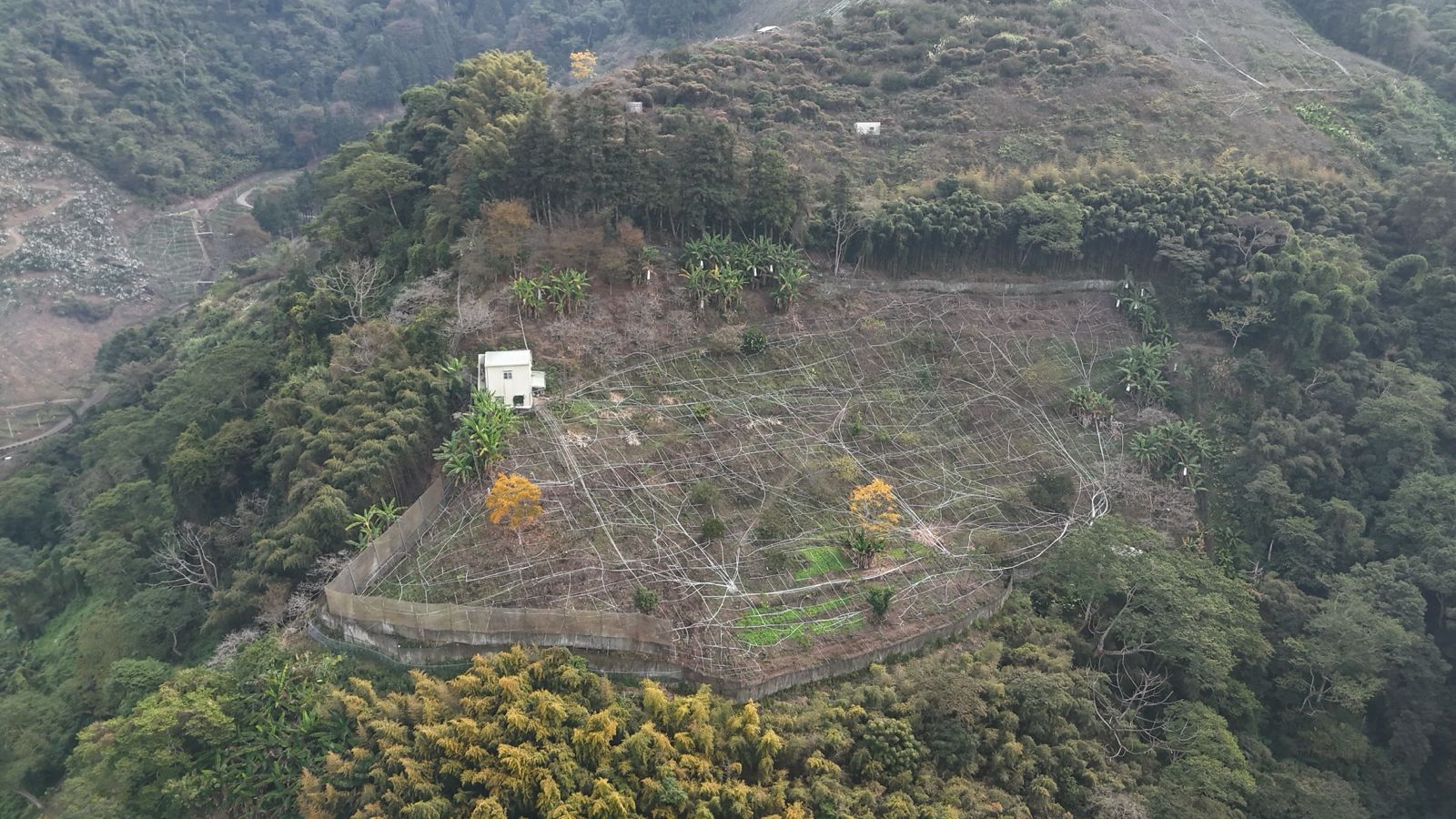
The last issue of the Carbon Farming Digest described the monkey damage to Lin Shih-feng's orchard. He grows fruit trees with Shumei natural farming in Daguan, Heping District, Taichung, and has long had to deal with wild animals coming in to eat. For a smallholder, fruit that gets eaten is a loss, and where and when to stand guard is labour that has to be reckoned with every day. A team led by Professor Chen Chen-chih at the Institute of Wildlife Conservation, National Pingtung University of Science and Technology (NPUST), is developing an edge artificial intelligence (AI) system aimed at non-lethal deterrence. It first tackles a practical problem: when macaques appear, can equipment at the field's edge recognise them by itself and keep a record?
Running the macaque recognition at the field's edge
At the forest edge there are leaves moved by the wind, shadows and obstructions; if a camera raised an alarm at every movement, growers would soon be worn out checking. NPUST's prototype uses two-stage recognition: images are first scanned quickly at lower resolution, then suspicious areas are confirmed at higher resolution, with the computation done on the device itself — that is edge AI. The system keeps images and event data, so the team can review which judgements were right and which were false alarms and then fine-tune the model with images from each site; growers can also look at them with the researchers to see when, and from which direction, the macaques usually come in.
- Fast scan at low resolution
- Confirm suspicious areas at high resolution
- Computation on the deviceedge AI
- Keeps images and event data
The research briefing lists 9,442 training and validation images, with validation precision of 93% and recall of 84%. The former is the share of the model's "macaque" results that were correct; the latter is how many of the macaques that actually appeared were found. The prototype can already recognise and record automatically in real time; integration with deterrent devices and full-process field trials are still under way, and actual deterrence and loss reduction remain to be evaluated.
Whether orchards suffer less damage still needs field trials
What growers really want to know is: once macaques get in, how long do they stay, do they come back after leaving, and how much less of the crop is actually lost? Trials can first record visits and damage before the equipment is switched on, then compare with fields or periods in similar conditions, while also noting fruit ripening, weather and existing protection. It is also important to watch whether the macaques gradually get used to the equipment's responses or move to neighbouring fields; if neighbouring growers keep records too, it becomes possible to tell whether improvement in one orchard comes with losses in another.
For Lin Shih-feng, farming a hillside orchard with limited labour, whether the equipment is worth using also depends on whether it works reliably in the rainy season, how much time false alarms take to deal with and who repairs it when it breaks. Companies that want to support growers through the ESG Green Shinkansen can share the costs of trials, equipment maintenance and growers' record-keeping hours together with communities and the research team. By the end of a season, growers should be able to see two sets of accounts: whether crop losses have fallen, and whether the hours spent guarding the orchard and maintaining the equipment have gone down. Fruit spared one bite from a macaque can stay on the branch soaking up the winter sun, with a chance to grow sweet in time for the peak season.
Fruit spared one bite from a macaque can stay on the branch soaking up the winter sun, with a chance to grow sweet in time for the peak season.
Corporate ESG teams, schools and consumers are welcome to book field visits, rice tastings and food and farming education activities: [email protected]|0906892567


