 努力小農
The dew turns cold: time for the body to learn to “store”
本文尚無譯文。
The dew turns cold:
time for the body to learn to “store”
COLD DEWThe dew is already cold; autumn deepens
of the twenty-four
White Dew
and body fluids
Cold Dew is the fifth autumn solar term among the twenty-four, usually falling around 8 or 9 October; this year it falls on 8 October. The name means the dew has already turned cold — colder than at White Dew and closer to the temperature at which it freezes into frost — the signal that autumn is deepening and winter is drawing near. The weather is dry and mornings and evenings are cold; although there is still autumn sun by day, the day–night temperature gap is marked. Traditional Chinese medicine sees this as the peak of the “dryness” season, when the lungs and body fluids are most easily harmed — a common time for respiratory discomfort, dry itchy skin, allergies and aching joints.
DIETDiet: nourish yin and moisten dryness; warm up gradually
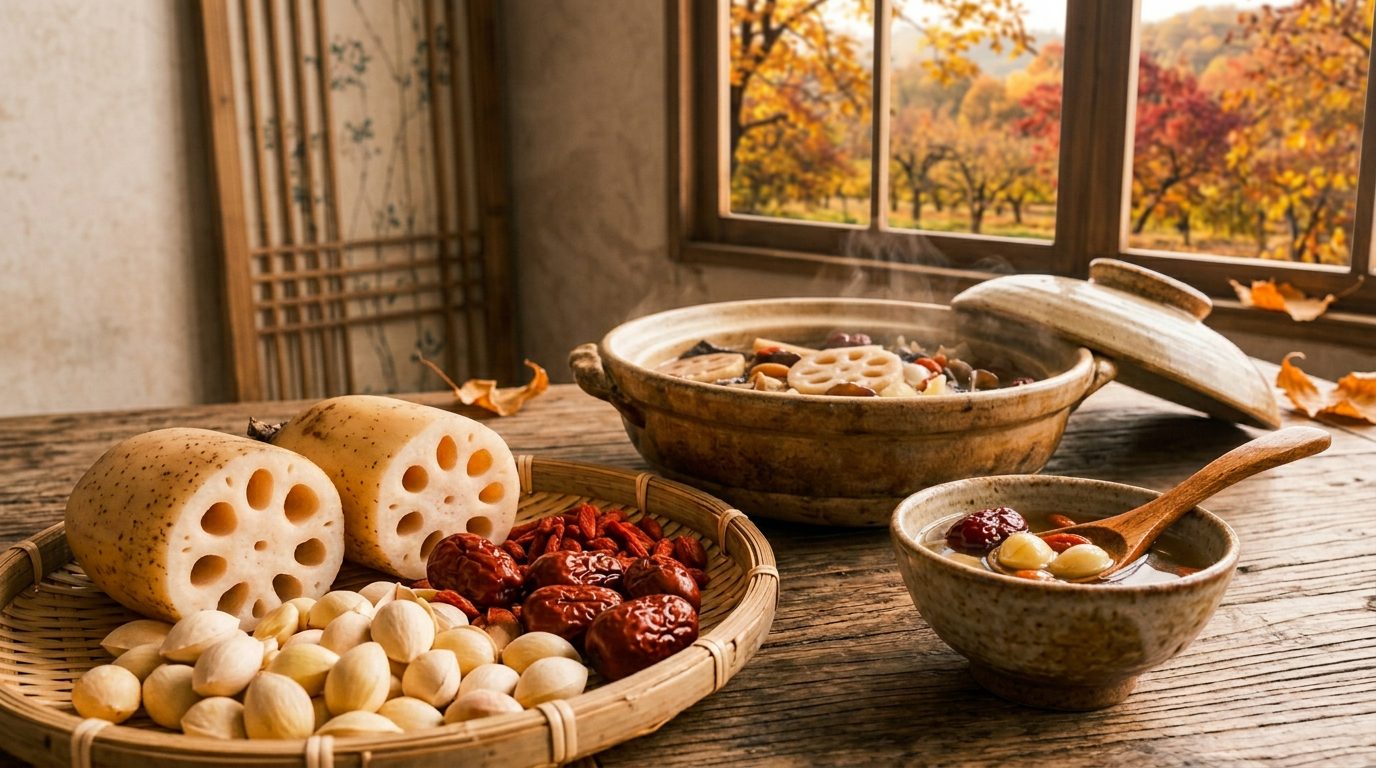
The dietary principle for Cold Dew is to “nourish yin and moisten dryness, with gentle nourishment first”. White fungus, Asian pears, lotus root, lily bulbs, Chinese yam and sesame all help moisten the lungs and produce fluids; seasonal fruits such as persimmons, pomelos and guavas also replenish water and vitamins, but persimmons are cooling by nature and should not be eaten in quantity on an empty stomach or by people with a cold constitution. As temperatures fall, you can begin adding warming foods in moderation, such as pumpkin, red dates, walnuts and chicken soup, helping the body move step by step from autumn's moistening to winter's warming nourishment. Raw and iced foods should be avoided even more now, and spicy, heating, fried and grilled foods kept in check so as not to add to dryness. Folk custom also says “eat sesame at Cold Dew” for its moistening, yin-nourishing quality.
Moisten the lungs, produce fluids
Seasonal fruit
Persimmons are cooling; avoid eating many on an empty stomach or with a cold constitution
Warming foods (add gradually)
Avoid and limit
DAILY RHYTHMDaily rhythm: keep warm, protect your feet, gather in and calm the spirit
The ancients said “At Cold Dew, don't bare your feet”, reminding us to pay special attention to keeping the feet and lower legs warm at this time — especially soaking the feet before bed and wearing socks, which help circulation and improve sleep. With big temperature swings between morning and evening, take a light jacket when going out to keep out the cold wind; indoors, keep humidity at a comfortable level and drink plenty of warm water to ease dryness of the airways and skin. Keep to the principle of “early to bed, early to rise”, letting the body follow the shortening daylight and gradually enter a state of “storing”. Moods can also dip easily; moderate exercise, sunshine and time with family and friends all help steady the mind.
- Soak your feet and wear socks before bedHelps circulation and improves sleep
- Take a light jacket outBig morning–evening swings; keep out the cold wind
- Keep humidity up, drink warm waterEases dryness of the airways and skin
- Early to bed, early to riseFollow the shortening daylight and enter a state of “storing”
- Exercise, sunshine, time with loved onesHelp steady the mind
IN THE FIELDCold Dew in the fields: farmers' own sense of the season
For those who farm, Cold Dew is the tail end of the autumn harvest and the starting point for autumn and winter crops. The second rice crop has mostly been harvested and fields enter fallow or land preparation; in some areas winter crops such as vegetables, buckwheat and rapeseed begin to be sown. In orchards, autumn fruits such as pomelos, persimmons and apples are at their peak, and harvesting and keeping them fresh needs good timing. Experienced farmers know that it is dry with little rain around Cold Dew, so irrigation and keeping the soil moist must be planned early, while also watching for wind damage and moisture loss from the strengthening north-east monsoon.
Most of the second rice crop has been harvested; fields enter fallow or land preparation
Some areas begin sowing vegetables, buckwheat, rapeseed and more
Pomelos, persimmons and apples at their peak — time harvest and storage well
Dry with little rain: plan irrigation and moisture early; the north-east monsoon brings wind damage and moisture loss
BODY & LANDBodies need care in step with the seasons, and so does the land
The body's rhythm
The land's rhythm
Bodies need care in step with the seasons, and so does the land. Moving from “moistening dryness” to “storing and nourishing” is the body's rhythm of preparing for winter; moving from harvest to fallow and rotation is the land's rhythm of rest and recovery. Covering fields with green manure and adding organic matter during fallow not only lets the soil catch its breath, but is also the most important part of carbon farming. This is exactly what the carbon farming platform and the MiHuMiSang app want to do together with you: turn the old wisdom of “following the seasons, step by step” into everyday practice that can be seen and tracked.
Taking good care of our bodies, and of the land,
is what this solar term truly teaches us.


