 努力小農
本文尚無譯文。
Witnesses to climate change: is the Noto Peninsula's satoyama a model of sustainability or an epitaph? (Part 1)
The satoyama of Japan's Noto Peninsula was a utopia of harmony between heaven and humanity, but under earthquakes, typhoons and natural disasters it has become a mirage. (Photo: Jay Fang)
What is the Satoyama Initiative?
The spirit of the Satoyama Initiative emphasises harmonious coexistence between people and the natural environment and is committed to protecting and restoring traditional agricultural and forestry landscapes. The initiative originated in Japan, particularly on the Noto Peninsula, whose farmland and terraced landscapes have centuries of history.
The core ideas of the Satoyama Initiative include:
1. Biodiversity conservation: promoting the protection of biodiversity by maintaining traditional farming and forestry activities.
2. Sustainable development: emphasising the sustainable use of resources so future generations can also enjoy natural resources.
3. Community participation: encouraging local communities to take an active part in environmental protection and resource management, strengthening community resilience.
These ideas are especially important in the face of climate change and natural disasters. This year, for example, the Noto Peninsula suffered the double blow of an earthquake and torrential rain, seriously damaging local farmland and terraced landscapes. Yet this has also become a test of the Satoyama Initiative's resilience: local communities and supporters have not given up but have thrown themselves into post-disaster reconstruction and recovery.
In early May this year I went to Japan to assess the feasibility of the smallholder carbon farming project for post-earthquake reconstruction on the Noto Peninsula (see "Trouble in Noto is trouble for Taiwan: smallholder carbon farming heads to Japan's Noto Peninsula"), followed by a stakeholder meeting on 16 September (see "Heading to Noto: smallholder carbon farming stakeholder meeting"). But unsurprisingly, the unexpected always happens… otherwise why would we say "the weather is unpredictable"?
On 11 November I visited Noto again with Hsieh Ching-kuei of the Tzu Chi Foundation, this time to sign the Noto smallholder carbon farming project contracts with smallholders of Shiroyone Senmaida and the Tome area. The owners are the local smallholders, the Tzu Chi Foundation is the sponsor, and Eco-affinity Inc. is the project developer — formally launching the smallholder carbon farming project.
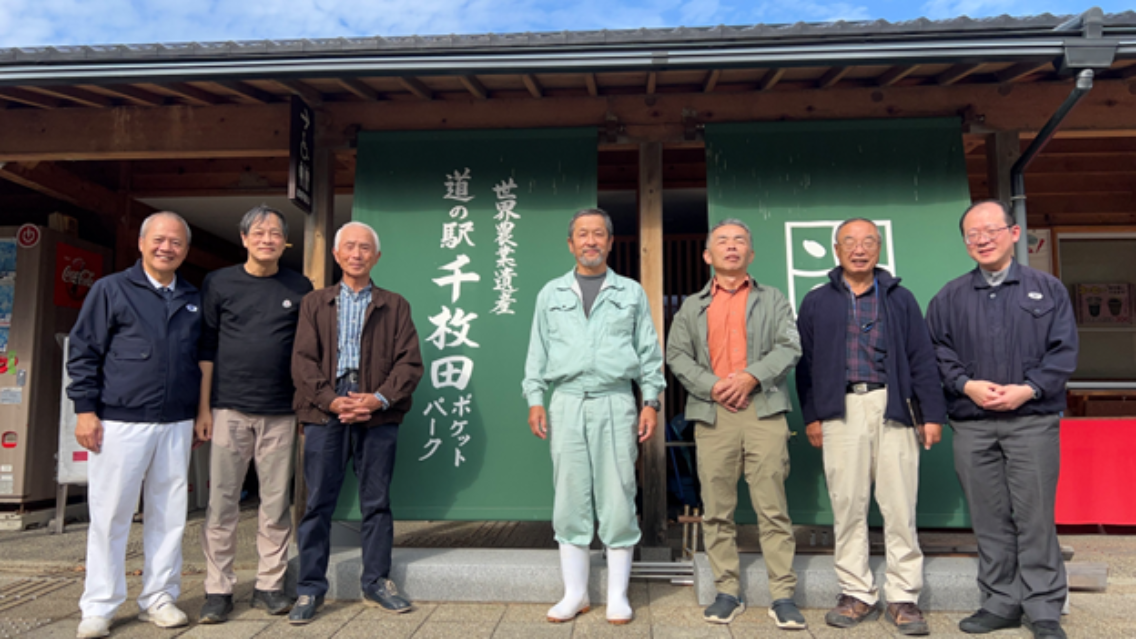
After half a year of assessment and consultation, we signed project development contracts with smallholders affected by the Noto Peninsula earthquake, working together to restore and revitalise sustainable satoyama agriculture. Following the Gold Standard Principles & Requirements for project development, we will leave scientific evidence for international certification and records of the Sustainable Development Goals (SDGs). (Image: provided by Jay Fang)
Autumn and winter typhoons have shattered our understanding of typhoons
In early and late October two autumn typhoons, Krathon and Kong-rey, battered cities across Taiwan, and in mid-November four more typhoons (Usagi, Yinxing, Toraji and Man-yi) were eyeing Taiwan. Yet the news focused on "typhoon days off", ignoring that under climate change we face an unprecedented climate crisis. For farmers especially, late October is autumn harvest time; a typhoon then is a "catastrophe" for a year's or a season's harvest. In autumn the US and Spain in Europe faced extreme hurricanes and torrential rain causing heavy casualties and losses — yet even such major events fail to awaken the world to a disaster for all humanity.
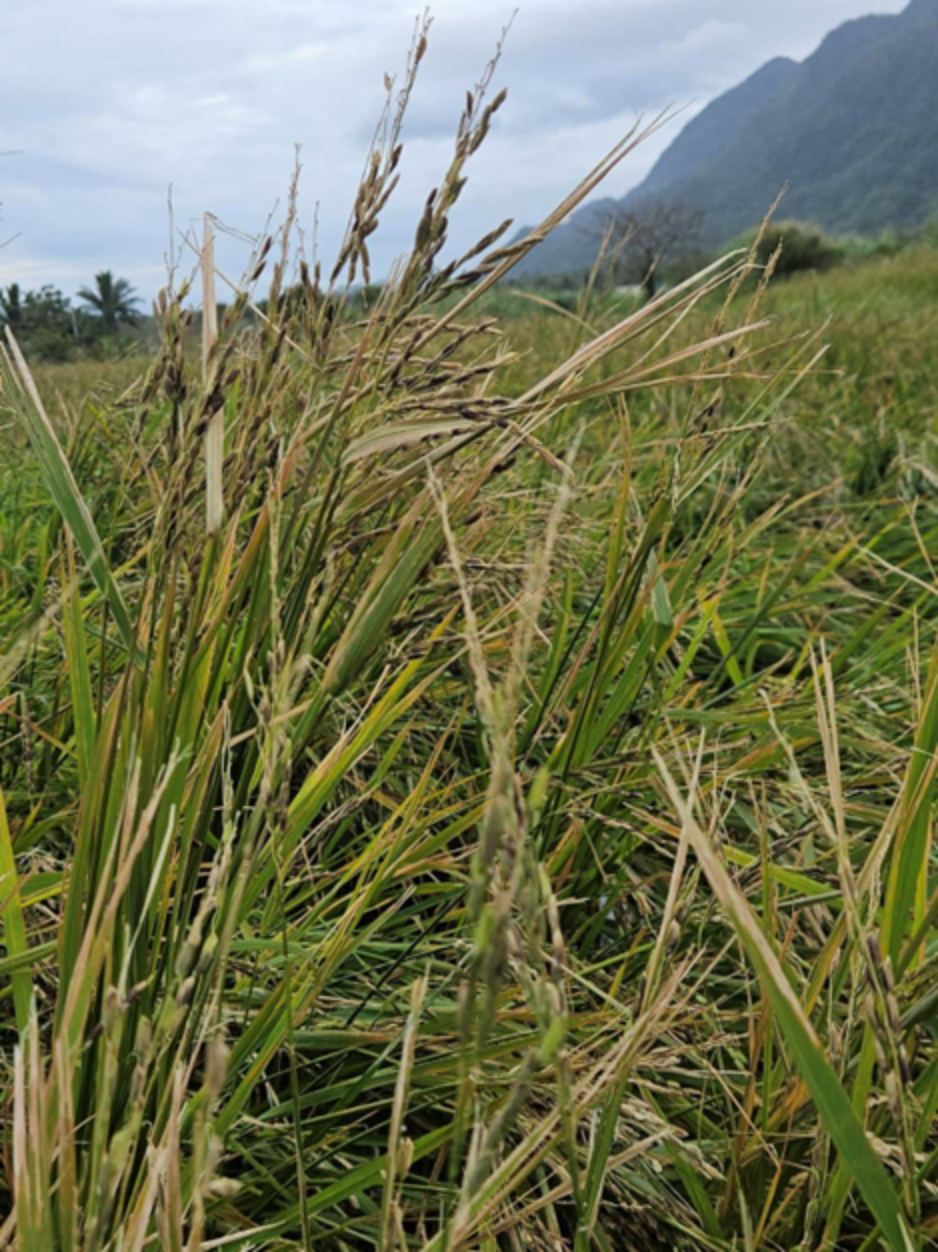
These past two years typhoons have always "made landfall successfully" — at Chenggong Township in Taitung. Kao Shih-i's "Ichiro rice" at Pa'ongong, hit first, was blown away by Typhoon Kong-rey before it could be harvested; little was left. (Photo: Kao Shih-i)
On 5 November I spent a week travelling through southern Taiwan and Hualien–Taitung. The west was relatively little affected by Kong-rey, but the east was a scene of devastation. Smallholder Kao Shih-i of Pa'ongong, in Chenggong, Taitung, where Kong-rey made landfall, put it this way: "The typhoon 'pulled out' all my rice!" He sent photos, and indeed few ears of rice were left. "I don't know what to tell the customers who've already ordered rice!"
In general, in the Huadong Rift Valley — Fenglin, Wanrong and Yuli in southern Hualien, Chishang and Guanshan in Taitung — losses were about 30–50%, while smallholders on the Coastal Mountain Range in Changbin, Chenggong and Donghe in Taitung lost over 50%. This year they will certainly make a loss; the question is whether, and for how long, they can bear it. Most greenhouses and net houses were also torn off, making losses even worse.
As of 14 November, rice farmers in Hualien and Taitung were still rushing to harvest, because Usagi was about to arrive. "There's not much left to destroy anyway," farmers could only smile wryly in the face of the oncoming Usagi.
Trump elected: making emissions great again
On 6 November Trump, who rejects the climate crisis, was elected US president again. Predictably, he will "again" withdraw from the Paris Agreement and the UN Framework Convention on Climate Change and lift restrictions on US extraction and use of oil, gas and coal, making America's "emissions great again".
On 11 November, while everyone was busy with the "Singles' Day" shopping festival, consuming and emitting enthusiastically, the 29th Conference of the Parties to the UN Framework Convention on Climate Change was being held in Baku, the capital of Azerbaijan. Countries held their 29th meeting (COP29) "once again". Since the 1992 Rio Earth Summit, these meetings have been like a "global-warming cheerleading squad": apart from effectively heating up the Earth's temperature, they have achieved nothing. The 2020 pledge of US$10 billion a year to help developing countries cut carbon is a dud cheque.
This year, though, everyone has a new target to point at: Trump. This "grey rhino" who rejects the climate convention is bound to be COP29's hottest topic. Perhaps everyone breathed a sigh of relief: having pushed onto Trump the responsibility for 30-odd years of failed emission reduction, everyone can return to the good old days of "the horses still race, the dancing goes on".
I think Trump was elected because American voters rejected the "mainstream values" of "political correctness" and "environmentalism, diversity and equality" emphasised over past decades. They would rather choose a loudmouth facing 35 felony counts as president — better a true scoundrel than a hypocrite. Trump wins everything and doesn't need to think about re-election in four years, so of course he can do as he pleases.
A democratic system of "guess the leader" every four or five years looks especially pale and powerless in the face of a cross-century, cross-generational issue and crisis like climate change. Every political leader is focused on four-year, immediate problems, not on staking their political life on "sea levels rising in a hundred years may flood coastal cities". In office they either want re-election or are thinking about recouping campaign funds and repaying campaign debts — how could they have time and energy to solve the climate problem?
The almost-annual COP has become a collective psychotherapy session for the world's political and business elites, always coming up with soothing slogans, agreements and policies. Before ±2°C was clarified — and it can't be achieved anyway — they proposed ±1.5°C; now some say the Earth has already warmed by 3°C.
International leaders should hold their meetings in the satoyama
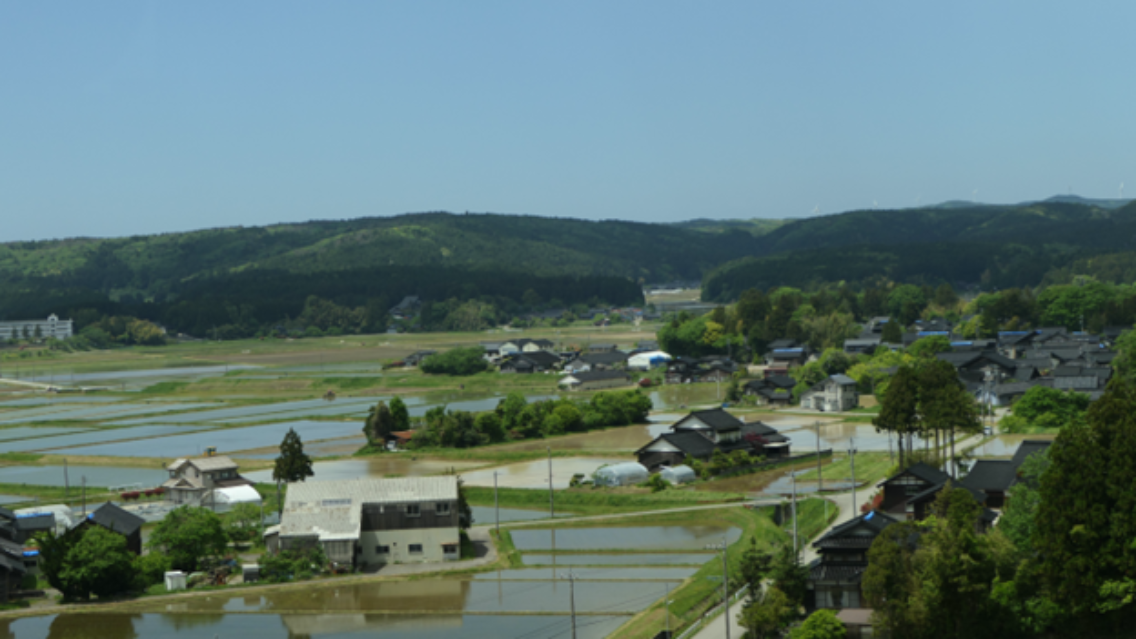
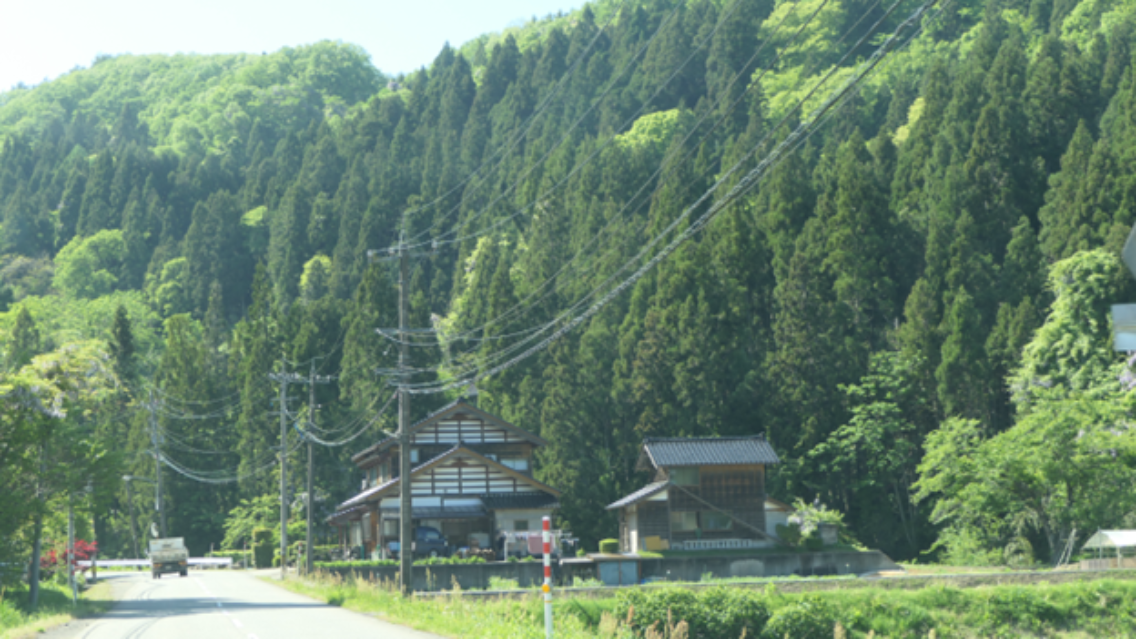
The satoyama of Japan's Noto Peninsula was a utopia of harmony between heaven and humanity, but under earthquakes, typhoons and natural disasters it has become a mirage. (Photo: Jay Fang)
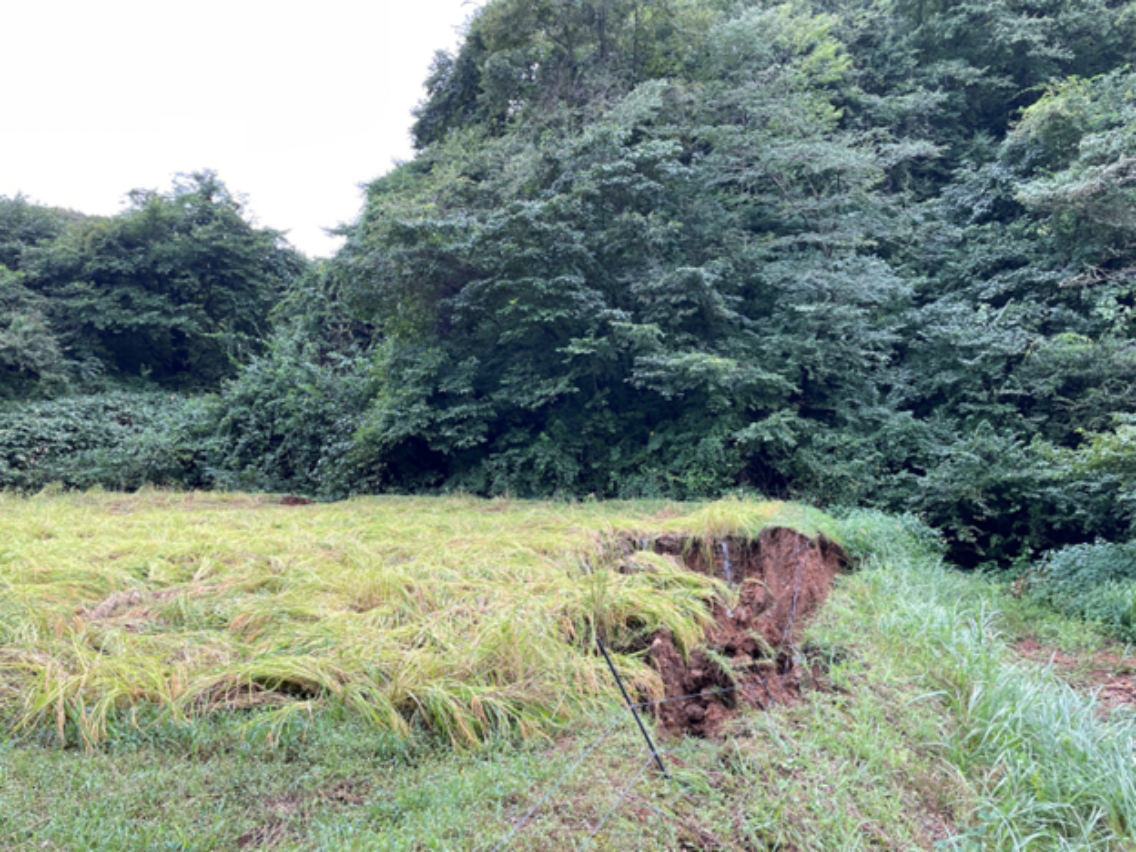
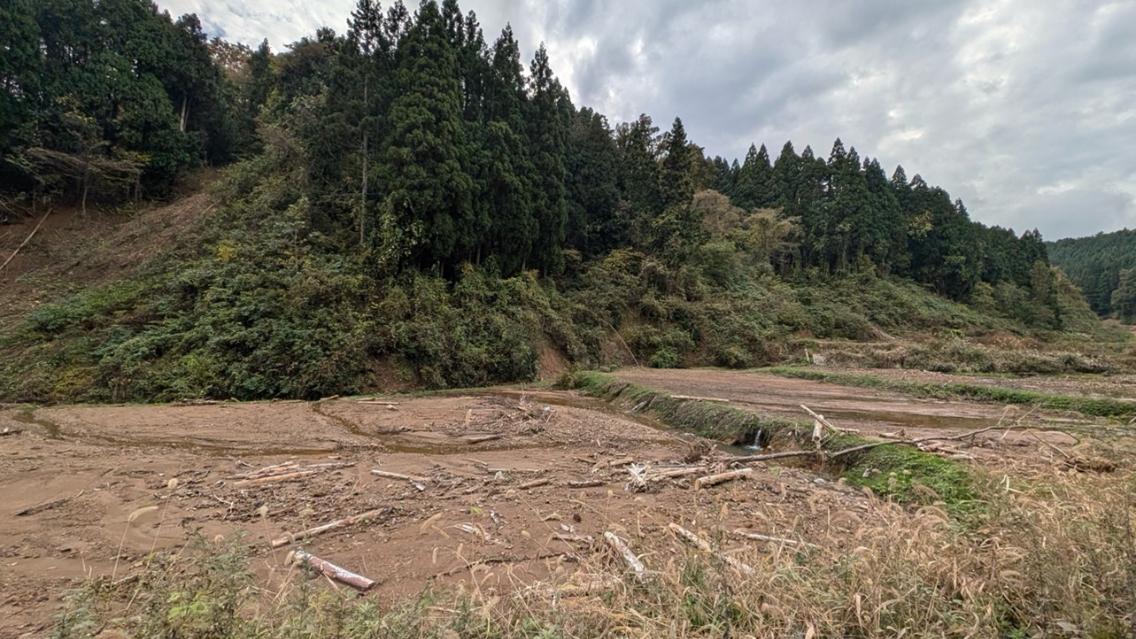
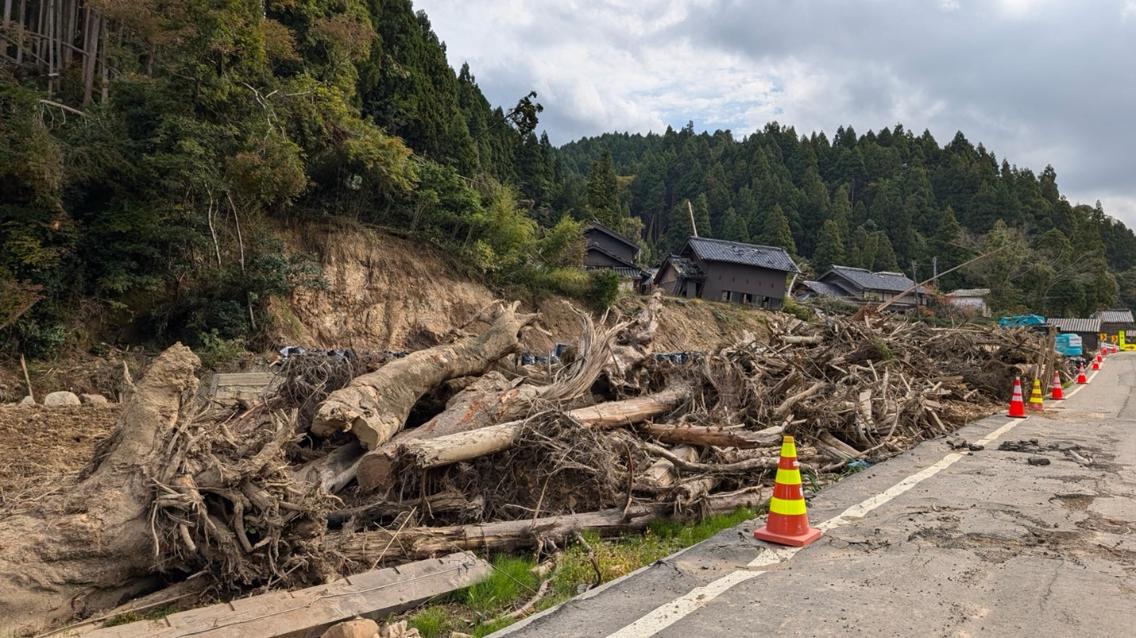
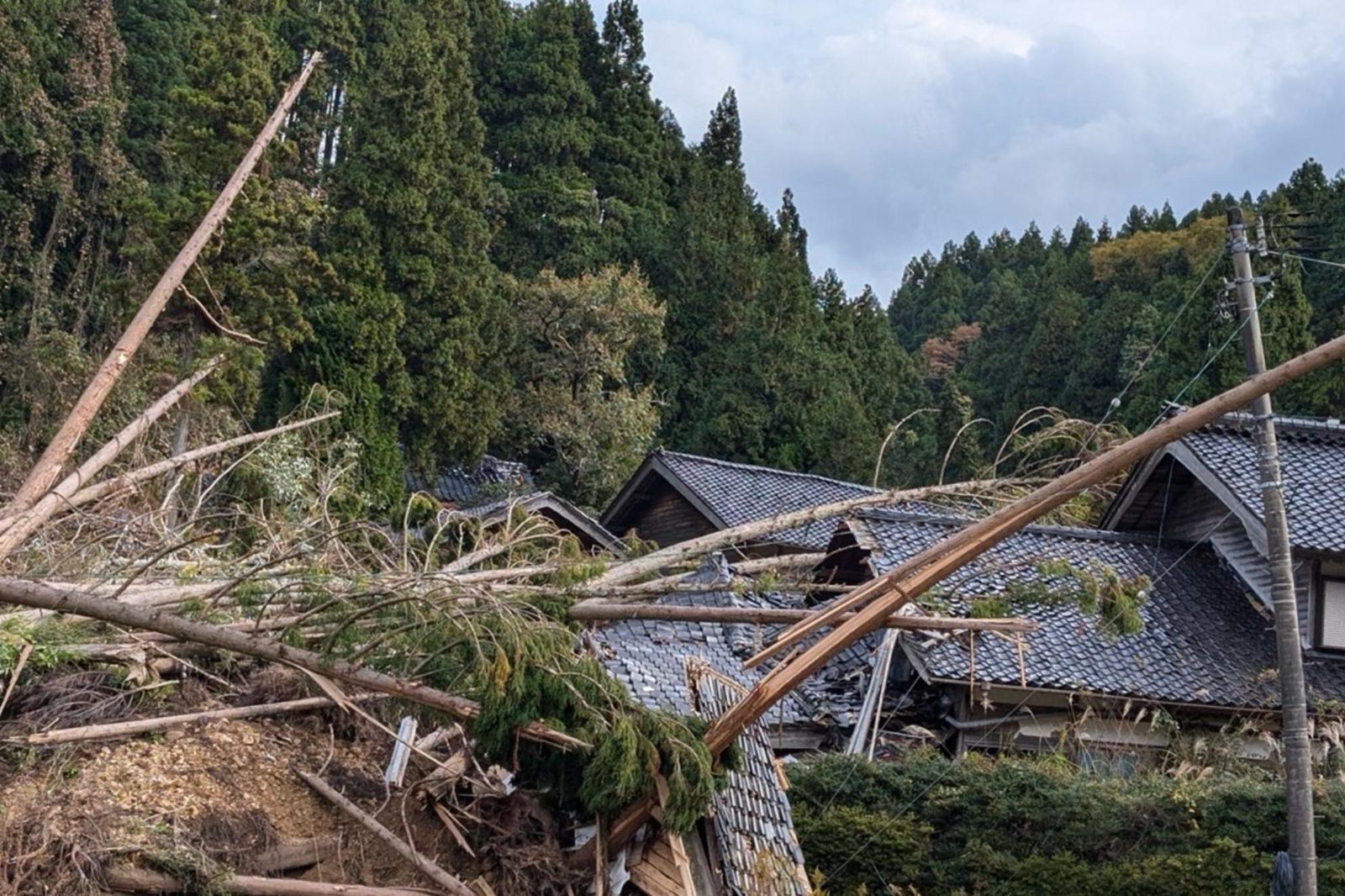
A month and a half after the September downpours, Tome's satoyama looks as if it has been through a war. Despite efforts at repair and clean-up, it is still ruins and devastation. (Image: provided by Jay Fang)
On 11 November I went with Hsieh Ching-kuei — Tzu Chi Foundation adviser and chair of the Mitian Sharing Cooperative in Hualien — to the Noto Peninsula, struck by the great earthquake on 1 January, to sign the Noto smallholder carbon farming project contracts with smallholders and to survey damage to the fields at Shiroyone Senmaida and in the Tome area of Noto Town. Hsieh, who has worked in international disaster relief for many years, had never seen a disaster area struck by both an earthquake and torrential rain within a year. This time he deeply felt that the severity of the damage far exceeded imagination. He had even been in Noto during the downpour on 20 September and was trapped in Wajima; coming back a month later, the scenes of devastation shocked him even more!
And all this is happening in the birthplace of the UN's sustainable agriculture and forestry initiative, the Satoyama Initiative — the Noto Peninsula. Perhaps this is the best warning to the world: "We have no more time to delay!"
Senmaida by the sea is a famous agricultural cultural landscape registered by the UN and Japan, an important local tourism resource. In January's earthquake, 80% of its 4 hectares of fields were damaged; they couldn't be planted this year and can only be repaired gradually. After the downpours, another 30% of the land was damaged. This 400-year-old cultural landscape of terraced fields faces an unprecedented crisis: besides almost total loss of production, tourists have dropped to zero.
COP meetings should be held in Noto, so that national political and business leaders can feel the power of global warming for themselves. Even if they can't do anything, a bit of reflection behind closed doors would do.
Source: CM Media ( https://www.cmmedia.com.tw/home/articles/50594 )


