About Us
綠色消費者基金會是1990年發起地球日,和1992年台灣環保團體參加地球高峰會後決定成立的基金會,推動綠色消費運動。天地和氣股份有限公司是因綠色消費者基金會倡議環安、農安、食安而設立的營利機構,開發「努力小農 App」,並從事國際自願性減碳專案,幫助小農取得國際碳權認證,實踐永續發展目標。
Google Translate
網頁由Google自動翻譯內容不準確之處請多包涵


種碳文摘/Carbon Farming Digest 第6期・白露|節氣專文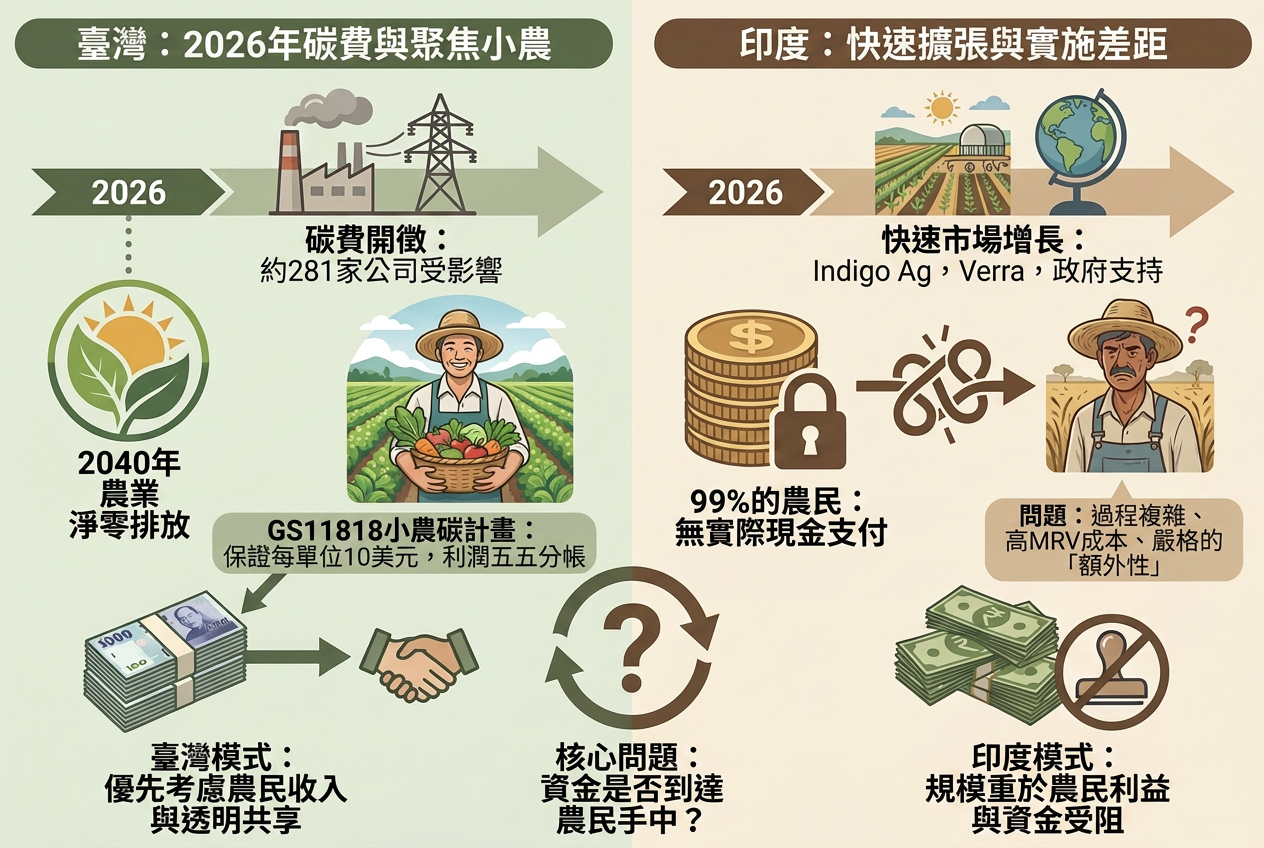
2026年是台灣碳費正式「動真格」的第一年:年排放量達2.5萬公噸以上的電力與製造業,須依2025年實際排放量繳交碳費,環境部推估約500個排放源、281家公司受影響。與此同時,農業部持續推進「2040農業淨零」,去年水土保持與農村再生工程減碳率達16.55%,超越15%目標;政府治理評鑑也在討論,是否將小農種碳納入企業ESG評鑑加分項,鼓勵企業投入。
印度案例:規模衝得很快,錢卻卡在半路
放眼國際,印度是這兩年農業碳權市場擴張最快的地方,但也是「規模」與「農民實際拿到錢」出現最大落差的案例。
2026年1月,美商Indigo Ag與印度在地夥伴合資的Grow Indigo,旗下Aadi專案通過Verra核准,首批發放涵蓋旁遮普(Punjab)、哈里亞納(Haryana)約3萬英畝農地,產出逾5萬噸碳權,是印度第一個達到「高誠信」門檻的土壤碳權案例。同年印度中央政府編列的2026–27年度預算,更首次設立2萬億盧比規模的碳捕集、利用與封存(CCUS)支持計畫,正式把農民納入國家碳交易體系,預計併入即將上路的碳權交易制度(CCTS)。2026年印度自願市場的土壤碳權價格約落在每噸500至2,500盧比之間。
但規模擴張的同時,落地執行的落差也被攤在陽光下。一篇2025年的印度案例研究發現,參與碳匯專案的農民中,約99%從未實際拿到任何現金給付;另一份涵蓋841位農民的獨立調查,同樣顯示99%的受訪農民無法真正接觸到碳市場收益。學界指出,問題出在流程複雜、缺乏在地中介聚合機制、MRV(監測/報告/驗證)成本過高,而國際通行的「外加性」(additionality)認定門檻——只承認「若無碳金就不會發生」的固碳量——反而讓許多本已投入友善耕作的農民,拿不到對應的資產認定,削弱了大規模參與的誘因。
相較之下,GS11818小農種碳計畫明訂10美元/單位保證收購價、扣除必要成本後與農戶50/50分潤,天地和氣為盡職調查不另向農民收費——這正是台灣模式與印度大型中介模式最關鍵的差異所在:印度的路徑證明「規模衝得快」跟「農民拿得到錢」是兩回事,而台灣選擇的是後者優先。
碳費開徵、ESG評鑑加分、印度市場的教訓,三條線收在一起指向同一個問題:當企業終於願意為農業碳匯付錢,錢究竟有沒有真正到農民手上?這是接下來每一期文摘都會持續追蹤的指標。
2026 marks the first year Taiwan's carbon fee is actually enforced, with roughly 281 companies and 500 emission sources affected. Internationally, India has seen the fastest scale-up in agricultural carbon markets — but also the widest gap between scale and farmer payouts. In January 2026, Grow Indigo's Aadi project became India's first Verra-approved, high-integrity soil carbon project, covering 30,000 acres and generating over 50,000 credits; India's 2026–27 budget also created a ₹20,000 crore carbon capture support scheme formally bringing farmers into the national carbon trading system. Yet separate research found that nearly 99% of Indian farmers enrolled in carbon projects have never actually received a cash payout, due to complex processes, high MRV costs, and additionality requirements that exclude many farmers from asset recognition. By contrast, Taiwan's GS11818 project guarantees a fixed purchase price of US$10 per unit and a 50/50 profit split with farmers, with no additional fees charged to them. As carbon fees, ESG ratings, and India's lessons converge, the real question is simple: when companies finally pay for agricultural carbon, does the money actually reach the farmers?
資料來源
Grow Indigo 首批高誠信土壤碳權發放: https://www.indigoag.com/pages/news/indian-farmers-unlock-a-new-harvest-as-grow-indigos-first-high-integrity-soil-carbon-credits-reach-issuance
印度2026年度預算 2萬億盧比碳權計畫(The Better India): https://thebetterindia.com/farming/union-budget-2026-carbon-credit-scheme-for-farmers-how-to-earn-more-from-land-expert-tips-11067208
Budget 2026與印度農業碳權解鎖(The Federal): https://thefederal.com/category/farm-matters/india-soil-carbon-credits-grow-indigo-adi-227175
印度小農種碳收益研究:99%農民未獲現金給付(ESG News.earth): https://www.esgnews.earth/latest-news/why-soil-carbon-markets-may-not-work-in-favor-of-smallholder-farmers/21041.html
外加性門檻與小農參與障礙研究(Taylor & Francis): https://www.tandfonline.com/doi/full/10.1080/14693062.2024.2416497
農業碳權方法學與再生農業市場趨勢(Senken): https://www.senken.io/academy/carbon-methodologies/regenerative-agriculture
台灣碳費徵收與農業淨零進度(Newtalk): https://newtalk.tw/news/view/2026-08-10/1052332
小農種碳與企業ESG評鑑連結(CSRone): https://csrone.com/news/9884