種碳節氣文摘 Carbon Farming Seasonal Digest | 小暑號 | 2026.7.7 | 第2期
|
|
|
|
Carbon Farming Seasonal Digest
種碳節氣文摘
|
|
|
|
2026小暑號
2026 年 7 月 7 日 · 第2期
Minor Heatly Issue · 7 July 2026 · No. 2
|
|
|
|
從夏至到小暑:歐洲酷暑失控,冷氣商機爆發,人類必須從「緩解」轉向「調適」
|
|
|
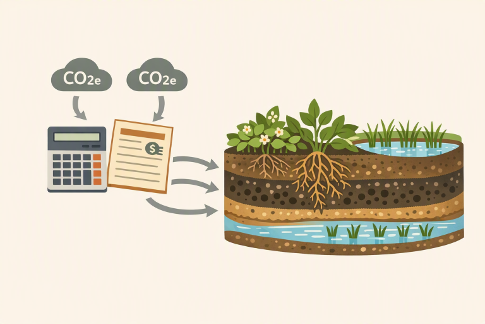
2026 年,是台灣碳費真正「動真格」的第一年。2025 年企業只需試申報、不繳費;但依規定,2026 年起,年排放量達 2.5 萬公噸以上的電力業與製造業(推估約 500 個排放源、281 家公司),必須依 2025 年實際排放量繳交碳費。基本費率為每噸 300 元,若企業提出「自主減量計畫」並經核定達標,可適用每噸 50 元或 100 元的優惠費率——差距高達 6 倍。更值得注意的是,環境部規劃 2030 年費率將調升至每噸 1,200 至 1,800 元,現在的決策,將決定企業未來五年的碳成本曲線。
碳費制度也開放企業以「自願性碳權」抵減部分費用:國外碳權抵減上限為收費排放量的 5%,國內自願減量與抵換專案(含農業土壤碳匯)的抵減比率則由環境部另行公告。這代表著:越早布局國內農業碳匯,企業就越早卡位這個逐步成形、而且與在地供應鏈、員工福利、ESG 揭露三者疊加效益的減量工具——而不只是繳一張「碳費帳單」而已。
|
|
2026 marks the year Taiwan's carbon fee becomes real. Companies emitting over 25,000 tonnes CO2e per year (roughly 500 sources, 281 companies) must now pay based on 2025 emissions — NT$300/tonne base rate, reduced to NT$50–100/tonne if an approved self-reduction plan hits its target. The rate is slated to rise to NT$1,200–1,800 by 2030. Voluntary domestic carbon credits, including agricultural soil-carbon projects, can offset part of the fee (international credits are capped at 5%; the domestic offset ratio is still pending official announcement). The earlier a company positions itself in domestic agricultural carbon sinks, the sooner it captures a lever that stacks compliance, local supply chain, and ESG disclosure value — not just a bill to pay.
|
|
|
- 徵收對象:年碳排(直接+間接)達 2.5 萬公噸以上的電力業與製造業。
- 費率:基本費率 300 元/噸;達成自主減量計畫目標可申請優惠費率 50 或 100 元/噸。
- 時程:2025 年試申報不繳費;2026 年起依 2025 年排放量正式繳費;2030 年費率規劃調升至 1,200~1,800 元/噸。
- 抵減額度:國外自願性碳權抵減上限為收費排放量 5%;國內自願減量/抵換專案(含農業碳匯)扣減比率另行公告。
- 農業碳匯方法學:農業部已核准「提升農業土壤管理」(土壤有機碳)方法學;有機草生栽培(覆蓋作物)方法學送審中。目前僅企業與政府機關可申請碳權,小農須透過與企業合作參與。
|
|
How the fee works: companies above the 25,000-tonne threshold pay NT$300/tonne by default, or NT$50–100/tonne with an approved reduction plan. International offsets cap out at 5% of billed emissions; the domestic ratio (agriculture included) is still being finalized. Taiwan's Ministry of Agriculture has approved a soil-organic-carbon methodology, with an organic cover-crop methodology under review — but only companies and government bodies can apply for the credits directly, so smallholder farmers participate through corporate partnerships.
|
|
|
03 企業行動:小農種碳+ESG綠色新幹線,為什麼是企業布局農業碳匯的最佳選擇
|
|
|
碳費上路後,企業會發現:買農業碳匯不是只有「抵費」這一個理由。透過 CARBON 平台的「ESG 綠色新幹線」沙盒計劃,企業投資花東小農種碳,取得的不只是 Gold Standard 黃金標準認證的減碳憑證(每公頃每年約 4 噸 CO₂e),還同時疊加六項 SDG 量化績效、可直供員工福利的花東優質好米,以及「努力小農 App 即時紀錄 → 第三方 VVB 驗證 → Gold Standard 公開登錄」的三層防漂綠憑證鏈,讓每一筆投資都經得起 IFRS S2 揭露檢驗。相較於直接在市場上採購來源不明、缺乏在地脈絡的碳權,小農種碳把「碳費合規」「ESG 揭露」「在地供應鏈」「員工福利」四件事一次做到,而且 70% 以上的投資金額依 PES 合約直接進入小農帳戶——是目前對企業最務實、也最經得起檢驗的農業碳匯選項。
|
|
Buying agricultural carbon credits isn't just about offsetting the carbon fee. Through CARBON's ESG Green Bullet Train sandbox, corporate investment in smallholder carbon farming in Hualien-Taitung comes bundled with Gold Standard–certified credits (~4 tonnes CO2e/hectare/year), six quantified SDG metrics, premium local rice for employee benefits, and a three-layer anti-greenwashing chain (App-logged field data → third-party VVB verification → public Gold Standard registry) built to withstand IFRS S2 scrutiny. Compared to sourcing anonymous credits on the open market, smallholder carbon farming stacks compliance, ESG disclosure, local supply chain, and employee benefits in one instrument — with over 70% of each investment flowing directly to farmers under PES contracts.
|
|
|
|
|
04 沙盒計劃法律骨架:ESG 綠色新幹線四方合作協議簡介
|
|
|
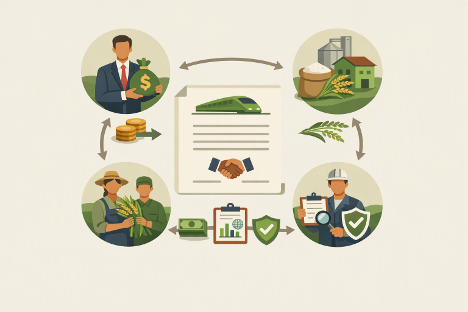
「ESG 綠色新幹線四方合作沙盒計劃協議」(草案,2026 年 6 月 20 日版)是這項行動方 案的法律骨架,把「小農種碳 × 企業 ESG 投資 × 生態系統服務給付(PES)」具體落實 為可執行、可查核的合約關係。協議依國際黃金標準(Gold Standard for the Global Goals)架構訂定,目標對接 IFRS S1/S2 揭露要求與台灣金管會證交所 ESG 評鑑準則。 協議由四方共同簽署:甲方是投資小農種碳的上市櫃企業;乙方是實際執行種碳農法的小農 團體,包括花蓮米田共享合作社、玉里長良里良質米第二、第三產銷班,以及池上鄉萬安社 區發展協會;丙方是銜接小農與市場的代理機構,如田祖永續農業、陳協和米廠,負責產銷 紀錄與稻米分級定價;丁方為負責盡職調查與專案開發的天地和氣股份有限公司,以及國際 千分之四倡議機構大武山文教基金會。 核心機制上,甲方投資取得的 SDG/ESG 績效歸屬企業本身,可直接用於永續報告揭露; 乙方或丙方則提供市價新台幣十萬元等值、食味值 65 分以上的良質米,供企業作為員工福 利使用;同時各方簽署 PES 合約,確保 70% 以上價金直接歸屬小農,而非層層抽成的補助 款。協議也設計「五層影響力架構」,第一層(ESG 小農)與第二層(企業採購)為必選, 第三至五層(員工教育、生態旅遊、供應鏈擴散)則依企業需求選配。 為防止漂綠,協議要求聲明須符合黃金標準 Claims Guidelines 六大誠信原則,並設有事 前審查、年度自評、第三方 VVB 驗證與吹哨者保護機制,違反經通知未改正者,其他方得 終止協議並追責。目前協議仍為草案,簽約日期待各方最終確認。
|
|
The "ESG Green Bullet Train Four-Party Cooperation Sandbox Agreement" (draft, dated 20 June 2026) is the legal backbone of this initiative, turning "smallholder carbon farming × corporate ESG investment × Payments for Ecosystem Services (PES)" into an enforceable, auditable contract. Built on the Gold Standard for the Global Goals framework, it is designed to align with IFRS S1/S2 disclosure requirements and Taiwan's FSC/stock exchange ESG evaluation criteria. Four parties sign on: Party A is the listed company investing in smallholder carbon farming; Party B comprises the farmer groups practicing the carbon-farming methods — the Hualien Rice Field Sharing Cooperative, the 2nd and 3rd Rice Production Teams of Changliang Village in Yuli Township, and the Wan'an Community Development Association in Chishang Township, Taitung; Party C are the intermediary agencies connecting farmers to the market, such as Tianzu Sustainable Agriculture Co. and Chen Xiehe Rice Mill, handling production records and rice grading/pricing; Party D handles due diligence and project development — Ecoaffinity Inc. and the Dawushan Cultural and Educational Foundation, Taiwan's 4 per 1000 initiative body. Under the core mechanism, the SDG/ESG performance generated belongs to Party A for direct use in sustainability disclosures, while Party B/C supply NT$100,000 worth of premium rice (taste score 65+) for employee benefits, under PES contracts guaranteeing farmers receive over 70% of the payment. A "five-tier impact framework" makes farming and procurement mandatory tiers, with employee education, eco-tourism, and supply-chain diffusion as optional add-ons. Anti-greenwashing provisions require all claims to meet Gold Standard's six integrity principles, backed by pre-review, annual self-assessment, third-party VVB verification, and whistleblower protection; uncorrected violations allow other parties to terminate the agreement and pursue damages. The agreement remains in draft form, with signing date and contract term pending final confirmation.
|
|
|
05 沙漠淹水、印度破50度、歐洲烤焦:同一套失控的大氣環流,緩解已經來不及
|
|
|
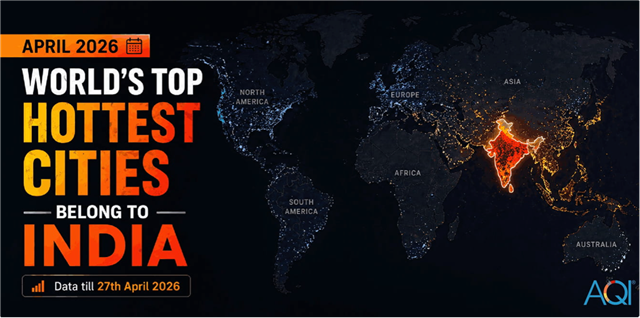
2026 年春夏歐亞大陸接連出現的三起極端天氣為線索,指出新疆塔克拉瑪干沙漠洪水、印度破 50 度熱浪與歐洲長時間高溫,並非彼此孤立的偶發事件,而是同一套失衡大氣環流的不同表現。北極暖化削弱南北溫差,使噴射氣流變慢、變彎並容易停滯,進而造成高壓區長時間蓄熱、水氣匯聚區持續降雨,讓乾旱與洪水兩種極端同時被放大。文章進一步強調,減少排放仍然必要,但過去累積的暖化效應已使極端事件在未來十年更頻繁,因此氣候行動不能只停留在緩解,而必須加速轉向調適。從城市降溫、街廓熱風險地圖、乾旱區排水標準,到種碳農法提升土壤韌性,都是面對新氣候現實的具體做法。
|
|
This article connects three extreme weather events that struck Eurasia in the spring and summer of 2026: flooding in China’s Taklamakan Desert, deadly heat across India, and a prolonged heatwave over Europe. Although these events appear different—one involving floodwater in one of China’s driest regions and the others involving extreme heat—they are presented as symptoms of the same disrupted atmospheric circulation. Rapid Arctic warming has weakened the temperature contrast between the poles and the equator, slowing and bending the jet stream. As the jet stream becomes more unstable, it can lock weather systems in place for weeks. In some regions, stalled high-pressure systems trap heat and intensify heatwaves; in others, persistent moisture convergence can produce record rainfall, even in deserts. The article argues that mitigation remains essential but is no longer sufficient on its own. Even rapid emissions cuts cannot immediately reverse the warming already stored in the atmosphere and oceans or restore a stable jet stream. Therefore, climate strategy must expand from reducing emissions to adapting systems for survival under more frequent extremes. Practical adaptation measures include district cooling and green infrastructure in cities, block-level heat-risk mapping, revised drainage standards for arid infrastructure, and carbon farming practices that improve soil organic matter, water retention, drainage, and resilience.
|
|
|
06 從夏至到小暑:歐洲酷暑失控,冷氣商機爆發,人類必須從「緩解」轉向「調適」
|
|
|
2026年夏至前後,歐洲遭遇破紀錄熱浪,法國、西班牙、德國等地高溫、死亡、溺水、基礎設施損壞與農業損失同步攀升,顯示極端氣候已從未來風險變成當下危機。熱浪也催生冷氣需求,中國美的PortaSplit因免鑽孔、低冷媒量與可自行安裝等設計,精準切入歐洲法規縫隙,成為搶手商品。文章指出,冷氣熱銷不只是商機,更暴露歐洲制度與基礎建設尚未準備好面對新氣候現實。面對已被鎖定的升溫趨勢,社會與企業不能只依賴減碳,還必須加速調適,包括能源、建築、農業與公共衛生系統的韌性工程,才能在下一個異常夏天維持生命、生計與競爭力。
|
|
Europe’s 2026 summer solstice became a severe climate stress test as record heat spread from late May into late June, pushing temperatures above 44°C in France and driving excess deaths beyond 1,300 across Europe and over 2,000 in Spain. The heatwave exposed cascading vulnerabilities: nuclear plants lost cooling capacity, roads buckled in Germany and the Netherlands, household electricity use surged, poultry deaths and crop damage rose, wildfires intensified, and economic losses mounted. Yet the crisis also created an unexpected commercial opening for Asian air-conditioner makers, especially Midea’s PortaSplit. By using a no-drill window mount, low refrigerant load, quiet operation, and self-installation model, the product fit within European regulatory limits and quickly became a scarce, high-demand appliance. The article argues that this is more than a cooling-market story. It reveals that Europe’s regulations, buildings, grids, farms, and public health systems remain underprepared for a hotter world. Since locked-in warming will continue for decades, climate strategy must shift from mitigation alone toward rapid adaptation and resilience.
|
|
第 3期・大暑(2026 年 7 月 22 日):主題「永續田園地景」,我們將從花東的田間景觀出發,談種碳農法如何同時守護生產、生態與地景美學。
|
|
|
|
|
|
|
|
|