Carbon Farming Seasonal Digest End of Heat issue | 2026.8.23 | No. 5
|
|
|
|
Carbon Farming Seasonal Digest
|
|
|
|
2026 End of Heat issue
23 August 2026 · No. 5
|
|
|
This issue: Taiwan smallholder carbon farming stakeholder meeting
|
|
|
[A word from the publisher]
Dear friends who care about the land and the climate,
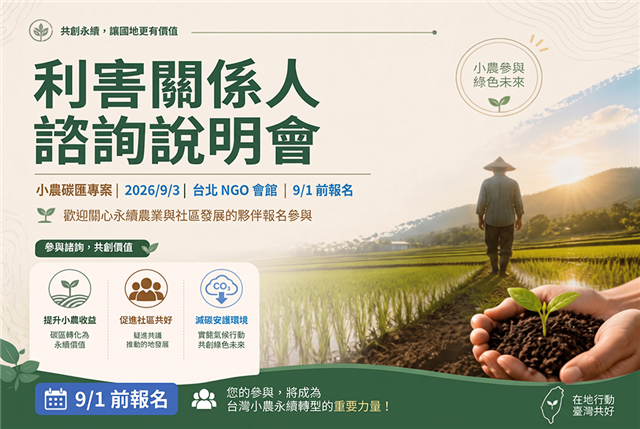
End of Heat has arrived, the summer heat is easing, and the ears of rice in the fields are beginning to bow. In this issue I would first like to let you know that on the afternoon of Thursday 3 September we will hold a “Smallholder Carbon Farming Stakeholder Consultation Meeting” at NGO House in Taipei. We warmly invite everyone who cares about sustainability, food safety and ESG investment — company representatives, civil society groups, or anyone who simply wants to understand what carbon farming is about.
We are holding this meeting because Gold Standard for the Global Goals (GS4GG) certification rules and activity modules for soil organic carbon have been revised in recent years, directly affecting the certification progress of the Small Farmers' Carbon Farming Project in Taiwan (GS11818, year 4) and the Chishang Smallholder Carbon Farming Project (GS23490, year 2). Our last stakeholder consultation, at the Legislative Yuan, was on 4 June 2022. Four years on, the system has changed and the projects have grown; it is time to go back to our stakeholders, explain things again and listen again.
That is the core of this issue: whether an emission-reduction and sustainability certification succeeds never depends on a beautiful report, but is rooted in transparency and inclusiveness. Stakeholder consultation may look like “just a meeting”, but it is the most important groundwork when Gold Standard certification begins — without this step, none of the carbon credits or ESG claims that follow can stand.
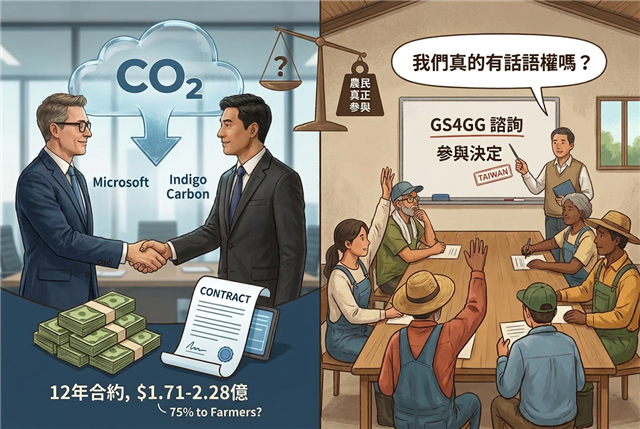
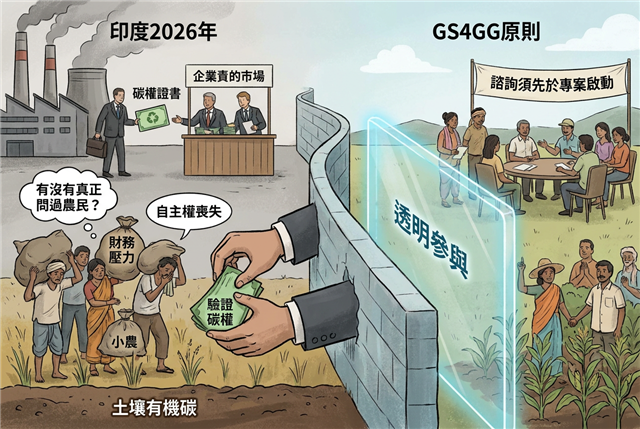
In this issue we also use the metaphor of the “ESG Green Shinkansen” to remind companies and farmers of one thing: funds and resources can travel from companies to the fields as fast as a Shinkansen, provided the tracks are laid openly and solidly. With Taiwan's carbon fees starting in 2026, corporate demand for agricultural carbon sinks will only grow. Internationally, Microsoft and Indigo Carbon have signed the largest soil carbon deal ever, with farmers receiving 75% of revenue — a positive example. But at the same time India offers a cautionary tale: nearly 490 heavy-industry companies rushing to buy domestic carbon credits while smallholders alone bear the financial risk and lose their autonomy. It reminds us that carbon credit deals without transparent consultation, however fast they move, may leave those who should benefit most standing on the platform.
Please join us on 3 September, in person or online, and help lay these tracks well together.
Jay Fang
Chairman, Eco-affinity Inc.
|
|
|
01 End of HeatSeasonal note
|
|
|
|
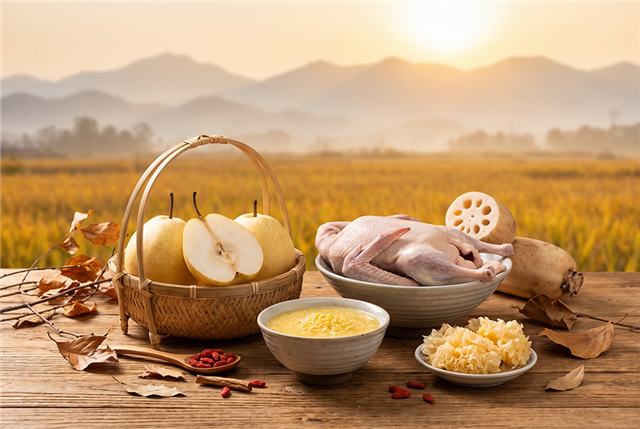
The heat truly fades: time for the body to start “nourishing”
|
|
|
End of Heat is the second solar term of autumn. “Chu” means to stop, signalling that the summer heat truly withdraws here: mornings and evenings grow cooler and the day–night temperature gap widens, though the “autumn tiger” still brings lingering heat by day. Self-care now should focus on nourishing yin and moistening the lungs: eat less spicy food and more white foods such as white fungus and Asian pears; go to bed early and rise early, gathering in yang energy and adding layers to keep warm. In the fields, the second rice crop is entering the critical heading and grain-filling stage, and drainage risks from typhoons and heavy rain need watching — it is the final sprint before the autumn harvest.
|
|
|
|
|
CH1|Taiwan smallholder carbon farming stakeholder meeting, series (1)
|
|
|
Join the Taiwan smallholder carbon farming stakeholder meeting on 3 September
|
|
|
Four years have passed since the 2022 consultation at the Legislative Yuan, and revisions to the GS4GG soil organic carbon methodology and activity modules are affecting the certification progress of GS11818 (year 4) and GS23490 (year 2).
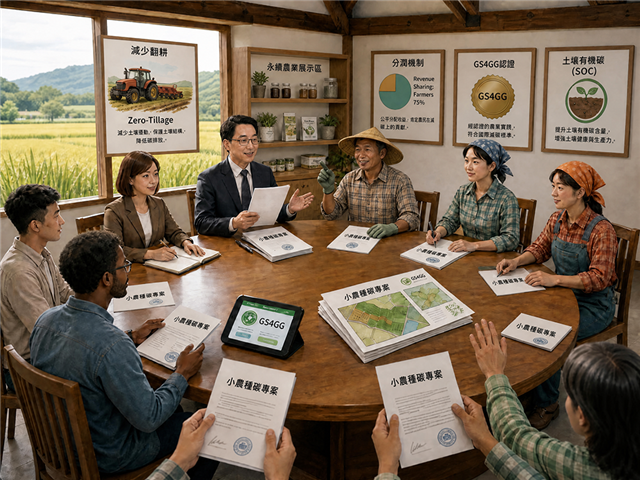
At 2:00 pm on 3 September, we will reconvene the stakeholder consultation meeting at NGO House in Taipei to explain the project design, expected benefits and potential impacts in public, and open a written feedback period of at least 30 days. We warmly invite companies, civil society groups and everyone who cares about sustainability, food safety and ESG investment to attend in person or online, and see for themselves how an open, transparent project is put to the test.
|
|
|
CH2|Taiwan smallholder carbon farming stakeholder meeting, series (2)
|
|
|
2026, the first year of carbon fees: why Taiwanese companies need agricultural carbon sinks more than ever
|
|
|
2026 is the first year Taiwan's carbon fees “get real”: about 281 big emitters must pay based on their actual emissions, and agricultural carbon sinks are becoming the focus of the domestic carbon credit market. But for companies to be compliant and stand up to scrutiny, the precondition is not only whether credits are verified, but whether farmers genuinely took part when the project was designed. This article argues that treating stakeholder consultation records as due-diligence documents before buying carbon credits should be the new standard for companies choosing credits in 2026.
|
|
CH3|Taiwan smallholder carbon farming stakeholder meeting, series (3)
|
|
|
Microsoft's US$228 million soil carbon deal: farmers' revenue share and the role of stakeholders
|
|
|
Microsoft and Indigo Carbon signed the largest soil carbon deal ever: a 12-year contract worth US$171–228 million, with farmers receiving 75% of revenue — at first hailed as a positive example for the market. But this article asks: does a good revenue-share figure mean farmers genuinely took part in designing the contract? GS4GG's consultation requirements care not only about “how much farmers get” but also about “whether farmers genuinely took part in deciding” — which is why Taiwan's projects insist on holding in-person consultation meetings.
|
|
CH4|Taiwan smallholder carbon farming stakeholder meeting, series (4)
|
|
|
A warning from India: when consultation becomes a formality, smallholders bear the greatest risk
|
|
|
India's new carbon trading scheme took effect in 2026, and nearly 490 heavy-industry companies rushed to buy domestic carbon credits, with soil organic carbon their first choice. Reports say companies take the verified credits to offset emissions, while smallholders alone bear the financial pressure and risk losing their autonomy. The problem is not whether the credits are real, but whether farmers were genuinely asked before the deal. Using this as a mirror, the article explains why GS4GG insists that “consultation must come before project start”, treating transparent participation as a hard firewall.
|
|
CH5|Taiwan smallholder carbon farming stakeholder meeting, series (5)
|
|
|
Momentum in the global carbon farming market: why 2026 is called “the year soil carbon took centre stage”
|
|
|
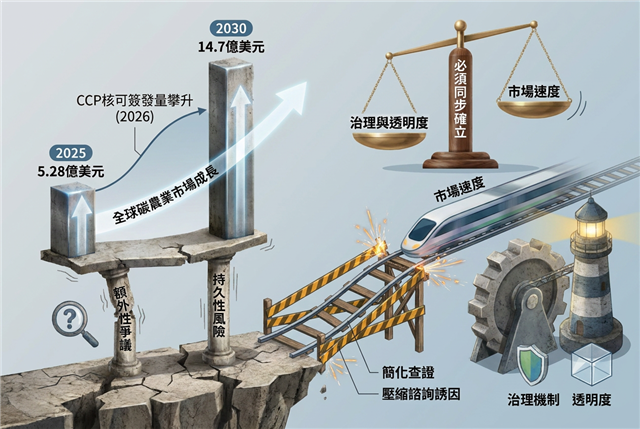
An AlliedOffsets report notes that CCP-approved issuance kept climbing in 2026, and the global carbon farming market is expected to grow from US$528 million in 2025 to US$1.47 billion in 2030. But the hotter the market, the greater the risk of disputes over additionality and permanence, and the stronger the temptation to simplify verification and compress consultation. As background to this digest, the article explains why governance and transparency must keep pace with market growth rather than be sacrificed to it.
|
|
|
|
|
|
Eco-affinity Inc. is a for-profit company set up following the Green Consumers' Foundation's advocacy for environmental, agricultural and food safety. It developed the MiHuMiSang app and runs international voluntary emission-reduction projects, helping smallholders obtain international carbon credit certification and put the Sustainable Development Goals into practice.
|
|
|
|
|
|
|
Follow us: website / YouTube / Facebook >>>
|
|
|
|
|
|
|
Share this issue with your friends >>>
|
|
|
|
|
|
|
|
|
 努力小農