 努力小農
本文尚無譯文。
What is carbon farming? Agricultural net zero (Ag Net Zero)
- Carbon is the central element of the organic matter of life on Earth
- Is the "carbon dioxide" in today's greenhouse gas debate the same as the carbon in living things?
- Is the carbon emitted by industry the same as the carbon emitted by agriculture?
- Does agriculture add carbon or reduce it?
Agriculture emits more carbon than you think
What causes massive loss of soil organic matter, making it a major source of the Earth's carbon dioxide, is — surprisingly — spring ploughing. Over the past 20 years, NASA data on atmospheric CO2 concentration show the peak is not in winter when coal is burned for heating, but in March, April and May when farmers cultivate in spring. Only in July, when summer arrives, ploughing stops and photosynthesis flourishes, does carbon dioxide fall. (See the video: NASA CO2 concentration changes 2020–2021)
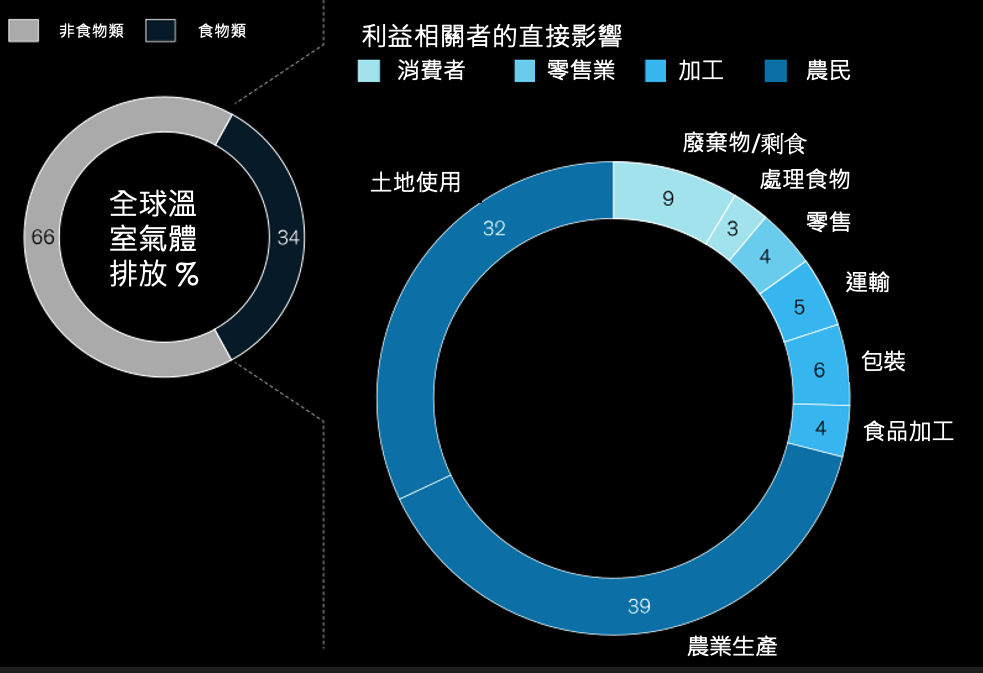
Carbon dioxide emissions from the agri-food sector account for
34% of global greenhouse gas emissions from human activity
Is carbon a pollutant or an asset?

Pollution control? Asset management?
- The carbon in today's greenhouse gases is carbon emitted from fossil fuels that cannot be cycled — not the carbon emitted by living things themselves, which can be cycled.
- In environmental protection, what we face is carbon dioxide emitted from industrial fossil fuels; the Air Pollution Control Act even designates carbon dioxide as a pollutant.
- For agriculture, forestry, fisheries and livestock, carbon is a product that is cultivated — an asset — so it should be managed as an asset.
- Agricultural carbon emissions today should refer to the greenhouse gases emitted by industrialised agriculture, such as making nitrogen fertiliser (urea, NH4) from natural gas (methane, CH4) and the emissions from fossil energy used in production. This is additional carbon emitted.
- Living plants and animals themselves emit carbon and also absorb it, maintaining a carbon balance; this is not polluting emission.
How the world's countries are facing global climate change
- Earth Day 1970 led to the US Clean Air Act and the US Environmental Protection Agency
- It also led the UN to establish the UN Environment Programme (UNEP) in 1972
- In 1987 the World Commission on Environment and Development published Our Common Future
- At the 1992 Earth Summit in Rio de Janeiro, Brazil, countries signed four important agreements: the Framework Convention on Climate Change, the Forest Principles, the Convention on Biological Diversity and Agenda 21.
There are so many regulations, standards, guidelines and requirements that ordinary people don't know where to start
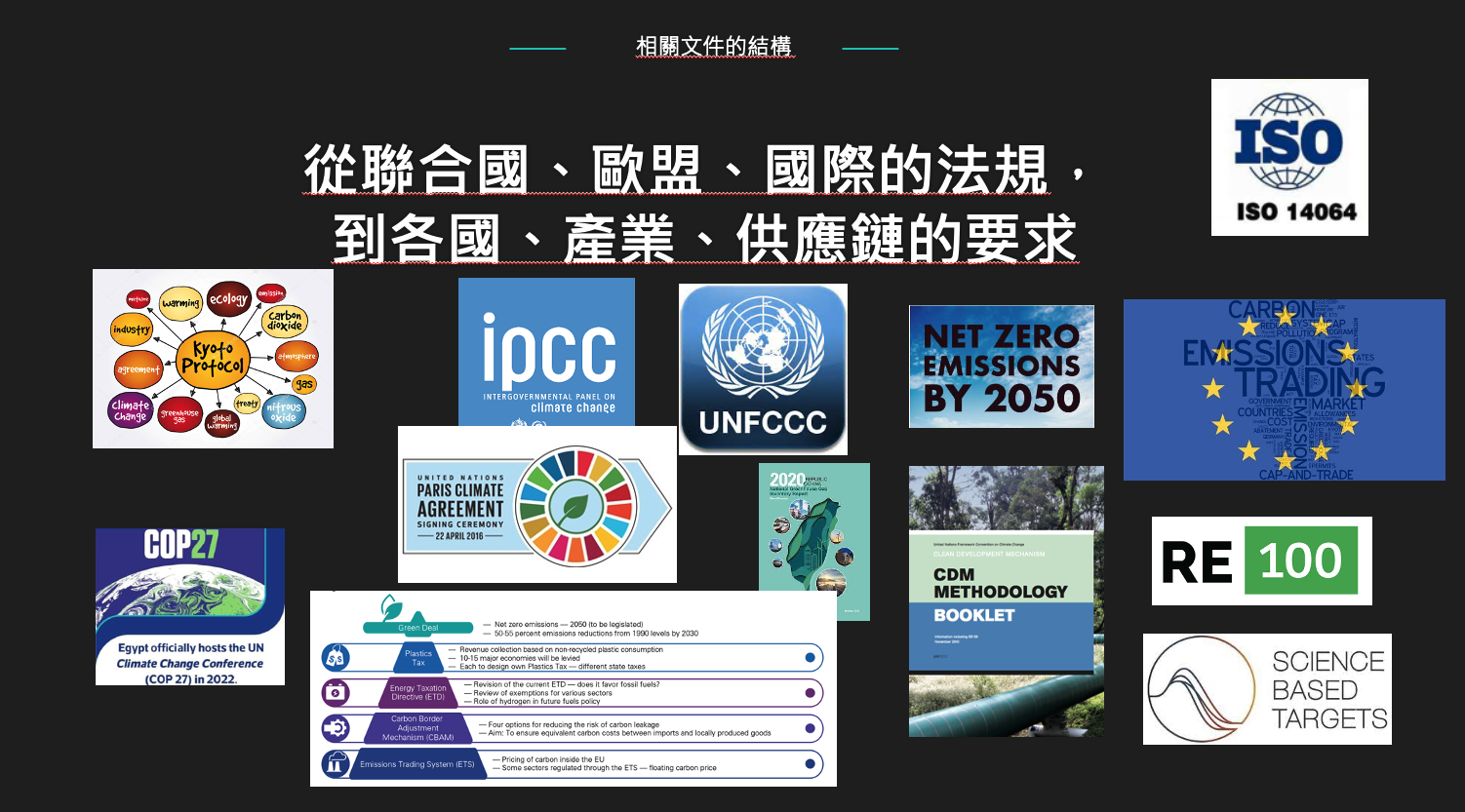
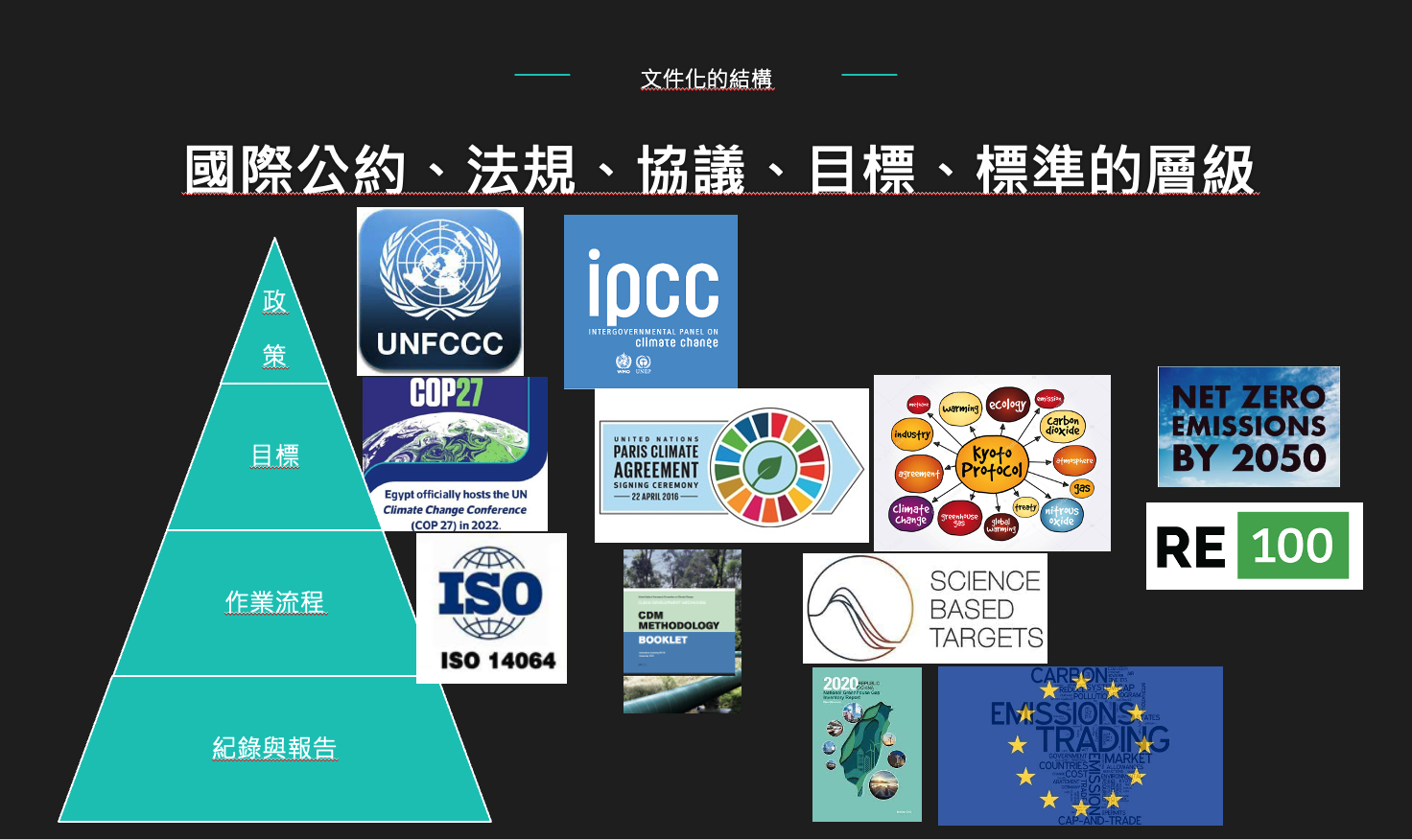
We have organised these regulations into four levels of documents following the ISO 9000 documentation principle
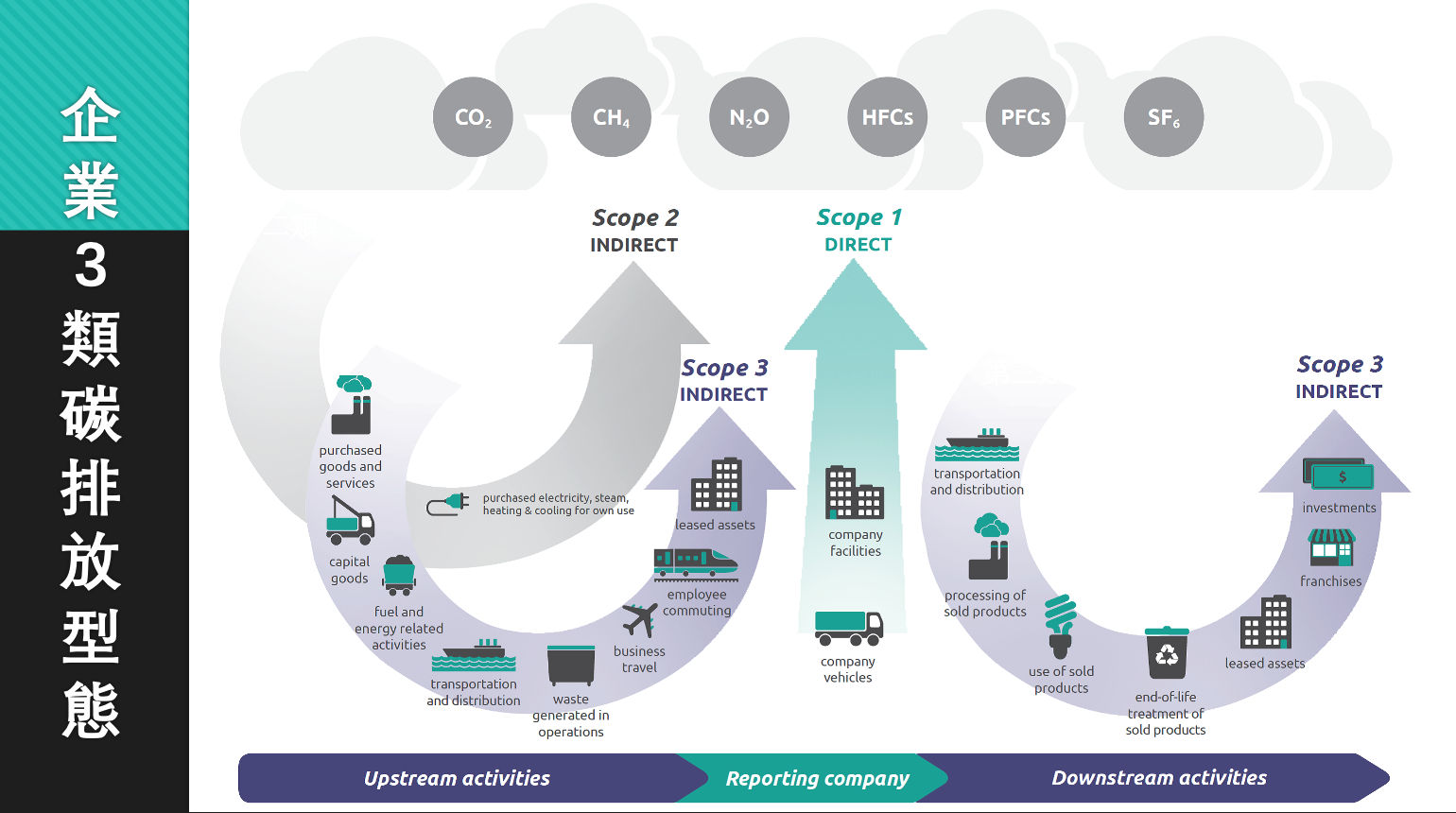
Carbon emissions are classified into three scopes
Scope 1: a company's direct emissions
Scope 2: upstream indirect emissions
Scope 3: downstream indirect emissions
To obtain emission-reduction certification and certified carbon credits, we must set up an emission-reduction project
A project's life cycle generally has the following 8 steps
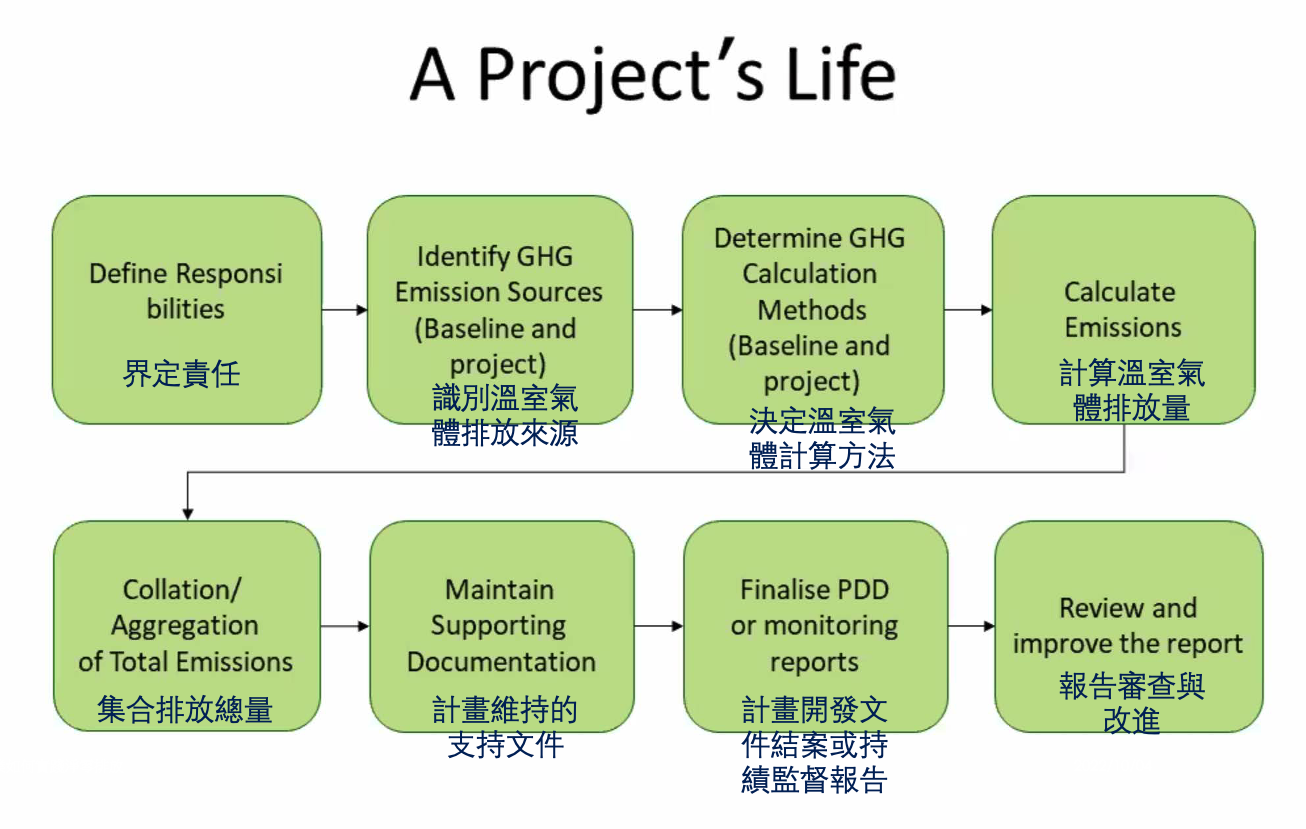
We are applying for Gold Standard certification
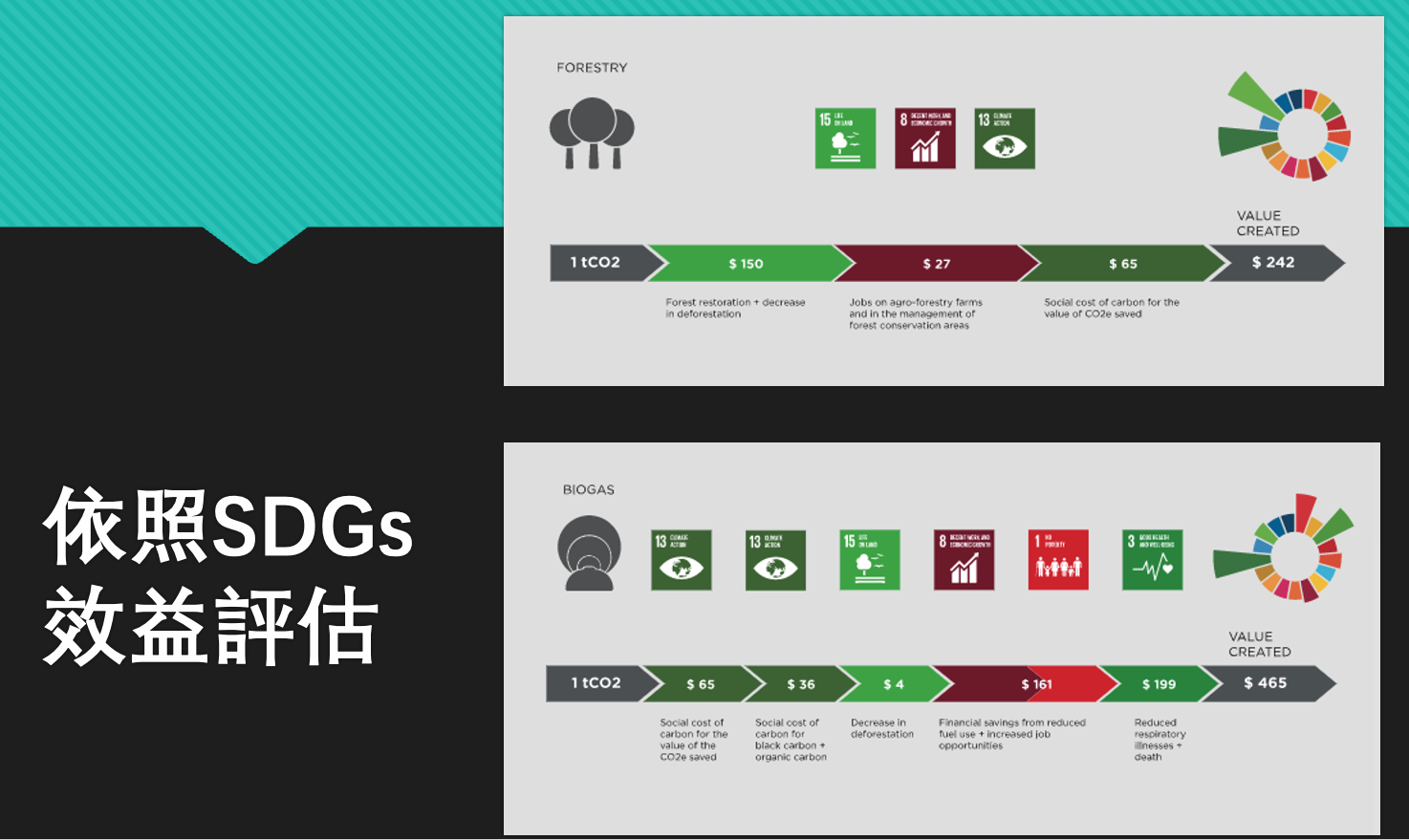
Besides climate action through carbon reduction
there are other UN Sustainable Development Goals
Sustainable Development Goals, SDGs
At least 3 goals must be met quantitatively
SDG 13 Climate Action is the required default goal
Our Smallholder Carbon Farming Project has also submitted
SDG 2 Zero Hunger
SDG 4 Quality Education
SDG 8 Economic Growth
Carbon reduction and carbon trading systems
- Some myths must be cleared up
- Reducing carbon means you can trade carbon
- Carbon trading makes money
- Blockchain and Bitcoin can facilitate carbon trading
- Using organic fertiliser reduces carbon, so you can trade carbon
- Natural, eco-friendly products reduce carbon and can be traded as carbon
- Carbon reduction and carbon trading are international affairs and must follow international regulations, standards and methods
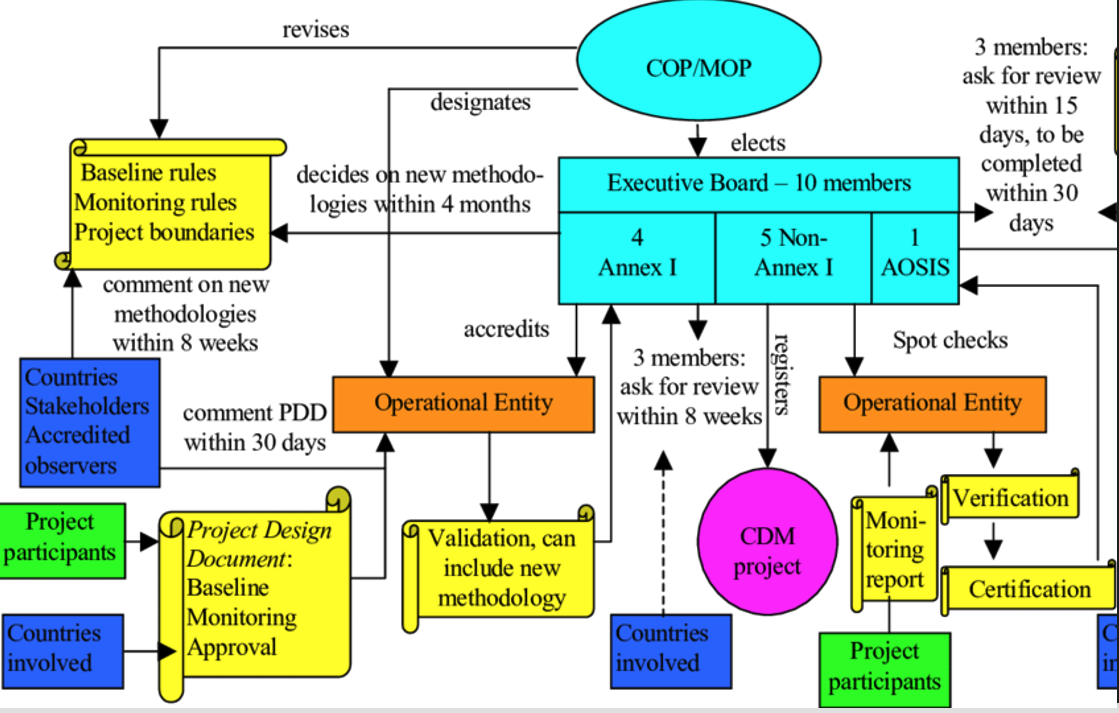
- Below are the routes to carbon trading — quite complex and difficult for the vast majority of people
- We provide certification project services to help smallholders reduce carbon, so they don't need to know all this — hard to understand, easy to do
What is Article 6 of the Paris Agreement?
This is the article of the international agreement covering carbon trading and offsets
- Article 6 of the Paris Agreement lets countries cooperate voluntarily to meet the emission-reduction targets in their nationally determined contributions (NDCs). In other words, under Article 6 one or more countries can transfer carbon credits earned from cutting greenhouse gas emissions to help other countries reach their climate goals. Within Article 6, Article 6.2 lays the groundwork for countries to trade emission reductions ("mitigation outcomes"). Article 6.4 is expected to resemble the Kyoto Protocol's Clean Development Mechanism, setting up a mechanism for trading emission reductions between countries under the supervision of the Conference of the Parties, the decision-making body of the UNFCCC. Article 6.8 recognises non-market approaches to promoting mitigation and adaptation, introducing cooperation through finance, technology transfer and capacity building that doesn't involve trading emission reductions.
- Article 6 concerns building an international compliance carbon market bound by Paris Agreement rules, in which countries can trade carbon credits. Under Article 6, reductions authorised for transfer by the selling country's government can be sold to another country, but only one country may count the reductions towards its NDC. Avoiding double counting is essential so that global reductions aren't overstated. The Article 6 rules set up an accounting mechanism called "corresponding adjustments" to ensure no double counting occurs.
- Corresponding adjustment requirements may extend from compliance markets to voluntary carbon markets, where demand is driven by private-sector voluntary emission-reduction commitments. For example, the market-based mechanism for airlines — the International Civil Aviation Organization's Carbon Offsetting and Reduction Scheme for International Aviation (CORSIA) — is expected to require corresponding adjustments for traded credits.
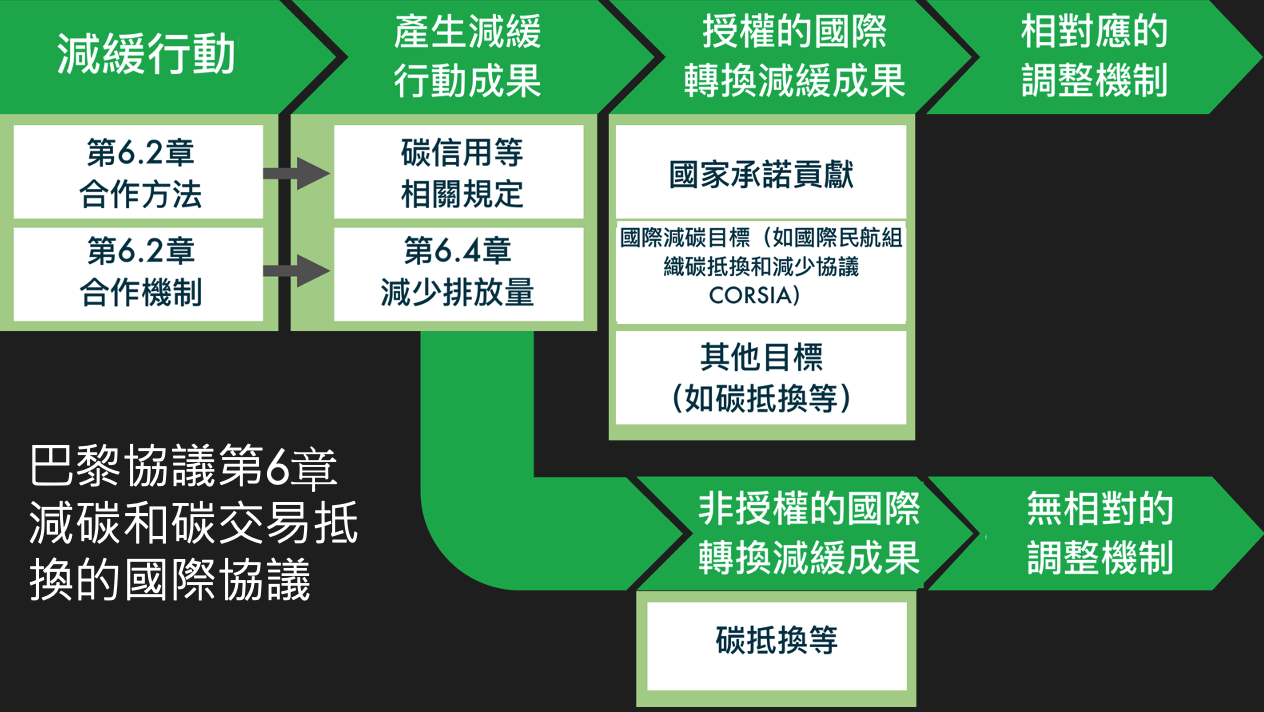
Necessary conditions for international carbon credits, carbon trading and offsets
- Must be accepted by the UNFCCC / United Nations
- Must have an internationally recognised quantification method
- Must meet international standards
- Must have a project
- Must have transparent stakeholder consultation with public participation
- Must have a baseline
- Must have additionality
- Must be verifiable
- Must be internationally certified
- Must be traded on an open, transparent market
- Must be traceable to the emission-reduction project
- Must consider carbon leakage
- Must consider risk assessment
- Must have no double counting at all
- Agricultural carbon reduction must not reduce yields or output value
Humanity adds 4.3 billion tonnes of carbon emissions every year
The world's soils store 1.5 trillion tonnes of carbon
If we increase the carbon stored in soil by just four per thousand, we can neutralise carbon emissions
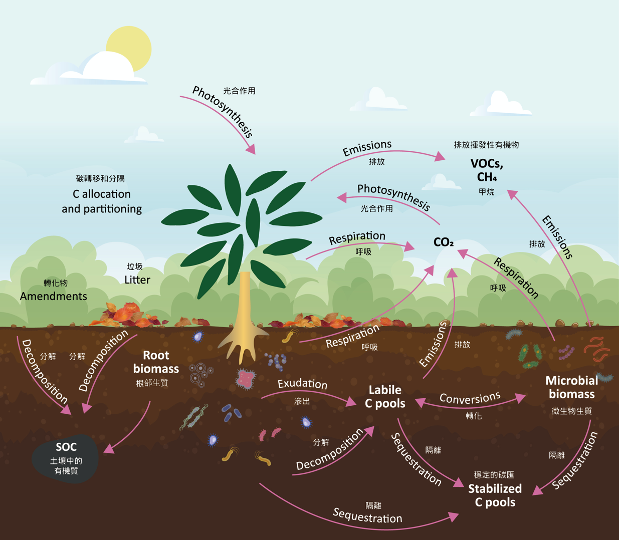
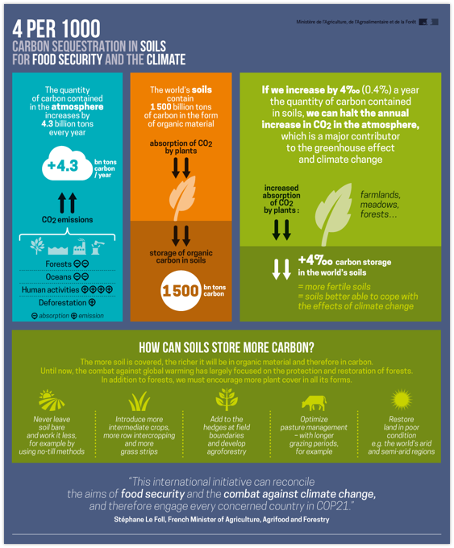
Soil organic carbon methodology
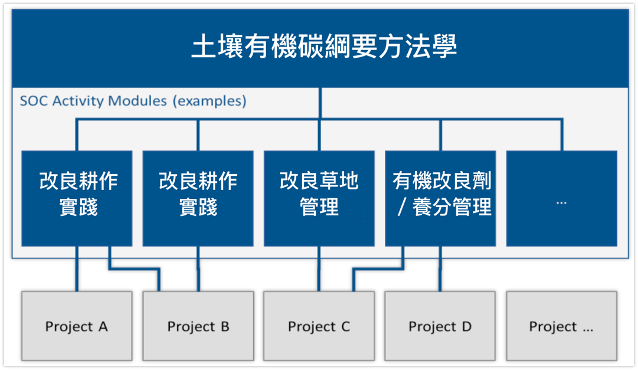
In theory, organic farming can increase soil organic carbon,
achieving carbon reduction and generating carbon credits, but...
- Reduce soil disturbance, e.g. no ploughing or deep tillage
- Increase soil cover
- Ensure a healthy soil microbial ecology and use microbial inputs appropriately
- Maintain biodiversity on the farm
- Let the 40% of organic matter from plant photosynthesis that enters the soil fix carbon and build organic matter
- Reduce excess fertiliser (whether organic or chemical)
- Maintain long-lasting organic matter, such as humus, humic acid, biochar, etc.
Disclaimer: I am not an agricultural expert. I only provide the principles of the standard carbon reduction methodology for increasing soil organic carbon in agriculture; those wishing to practise low-carbon agriculture should weigh each principle and apply it to their farming.
Besides increasing soil organic carbon, there are several other carbon reduction methodologies
- Water management in rice paddies to reduce methane emissions
- Legume–grain rotation to reduce chemical nitrogen fertiliser (conventional/organic)
- Bioenergy from agricultural waste, such as using rice husks to generate heat for drying rice, pyrolysis to produce syngas, and biochar.
Rebuilding the value chain of agriculture and afforestation
1. Utilizing science-based sustainability metrics
2. Gathering sustainability data and benchmarking performance
3. Adopting novel agri-tech solutions to assess sustainability impacts
4. Collaborating on shared platforms that drive innovation and sector-wide progress
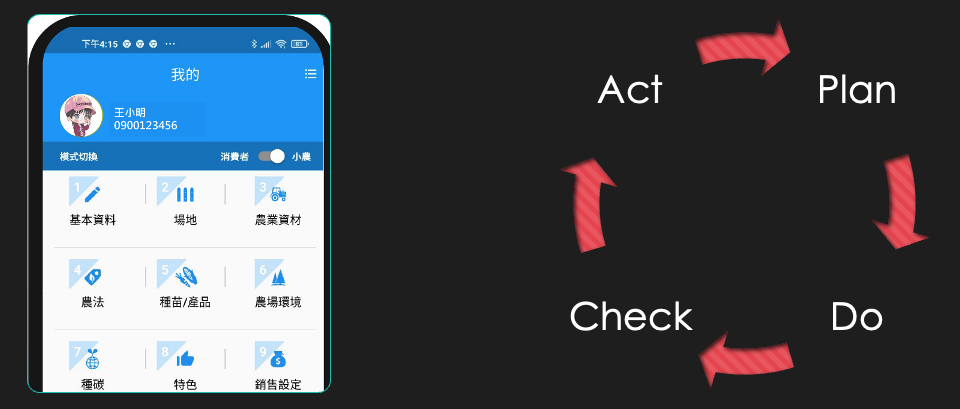
Using the MiHuMiSang app as a digital tool

About biochar
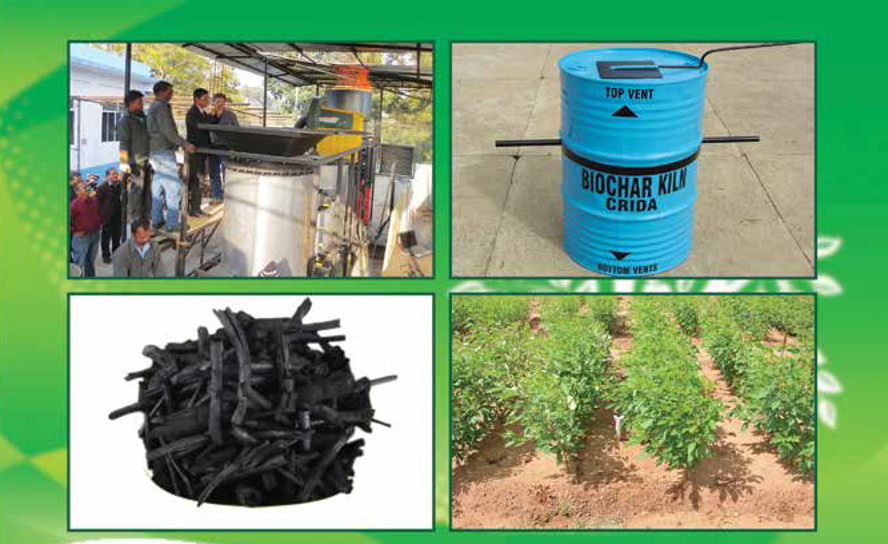
- In 2005 black earth was found in the Amazon basin — the result of thousands of years of human-made soil carbon accumulation, which also helps local farming
- Appropriate use of biochar is internationally regarded as one effective method of long-term carbon sequestration
- Biochar has a very long half-life, even up to a thousand years
- Biochar is produced by high-temperature pyrolysis of biomass, unlike direct burning; under good conditions it can fix 30–50% of the carbon
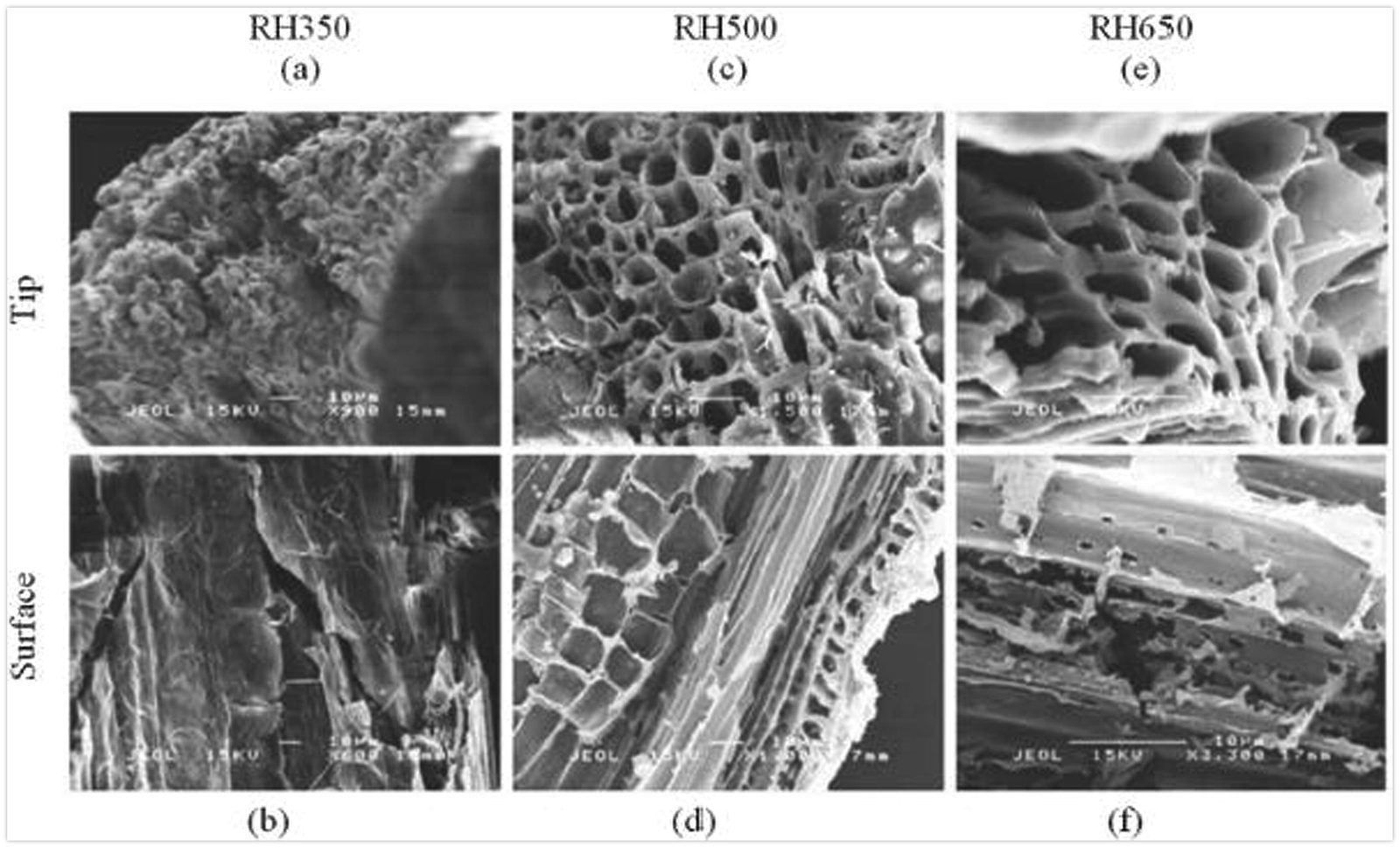
- Biochar has many pores — 1 gram can have 300–1,000 m² of surface area — which helps bacteria and organic matter interact
- The use of biochar in fertilisers is still developing
- Both Europe and the US have set biochar standards
- In 2017 and 2019 the European Parliament adopted regulations on biochar as an agricultural input
- Biochar is porous and provides a place for microbes and organic matter to interact, turning unstable organic matter into long-term stable organic matter.
- Biochar is not a fertiliser but can be a substrate. Because soil is extremely complex in composition and development, the use of biochar with fertilisers is still being researched.
- Improper or excessive use of biochar may compete for the soil's water and plants' nutrients, and actually do harm
- Agricultural waste from the fields, pyrolysed into biochar and returned to the fields, helps achieve circular agriculture
- Pay attention to the source of biochar; it must not be mixed with industrial slag or other harmful heavy metals or chemicals
Developing community-based carbon farming and carbon reduction plans
- Agriculture and afforestation
- A sustainable, healthy environment
- Providing sites for carbon reduction
- Integrating carbon reduction from bioenergy, biochar and small hydropower
- Reducing agricultural carbon emissions
- Integrating food and farming education
- Concrete, clear evidence of carbon reduction
- Internationally recognised carbon farming audits
- Able to establish a local carbon credit mechanism
-
Corporate carbon reduction
- A source of reductions for Scope 3 emissions
- Contributing carbon reduction resources to the land
- Corporate social responsibility
- Reducing the carbon footprint of food supply (buying local carbon-farmed food)
- Raising industrial competitiveness to meet international and domestic emissions requirements
- Employees taking part in carbon reduction action
Organic farming and carbon reduction complement each other
- The same goals
- Similar means
- Adding carbon reduction methodologies and quantification processes
- Combining SDGs and ESG to create more international market opportunities
- Raising the international competitiveness of farmers and farm produce
If you would like to join in carbon reduction, please contact us at [email protected]
Related articles -->
▶ Towards 1,000 hectares of smallholder carbon farming & FAQ (Part 2)
▶ Finally through... towards 1,000 hectares of smallholder carbon farming & FAQ (Part 1)
▶ The carbon farming project has grown! Taiwan's smallholders achieve over 10,000 tonnes of carbon farming in one year
▶ Refining diamond-grade carbon credits together
▶ Farmers' livelihoods in a just climate transition
▶ A few things about the Gold Standard carbon credit certification audit process
▶ Bringing the sustainable value of smallholder carbon farming to every consumer's table
▶ The SDG and ESG meaning of the Changliang Radish Festival
▶ The "first metre" of carbon reduction and net zero: Changliang, Hualien, a promised land for agricultural carbon reduction
▶ Investing in smallholder carbon farming: a just transition for agriculture
▶ A century-long plan typhoons can't blow away: Changliang's first metre of international carbon reduction certification
▶ Taiwan's agricultural carbon reduction methodology strides ahead
▶ Getting rich from carbon reduction? 9 myths about carbon credits
▶ Life is the foundation of carbon storage: land must be alive to be organic
▶ A key role in carbon trading: the project developer
▶ A remote Taiwanese village becomes an international carbon reduction hub: Changliang's smallholder carbon farming takes its first metre
▶ One month to the carbon exchange's opening: is Taiwan ready?


