 努力小農

本文尚無譯文。
Smallholder carbon farming is really simple (Part 1)
Organic and net zero complement each other, creating benefits for all
Not just organic — also maintaining ecological diversity
- Healthy soil, healthy crops, healthy people
- Beyond avoiding pesticides and chemical fertilisers, we value ecological diversity
Increasing soil organic carbon (carbon farming)
Photosynthesis is the Earth's most ecological, environmentally friendly and effective way to fix carbon
40% of the carbon fixed by plant photosynthesis enters the soil. If this carbon is stored in the soil, today's greenhouse gas problem can be solved. We need effective change and quantified certification to secure agricultural carbon credits.
Properly implemented organic farming can promote soil organic carbon, achieving the double effect of organic and net zero.
Methodology currently used: soil organic carbon
Compare changes in organic carbon content between the baseline and the project period to calculate the change in soil carbon
Other agricultural carbon reduction methodologies will follow (water management in rice paddies to reduce methane, legume–grain rotation to reduce nitrogen fertiliser, bioenergy)
Most people can take part
- Anyone willing can take part, whatever the size of their land or the crops they grow
- Based on trust: you don't need to own the land, only to have the right to use it
- Some exceptions
- Land in wetlands or marshes
- Soil that is already rich in organic matter
- Land that has not actually produced crops as farmland in the past 5 years (forest land or long-term fallow)
Carbon reduction and carbon farming: hard to understand, easy to do — there is strength in unity
- Obstacles
- Carbon reduction systems, international regulations and international certification are very complex and hard to implement.
- Certification is a burden for smallholders.
- Smallholders have little land and earn little each year.
- And smallholders are scattered and hard to verify, making them a difficulty and high risk for emission-reduction certification and verification, so certification and verification costs are high.
-
Help
- Only by coming together and pooling into one project, with professional help and the developer bearing all certification-related technology and funding, is it feasible.
- With a mobile app — photograph, check in, upload — work records can be presented truthfully, creating tamper-proof carbon reduction data points.
- Sustainable development has high social impact and links with corporate ESG.
- Working with consumers: community supported agriculture (CSA).

Step 1 Collect data for the past 5 years (baseline)
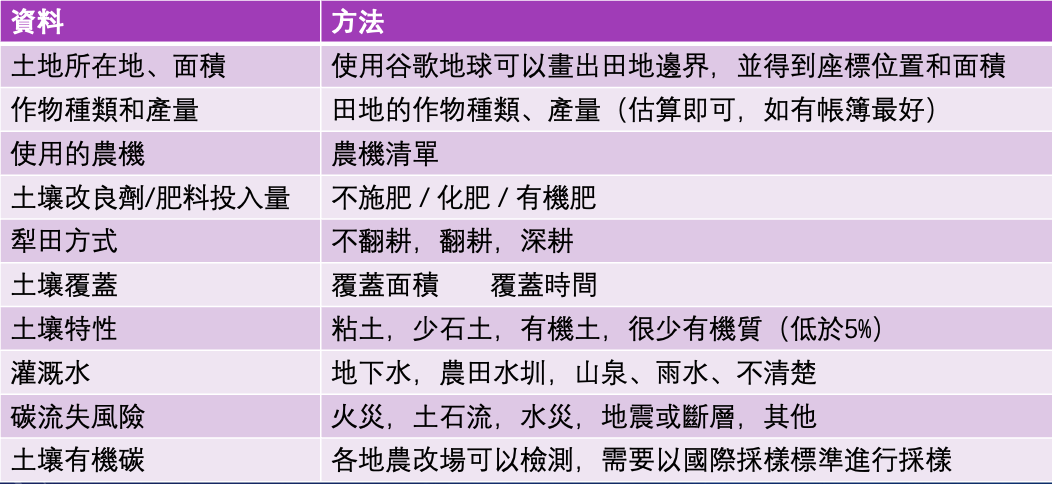
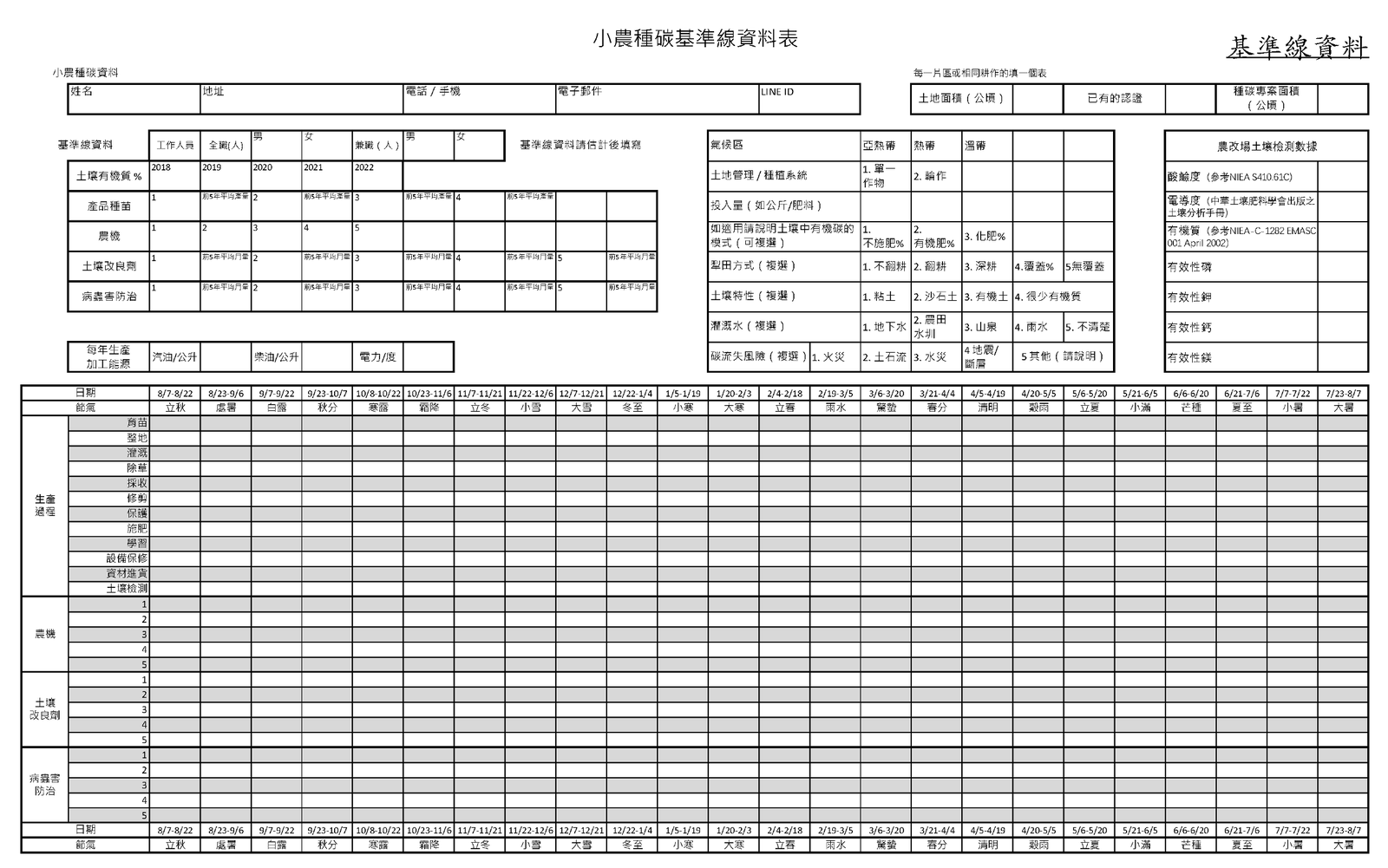
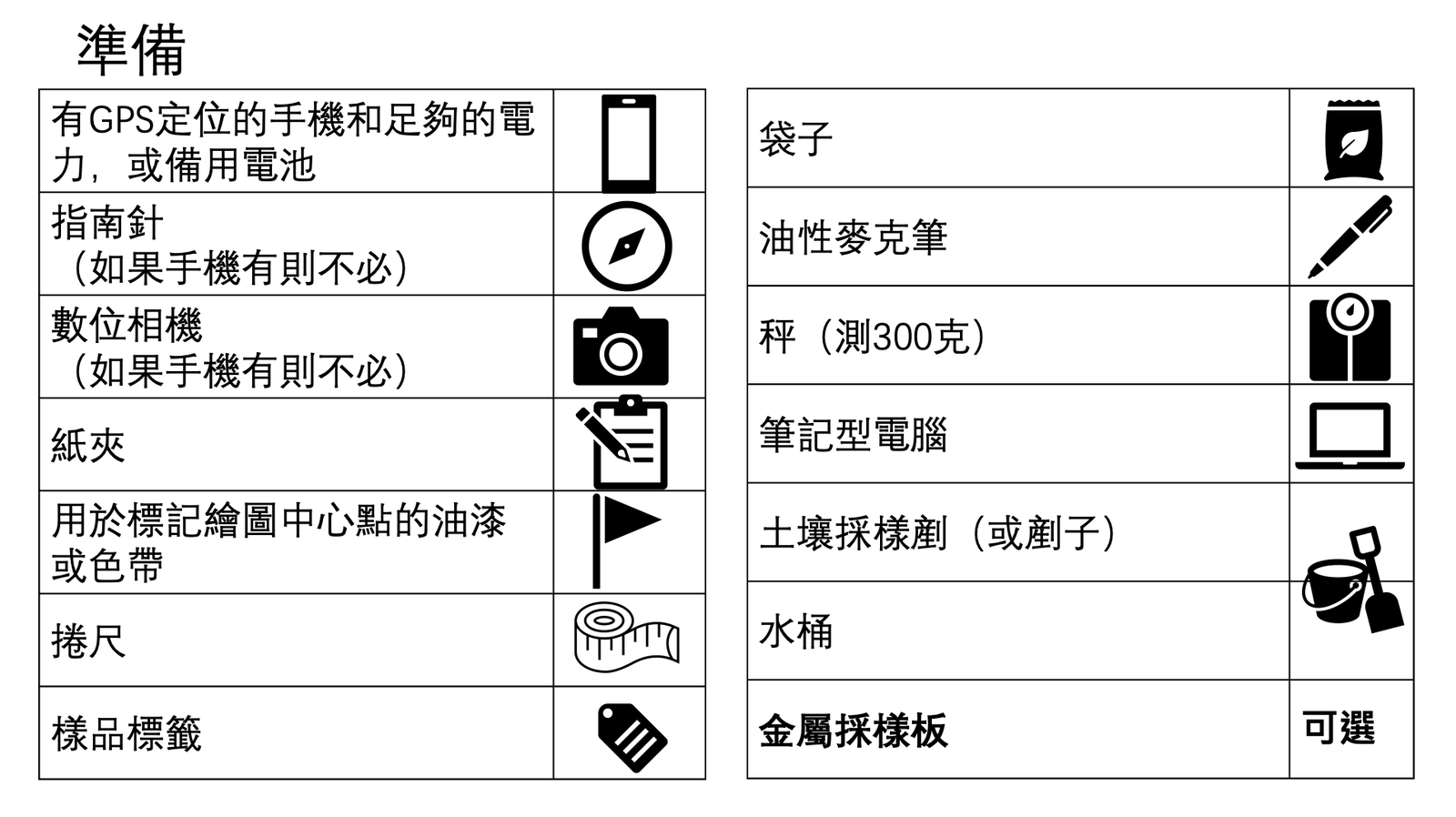
Step 2 Collect soil samples and send them for testing
- Soil sampling method for smallholder carbon farming
- MiHuMiSang
- The sampling method follows that recommended by the Gold Standard
- A Protocol for Modeling, Measurement and Monitoring Soil Carbon Stocks in Agricultural Landscapes
World Agroforestry Centre (ICRAF)
The Earth Institute, Columbia University (EI), May 2011
Locating the centre point
- First decide which fields will take part in carbon farming
- Use Google Earth or Google Maps to draw the area first
- Use about 1 hectare as one sampling unit
- Choose a centre point, ideally in the middle of the field
- Photograph and geolocate the centre point under "Site" in the MiHuMiSang app
- Every centre point must be photographed and geolocated
- Remember the relative position of the centre point so you can sample the same point again later
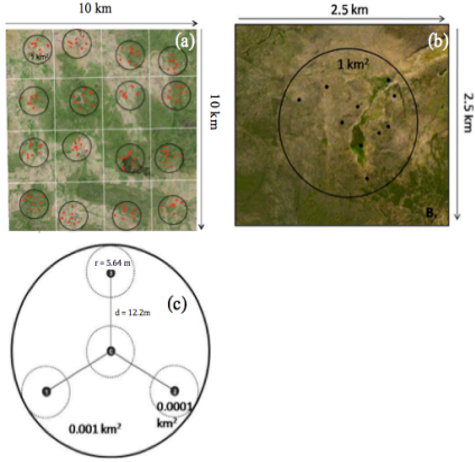
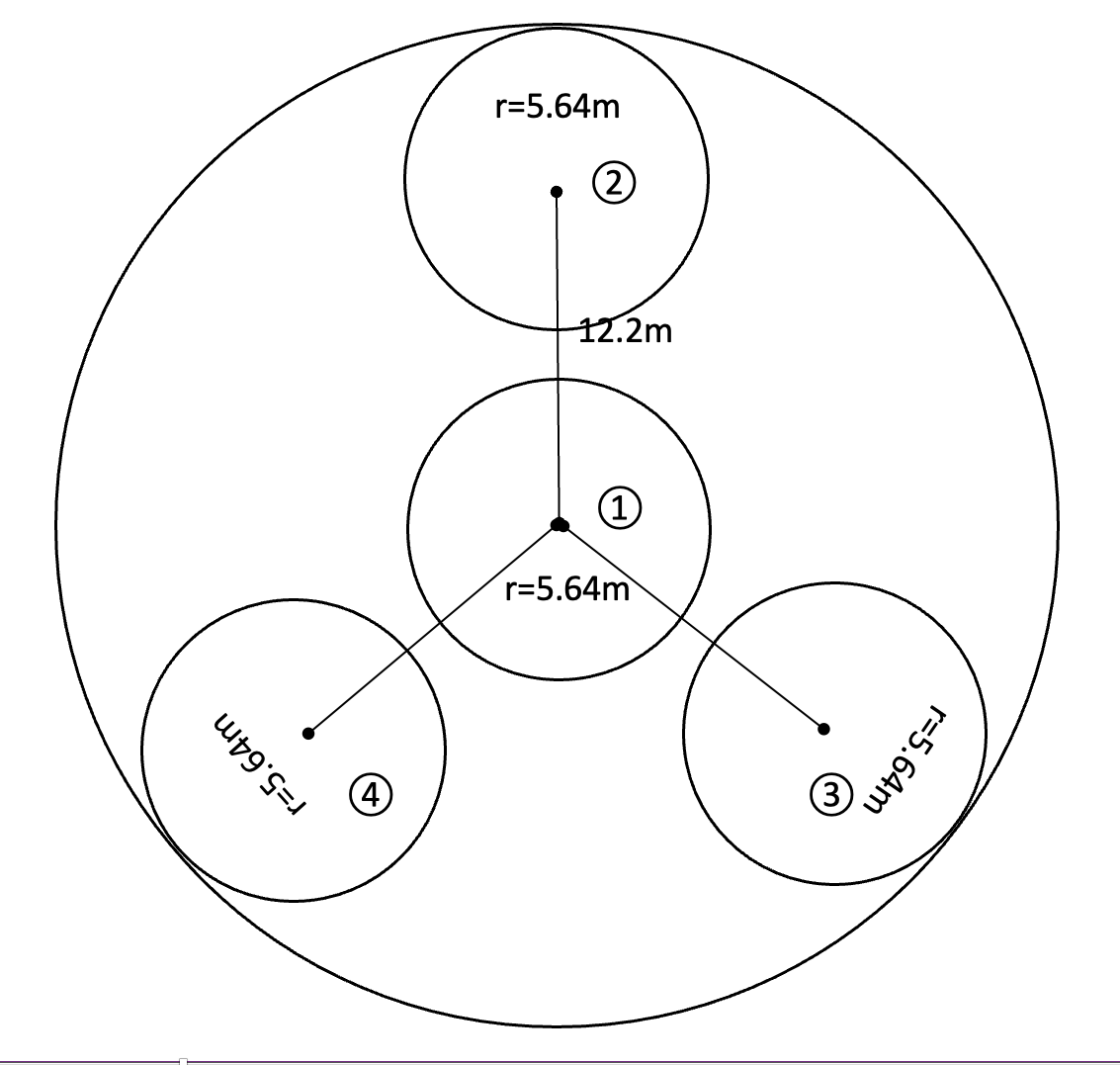
Setting up the 4 sampling points
Sampling area is 1 fen (1,000 m²)
1. Centre point
2. North point – 12 o'clock direction (12.2 m from the centre point, about 18 steps)
3. 120° point – 4 o'clock direction (12.2 m from the centre point, about 18 steps)
4. 240° point – 8 o'clock direction (12.2 m from the centre point, about 18 steps)
Around each of the four points is a circle with a radius of 5.64 m (about 8 steps); choose a random spot within this radius to sample
Timing, weather, soil and sampling method
1. Please complete sampling and send samples by the end of December
2. Ideally sample after three days of sunny weather
3. The soil shouldn't be too dry or too wet (too dry is hard to dig; too wet affects measurement)
4. Please take care of your safety
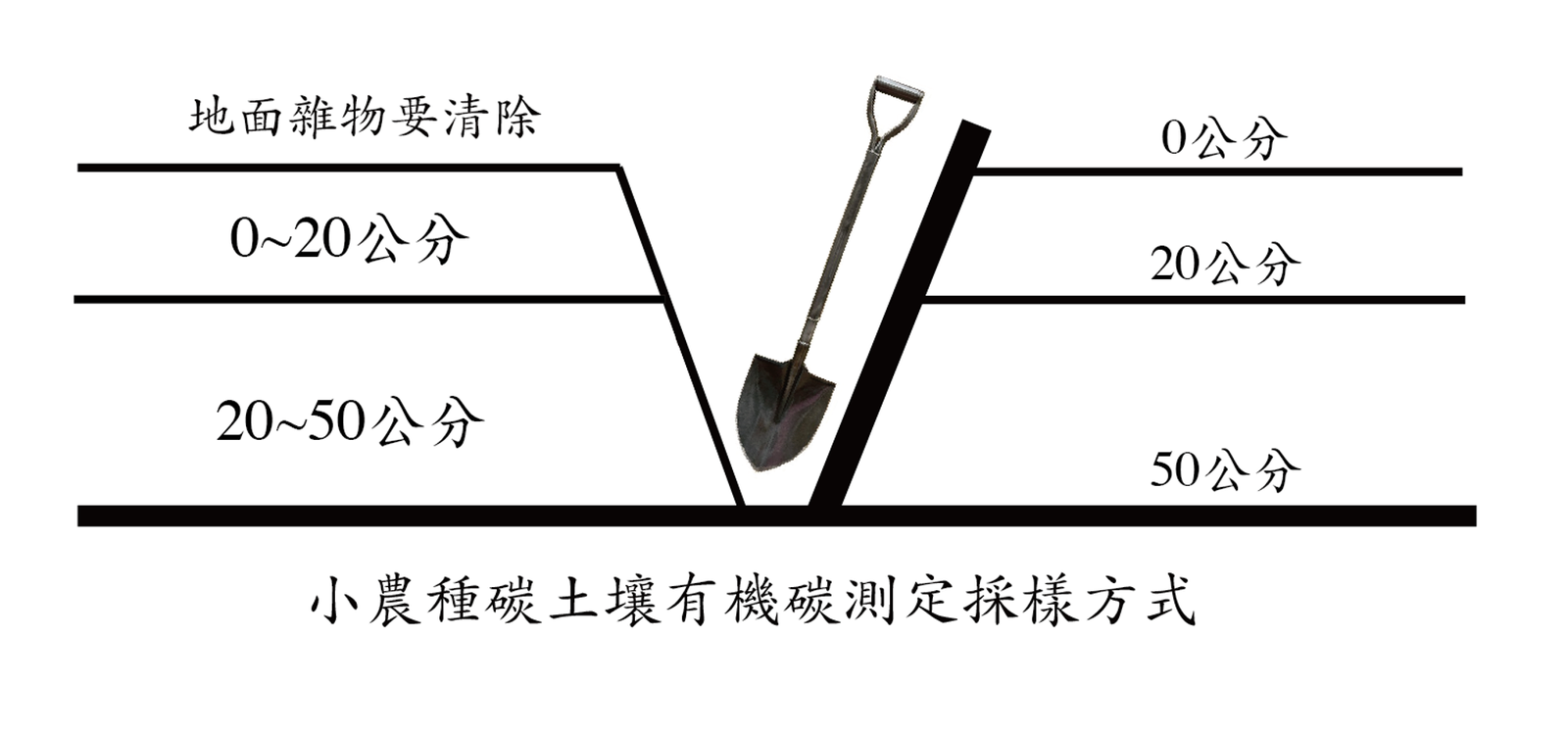
Sampling steps (0–20 cm and 20–50 cm)
1. Sample at the chosen centre point
2. Choose any spot within the 5.64 m radius
3. Dig 20 cm of soil with a spade
4. Mix evenly in a prepared bucket
5. Remove stones, wood, rubbish and other impurities
6. Write your name, time and sample number 1-1 on the plastic sampling bag
7. Put at least 300 g of soil sample into the plastic sampling bag
8. Seal the plastic bag
9. In MiHuMiSang, go to Site > Sampling point 1 > Photo
10. Then sample at 20–50 cm, repeating steps 4–8, with sample number 1-1
11. Then sample 0–20 cm and 20–50 cm at points 2, 3 and 4 in the same way, numbering them 2-1, 2-2, 3-1, 3-2, 4-1, 4-2 — 8 samples in total
After collecting the 8 samples, use MiHuMiSang's Diary > Photo to record today's work
Send samples to TARI --> application form
Address: No. 189 Zhongzheng Road, Wanfeng Village, Wufeng District, Taichung 413008
Recipient: Dr Lin Yu-wen (Agricultural Chemistry Division – Soil Carbon Sink Pilot Project)
Related articles -->
▶ Towards 1,000 hectares of smallholder carbon farming & FAQ (Part 2)
▶ Finally through... towards 1,000 hectares of smallholder carbon farming & FAQ (Part 1)
▶ The carbon farming project has grown! Taiwan's smallholders achieve over 10,000 tonnes of carbon farming in one year
▶ Refining diamond-grade carbon credits together
▶ Farmers' livelihoods in a just climate transition
▶ A few things about the Gold Standard carbon credit certification audit process
▶ Bringing the sustainable value of smallholder carbon farming to every consumer's table
▶ The SDG and ESG meaning of the Changliang Radish Festival
▶ The "first metre" of carbon reduction and net zero: Changliang, Hualien, a promised land for agricultural carbon reduction
▶ Investing in smallholder carbon farming: a just transition for agriculture
▶ A century-long plan typhoons can't blow away: Changliang's first metre of international carbon reduction certification
▶ Taiwan's agricultural carbon reduction methodology strides ahead
▶ Getting rich from carbon reduction? 9 myths about carbon credits
▶ Life is the foundation of carbon storage: land must be alive to be organic
▶ A key role in carbon trading: the project developer
▶ A remote Taiwanese village becomes an international carbon reduction hub: Changliang's smallholder carbon farming takes its first metre
▶ One month to the carbon exchange's opening: is Taiwan ready?


